This Friday, Hynix will be listed on the US stock market. What will be the impact on its stock price?
 Based on historical experience and current favorable logic, Hynix's stock price may still receive a certain boost in the short term after its ADR listing, especially with support from incremental funds in the U.S. However, for rational long-term investors, potential risk factors—dilution effects, excessive prior gains, and the possibility of reaching a cyclical peak—also need to hold significant importance in decision-making.
This Friday, July 10, heavyweight players in the storage chip industry are about to write a new chapter in the U.S. stock market.
SK Hynix submitted a revised F-1 registration document to the U.S. Securities and Exchange Commission (SEC) on June 30, planning to dual-list on Nasdaq under the trading code SKHY. This issuance plans to raise approximately $29.4 billion, all to be completed in the form of newly issued American Depositary Receipts (ADRs). Once this figure is realized, it will surpass the $21.8 billion record set by Alibaba in New York in 2014, becoming the largest ADR initial public offering in history.
How can a South Korean chip giant secure nearly $30 billion in its order book in the U.S. stock market? After this massive influx of funds, will Hynix's stock price rise further, or will it instead become a turning point for a short-term peak?
The answer may lie in the following favorable logic and potential risks.
1. Short-term Bullish Reasons
- Valuation Discount Expected to Recover ------ The Core Bullish Logic
The first and most direct opportunity facing Hynix is valuation recovery.
Based on earnings expectations for the next 12 months, Hynix's current price-to-earnings ratio is only about 6.2 times. In contrast, its main competitor Micron Technology has a valuation of about 7 times under the same metric—this is after Micron's 14% drop last week. It is worth noting that just on June 22, Micron's valuation was still above 11 times.
HSBC's research team pointed out the long-term reasons for this valuation gap: over the past 13 years, Micron has enjoyed an average valuation premium of 35% relative to Hynix. The underlying reasons are quite realistic—Micron has better access to domestic U.S. investors, more shareholder-friendly corporate governance policies, and higher stock price elasticity (beta) due to a smaller profit base.
Therefore, HSBC provided a key assumption: as Hynix lists on Nasdaq, its ADR is expected to receive a 20% valuation premium. This means that just "gaining more attention and capital inflow from U.S. investors" could push Hynix's valuation closer to Micron's.
- Passive Funds "Fresh Water" ------ Automatic Buying from ETFs
The listing of ADRs brings not only attention from actively managed funds but, more importantly, opens the channel for passive funds.
Once SKHY is listed on Nasdaq, it will qualify for inclusion in the major U.S. stock indices. The most direct path is to be included in the Nasdaq 100 Index—this index tracks the Invesco QQQ Trust (QQQ), which manages about $482 billion in assets. Being included in the Nasdaq 100 means that hundreds of billions of dollars in passive management funds will be allocated to SKHY, creating a continuous and stable incremental buying pressure.
For an Asian chip giant that has primarily traded on the Korean exchange, this "fresh water" effect from passive funds should not be underestimated. It can significantly enhance the daily liquidity of the stock and, in the long term, reduce the volatility of the stock price—because the inflow of ETF funds is relatively regular, making it less likely to experience drastic fluctuations.
- Active Arbitrage Funds ------ The "Balancer" of Price Differences
There will almost inevitably be price differences between the ADR and the parent stock in the Korean KOSPI market. This difference is a natural "arbitrage printing machine" for hedge funds.
The historical script has already been written: after Alibaba and TSMC listed in the U.S. stock market, significant price differences between ADRs and parent stocks attracted a large amount of arbitrage funds. The logic for arbitrageurs is simple: buy in the market with lower prices and sell in the market with higher prices, locking in risk-free returns through cross-market hedging.
Although this arbitrage activity is "earning the price difference" on a micro level, it plays a role in leveling the valuations between the two markets on a macro level. In the short term, the activity of arbitrage funds usually supports the KOSPI parent stock—because arbitrageurs need to buy the parent stock in the Korean market to hedge their short positions in the ADR.
- Fundamentals Provide a Solid Valuation Anchor
All narratives of valuation recovery ultimately need support from fundamentals. Hynix's fundamentals can be said to be among the strongest in the global chip industry.
According to company guidance and market expectations, Hynix is expected to achieve a net profit of 221 trillion Korean won (about $144 billion) and revenue of 355 trillion Korean won (about $231 billion) in the fiscal year 2026, representing year-on-year growth of 415% and 265%, respectively. In comparison, Micron's current fiscal year (ending August 31) is expected to see net profit surge by 876% to about $83 billion, with revenue jumping 247% to $130 billion.
More noteworthy is Hynix's structural advantages in the global storage chip landscape:
DRAM: Second in global market share (29.1%)
HBM (High Bandwidth Memory): First in global market share (56.4%)
NAND: Second in global market share (18.5%)
HBM is currently one of the most sought-after segments in the AI chip supply chain, and Hynix's absolute leading position in this niche provides it with pricing power and profit margins far exceeding those of traditional DRAM business.
2. Risks Not to Be Ignored
- Supply Shock ------ Nearly $30 Billion in New Equity
While the $29.4 billion ADR scale creates history, it brings a direct side effect: dilution.
According to regulatory filings, this ADR issuance corresponds to an increase of 17.79 million shares (not a reduction by existing shareholders), with a total value of about 45.45 trillion Korean won (about $296.5 billion). This means that SK Hynix's total equity will expand as a result.
The direct impact of the new equity on existing shareholders is the dilution of earnings per share (EPS). From a trading perspective, such a large-scale new stock supply entering the market in the short term may also exert direct supply pressure on the stock price.
More subtly, there are impacts at the arbitrage level. Since ADR pricing typically refers to the valuation levels of the U.S. stock market (which are often higher than those of the KOSPI parent stock), arbitrageurs may choose to buy the relatively cheaper KOSPI parent stock in the Korean market while shorting the relatively expensive ADR in the U.S. market. This operation, while leveling the price difference between the two markets, may also exert downward pressure on the KOSPI parent stock in the short term.
- Previous Gains Have Been Quite Significant ------ Stock Price May Be Overextended
When discussing the catalytic effect of the ADR listing, one premise cannot be overlooked: Hynix's Korean stock has already risen significantly over the past year.
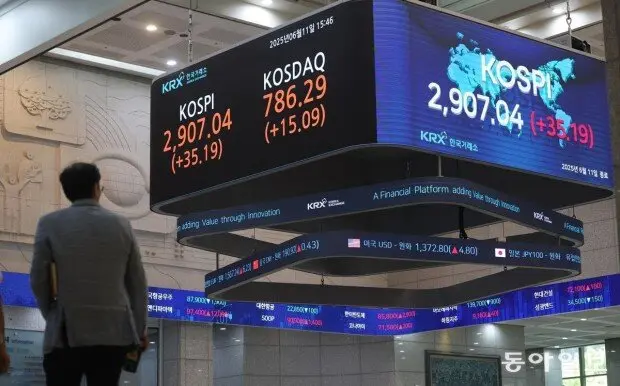
Recently, Hynix's stocks listed in Korea have cumulatively risen about 710% over the past 12 months—even after experiencing a correction of about 20% from the peak in June. This year alone, the stock price has soared over 220%, with its market capitalization once exceeding $1.1 trillion.
This level of increase means that the current Hynix stock price already incorporates a large amount of optimistic expectations regarding the HBM supercycle and future growth. While the incremental funds brought by the ADR listing are indeed a positive factor, whether they can push the stock price to continue breaking through on top of already multiple doublings is a question that needs to be raised.
There is always a layer of valuation filter between a "good company" and a "good price."
- The Cyclical Shadow of the Storage Industry ------ Samsung's Financial Report Has Sounded the Alarm
One of the most essential characteristics of the chip industry is its strong cyclicality. Recently, the financial performance of its peer Samsung Electronics has already sounded an alarm for the entire industry.
On July 7, Samsung released its best financial report ever—profits reached an all-time high. However, on the day the report was released, Samsung's stock price fell nearly 7%. On the same day, Hynix's stock price also declined.
Why did the best financial report result in the worst stock price reaction?
Because the market clearly sees: Samsung's profits almost entirely come from the supercycle dividends brought by the price increases of DRAM and NAND chips. This is not a unique competitive advantage (alpha) of Samsung, but a cyclical dividend (beta) enjoyed by the entire industry. When the entire industry is making "cyclical money," the market is not pricing who has stronger execution but how long this cycle can last.
The fact that Hynix and Samsung fell simultaneously indicates that investors are re-pricing the cyclical peak of the entire storage industry. While the ADR listing can indeed bring incremental funds, if the industry itself is approaching a cyclical turning point, the driving force of these funds may be offset by greater cyclical headwinds.
3. Opportunities and Challenges Coexist
SK Hynix's listing on Nasdaq is a milestone event. The $29.4 billion fundraising scale itself demonstrates global capital's recognition of the AI storage narrative, and the valuation recovery, passive fund inflow, and arbitrage support brought by the ADR listing indeed constitute short-term catalytic factors worth paying attention to.
However, investors also need to be clear-headed: this ADR issuance is new equity rather than a reduction of existing holdings, the previous significant gains have already overextended some expectations, and the strong cyclicality of the storage chip industry is sending warning signals through Samsung's financial report.
Based on historical experience and current favorable logic, Hynix's stock price may still receive some uplift shortly after the ADR listing, especially from the support of incremental funds from the U.S. However, for rational long-term investors, the potential risk factors—dilution effects, excessive previous gains, and the possibility of a cyclical peak—also need to occupy an important position in decision-making.
Final Thoughts
The listing of SK Hynix's ADR provides U.S. investors with a direct window to participate in the global leader in HBM. If you are interested in the investment logic of the storage chip industry and AI infrastructure, this will be an event worth paying attention to.
In response to the market volatility in the early stages of this new stock listing, BIT has introduced a phased trading protection mechanism (such as bearing 50% of the loss risk within limits, offering fractional shares of Hynix for meeting holding standards, etc.), helping investors initially explore a more reasonable smoothing of the cost curve. For investors focused on the AI semiconductor cycle and looking to optimize their asset allocation tools, keeping an eye on quality channels and official updates (such as BIT U.S. stocks official X: @BITstocks_CN) will help capture the liquidity dividends of top global chip assets in a more lightweight manner.
Disclaimer
This article is a submission from a guest author, and the market observations, data analysis, and judgments contained herein represent the author's personal views and do not represent the official position or research opinions of the BIT platform, nor do they constitute any investment advice or invitation. BIT makes no express or implied guarantees regarding the accuracy, completeness, or timeliness of the content of this article, and the prices and data mentioned are as of the publication time and may become invalid with market changes. Cryptocurrencies and related securities are high-volatility assets, and there is a risk of principal loss in investments; past performance does not predict future results. Investors should independently assess whether to participate in trading and consult independent professional advisors if necessary.
 Risk warning
Popular articles