Bitget UEX Daily Report|Escalating conflicts in the Middle East raise inflation concerns; AI chip stocks pull back, dragging down U.S. stocks; Apple's new highs in a bearish market highlight defensiveness

 Bitget UEX Daily Report
# 1. Hot News
Federal Reserve Dynamics
Waller releases hawkish signals, CPI data becomes key policy indicator Federal Reserve Governor Waller stated on Monday that if future data shows inflation significantly above the 2% target, the Federal Reserve may need to raise interest rates in the short term. Current policy is at a crossroads, with direction depending on the latest data, including tonight's CPI. If inflation remains sticky or rebounds, policy will need to tighten; under current policy levels, inflation may gradually fall back to 2%, but there are concerns that worsening data could lead to faster action. Market impact: Increases uncertainty about the Fed's path, supports the dollar index in the short term, suppresses high-valued risk assets, especially technology growth stocks, and may increase volatility.
International Commodities
Middle East conflict escalates, U.S. resumes maritime blockade on Iran, oil prices surge raising inflation expectations The U.S. Central Command announced the resumption of the maritime blockade on Iran starting July 14 at 16:00 ET, targeting non-compliant vessels at Iranian ports and along the coast, while charging fees for vessels passing through the Strait of Hormuz. Trump has notified Congress that U.S. military forces will implement "defensive strikes" against Iran, stating that an agreement with Iran is still possible but will continue to take tough actions to weaken its influence. Market impact: Rapid increase in oil supply risk premium, directly raising energy inflation expectations, potentially complicating the Fed's easing path, benefiting energy and commodity-related assets, while temporarily suppressing global risk appetite and growth expectations.
Macroeconomic Policy
Federal Reserve balance sheet reform progresses, QT risks and tightening transmission raise Wall Street's alert The Federal Reserve is evaluating its approximately $6.7 trillion balance sheet, with a working group led by Kevin Washington focusing on QT's impact on financial liquidity. Past aggressive QT has triggered crises in the repo market. Goldman Sachs pointed out that if the Fed turns hawkish due to inflation, it could affect the stock market through three channels: weakening growth prospects, AI high capital expenditure companies being sensitive to financing costs, and historically weak stock market returns during tightening cycles. Market impact: Reduced liquidity buffers may amplify short-term market volatility, declining bank reserves increase systemic risk transmission, and policy uncertainty becomes the current core variable.
# 2. Market Review
Commodity & Forex Performance (Real-time Updates)
- Spot Gold: $4000.60/oz, -0.13%
- Spot Silver: $57/oz, -0.54%
- WTI Crude Oil: $79.42/barrel, +1.64%
- Brent Crude Oil: $84.58/barrel, +1.54%
- Dollar Index (DXY): 101.28, +0.32%
Driving Factors Analysis: The escalation of geopolitical tensions in the Middle East is the current core driver. The U.S. resuming its maritime blockade on Iran and charging fees for vessels in the Strait of Hormuz directly raises the risk of oil supply disruptions, leading to significant increases in WTI and Brent crude oil prices. The surge in oil prices exacerbates inflation concerns, with Federal Reserve Governor Waller signaling a potential short-term rate hike if CPI exceeds expectations, causing the dollar index to strengthen to around 101.28. Gold and silver fluctuate slightly between risk aversion and inflation hedging demand, temporarily suppressed by the dollar and real interest rates, but their long-term safe-haven attributes still provide support. The asset linkage logic is clear: geopolitical events create short-term pressure on risk assets, while commodity and energy-related assets are relatively resilient, with the dollar and U.S. Treasury yields becoming safe havens for funds. The short-term market focus is on whether tonight's U.S. CPI can validate the inflation trend, thereby influencing the Fed's policy path and global liquidity expectations.
Cryptocurrency Performance
- BTC: Approximately $62,480, -2.26%
- ETH: Approximately $1,780, -2.19%
- Total Cryptocurrency Market Cap: Approximately $2.23 trillion, -1%
- Market Liquidation Situation: Total liquidation in 24 hours approximately $368 million, long positions liquidation approximately $311 million
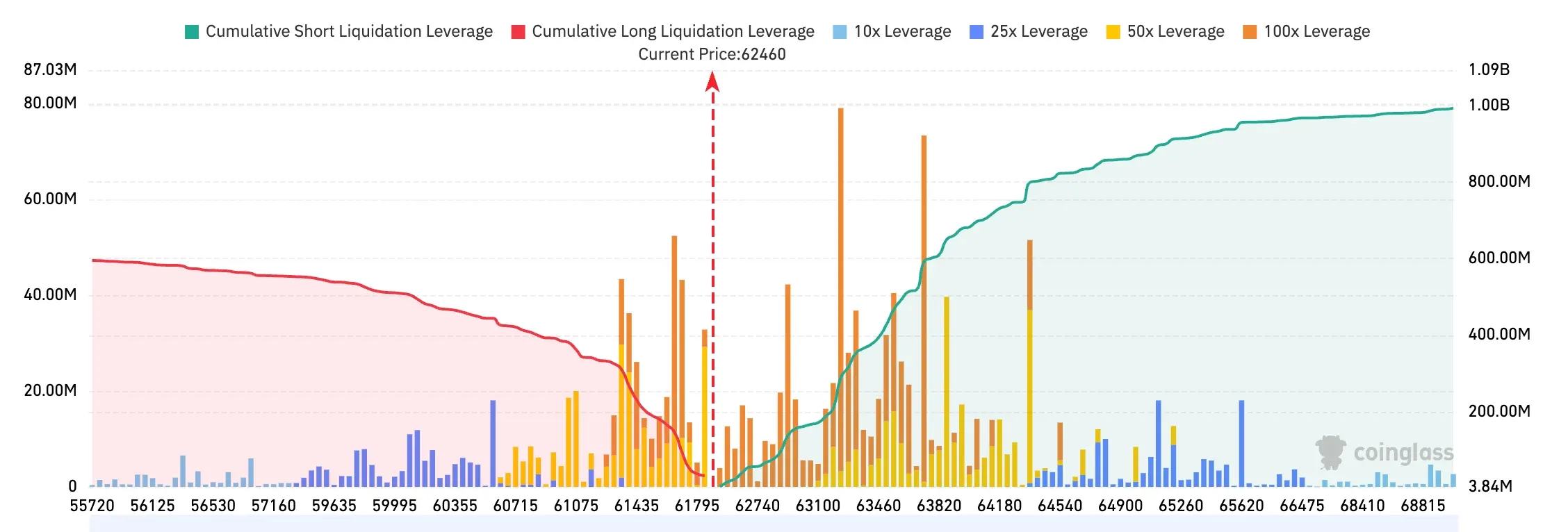
- Bitget BTC/USDT Liquidation Map: Current BTC price is around $62,460, with a very dense short liquidation cluster in the $63,000--$63,800 range, accumulating nearly $1 billion in short liquidations. If prices continue to rebound, it may trigger large-scale short squeezes. Long liquidations are mainly concentrated in the $61,000--$61,800 range, but the scale is significantly weaker than the short pressure above, indicating that the short-term liquidation magnetic effect still leans towards the upside, making the market more likely to experience a surge above $63,000.
- Spot ETF Net Inflow/Outflow: BTC spot ETF saw a net inflow of approximately $90 million yesterday, currently experiencing a net outflow of $239 million within 24 hours.
Driving Factors Analysis: The combination of geopolitical tensions and macro uncertainty is the main reason for the cryptocurrency market pullback. The Middle East conflict raises oil prices and inflation concerns, while Federal Reserve officials release hawkish signals, putting pressure on risk assets, with BTC and ETH following the decline of tech stocks and risk appetite. ETF fund flows show net outflows, indicating that some profit-taking or risk-averse funds are withdrawing. The leveraged market is experiencing a significant liquidation wave, with a higher proportion of long position liquidations, reflecting high leverage after recent rebounds. Technically, BTC is seeking support around $62,000, with trading volume and open interest changes indicating that the market is in a wait-and-see mode. The overall trend remains highly correlated with the tech sector of the U.S. stock market, with short-term differentiation likely to continue: BTC, as a macro risk asset, is more sensitive to liquidity and dollar movements, while ETH is relatively independent, influenced by network fundamentals and Layer 2 developments. Institutions generally believe that tonight's CPI data will be a key catalyst; if inflation exceeds expectations, volatility in risk assets may further amplify; conversely, it may alleviate some pressure.
U.S. Stock Index Performance

- Dow Jones: 52,498.64 (-0.26%), experiencing a slight pullback
- S&P 500: 7,515.34 (-0.79%), key support facing testing
- Nasdaq: 25,873.18 (-1.55%), significant drag from the tech sector
Tech Giants Dynamics
- NVDA: $203.88 (-3.52%)
- AAPL: $317.31 (+0.63%)
- MSFT: $392.75 (+1.53%)
- GOOGL: $355.50 (-1.31%)
- AMZN: $248.06 (+0.80%)
- META: $656.73 (-1.86%)
- TSLA: $394.76 (-3.19%)
Performance Summary and Driving Analysis: U.S. stocks are generally under pressure, with the Nasdaq experiencing the largest decline, mainly dragged down by AI chips and overvalued tech stocks. The escalation of geopolitical conflicts triggers risk aversion, combined with downward adjustments in earnings outlooks for some AI-related stocks, leading funds to withdraw from high capital expenditure computing chains. Apple's counter-trend new high highlights differentiation: the market believes it is less involved in the intense AI data center arms race, becoming a defensive allocation target. Microsoft and Amazon show relative resilience, indicating that cloud and AI application sectors still have some robustness; while Nvidia, Tesla, and Meta experience deeper pullbacks, reflecting valuation pressure and short-term sentiment deterioration. The overall sector trend is "defense over offense," with the uncertainty of high-intensity investments in AI infrastructure amplified in the current macro environment.
Sector Movement Observation
Semiconductor Sector down approximately 3-6%
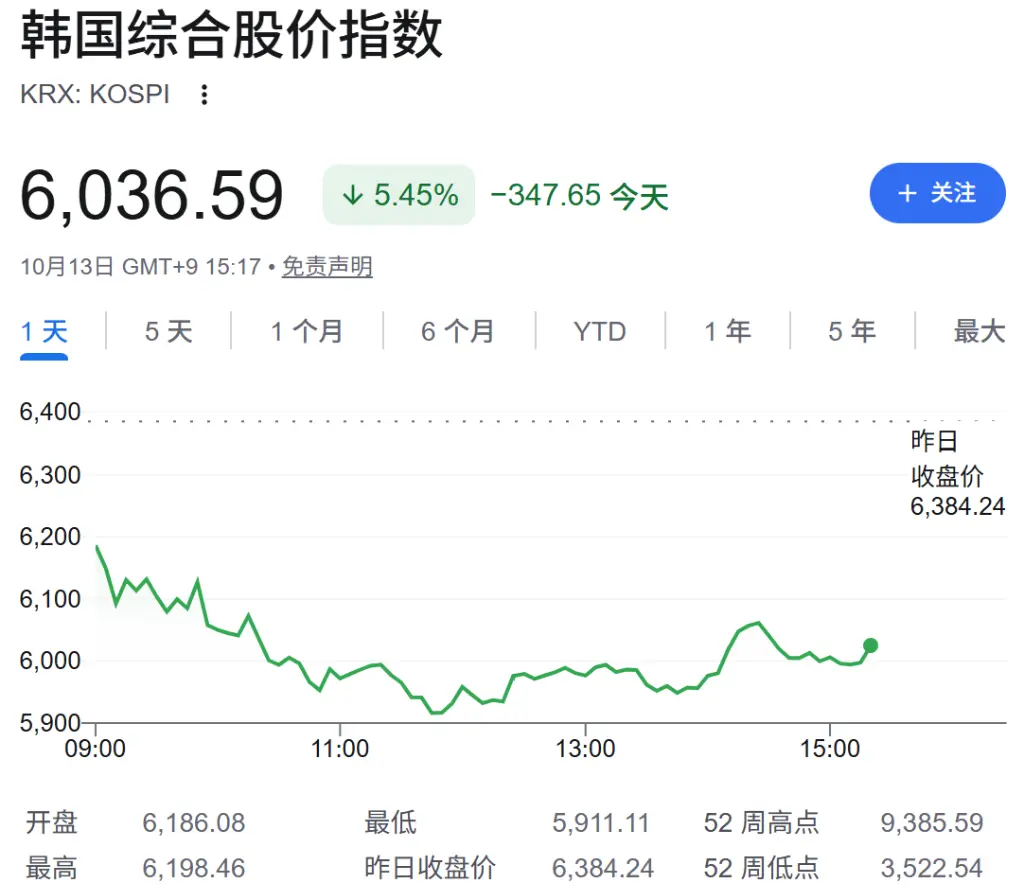
- Representative stocks: NVDA -3.52%, SK Hynix -9.3%
- Driving Factors: Concerns over slowing demand growth for AI chips combined with geopolitical risks lead to decreased risk appetite, and downward adjustments in Q2 earnings expectations for some stocks trigger sell-offs, reflecting a market reassessment of the sustainability of high capital expenditures.
Energy and Related Sectors relatively resilient (driven by rising oil prices)
- Representative stocks: Some oil and gas and energy service stocks rise
- Driving Factors: The Middle East conflict raises the oil supply risk premium, with significant increases in WTI and Brent prices, and the market's focus on energy inflation and supply chain security intensifies, leading to temporary inflows into related sectors to hedge risks.
# 3. In-depth Analysis of U.S. Stocks
1. Apple Inc. - New High Amidst AI Arms Race
Event Overview: Amidst a general downturn in AI chip stocks, Apple's stock price rose 0.63% and reached a historic high. Market views suggest that Apple is less involved in the high-intensity AI data center capital expenditure race, becoming a safe haven for funds. However, the company faces rising memory chip prices that may squeeze gross margins, having raised prices for Macs, iPads, and home products on June 25, leading to the largest single-day drop. The September release of the foldable iPhone is seen as an important catalyst. Market Interpretation: Institutions believe that the current market's uncertainty regarding AI investment returns is increasing, leading funds to shift towards fundamentally solid, relatively reasonably valued tech giants. As a leader in consumer electronics and services, Apple's strong cash flow and defensive attributes are highlighted in the current geopolitical and macro environment. Investment Insight: In the short term, it can serve as a defensive allocation option under geopolitical and AI valuation pressures, but continuous tracking of gross margin trends and new product launches is necessary.
2. SK Hynix - Earnings Outlook Downgrade Triggers Continuous Stock Price Decline
Event Overview: SK Hynix ADR has seen a nearly 10% drop over two consecutive days, mainly due to a South Korean investment bank downgrading Q2 operating profit expectations to about 8% below market consensus. Although HBM is a core product for AI, the slow price increase of long-term contracts compared to traditional DRAM and other factors affects profit release. The market is also paying attention to unconfirmed rumors of the South Korean Ministry of Finance possibly taking a stake. Market Interpretation: Reflects market concerns about the sustainability of high growth in AI semiconductors, combined with overall declining risk appetite and shocks from geopolitical events. As a high-margin product, the pricing and shipment rhythm of HBM become key observation indicators. Investment Insight: AI supply chain stocks are experiencing increased short-term volatility; it is advisable to focus on fundamental realizations and inventory cycle changes, avoiding chasing high prices and selling off.
3. Intel - Additional €5 Billion Investment in Ireland Factory to Expand AI Capacity
Event Overview: Intel announced an additional €5 billion investment in its Leixlip factory in Ireland for AI chip capacity and foundry business expansion, enhancing Xeon server capacity and external customer delivery capabilities. The company emphasizes that this move strengthens its global manufacturing position and supply chain resilience. Market Interpretation: As a significant beneficiary of the U.S. CHIPS Act, the continued expansion shows management's confidence in the foundry transformation and long-term demand in the AI market. However, short-term stock prices are still dragged down by the broader environment and geopolitical risks. Investment Insight: Focus on the progress of IDM and foundry dual-drive, which may benefit from AI computing demand and geopolitical supply chain restructuring in the medium to long term, suitable for medium to long-term allocation.
4. Micron - Investing in Wafer Supply Chain to Address AI Wafer Shortages
Event Overview: Micron announced an investment in GlobalWafers to secure wafer supply for its Sherman, Texas factory. As part of the push for localized U.S. chip manufacturing, this move aims to address potential upstream material bottlenecks due to rapidly growing AI computing demand. Wedbush points out that wafers may become the next critical shortage after chips. Market Interpretation: The AI storage supercycle is evolving from "chip shortages" to "material and wafer shortages," with storage manufacturers actively laying out supply chain security to lock in future market share. Investment Insight: Focus on the pace of capacity expansion in storage and upstream material sectors; related stocks may have structural opportunities during the medium to long-term realization of AI demand.
5. SpaceX (SPCX) - Stock Price Falls Close to IPO Reference Price, FAA Approves Next Flight
Event Overview: SpaceX stocks have fallen nearly 9% over two consecutive days, approaching the $135 IPO reference price. The FAA has completed the review of the May Starship booster failure and approved preparations for the 13th flight, with the launch window set for Thursday at 18:45 ET. Market Interpretation: Reflects digestion of pre-IPO valuations and the market's cautious attitude towards the high growth story of the space business, combined with an overall decline in risk appetite for tech stocks. Progress in commercial launches and Starlink business remains core highlights. Investment Insight: High-growth narrative stocks are easily pressured in the context of macro and geopolitical uncertainties; it is advisable to focus on actual launch frequency and commercialization revenue realization.
# 4. Market & Project Dynamics
- According to CoinDesk, Bitcoin has fallen 28% this year, but the prolonged panic selling may be nearing its end. The first signal comes from price resilience: even as U.S.-Iran tensions escalate and oil prices soar, Bitcoin held above $62,000 over the weekend, contrasting with declines in March and April under similar circumstances. Wintermute trader Jasper De Maere stated, "Weak hands have largely exited." The second signal comes from ETF fund flows: last week, the U.S. spot Bitcoin ETF saw a net inflow of $197 million, ending eight consecutive weeks of outflows. De Maere noted that a single reversal does not constitute a trend, but marginal sellers are exhausting. Nexo analyst Dessislava Ianeva added that the average daily net sell-off in June was nearly 2,000 BTC, which has slowed to just 53 in July, making it one of the calmest months of 2026, except for April.
However, Alex Kuptsikevich, chief market analyst at FxPro, warned that the current rebound is mainly driven by derivatives traders, and the spot market remains pessimistic. Without strong buyer liquidity, prices may remain volatile for months. This week's U.S. CPI and Federal Reserve Chairman Warsh's first congressional testimony will be key directional variables.
According to SolanaFloor monitoring, Circle has minted approximately 500 million USDC on the Solana chain in the past 24 hours.
According to The Block, mentions of Bitcoin and Ethereum on Twitter have fallen to a 12-month low, with Bitcoin around 130,000 mentions and Ethereum around 40,000, indicating a drop in retail interest to 2020 levels. At that time, institutional interest in crypto was still in its infancy, whereas now the situation has reversed—institutional participation continues to rise, and tokenization has become a hot topic at major conferences and in traditional financial media.
Analysts point out that tweet volume is a proxy indicator of retail interest, and the current readings show that retail interest has fallen back to 2020 levels, while institutional participation is moving in the opposite direction. Historically low tweet volumes often coincide with periods of price stagnation or decline, but price trends and infrastructure development may no longer require the same level of public attention to drive.
- Strategy sold nearly $467 million of MSTR common stock last week but did not increase its Bitcoin holdings, seen by analysts as early evidence of executing its "digital credit capital framework." The company's Bitcoin holdings remain unchanged at 843,775 BTC, with dollar reserves increasing to $3 billion (an approximately 18% increase over the week), and the annual dividend coverage period extended to over 20 months.
TD Cowen reiterated a buy rating and a target price of $260, stating that this indicates management is executing the capital allocation strategy announced about two weeks ago. Benchmark also maintains a buy rating with a target price of $570, stating that this move is building a "dividend reserve." Analysts noted that Strategy's lack of Bitcoin purchases last week is not a negative signal; the key is whether the company can increase its per-share Bitcoin holdings while supporting the preferred stock capital structure. The current MSTR stock price is close to a long-term low of $91.50.
- Federal Reserve Governor Waller stated on Monday that if future data indicates that the inflation rate remains significantly above the 2% target, the Federal Reserve may need to raise interest rates "in the short term." He noted that current monetary policy is at a "crossroads." Waller stated that this direction will be determined by new information such as the CPI report to be released on Tuesday; if the data trend shows adverse changes, the Fed should not "be complacent."
Waller stated, "Under current policy levels, inflation could gradually fall back to the 2% target. But I also worry that another scenario may occur, where data in the coming weeks shows inflation remains at high levels or even continues to rise, which would require tighter monetary policy in the short term." He specifically mentioned that he is concerned that recent inflation reports indicate price pressures seem to be broadening across the economy, exceeding the impacts of last year's import tariff increases or recent energy cost rises, potentially reflecting a more systemic inflation that would require tighter monetary policy. Waller stated, "If core inflation performs hot again this week, the FOMC will have to consider tightening monetary policy in the short term. We need to see inflation data consistently decline over several months to believe that inflation is moving in the right direction."
# 5. Today's Market Calendar
Data Release Schedule
|------------|----|----------------|-------| | 18:00 (ET) | U.S. | June NFIB Small Business Optimism Index | ⭐⭐⭐ | | 20:30 (ET) | U.S. | June CPI Data | ⭐⭐⭐⭐⭐ |
Important Event Preview
July 14 (Tuesday)
- Federal Reserve Chairman Warsh will attend a congressional hearing for the first time as chairman, focusing on the semiannual monetary policy report; ★★★★★
- At 20:30, U.S. June CPI and core CPI will be released, with institutions expecting overall CPI year-on-year to fall to 3.8%-3.9%, and core CPI year-on-year to be about 2.9%; ★★★★★
- The five major Wall Street banks JPM, BAC, GS, WFC, and C will release Q2 financial reports before the market, focusing on investment banking business, net interest income, and credit quality signals; ★★★★★
- Federal Reserve Governor Waller will give a speech. July 15 (Wednesday)
- At 20:30, U.S. June PPI and core PPI will be released, providing clues on upstream price pressures;
- Federal Reserve Chairman Warsh will attend a Senate Banking Committee hearing, continuing to comment on inflation and interest rate paths;
- ASML will release Q2 results before the market, focusing on new orders, EUV deliveries, and annual guidance to assess AI capital expenditures; ★★★★★
- Banks and related companies such as MS and BLK will release earnings before the market;
- Chicago Fed President Goolsbee, New York Fed President Williams, and others will give speeches. July 16 (Thursday)
- At 20:30, U.S. June retail sales will be released, examining consumer conditions under high interest rate environments;
- TSMC (TSM) will release complete Q2 results before the market, focusing on AI-related revenue, advanced process capacity utilization, and annual capital expenditure plans; ★★★★★
- Netflix will release Q2 results after the market, focusing on subscription growth, advertising business, and guidance for the second half of the year; ★★★★★
- At 02:00, the Federal Reserve will release the Beige Book on economic conditions. July 17 (Friday)
- Dallas Fed President Logan, Federal Reserve Vice Chairman Jefferson, and others will give speeches.
- The 2026 World Artificial Intelligence Conference will open in Shanghai (July 17-20).
Institutional Views:
Institutions such as Goldman Sachs point out that if the Federal Reserve turns hawkish due to inflation data, it may affect U.S. stocks through weakening growth prospects, AI high capital intensity companies being sensitive to financing costs, and historically weak stock market returns during tightening cycles. Geopolitical conflicts raising oil prices may enhance inflation stickiness and increase policy uncertainty. Wall Street warns that the Federal Reserve's balance sheet reform and ongoing QT may trigger short-term financing cost increases and Treasury volatility risks. Overall, the current environment suggests cautious allocation of high-valued growth stocks and high-leverage risk assets, with defensive tech (such as Apple), energy, and commodity-related sectors being relatively more resilient. The cryptocurrency market, as a high-risk asset, is under short-term pressure, but changes in ETF fund flows and liquidation situations are worth continuous monitoring. Institutions generally believe that tonight's CPI data will be the core catalyst determining the short-term market direction.
Disclaimer: The above content is compiled by AI search, with human verification for publication, and does not constitute any investment advice. The data in the text may inevitably contain deviations; please refer to real-time market data.
 Risk warning