Morning Report | Senator requests SEC to investigate Trump Meme Coin; Robinhood launches $200 million venture capital fund, focusing on Y Combinator seed-stage projects

 August 5 Market Important Events Overview
Compiled by: ChainCatcher
What important events have occurred in the past 24 hours?
CryptoQuant Analyst: The Federal Reserve's decision to maintain interest rates fails to boost Bitcoin, and prices will remain under pressure due to weak U.S. demand
According to ChainCatcher, CryptoQuant analyst Novaque Research analyzed that the Federal Reserve voted 9 to 3 on July 29 to keep the interest rate target range unchanged at 3.50% to 3.75%. However, maintaining interest rates is different from cutting them and has not brought new liquidity stimulation, which is reflected in Bitcoin's internal demand indicators. Novaque stated that the Coinbase premium index remains deeply negative, close to -0.11, indicating that Bitcoin is priced weaker on Coinbase compared to offshore platforms, pointing to sluggish U.S. spot demand; total open interest remains below the 100-day moving average, and CME options exposure has significantly contracted from the peak in the first quarter; exchange reserves have rebounded from the April low to about 2.72 million BTC, indicating an increase in supply that can be sold at any time. They believe that in the context of weak U.S. demand, merely pausing interest rate hikes can only prevent further tightening and cannot create a favorable environment for price increases, and Bitcoin prices will remain under pressure in the short term.
South Korea raises margin threshold effect becomes apparent: Retail investors reduce holdings in leveraged ETFs and turn to spot buying
According to ChainCatcher, Daum reported that South Korea's financial regulatory authorities raised the base margin for domestic and foreign single-stock leveraged products from 10 million Korean won in securities to 30 million Korean won in cash starting July 31, prompting South Korean retail investors to quickly adjust their portfolios. According to data from the Korea Securities Depository, Tesla's 2x leveraged product TSLL recorded a net purchase of $14.58 million on August 3, but the purchase amount on the 4th plummeted from the previous day's $15.6 million to $1.56 million, while the selling amount rose to $8.68 million, resulting in a net sell of $7.11 million for the day. During the same period, Tesla's spot net purchases reached $42.3 million, more than five times the net purchase amount of TSLL. Micron Technology and SanDisk also showed similar divergence—Micron's 2x leveraged product flipped from a net purchase of $10.81 million on the 3rd to a net sell of $15.98 million on the 4th, while SanDisk's 2x leveraged product flipped from a net purchase of $17.74 million to a net sell of $33.74 million, while both companies' spot inflows reached $148 million and $145 million, respectively, indicating a significant trend of funds shifting from leveraged tools to underlying stocks. The tightening of regulations requires that the base margin must be paid in cash, and alternative securities such as stocks, ETFs, and bonds will no longer be counted, and existing investors must also meet the new standards when making additional purchases; selling is unrestricted, but the funds from sales must be settled after T+2 days before they can be counted as cash margin. The new regulations were originally planned to be implemented in phases in August, but due to concerns that limiting it to Korean products would lead to funds flooding into overseas leveraged products like Tesla and Nvidia, creating a balloon effect, the Korean regulatory authorities moved the implementation date to July 31 and simultaneously covered domestic and foreign products. South Korean investors have reacted strongly, believing that extending measures aimed at local market volatility to overseas products constitutes excessive intervention, and that only South Korean investors must meet the 30 million won cash threshold, putting them at a disadvantage in global competition.
Senators request SEC to investigate Trump Meme coin
According to ChainCatcher, U.S. Democratic Senators Elizabeth Warren and Richard Blumenthal sent a letter to SEC Chairman Paul Atkins on Tuesday, requesting an investigation into whether the Trump-related Meme coin violates securities laws. The two senators cited reports stating that since the Trump Meme coin was launched in January 2025, nearly 1 million crypto wallets have incurred losses totaling approximately $3.81 billion. They accused Trump of possibly being involved in a "Rug pull" and requested that the SEC determine whether there are fraudulent arrangements or violations of securities laws. Warren and Blumenthal stated that although the token is driven by Trump's public statements, its price has significantly declined, and the SEC needs to investigate whether there is a fraudulent scheme and prevent the continued extraction of significant value from hundreds of thousands of investors. As this letter was sent, the White House is assessing the latest ethical compromise regarding conflicts of interest surrounding Trump's crypto business. This compromise is seen as key to advancing the Clarity Act, a crypto market structure bill. A previous draft endorsed by Trump faced Democratic opposition because it only restricted public officials and their spouses from issuing or sponsoring digital assets, did not cover other family members, and was to be enforced by the Department of Justice. The two senators also stated that Trump has a "keen interest" in promoting his supporters to trade his Meme coin and claimed that Trump has earned $636 million from the Meme coin. As the Senate is set to enter its August recess on Friday, and the focus will shift to the November elections, whether the Clarity Act can advance in the short term still depends on whether both parties can reach a consensus on Trump's related crypto conflicts of interest.
U.S. SEC Commissioner: Even if the CLARITY Act is not passed, crypto regulatory reform will continue to advance
According to ChainCatcher, Bitcoin Archive reported that U.S. Securities and Exchange Commission Commissioner Hester Peirce expressed optimism about Congress passing the CLARITY Act and stated that even if the bill does not pass, there is still much that can be done. Hester Peirce pointed out that the SEC will continue to advance related work, and regardless of whether the bill passes, the SEC will strive to push forward; even if the CLARITY Act fails to materialize, regulators still have considerable space to promote the construction of a digital asset regulatory framework. Hester Peirce has previously called for clearer regulatory rules for crypto assets, believing that a clear market structure helps the U.S. maintain competitiveness in the digital asset field and reduces the long-term uncertainty faced by the industry.
SK hynix subsidiary Solidigm seeks pre-IPO financing, targeting a valuation of 50 trillion won
According to ChainCatcher, Citrini analyst jukan posted on the X platform stating that South Korean media reported that SK hynix subsidiary Solidigm is seeking pre-IPO financing, possibly preparing for a Nasdaq listing. Reports indicate that the company's target valuation in this round of financing is 50 trillion won. Solidigm is a U.S. subsidiary established by SK hynix in 2021 to take over Intel's NAND flash memory and SSD business, which SK hynix agreed to acquire for about 10 trillion won in 2020.
Data: Bitcoin may maintain a range of $58,000 to $67,000 in August, breakthroughs still require macro and funding catalysts
According to ChainCatcher, CryptoQuant analyst Axel Adler Jr released the August Bitcoin market outlook stating that BTC is currently about 50% down from the cycle high of $126,200 set in October 2025, and the price is close to the on-chain comprehensive holding cost, expecting that August will likely maintain a volatile trend. The report believes that the most likely scenario for August (probability about 55%) is that BTC will operate in the range of $57,700 to $67,000, potentially closing at $60,000 to $64,000 by the end of the month. The bearish scenario (30% probability) is a drop below $57,700, further testing the on-chain realized price of about $52,800; the bullish scenario (15% probability) requires stabilizing above $67,000, along with continued inflows of ETF funds, a decline in U.S. Treasury yields, and a weakening dollar, targeting $71,000 to $74,000. The current valuation is close to the on-chain cost area, and spot Bitcoin ETFs still maintain net inflows, providing support for the market; however, the high interest rate environment, sustained high U.S. Treasury yields, and a strong dollar still limit the upside potential of risk assets. The report also reminds to pay attention to the impact of macro events such as U.S. non-farm employment, CPI, and the Jackson Hole central bank annual meeting on market liquidity.
Digital investment service platform InvestiFi completes $20 million financing, led by Vibe Credit Union
According to ChainCatcher, ThePayPers reported that the digital investment service platform InvestiFi has completed $20 million in financing, led by Vibe Credit Union, with participation from several U.S. credit unions including BankTech Ventures, ICCU (Idaho Central Credit Union), United Financial Credit Union, and Coastal Credit Union. InvestiFi supports traditional financial institutions in directly providing cryptocurrency trading, as well as investment services for stablecoins, stocks, ETFs, etc., within the existing online banking system, allowing users to invest directly through checking or savings accounts without transferring funds between bank accounts and external brokers or crypto platforms. The new funds will be used to expand the platform's scale.
Ethereum Foundation provides security funding to WEBCAT, aiding wallet verification front-end code to prevent phishing attacks
According to ChainCatcher, the Ethereum Foundation's "Trillion Dollar Security" (1TS) program announced that it is providing special funding to the Freedom of the Press Foundation (FPF) to support the ongoing development of the open-source tool WEBCAT, aimed at addressing the long-standing security gap in front-end code verification for Ethereum wallets and decentralized applications (DApps). WEBCAT (Web-based Code Assurance and Transparency) is an open-source tool designed to help browsers verify whether the code loaded by a website matches the version publicly released by the developer. This funding will promote WEBCAT's expansion to Ethereum wallets and application scenarios, enabling users to verify whether the front-end pages they access have been tampered with. The Ethereum Foundation stated that while HTTPS can verify the website users connect to and encrypt communications, it cannot prove whether the front-end code actually running on the site is the version released by the developer. If attackers control the website's front-end code, they may modify the transaction receiving address without the user's knowledge or induce users to sign transactions that do not match the content displayed on the page. The Ethereum Foundation noted that front-end attacks have become a significant security risk for blockchain infrastructure, and malicious modifications to web interfaces could lead to supply chain attacks, DNS hijacking follow-up attacks, and user interface deception issues. WEBCAT was initially developed by the Freedom of the Press Foundation to enhance the code credibility of secure communication systems like SecureDrop. Its expansion into the Ethereum ecosystem will complement security measures like "Clear Signing" in the 1TS program: the former helps wallets confirm that the application front-end has not been tampered with, while the latter helps users understand the transaction content they are approving.
Analysis: Weak dollar and interest rate expectation repricing may benefit gold and Bitcoin
According to ChainCatcher, BIT released a market analysis stating that from a technical perspective, gold may be in a bottoming phase. The report also pointed out that its views differ from the current market consensus: although the bond market is still pricing in the expectation of two interest rate hikes by the Federal Reserve this year, it believes that there may not be any hikes this year.
Binance to add 10 bStocks tokenized securities as collateral assets
According to ChainCatcher, Binance will add 10 bStocks tokens as qualified collateral assets on August 5, 2026, at 20:00, including BitMine Immersion Technologies (BMNRB), Super Micro Computer (SMCIB), IREN Limited (IRENB), ASML (ASMLB), Netflix (NFLXB), AST SpaceMobile (ASTSB), Coherent (COHRB), Credo Technology (CRDOB), USA Rare Earth (USARB), and Astera Labs (ALABB). Eligible users can use these tokens as margin collateral to participate in full-margin trading, unified account models, and unified account professional versions.
ESMA adds 12 companies to MiCA registration list, total authorized CASPs reaches 321
According to ChainCatcher, the European Securities and Markets Authority (ESMA) updated the registration list for the crypto asset market regulations (MiCA) on July 31, adding 12 companies. This is the fourth update since the transition period ended on July 1, bringing the total number of authorized crypto asset service providers (CASP) under MiCA to 321. The newly added entities include three cooperative banks in Germany: Volksbank Raiffeisenbank Oberbayern Südost, VR Bank Schleswig-Holstein Mitte, and VR-Bank Landau-Mengkofen; Spain's Basque Pay, Fintech Payments; and France's Finary, Woorton, Blockchain Process Security, and Shares Financial Assets. ESMA also added Cervo Rendisco, Flandenzo, and Corona Fondenza to the list of non-compliant entities, with the relevant markings coming from Italy's securities regulator Commissione Nazionale per le Società e la Borsa (CONSOB). The non-compliant entity list currently contains 167 items. This update did not involve changes to other MiCA-related registration lists. The number of authorized electronic money token (EMT) issuers remains at 41, and there are currently no entities registered for asset-referenced tokens (ART).
U.S. and U.K. reaffirm commitment to stablecoin and tokenization regulatory cooperation
According to ChainCatcher, Cointelegraph reported that at the 13th U.S.-U.K. Financial Regulatory Working Group (FRWG) meeting held in London on July 8, both sides reaffirmed their commitment to strengthening financial regulatory cooperation, discussing topics such as stablecoin regulation, digital asset market structure, tokenization, and the digitalization strategy of the U.K. wholesale financial market. The joint statement indicated that the U.S. informed the U.K. about the implementation progress of the GENIUS Act and related work on digital asset market structure, expressing support for "responsible" digital asset innovation while emphasizing financial stability and international regulatory cooperation. On July 14, the "Future Markets Transatlantic Working Group" (TTMF) further released preliminary recommendations and a joint statement on stablecoins, laying the foundation for the U.S. and U.K. to continue playing a leading role in the digital asset and capital markets.
Japan's Financial Services Agency restructures crypto regulatory framework, establishes "Crypto Assets and Stablecoins Division"
According to ChainCatcher, NADA NEWS reported that Japan's Financial Services Agency announced the establishment of a new "Crypto Assets and Stablecoins Division," specifically responsible for the regulatory affairs of crypto assets and stablecoins, with the organizational restructuring effective from August 7. Previously, crypto asset business was managed by the "Crypto Assets and Blockchain Innovation Office" and the "Crypto Asset Monitoring Office" under the Risk Analysis Division of the Comprehensive Policy Bureau. After the restructuring, the new division will be elevated from an office-level to an independent division under the Asset Utilization and Insurance Supervision Bureau. The division will include the "Crypto Asset Monitoring Office," "Innovation Promotion Office," and "Digital Payment Planning Office," responsible for exchange regulation. The Financial Services Agency stated that the restructuring is to address new challenges such as financial digitalization and regulatory demands.
Data: Bitcoin spot ETFs saw a total net inflow of $211 million yesterday, with BlackRock's IBIT leading with a net inflow of $170 million
According to ChainCatcher, based on SoSoValue data, Bitcoin spot ETFs saw a total net inflow of $211 million yesterday (Eastern Time August 4). The Bitcoin spot ETF with the highest net inflow yesterday was BlackRock's ETF IBIT, with a net inflow of $170 million, bringing IBIT's historical total net inflow to $60.763 billion. Following that was Fidelity's ETF FBTC, with a net inflow of $19.5752 million, and FBTC's historical total net inflow currently stands at $9.972 billion. As of the time of publication, the total net asset value of Bitcoin spot ETFs is $78.258 billion, with an ETF net asset ratio (market value compared to total Bitcoin market value) of 6.06%, and the historical cumulative net inflow has reached $51.706 billion.
Data: Ethereum spot ETFs saw a total net inflow of $53.7474 million yesterday, with BlackRock's ETHA leading with a net inflow of $42.4582 million
According to ChainCatcher, based on SoSoValue data, Ethereum spot ETFs saw a total net inflow of $53.7474 million yesterday (Eastern Time August 4). The Ethereum spot ETF with the highest net inflow yesterday was BlackRock's ETF ETHA, with a net inflow of $42.4582 million, bringing ETHA's historical total net inflow to $11.48 billion. Following that was Fidelity's ETF FETH, with a net inflow of $9.3424 million, and FETH's historical total net inflow currently stands at $2.109 billion. As of the time of publication, the total net asset value of Ethereum spot ETFs is $10.316 billion, with an ETF net asset ratio (market value compared to total Ethereum market value) of 4.56%, and the historical cumulative net inflow has reached $11.253 billion.
Binance to launch 10 bStocks trading pairs
According to ChainCatcher, Binance will launch 10 bStocks tokenized securities trading pairs on August 5, 2026, at 20:00, including Astera Labs (ALABB), ASML (ASMLB), AST SpaceMobile (ASTSB), BitMine Immersion Technologies (BMNRB), Coherent (COHRB), Credo Technology Group Holding Ltd (CRDOB), IREN Limited (IRENB), Netflix (NFLXB), Super Micro Computer (SMCIB), and USA Rare Earth (USARB). Users can enjoy zero order fee for this activity, which will end on September 1, 2026, at 07:59.
Putin signs comprehensive digital currency regulation law, core provisions effective from September 1
According to ChainCatcher, TASS reported that Russian President Putin signed a law on August 4, implementing comprehensive regulation for the circulation of digital currencies and digital rights within Russia for the first time. This law establishes an operational framework for cryptocurrency exchanges, digital custodians, and market participants, while regulating cryptocurrency mining, the issuance, and circulation of digital financial assets (DFA). Key contents include: cryptocurrency exchanges must be included in a special registry to operate (transition period until July 1, 2027), with a minimum registered capital requirement of 15 million rubles (approximately $187,000); the use of cryptocurrencies for payment of goods and services remains prohibited domestically, but is allowed for cross-border trade settlements and mining earnings; non-qualified investors have a purchase limit of 300,000 rubles (approximately $3,700) per year per intermediary, while qualified investors are not subject to restrictions; banks have the right to freeze funds involved in unauthorized cryptocurrency transactions. The core provisions of the law will officially take effect on September 1, 2026, with some provisions being implemented in batches on July 1 and September 1, 2027.
Probability of a 25 basis point rate hike by the Federal Reserve in September is 58.4%
According to ChainCatcher, Jin10 reported that CME's "FedWatch" shows that the probability of the Federal Reserve maintaining interest rates unchanged by September is 41.6%, while the probability of a cumulative 25 basis point rate hike is 58.4%. By October, the probability of maintaining interest rates unchanged is 30.5%, while the probability of a cumulative 25 basis point rate hike is 53.9%, and the probability of a cumulative 50 basis point rate hike is 15.5%.
Eleanor Terrett: The two parties in the U.S. have yet to reach an agreement on the CLARITY Act
According to ChainCatcher, crypto journalist Eleanor Terrett revealed that U.S. Senate Majority Leader John Thune has submitted a motion to terminate the debate procedure (cloture) regarding advancing legislation related to college sports. This move is seen as indicating that there is currently no bipartisan consensus on the CLARITY Act, which pertains to the regulatory framework for the crypto industry. Previously, the market had hoped that Congress could push the CLARITY Act forward to provide a clearer legal framework for issues such as digital asset market structure and regulatory jurisdiction. However, the latest developments show that there are still divisions within the Senate. Analysts believe that if the two parties cannot reach an agreement on the CLARITY Act, the timeline for advancing the bill may be further delayed. However, supporters still believe that the bill is significant for clarifying the boundaries of U.S. crypto asset regulation and reducing uncertainty in the industry.
Google in talks for over $1.5 billion deal with Mechanize
According to ChainCatcher, Business Insider reported exclusively that Google is in negotiations with San Francisco-based AI programming agency Mechanize for a potential deal involving the acquisition of some talent at a valuation exceeding $1.5 billion, while also discussing a non-exclusive technology licensing agreement. The acquired talent will be responsible for model evaluation and development. Deal details are still in progress and may change. Mechanize was founded last year with the long-term goal of "automating all valuable work," currently focusing on the software engineering field. The company previously completed a $9.1 million financing round at a valuation of $500 million, with investors including former GitHub CEO Nat Friedman and Stripe CEO Patrick Collison. CEO Tamay Besiroglu co-founded Epoch AI. Reports indicate that Google faces competitive pressure in the AI programming field from OpenAI's Codex and Anthropic's Claude Code, and Mechanize's technology could help enhance model programming performance. Neither Google nor Mechanize responded to requests for comment.
BlackRock's tokenized reserve fund receives highest principal stability rating from S&P Global
According to ChainCatcher, S&P Global Ratings awarded BlackRock's new tokenized money market fund, the BlackRock Daily Reinvestment Stablecoin Reserve Vehicle (BRSRV), an "AAAm" rating on Monday, marking its highest principal stability fund rating. The rating is based on factors including the credit quality of investments and trading counterparties, term structure, and management's ability to maintain stable net asset value. S&P Global Ratings stated that no weaknesses were found in BlackRock's management and organization, credit research and analysis, risk management, and compliance. It also noted that the fund's tokenized framework possesses operational resilience, employing a permissioned structure that restricts transactions to whitelisted wallets to reduce risks associated with networks, smart contracts, and blockchain networks. BRSRV was launched on Monday as an open-ended management investment company, aiming to ensure that its shares meet the qualified reserve asset requirements for stablecoin issuers under the GENIUS Act. The fund will hold cash, U.S. Treasury bills maturing in 93 days or less, and overnight repurchase agreements backed by Treasury instruments, maintaining a weighted average maturity of no more than 60 days and a weighted average life of no more than 120 days. S&P Global Ratings also released a summary of stablecoin stability assessments on Tuesday, stating that among the 11 stablecoins covered, 6 have "adequate" or stronger capabilities to maintain their fiat currency peg. USDT remains at a level 5 "weak," while TUSD and USDe are also at level 5; USDC, EURC, USDG, and USDP are rated level 2 "strong."
Moonshot AI launches $50 billion Pre-IPO round of financing, K3 model release causes funding to become "suddenly scarce"
According to ChainCatcher, the Moonshot AI G round (Pre-IPO) financing has officially launched, with a valuation of $50 billion. Insiders revealed that after the release of the K3 model, the financing amount has become "suddenly scarce," with multiple institutions registering investment intentions. Participants must complete payments by August 15, and if they want to enter the shareholder register directly, their managed scale must exceed $500 million. The company previously completed its F round financing (valued at $35 billion) last week, raising a total of $3.5 billion. In April of this year, the company's valuation was approximately $18 billion, nearly tripling within three months. Insiders stated that the core driver of this valuation jump is the release of the K3 model. On July 27, Moonshot AI officially open-sourced the complete model weights of Kimi K3, becoming the world's first large model with 30 trillion parameters to be implemented. Currently, the company's API revenue accounts for more than 70% of total revenue, with ARR achieving several times growth after the K3 release. In response to recent reports of "submitting an IPO application to the Hong Kong Stock Exchange as early as this month," insiders stated that "the news is inaccurate, and G round financing is still ongoing." As of the time of publication, Moonshot AI has not responded to this news.
RootData stock derivatives data: The top three trading volumes in the past 24 hours were Binance, Hyperliquid, and OKX; Coinbase dropped nearly 17%
According to ChainCatcher, RootData's latest stock derivatives exchange ranking shows that with the surge in U.S. stocks and the S&P 500 hitting a new high, the trading volume of most stock derivatives exchanges increased in the past 24 hours, with Binance, Hyperliquid, and OKX ranking the top three. Binance's 24-hour trading volume was approximately $23.75 billion, up 21.30%. Hyperliquid's 24-hour trading volume was approximately $6.06 billion, up 27.94%. OKX's 24-hour trading volume was approximately $5.81 billion, up 21.20%. Among the top ten exchanges, the three with the highest trading volume increases in the past 24 hours were MEXC, Bybit, and XT.COM. MEXC rose 93.50% to $1.97 billion, Bybit rose 61.78% to $1.55 billion, and XT.COM rose 48.34% to $1.37 billion. Additionally, it is worth noting that among the listed exchanges, two exchanges experienced significant declines in 24-hour trading volume. Coinbase fell 16.92% to $56.6743 million, and Ondo Perps saw a 4.00% decline to $91.1292 million.
Robinhood launches $200 million venture capital fund, focusing on Y Combinator seed projects
According to ChainCatcher, Robinhood's Robinhood Ventures announced the launch of its second venture capital fund, RVII, aiming to raise $200 million, primarily investing in current or past incubated projects from Y Combinator. The fund will be listed on the NYSE, priced at $25 per share, and is expected to begin trading on August 13. Unlike the previous first fund (RVI) which had zero performance fees, RVII will charge a 2% management fee and a 20% performance fee, with an annual total expense ratio of approximately 4.18%. Robinhood described the fund as a "speculative" investment, "carrying significant loss risks" and without shareholder redemption rights. The first fund was launched in March, raising $658.4 million, primarily directed towards late-stage companies like Databricks, Stripe, OpenAI, and SpaceX, rebounding about 30% after a 16% drop on its first day of trading. RVII will shift its focus to seed-stage projects. Sarah Pinto, head of Robinhood Ventures, stated that retail investors "do not need to wait for a company's IPO to participate in early growth." Goldman Sachs serves as the lead underwriter, with Citigroup, JPMorgan, UBS, and Wells Fargo as co-underwriters, and the subscription window will close on August 12.
Bending Spoons agrees to acquire Airtable for $2.25 billion, an 80% drop from its peak valuation of $11.7 billion
According to ChainCatcher, Bloomberg reported that Italian app developer Bending Spoons SpA has agreed to acquire U.S. software company Airtable for an equity value of $2.25 billion, to be completed in an all-cash transaction. After deducting Airtable's approximately $965 million in net cash, the enterprise value is about $1.29 billion. This price represents a significant drop of approximately 80% from Airtable's valuation of $11.7 billion obtained in 2021, serving as another example of the valuation correction in the software industry. Airtable, founded in 2013, provides tools for non-technical employees to build customized applications and raised $735 million at a valuation of $11.7 billion at the end of 2021 but failed to go public as planned "within a few years." Like many software companies, it has struggled to maintain stable growth amid the impact of generative AI tools like ChatGPT and Claude Code. As of June 2026, Airtable's annual recurring revenue was approximately $480 million. This is Bending Spoons' first acquisition since its Nasdaq listing on July 1, and after the transaction is completed, Airtable will gain resources to advance its AI-native platform development, but its operational model is similar to private equity, which typically involves layoffs and restructuring of acquired companies.
Samsung plans to turn 800 million Galaxy phones into stablecoin wallets, potentially becoming the world's largest stablecoin distribution channel
According to ChainCatcher, analysts indicate that Samsung is accelerating its layout of digital asset infrastructure, planning to provide native stablecoin functionality to approximately 800 million Galaxy smartphones through Samsung Wallet, which is expected to become an important distribution channel for stablecoins like USDC. It is reported that Samsung announced at the Galaxy Unpacked 2026 event that it will integrate stablecoin-related features into future devices, including savings and payment accounts linked to fiat currencies. Currently, Samsung Wallet covers 61 countries, with nearly 19 million users in South Korea. Joseph Goh, head of the Asia-Pacific region for crypto investment bank Areta, stated that the core bottleneck for the widespread adoption of stablecoins is not liquidity but user reach, "distribution channels are the scarce asset, and Samsung has a large user entry." He believes this move could propel Samsung to become a major distributor of stablecoins like USDC. This is not Samsung's first foray into the crypto space. The company launched a digital asset wallet through its Knox security module back in 2019, allowing users to store Bitcoin, Ethereum, and other assets, and connect to Ledger hardware wallets. Additionally, Samsung is strengthening its digital asset infrastructure layout. Samsung SDS CEO Lee Joon-hee previously stated that the company invested in Dunamu, the operator of South Korea's largest crypto exchange Upbit, as an important strategic layout for entering the digital asset infrastructure field, including stablecoins and AI payments. In May of this year, Samsung Securities, Samsung SDS, and Samsung Card agreed to acquire approximately 4% of Dunamu's shares for about $408 million. Analysts believe that Samsung Wallet is responsible for providing user distribution entry, while infrastructure layouts like Dunamu are responsible for underlying trading and asset services, indicating that Samsung may be building a complete ecosystem covering stablecoins, payments, and digital asset services.
Bybit obtains Austrian EMI license, will offer regulated electronic money and payment services in Europe
According to ChainCatcher, cryptocurrency platform Bybit announced that its local subsidiary Bybit Payments GmbH has been granted an electronic money institution (EMI) license by the Austrian Financial Market Authority (FMA), allowing it to provide regulated electronic money and payment services in Europe through Bybit.eu. Bybit EU GmbH has been authorized as a crypto asset service provider under the EU's Markets in Crypto-Assets Regulation (MiCAR) since May 2025. Bybit stated that Bybit Payments will be responsible for fiat and electronic money business, while Bybit EU GmbH will handle digital asset business. Bybit Payments plans to launch peer-to-peer transfers, open banking features, merchant solutions, card programs, and strong customer authentication tools based on the EMI framework. Company representatives stated that this license will support its direct cooperation with European financial institutions and payment processors.
Luxembourg includes cryptocurrency exchanges in FIU alert system
According to ChainCatcher, Luxembourg has authorized the Financial Intelligence Unit (FIU) to send cross-institutional fraud alerts to traditional banks and cryptocurrency exchanges through new legislation, effective August 8. The bill, numbered 8722, requires cryptocurrency exchanges in Luxembourg to receive alerts in sync with banks and payment institutions. The legislation aims to close loopholes that allow fraudulent funds to be quickly transferred between traditional financial institutions and digital assets. Under previous rules, banks could only intercept transactions of flagged accounts within their own systems and could not notify another financial institution or cryptocurrency exchange to prevent funds from entering or exiting. Max Braun, head of the Luxembourg FIU, stated that including cryptocurrency exchanges in the cross-departmental alert system will make it more difficult to cash out related accounts. Data from the Luxembourg Ministry of Justice shows that the country's police recorded 6,382 fraud cases in 2024, with financial practitioners submitting over 18,000 fraud and scam reports.
Meme Popularity Rankings
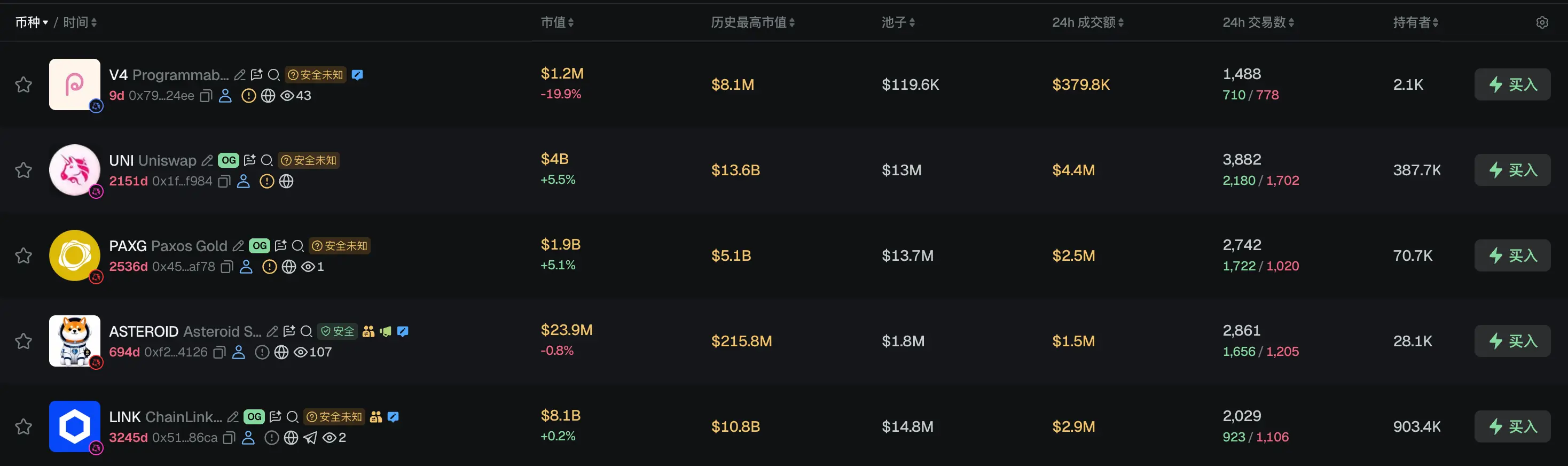
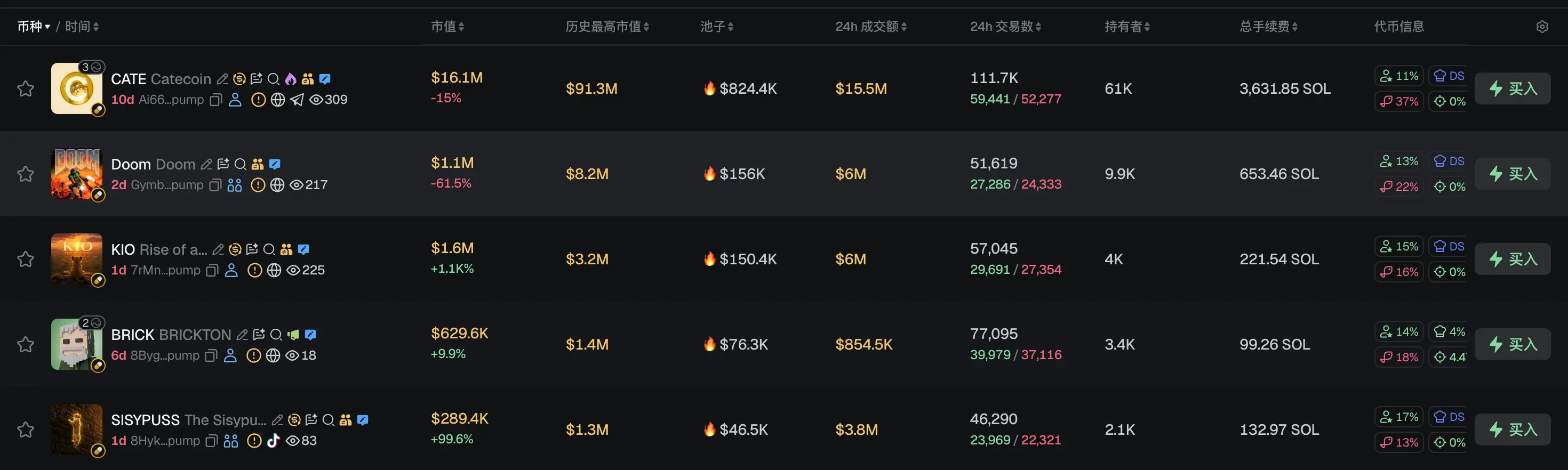
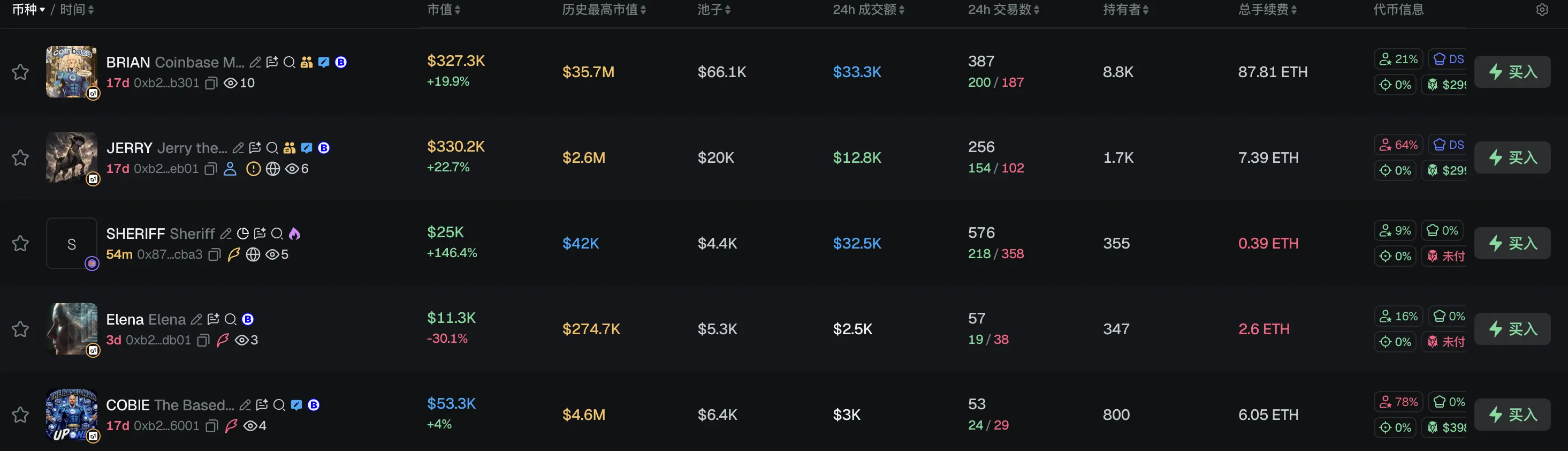
According to the meme token tracking and analysis platform GMGN market data, as of August 6, 09:50,
The top five popular ETH tokens in the past 24 hours are: V4, UNI, PAXG, ASTEROID, LINK
The top five popular Solana tokens in the past 24 hours are: CATE, Doom, KIO, BRICK, SISYPUSS
The top five popular Base tokens in the past 24 hours are: QUID, ELSA, VELVET, SOL, SOSO
What are some noteworthy articles to read in the past 24 hours?
Arthur Hayes' lengthy article: The AI siphon has ended, I still believe in ETH
The AI bubble once siphoned liquidity from the crypto market, but that situation has ended. As market narratives gradually shift from "investing in AI at any cost" to "what is my return on investment," and finally to "when will I recoup my principal"…… Governments that have bet their entire economic policies on AI will begin to worry—perhaps this bubble really could burst. To avoid admitting their mistakes and to prevent this outcome, they will engage in massive capital misallocation, and this scale of capital misallocation will ultimately create a cryptocurrency bull market like we have never seen since 2021.
The more products each user interacts with, the more stable Robinhood's own revenue curve becomes. A downturn in one business line can be offset by a peak in another, and these peaks often come from the same user's account. Coinbase redistributed existing crypto capital among consumers and institutions. Traditional brokerages hold assets but cannot create user interactions. Robinhood's unique advantage lies in its ability to transform a single customer relationship into a compounding growth, self-diversifying revenue node that spans both traditional and crypto businesses, both of which can be connected and amplified through its native blockchain.
Key point eight: The impact of Changxin storage is limited to the domestic market. With Changxin storage completing its IPO, investor concerns about the impact of Chinese storage manufacturers on the global supply-demand pattern have intensified. Goldman Sachs believes that Changxin storage's expansion will primarily meet domestic demand, with limited substantive impact on the global supply-demand tension. From a technological gap perspective, Goldman Sachs cited TrendForce data indicating that Changxin storage's current mainstream process is equivalent to the 1z node, while Samsung and SK Hynix are transitioning from 1a/1b to 1c nodes. In terms of product structure, about 70% of Changxin storage's mobile DRAM shipments are LPDDR4(X), while Samsung and SK Hynix's mobile DRAMs have a 75% to 85% share of LPDDR5(X), indicating a clear misalignment in product positioning.
MarsCoin ignites BNB Chain: Are Meme coins entering the RWA era?
If successful, MarsCoin could become a template for the next phase of Meme asset innovation; if it fails, it may just be another fleeting market experiment under the RWA craze. However, regardless of the final outcome, MarsCoin has already demonstrated a clear trend: the competition for future Meme coins may no longer just be about capturing attention, but about how to convert that attention into real asset value. For Binance, the significance behind this experiment may be even more direct—regaining control over the Meme market's narrative also means regaining control over the flow of the crypto market in an era where on-chain hotspots are becoming increasingly dispersed.
- Valuation and stock supply pressure remain. As of this Monday's close, SpaceX's stock price has cumulatively dropped over 15% from its issuance price, nearly 50% from its high since listing on June 16, with its market value evaporating by over $1 trillion since its post-listing peak. Meanwhile, there were concerns that the expiration of the first lock-up period for its stock on Thursday would release a large amount of stock supply. Even with better-than-expected performance, the combination of high valuation and unlocking pressure will suppress the sustainability of after-hours buying. 5. Although the AI business performed better than expected, the market still lacks confidence in its long-term returns. The addition of $14.1 billion in contract sales, the release of Grok 4.5, and the acquisition of Cursor have all reinforced SpaceX's AI narrative, but contract sales do not equate to current revenue, and acquisitions do not equate to profits. Investors will next question when these AI investments will translate into free cash flow.
The Federal Reserve's stance and Friday's non-farm data become the focus. Before the ADP report was released, Federal Reserve Chairman Waller described the job market as "robust" and "steady" at a press conference last week, and the Federal Open Market Committee (FOMC) maintained interest rates unchanged, but three officials voted in favor of a rate hike, indicating that internal divisions still exist. The market is currently awaiting confirmation from Friday's official government non-farm employment report. A Bloomberg survey shows economists expect July non-farm employment (including the public sector) to increase by 80,000, an improvement from June. If the data aligns with the ADP report's trend, it will further reinforce the market's judgment that "the labor market is robust enough to support the Federal Reserve's focus on combating inflation," which will directly impact expectations for the Federal Reserve's policy path.
Report: DeepSeek restarts financing, pre-investment valuation of 500 billion yuan
With the rising demand for inference computing power and continuously increasing costs, many large model companies are pursuing extreme inference efficiency, including Tencent's high cost-performance route domestically. Recently, U.S. AI model company OpenAI also announced a reduction in API call prices for the GPT-5.6 series models, with the entry-level model Luna seeing an 80% price drop. Before the official release of DeepSeek-V4-Flash, under the pursuit of similar model capabilities, GPT-5.6's cost-performance ratio was even higher than DeepSeek's. However, this cost-performance advantage was quickly erased. On the latest list from OpenRouter, an AI model aggregation platform for global developers, DeepSeek-V4-Flash's official version ranked first in token consumption for the week with 71 trillion.
The death of ai16z: Crypto AI got an early start but arrived late
This also means that the relationship between crypto and AI is not over, but the direction needs to be reversed. AI empowering all scenarios has become a political correctness, and crypto can also be covered. As for how large the crypto pie is, that may depend on when BTC can recover. Personally, what should be done is to embrace change. A developer shedding the burden of tokens is worth much more in today's AI world than what tokens can offer; and a crypto player who solidly embraces AI can clearly gain more than the previous rough model. Being in crypto often allows one to see the direction a step ahead—or perhaps we just got our positions reversed.
For example, Mastercard launched Agent Pay for Machines this year, explicitly supporting stablecoins and targeting high-frequency, low-value micropayments between machines; Visa is also advancing Agentic Commerce, Agent Registry, and stablecoin settlements; Stripe has launched a dedicated Machine Payments Protocol. In the past, Crypto has always sought to replace the infrastructure of the internet, making many attempts around various economic consumption activities of people, but the results have been unsatisfactory; however, in the Agent era, the future AI economy and business seem to be inextricably linked to Crypto's infrastructure, and with the arrival of the Agent economy era, Crypto may finally welcome its best era.
Discussing L1 value capture through two proposals from Solana
Note: The blue dots represent the same fee payer who initiated over 250 transactions during that period, indicating they are more likely to be bots and thus have higher price elasticity. Bots typically have very low margins, so once prices rise, they often significantly reduce resource consumption. The protocol hopes to charge higher fees for transactions with a higher willingness to pay. Calculating fees is a step in this direction, but it is not thorough enough. For financial activities, nominal transaction amounts often reflect willingness to pay better than computational volume. This is also why exchanges typically charge fees based on basis points. Token programs can provide a way to charge fees based on transaction amounts. By modifying the token program, a small proportionate fee can be charged during token transfers. Thus, even if a high-value transfer uses similar computational resources as a low-value transfer, the high-value transfer still needs to pay more fees.
RootData is a global platform providing information on Web3 project financing history, team composition, investment institution portfolios, etc., in database form, widely used by global investors and researchers as a tool for project due diligence and investment analysis. Continuously strengthening data services, Kimpga has previously partnered with the token evaluation platform APYWA to introduce token rating data. The official statement indicates that after integrating with RootData, the platform has further supplemented its project fundamentals information layer based on its existing market data and rating data, providing stronger support for users' investment decisions. Currently, Kimpga has accumulated 10 million users and is a mainstream cryptocurrency market platform in South Korea, providing real-time market and premium data from over 18 major exchanges both domestically and overseas.
AI agents can finally spend their own money: Cloudflare Wallets go live
A noteworthy point for the crypto industry is that Cloudflare did not mention any public chains, nor did it mention Ethereum, Solana, or Base, and it has no intention of issuing tokens; it only referred to "stablecoins." This is a choice from an infrastructure company: it seeks the functionality of stablecoins as payment tools, with a tool-like, interchangeable attitude towards the underlying chains. The truly large-scale landing scenario for stablecoins may be machine-to-machine micropayments, far exceeding person-to-person transfers. Cloudflare has just paved this path into the internet's pipeline layer.
 Risk warning


Popular articles