Outlook on Bitcoin's Future
 Core Viewpoint

 Bitcoin did not follow gold's rise, ETF funds continue to flow out, and market sentiment has dropped to a freezing point. However, on-chain valuation, the behavior of long-term holders, and changes in selling pressure indicate that it may have entered a zone worth reconsidering for long-term allocation.
Author: Will Clemente, Bitcoin On-Chain Analyst
Compiled by: Jiahua, ChainCatcher
I hope everyone had a pleasant summer. It has been a while since I wrote a long article about Bitcoin. In this article, I want to consolidate my thoughts on this asset and some ideas that have gradually taken shape in my mind recently, discussing how to view and allocate Bitcoin in the future.
Last year, I basically shifted my personal focus from the market to commodities. The reason is that it was already quite clear that the crypto market was facing an oversupply issue, which made the entire market feel very heavy.
At the same time, apart from a few localized areas like Hyperliquid, the industry lacked sufficient innovation, at least compared to the active performance of other markets. Therefore, the market also faced issues of insufficient demand and an inability to digest a large supply.
I originally thought there was a window for Bitcoin to perform well at the end of last year: small-cap stocks were surging, and gold had just gone through a strong rally. However, Bitcoin ultimately only made a failed breakout—just a few days before October 10—which left me very disappointed.
In January of this year, due to the market performance resembling the previous bear market we experienced in 2022, I further reduced my remaining Bitcoin exposure.
To be frank, this year has not been a pleasant year to focus on Bitcoin or even the entire crypto market. In terms of the percentage drop from Bitcoin's highs, this round is generally milder than the last one, but from many angles, this bear market might even be harder to endure than in 2022.
At least in 2022, you could clearly point out the reasons for the market decline: rising interest rates, the cleansing of leverage and fraud, and the collapse of FTX. Then you could say, "If these factors might change, and by the end of 2022, the space for further deterioration was clearly smaller than for improvement, then Bitcoin could likely be a good long-term buying point."
But today, there is no similar logic; Digital Asset Treasury (DAT) and quantum computing risks might be a few exceptions—more on this later—and in my view, these two issues have finally begun to show some signs of repair.
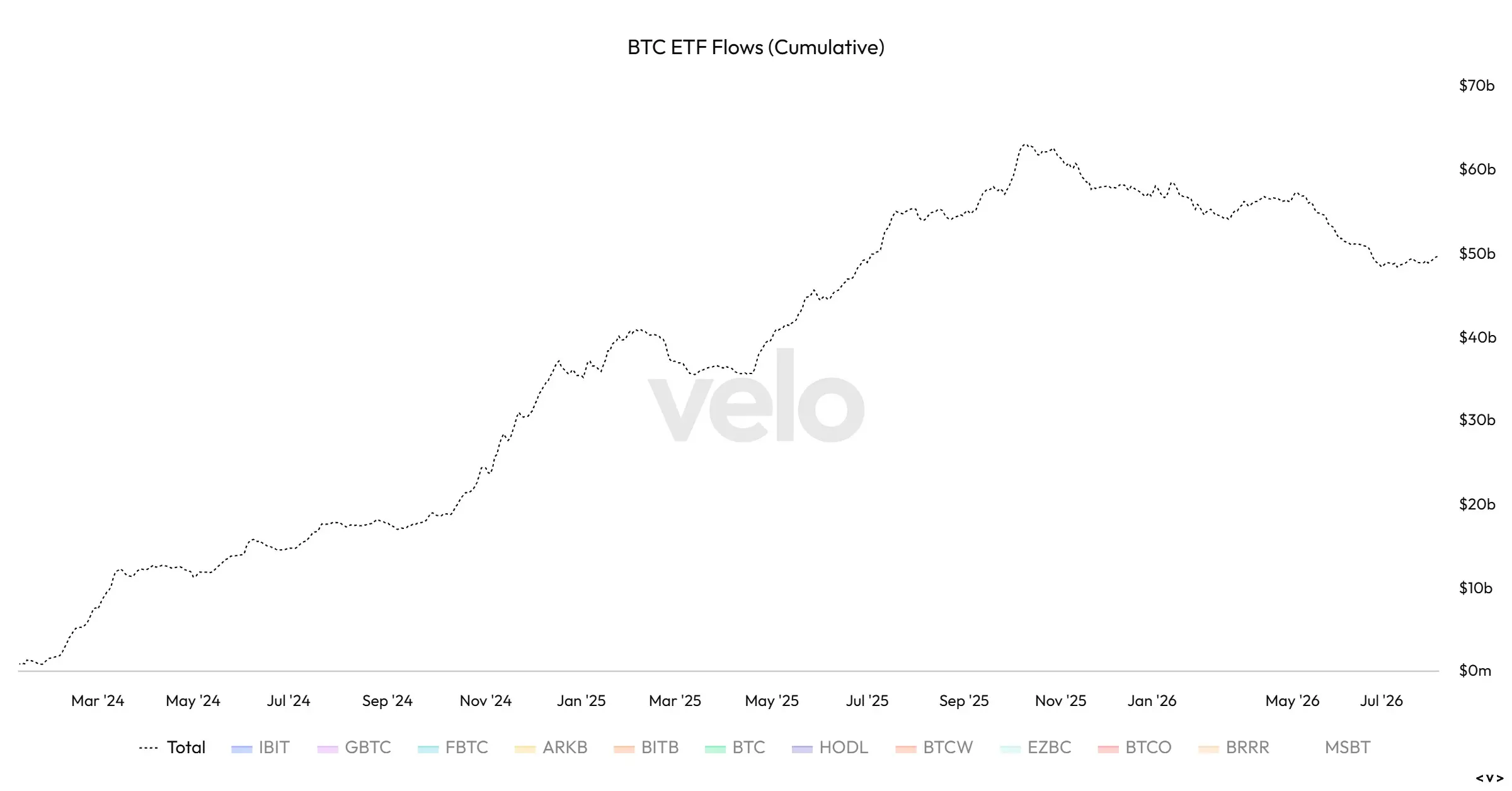
Bitcoin ETFs hold about $50 billion in assets. They set records for inflows at the beginning of their listing, only to be surpassed by memory ETFs earlier this year. Large financial institutions have also begun to launch related lending products.
Last year, driven by central bank reserve demand and the "de-dollarization" narrative, gold performed exceptionally well; logically, that should have been a moment for Bitcoin to shine.
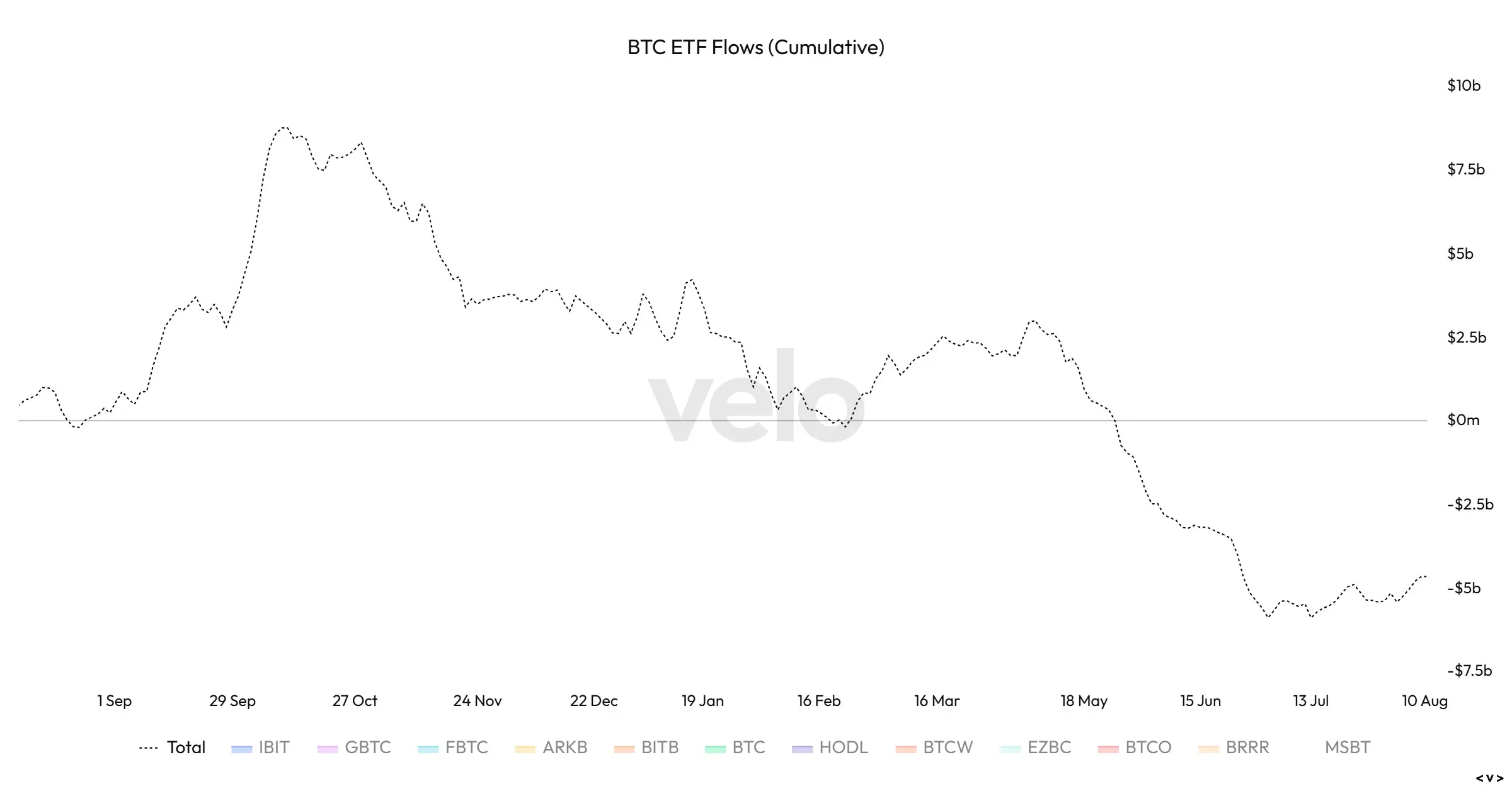
Now, almost anyone looking to gain Bitcoin exposure has corresponding channels. Because of this, Bitcoin ETFs experienced a net outflow of $5 billion over the past year, while DRAM-related products attracted $10 billion in funding within a month, which is particularly disappointing.
Network Health
When discussing Bitcoin's fundamentals, we are clearly not talking about traditional financial metrics, but rather observing the underlying state of the network itself. I won't go through every metric just to list data, but there are two points that I believe are indeed very important.
In an increasingly centralized world, with state-led economies, state-influenced markets, and the potentially strongest technological centralization forces we've ever seen from large tech companies, I truly believe that "decentralization" itself holds value.
For those who are not very familiar with Bitcoin's underlying mechanisms, the network consists of miners that everyone has heard of, as well as nodes. Anyone can run a node. Nodes are responsible for executing rules and validating the network, while miners provide security for the network through energy-intensive computational work. Nodes are distributed globally, and there are likely many more nodes that are not easily traceable. The following list covers nearly 200 countries.
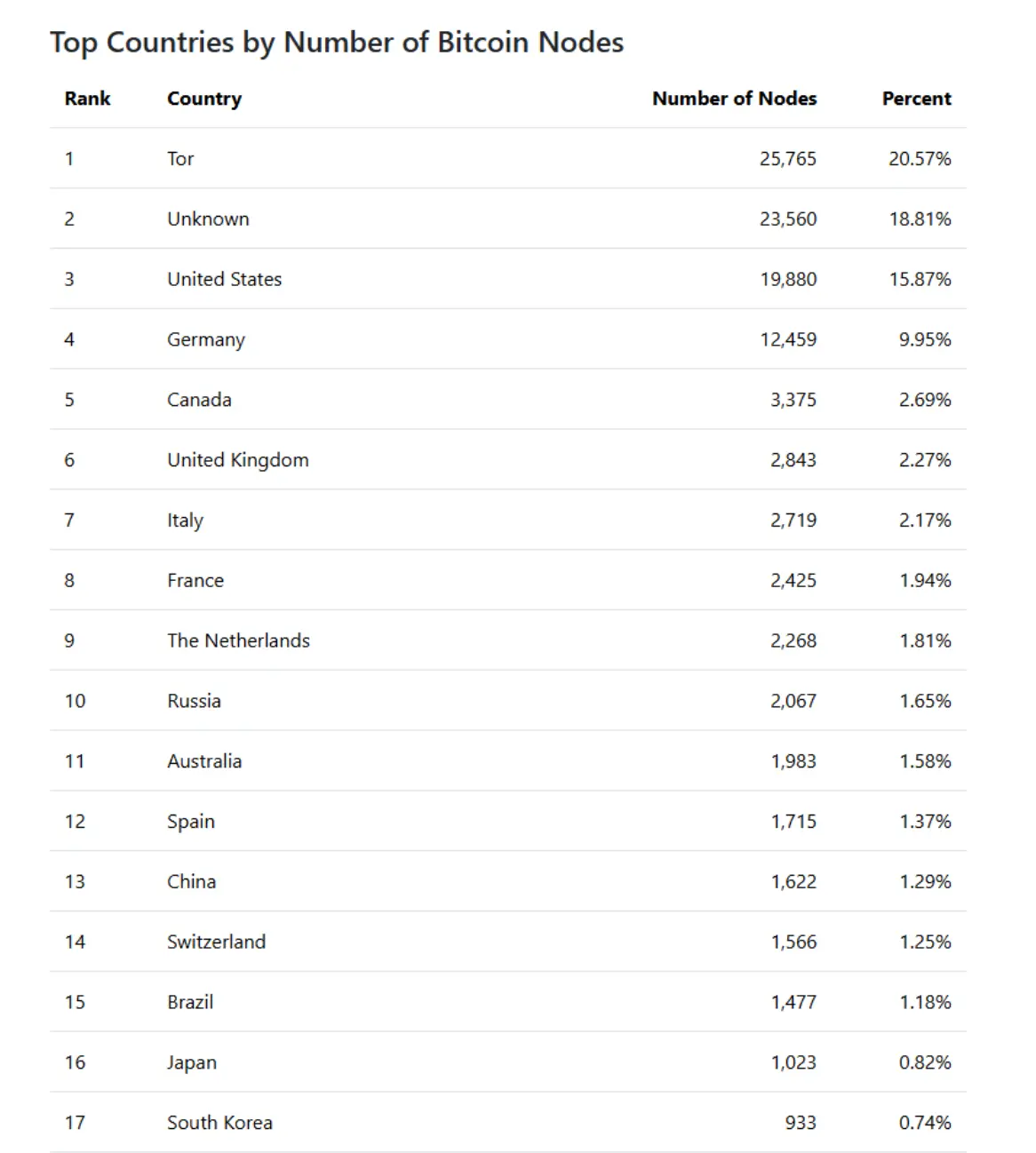
We can observe mining pools—though mining pools do not control individual miners—but it is difficult to track every independent miner like we can with nodes. However, we can observe the overall energy input supporting the entire network through hash rate.
From any perspective, Bitcoin's overall network hash rate is declining. After 2022, due to increased competition and rising energy prices, miners' profit margins have been squeezed. More importantly, many mining companies have begun to shift towards artificial intelligence and high-performance computing (AI/HPC). So far, this has proven to be a prudent business decision for those publicly listed mining companies that have already made the transition.
Bitcoin has underperformed compared to AI-related assets, while the market's demand for hash rate is growing rapidly, further reinforcing the aforementioned trend. Therefore, this situation can be interpreted pessimistically or optimistically.
The pessimistic view is that, in terms of energy input for network security, the technical security level of the Bitcoin network has indeed declined; at the same time, as a digital commodity, the energy input value supporting each unit of Bitcoin—its production cost—has also decreased.
However, it is worth noting that due to the difficulty adjustment mechanism, the Bitcoin network itself has not fallen into crisis because of this. The network automatically adjusts mining difficulty and reward conditions every two weeks based on the hash rate level. When competition decreases, this mechanism incentivizes new miners to join and provide security for the network.
The optimistic view is that, despite almost all publicly listed mining companies we know of shifting towards AI/HPC, the overall network hash rate has only returned to mid-last year’s levels. This indicates that the actual participants in Bitcoin mining, who can access cheap energy, may be more than some had originally thought. Combined with node distribution data, the Bitcoin network still maintains a decentralized and healthy state.
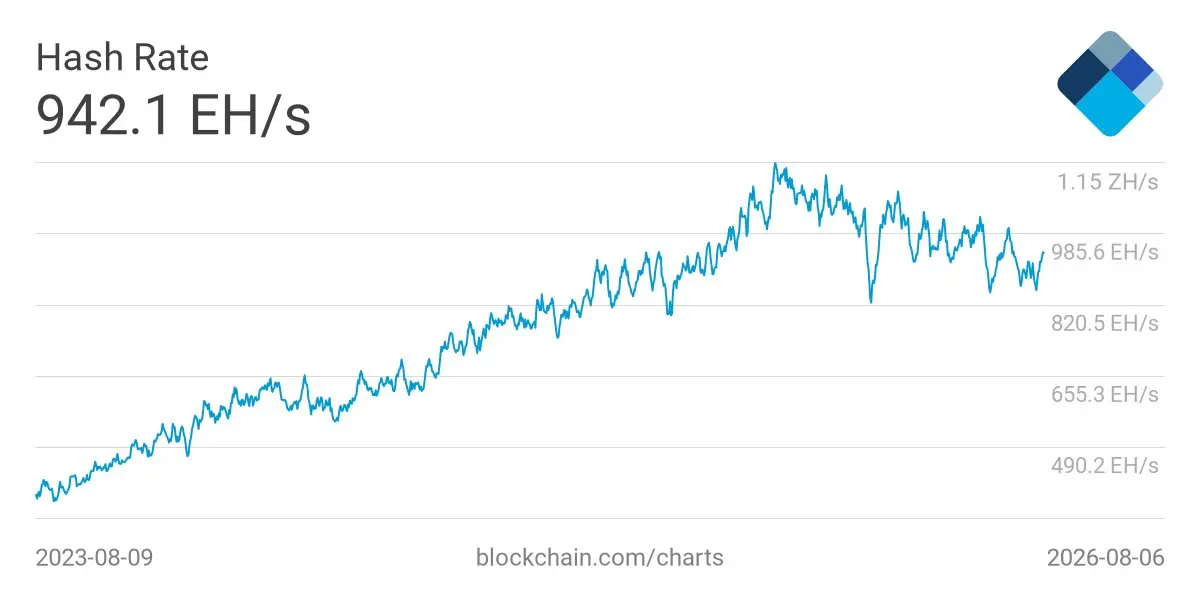 Overall, I believe the Bitcoin network itself remains as decentralized and healthy as ever.
Valuation Methods and Current Metrics
Bitcoin clearly does not generate cash flow, but we can still compare its current valuation with historical market performance through several unique methods.
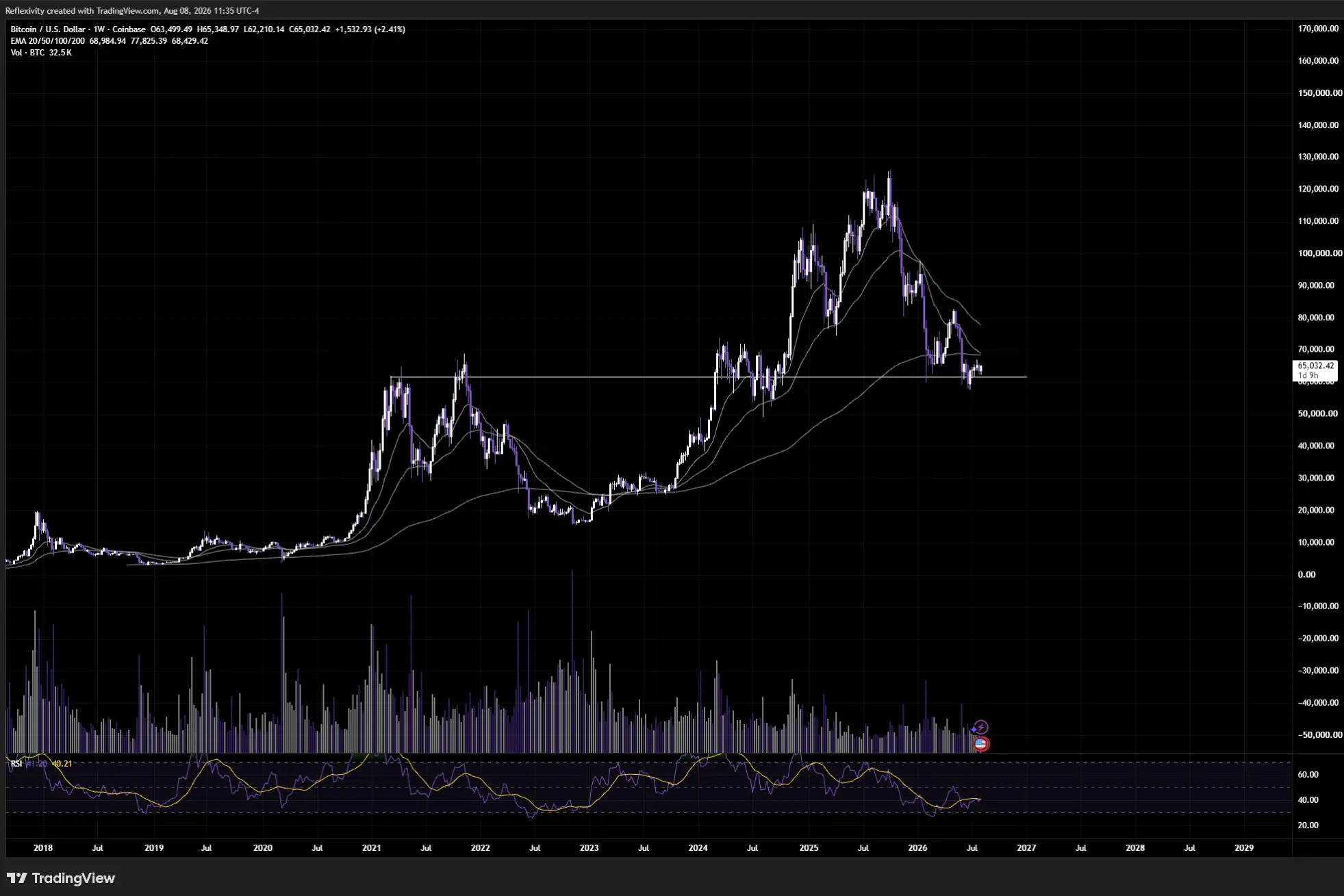
From a technical perspective, Bitcoin is currently consolidating near its pre-2021 highs, slightly below the 200-week exponential moving average (EMA). The weekly RSI has shown a bullish divergence emerging from the oversold zone, and the last time it reached such an oversold level was at the depths of the last bear market.
Historically, the 200-week moving average has been a good foundational threshold to start considering gradually accumulating Bitcoin spot positions.
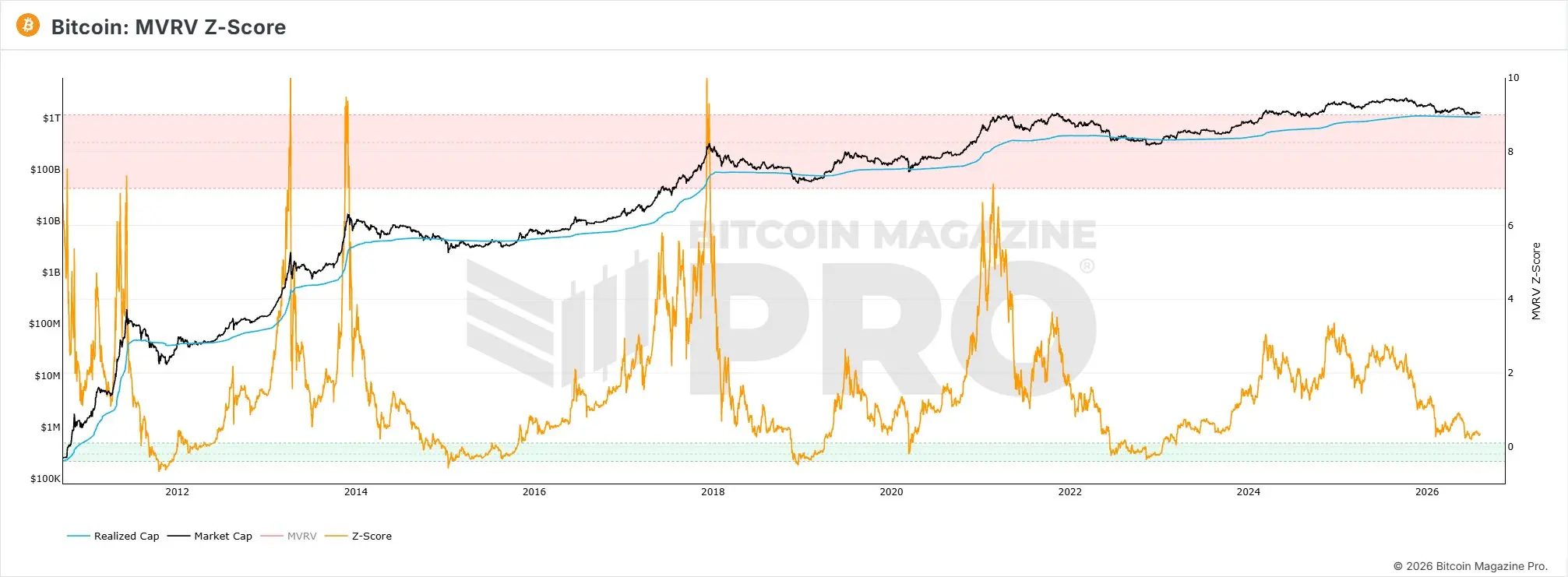
Among the on-chain data-based valuation methods, one of the most effective metrics is the Market Value to Realized Value ratio (MVRV). It compares Bitcoin's current marginal trading price with the aggregated cost basis of the entire network; the latter is calculated based on the price at which the token was last transferred to a new wallet cluster.
When this ratio is high, it means the current marginal trading price is far above the average cost of the entire network. There are a lot of unrealized profits (PNL) in the market, and many holders have a strong incentive to take profits.
When this ratio is below 0, it indicates that, overall, market participants are in a state of unrealized losses. Historically, this usually marks a phase more suitable for accumulating positions.
You will notice that in 2024-2025, this metric has never truly reached the frenzied peak levels of the past. This reflects the gradual maturation of this asset class in recent years, with volatility also contracting.
Considering that the peak indicators of each bull market have continued to decline, while the lowest points of each bear market have slightly risen, a reasonable conclusion might be: the market does not necessarily have to enter negative territory to find a bottom this time.
It is extremely difficult to buy at the lowest point. The most important conclusion here is that Bitcoin is currently at the lower end of its historical valuation range.
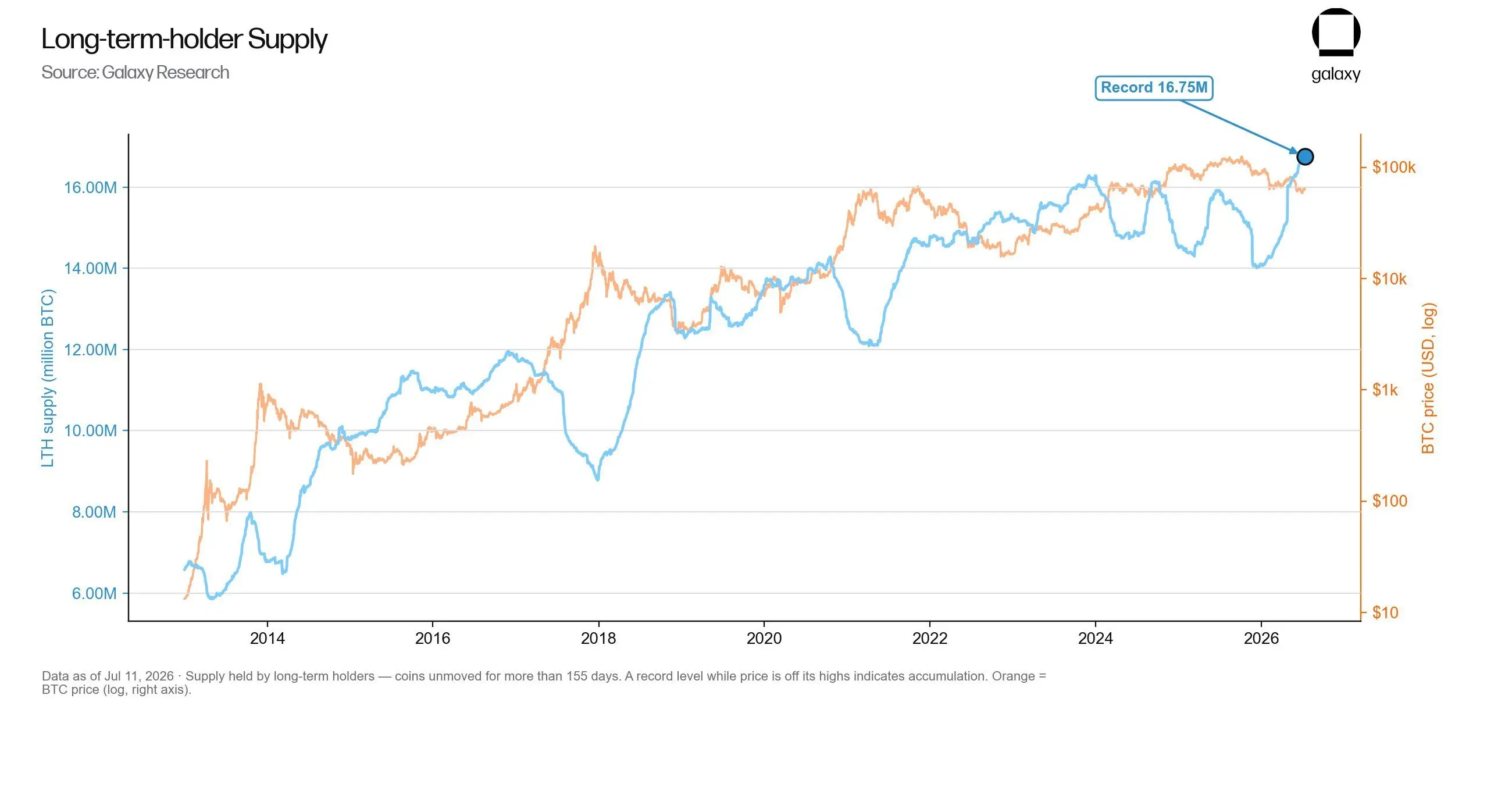
Long-term holders also seem to be quite actively accumulating positions. After a sustained distribution in mid-2025, they have now begun to increase their holdings again, indicating they believe the current price level holds value.
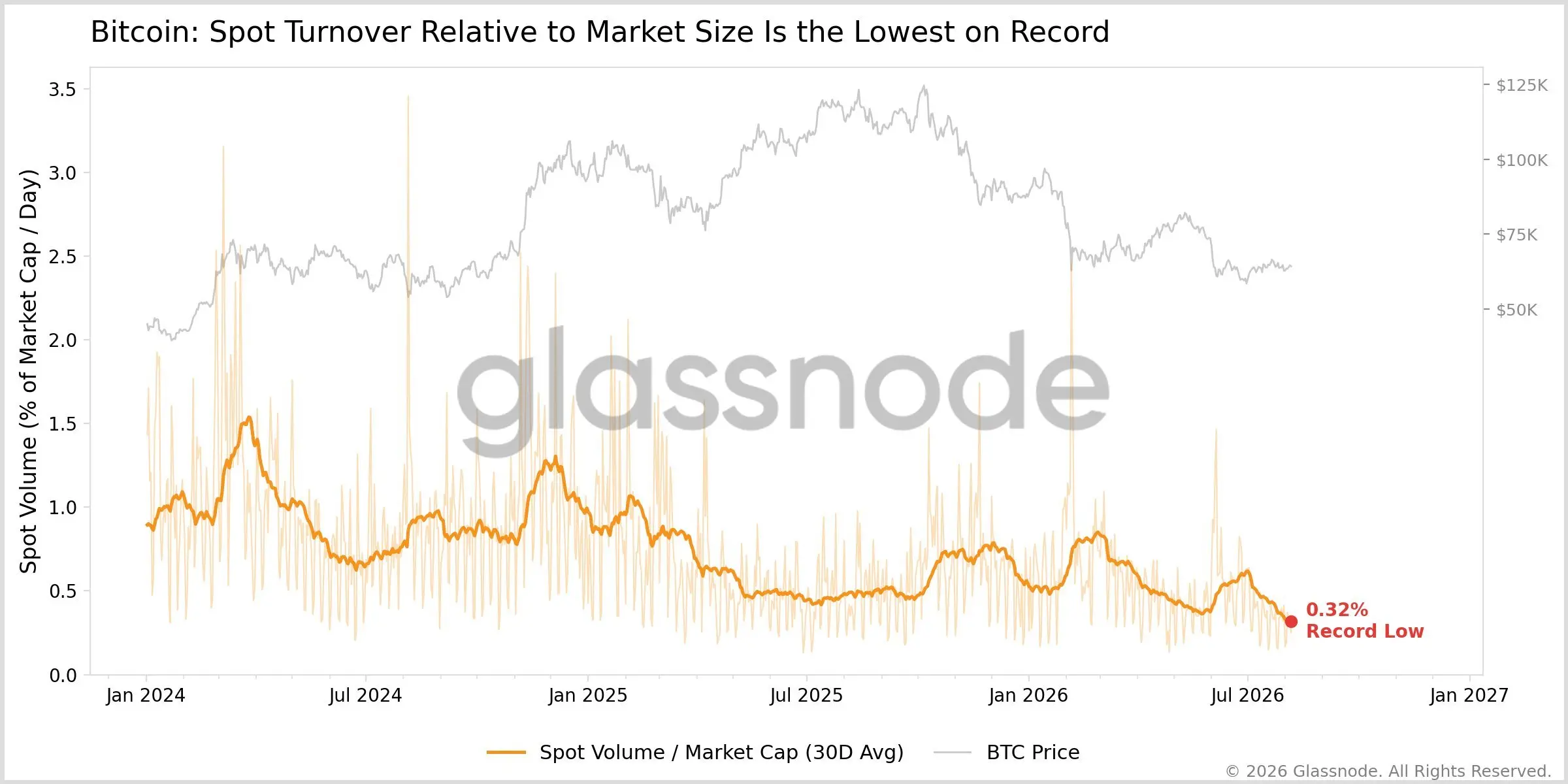
Trading volume has almost completely dried up. @n3ocortex created a great chart showing that the turnover of Bitcoin spot trading relative to its market cap has fallen to historical lows. ETF and DAT trading volumes also show a similar state.
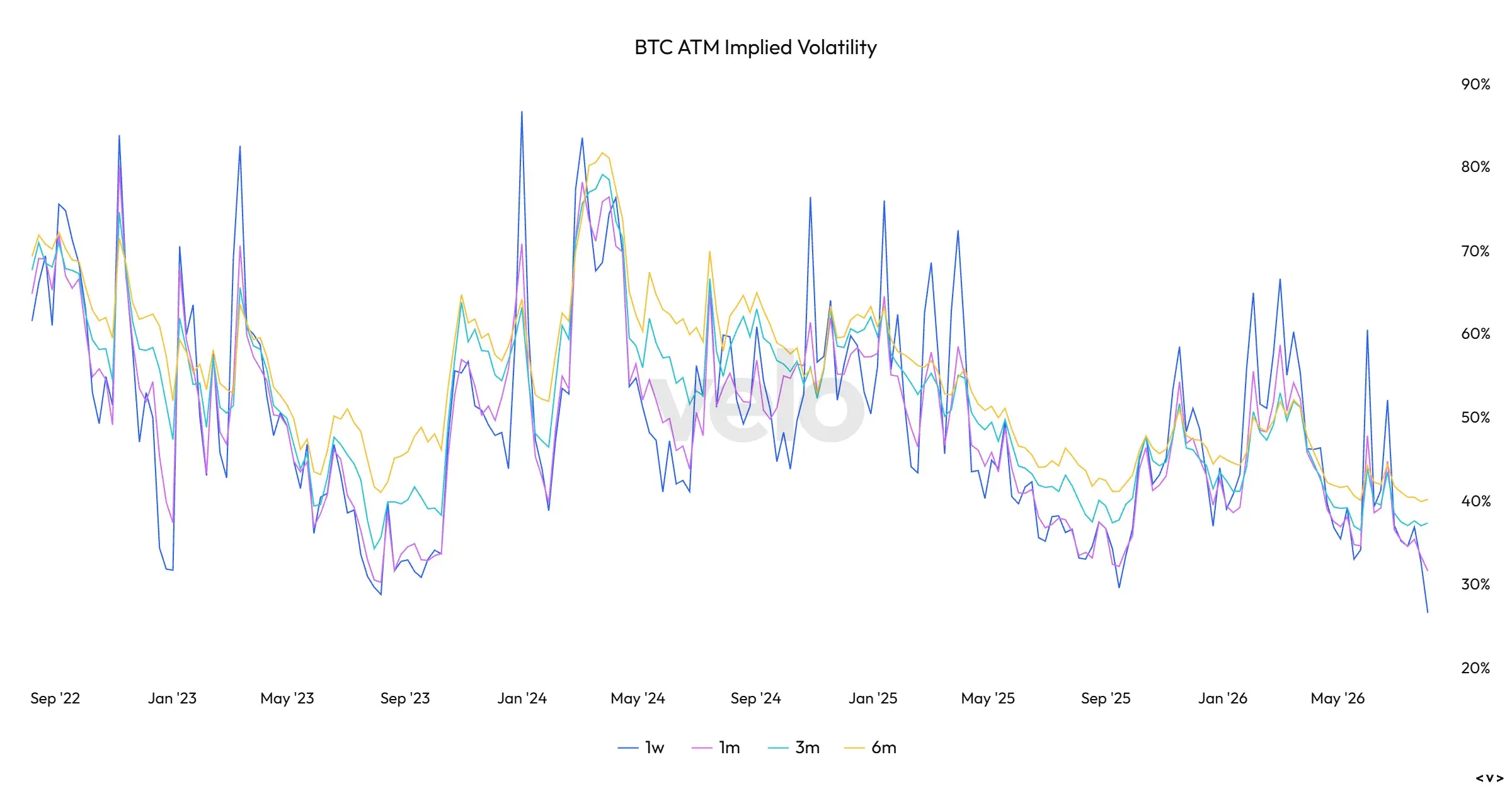
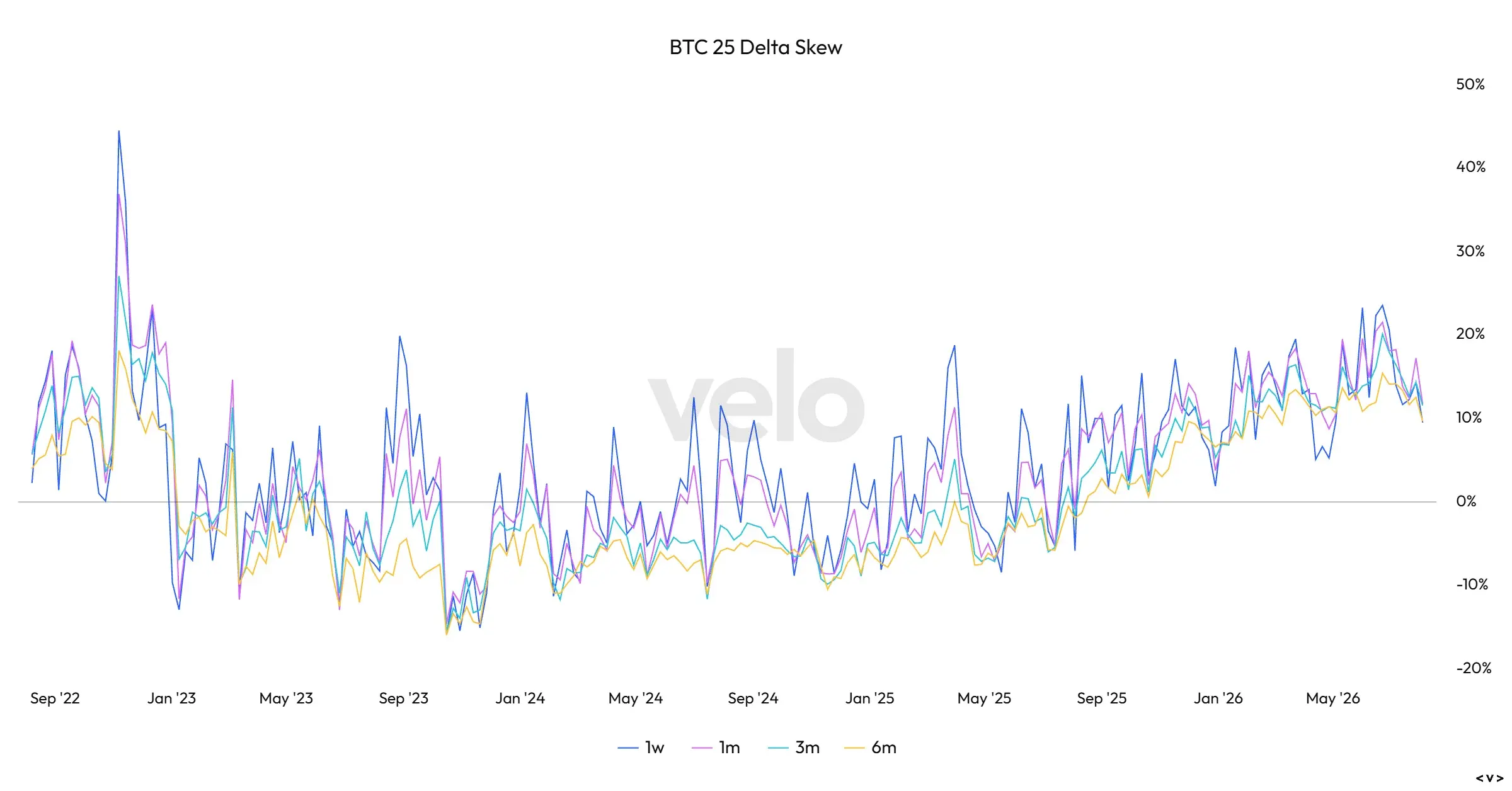
The implied volatility of near-term options has dropped to its lowest level in years, indicating that the market views Bitcoin as "dead money" that will not perform in the short term. Meanwhile, options skew data shows that the only thing the market has been noticeably interested in over the past year is purchasing more downside protection.
Finally, looking at the derivatives market: the Bitcoin futures basis—the price difference between forward contracts and Bitcoin spot prices—has been declining for several years, and it has even been difficult to reach levels that are on par with U.S. Treasury yields.
This indicates two things:
- More and more funds are arbitraging the Bitcoin futures basis;
- The market is not giving a high premium to forward Bitcoin futures contracts relative to spot prices.
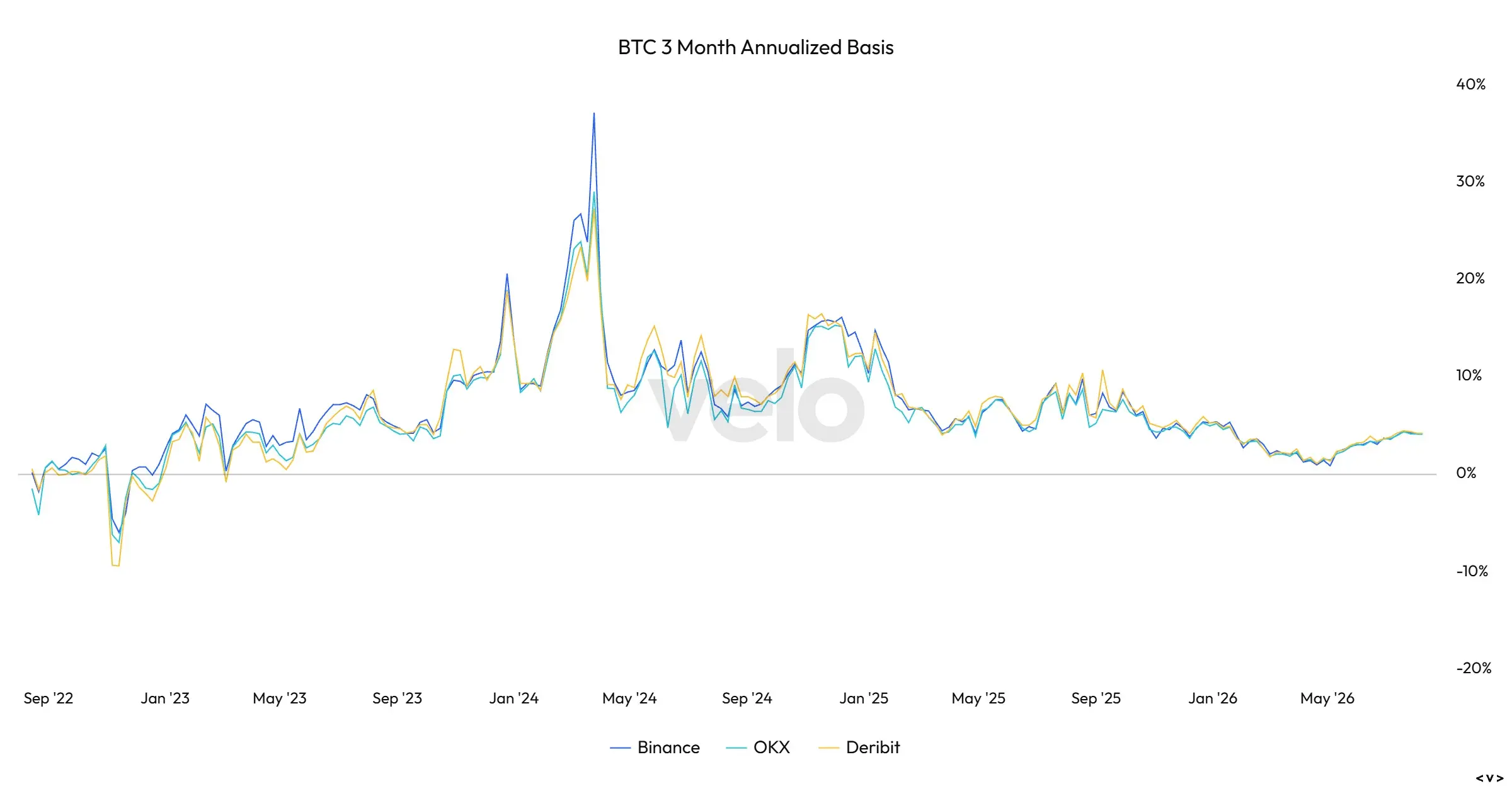
Putting these factors together, the objective picture presented is that the market has completely quieted down. In both the futures and options markets, traders have not shown bullish views and are pricing in a continued flattening of Bitcoin's volatility.
At the same time, multiple indicators show that Bitcoin is entering a deep value area; long-term holders have begun to accumulate positions again. This seems to contrast with traders' views and the trend of Bitcoin ETFs experiencing a net outflow of $5 billion over the past 52 weeks.
DAT and the Ghost of "Quantum Computing"
During the 2023-2025 bull market, one of the biggest pressures facing the market is Digital Asset Treasury companies. At least theoretically, the design logic of such tools is to dilute common stockholders in a way that can enhance per-share value, thereby accumulating more Bitcoin and ultimately enhancing shareholder value.
However, after Strategy and Japan's Metaplanet achieved success, many similar companies began to compete for return opportunities, significantly intensifying competition. The funds flowing into these tools have been fully dispersed, ultimately leading to a narrowing of their premiums relative to net asset value.
In recent months, we have seen several related news items: some treasury companies have slowed their pace of accumulating Bitcoin, some have begun to sell Bitcoin directly, and a few companies have even completely changed their strategies. I believe these are positive signals of market self-correction.
Recently, even when Saylor announced the sale of Bitcoin, the price of Bitcoin actually rose. According to the information from Strategy's latest earnings call, the company is restructuring its capital and prioritizing STRC. This stands in stark contrast to the previous situation where "announcing the purchase of Bitcoin led to a drop in Bitcoin's price."
Looking ahead, I do not believe DAT will exert the same level of pressure on the market as it did 6-9 months ago, especially given that Bitcoin's price has fallen over 50% from its highs.
I do believe that quantum computing is a real threat, especially on a time scale of more than five years. In recent months, while assisting with investment analysis at STIX, I have come into contact with several quantum computing startups that are just beginning to mature, and I have spoken with some people in the industry, so I have gained some understanding of this field. Of course, I am by no means an expert.
My view is that this threat should be taken seriously. However, when Bitcoin's price is at $60,000, down 50% from its highs, and underperforming compared to other assets, I believe the current price has largely accounted for this risk.
From now on, even considering the most extreme doomsday scenarios, the development direction of these widely discussed concerns is likely to become less dire. The worse Bitcoin performs due to market concerns about quantum risks, the more motivation large holders and institutions that profit from Bitcoin trading, custody, and lending will have to push a group of developers to find and propose solutions.
This is similar to the situation when ETFs were approved in the last cycle: the market tends to trade in anticipation of the probability of issues being resolved. Therefore, once the relevant risks are completely mitigated, you will no longer be able to buy at extremely low prices.
Potential Bullish Logic
Even if you believe Bitcoin is currently at a price suitable for long-term allocation, the opportunity cost remains an extremely important consideration for medium- to short-term capital allocators: the current economic heat is high, and there are genuinely innovative opportunities worth speculating and investing in, making it seem that allocating funds to Bitcoin would mean missing out on many things.
The core question that has persisted over the past few months is: since gold has risen this year and high-beta stocks have performed strongly, why hasn’t Bitcoin followed suit? What needs to happen for Bitcoin to perform from now on?
As shown in the previous charts, on-chain data indicates that long-term holders are making significant purchases. Meanwhile, DAT has shown signs of capitulation, and ETFs have brought significant net selling pressure.
The end of the past few Bitcoin bear markets relied on the exhaustion of selling power, rather than necessarily requiring a catalyst that could stimulate a large influx of new demand. Now, if you have ever felt concerned about DAT, quantum computing risks, or Bitcoin's underperformance, how many people have not sold and can continue to sell at a pace exceeding that of the past 6-9 months?
Clearly, if macroeconomic or geopolitical turmoil occurs, Bitcoin could still experience a sharp drop due to a sudden rise in asset correlation. But here we are discussing judgments over the next few months on a higher time frame.
I fully understand that there is currently no clear catalyst. The "Clarity" Act might count as one, but I do not believe it will have a significant impact on Bitcoin itself. However, market bottoms often look like this.
What you need to weigh is the probability of further deterioration relative to the expectations already reflected in the current price. This is exactly the opposite of the judgments made during a bull market: in a bull market, people assess the probability of actual conditions being better than expected.
I do not rule out the possibility of one last drop occurring sometime this year, but having come this far, I believe the market has accounted for many of those risks over the past year.
A potential catalyst for Bitcoin might simply be large institutions making stable purchases according to established requirements. The asset management scale (AUM) growth of ETFs at the beginning of their listing was astonishing, but we have long passed the initial excitement phase. Since October of last year, the total AUM of ETFs has been slowly declining.
One possible catalyst is that large asset management firms decide to include a small, single-digit percentage allocation of Bitcoin in their various investment portfolios. This would bring inflows that are less sensitive to price changes for Bitcoin.
This may sound like an attempt to forcefully seek comfort, but Bitcoin has lacked significant correlation with various assets over the past year. For large management firms that often seek to diversify asset correlations and risk exposure, this could indeed become a reasonable basis for allocating a small amount of Bitcoin.
Conclusion: How to Consider Allocation Going Forward
In short: I believe Bitcoin has become "cheap," although there may still be another leg down at some point this year. The fundamentals of the network are generally healthy. So far, most risks have been priced in; those who would sell due to these risks have likely already sold. It is nearly impossible to buy at the exact lowest point.
In my view, there are several ways to allocate from now on. Of course, this is not investment advice.
The simplest strategy is to consider gradually buying Bitcoin spot through dollar-cost averaging over the next few months. You could also wait for one last drop or act after the market shows renewed vitality and upward momentum.
Another strategy is to start allocating now. Given that implied volatility is very cheap, you can simultaneously use the options market to hedge against any potential last drop that might shake you out of your position.
I personally have not yet pulled the trigger, but I will likely start taking action in some way soon.
I hope this article brings some valuable thoughts and sparks discussions about how others view these issues. Perhaps the "four-year cycle" proves that we live in a simulated world. In any case, the price movements of this orange coin seem poised to be interesting in the coming months.
 Risk warning