Morning Report | Trump's eldest son linked to Kalshi and Polymarket raises concerns about conflicts of interest and information advantages; $3.4 billion in cryptocurrency stolen in 2025, funds are usually laundered within 45 days

 Overview of Important Market Events on August 9
Compiled by: ChainCatcher
What important events occurred in the past 24 hours?
MARA pledges 18,750 bitcoins to obtain $600 million in new debt, expanding power generation and AI infrastructure business
According to ChainCatcher, Bitcoin mining company MARA has completed two loans, obtaining $600 million in new debt after pledging 18,750 bitcoins to expand its power generation and AI infrastructure business. The collateral was valued at approximately $1.2 billion at the time of the transaction. The total principal of the two loans is $750 million, with Coinbase Credit providing $450 million, including refinancing of an existing $150 million credit line and an additional $300 million; Two Prime Lending provided another $300 million, with both loans fully drawn. The interest rate on the Coinbase loan is 3.875 percentage points above the midpoint of the Federal Reserve's target rate range, maturing on August 4, 2028; the fixed interest rate on the Two Prime loan is 7.65%, maturing on August 3, 2028. If the principal remains unchanged, the annual interest expense on the two loans is approximately $56.7 million. MARA stated that the loan funds will be used for general corporate purposes, including paying part of the cash consideration for the acquisition of Long Ridge Energy & Power LLC. The transaction has an enterprise value of approximately $1.5 billion, with Long Ridge owning a 505-megawatt gas power plant and over 1,600 acres of industrial land, which MARA plans to use for power generation, Bitcoin mining, and potential AI and high-performance computing parks.
Bifrost liquidity mining incentive vulnerability exploited by hackers, approximately $720,000 in assets stolen
According to ChainCatcher, Bifrost monitoring reported that hackers exploited a vulnerability in the liquidity pool, stealing approximately $720,000 worth of assets from the vDOT single-coin pool and the vASTR/ASTR and vMANTA/MANTA pools. The stolen assets were subsequently deposited into HitBTC and eventually flowed into Binance. Bifrost has contacted Binance's security department to submit a fund freeze request and has reported to law enforcement with an on-chain evidence package, including transaction tracking, wallet addresses, and timestamps. Currently, Bifrost has halted all liquidity mining rewards and is conducting a comprehensive security review.
OpenAI prevents Bitcoin Red Team member from continuing Bitcoin code security research
According to ChainCatcher, Bitcoin Red Team member @Rob1Ham stated that OpenAI has prevented him from continuing security analysis on the Bitcoin codebase, after he responsibly disclosed real vulnerabilities present in it. Rob1Ham mentioned that he had previously completed the authentication and onboarding process related to OpenAI's cybersecurity capabilities, but is currently unable to continue investigating whether the remediation measures are sufficient or if other vulnerabilities still exist. He stated that he will now resume Bitcoin security research using Chinese open-source AI models. Rob1Ham said, "Black hat hackers won't attack these issues, but white hat hackers will." He also stated, "For those who do not follow the rules and engage in harmful behavior, intelligence is unrestricted, while those committed to reducing harm are excluded."
U.S. listed spot Bitcoin ETFs saw inflows of $853 million last week, setting a new weekly high since April
According to ChainCatcher, as of that week, U.S. listed spot Bitcoin ETFs attracted inflows of $853 million, setting a new weekly inflow high since April.
$3.4 billion in cryptocurrency stolen in 2025, funds typically laundered within 45 days
According to ChainCatcher, cryptocurrency theft in 2025 amounted to $3.4 billion, with Bybit suffering a loss of $1.5 billion, accounting for 44% of the total for the year. In the first half of 2026, there were 212 related incidents, resulting in losses of approximately $1.1 billion, with about 55% involving the Lazarus-associated group, and KelpDAO losing $293 million in an April attack. Stolen funds typically undergo a three-phase transfer process lasting about 45 days: the first five days involve exchanging through DeFi protocols and entering mixing services, followed by cross-chain bridging and flowing through trading platforms with lower KYC requirements, and during days 20 to 45, cashing out in batches through non-KYC platforms, instant exchangers, and over-the-counter trading networks. Once funds cross multiple blockchains, mixing services, and jurisdictions, tracking may still be possible, but the difficulty of recovery significantly increases. The recovery rate for stolen funds from Bybit is less than 5%; Tether and Circle can freeze USDT and USDC addresses, and attackers typically exchange stablecoins for Ethereum or Bitcoin within minutes after the attack.
July CPI expected to slightly decline, Citigroup and Bank of America have differing views on September rate hike prospects
According to ChainCatcher, economists surveyed by Reuters expect the overall CPI year-on-year rate in the U.S. for July to decline from 3.5% in June to 3.4%; the core CPI year-on-year rate is expected to drop from 2.6% last month to 2.5%. Economists at Citigroup believe that if inflation readings soften for the second consecutive month, it would indicate that more than one month of data points to cooling inflation pressures, effectively ruling out the possibility of a rate hike in September. However, economists also expect a slight increase in core service inflation for July, with prices expected to rise 0.3% month-on-month. Previously, this data was flat from May to June. Analysts at Bank of America stated that the rebound in core service indicators may keep the September rate hike on the table. Analyst Kate Duguid stated that if the latter view prevails and inflation data is below expectations, the Fed's rate hike may be delayed until December or later.
Institutions: U.S. July CPI data may show easing inflation pressures
According to ChainCatcher, institutional analysis points out that the market generally expects the U.S. CPI to rise 0.1% month-on-month in July after a 0.4% decline in June. The core CPI month-on-month rate, excluding fuel and food, is expected to be 0.2%, with a year-on-year rate of 2.5%, the smallest year-on-year increase since February. Following the release of a weak July non-farm payroll report on Friday, the slowdown in inflation growth may help alleviate inflation concerns within the Fed. Previously, at the meeting on July 29, three officials voted in favor of a rate hike. The CPI report may show that energy-related price pressures have eased, which had sharply intensified in the months following the U.S. conflict with Iran at the end of February. At the beginning of July, retail gasoline prices fell to their lowest point in nearly four months, before rising again to over $4 per gallon by the end of the month. The report may also show that as airline fuel costs stabilize, ticket prices have also decreased.
Cyprus Securities and Exchange Commission to review crypto custodians from the second half of 2026 to the first half of 2027
According to ChainCatcher, the Cyprus Securities and Exchange Commission (CySEC) will conduct on-site inspections and off-site reviews of authorized crypto asset service providers from the second half of 2026 to the first half of 2027, focusing on institutions providing digital asset custody services. This action is part of the 2026 joint regulatory action coordinated by the European Securities and Markets Authority (ESMA), focusing on assessing institutional governance and control frameworks, key and storage management, private key security, wallet storage, and access control. The review will also cover trading controls, monitoring and incident response, smart contract security, and third-party risk management. CySEC stated that the relevant standards are mandatory, and the institutions' compliance readiness will be used as a screening basis for subsequent inspections.
White House crypto advisor: If the CLARITY Act cannot advance before September 15, it may be difficult to pass
According to ChainCatcher, White House cryptocurrency advisor Patrick Witt posted on the X platform that the U.S. Congress has been pushing for cryptocurrency market structure legislation for years, and the Senate has been negotiating the CLARITY Act since last summer. However, in the past week, Chuck Schumer and so-called "pro-crypto Democrats" have blocked the bill from undergoing procedural voting before the recess and have requested further delays. Patrick Witt warned that if the bill does not make progress before September 15, the likelihood of it passing in the future will significantly decrease.
France plans to legislate automatic sharing of crypto tax data with 48 countries
According to ChainCatcher, French Foreign Minister Jean-Noël Barrot submitted Bill No. 921 to the Senate on July 17, proposing to incorporate the crypto asset reporting framework (CARF) established by the Organization for Economic Cooperation and Development (OECD) into French law and automatically exchange crypto data with 48 countries that have signed relevant agreements. The exchanged information includes specific transactions, user names, addresses, tax identification numbers, residences, and cumulative transaction values during the reporting period. EU member states have prepared to conduct relevant data exchanges based on the DAC-8 directive, which will take effect on September 30, 2027. Once the bill is approved, the French government will accelerate the collection of crypto data. A Chainalysis report shows that by 2026, France had recorded 30 publicly known violent crypto asset robberies; the report stated that a tax official in the Paris area was suspected of selling data on high-net-worth crypto holders.
Coinbase CEO: Cryptocurrency has significantly improved global financial accessibility
According to ChainCatcher, Coinbase CEO Brian Armstrong posted on the X platform that cryptocurrency has contributed to the accessibility of global financial services. Stablecoins bring the dollar on-chain, allowing anyone, anywhere to hold low-inflation currency and transfer funds at a cost of less than one cent around the clock; DeFi enables anyone to access credit services; tokenized stocks provide investment opportunities in the U.S. stock market for the 4 billion people who cannot invest through brokers; Bitcoin offers a wealth storage tool that will not be diluted by inflation. He stated that there is still more work to be done in related fields, but the progress made should not be overlooked.
Nansen CEO: Robinhood is unlikely to launch a token, its L2 strategy focuses on technology rather than token issuance
According to ChainCatcher, Nansen CEO Alex Svanevik stated in a recent interview with Cointelegraph that Robinhood is unlikely to launch a token, as this could create competition with its publicly traded stock HOOD. Alex Svanevik pointed out that the Layer 2 network currently launched by Robinhood operates based on the Ethereum ecosystem and has a Gas token for paying network fees, so there is no need to issue an additional platform token. He believes that the core purpose of Robinhood's blockchain infrastructure layout is to enhance product capabilities using blockchain technology, rather than financing through token issuance or building new economic models. Previously, there was speculation that Robinhood might follow some crypto projects in launching ecosystem tokens, but it currently seems more likely that the company will use blockchain as an underlying technological tool rather than building a business system around tokens.
Trump's eldest son linked to Kalshi and Polymarket raises questions of conflict of interest and information advantage
According to ChainCatcher, the Trump family is accelerating its entry into the prediction market space, with Trump Media Technology Group developing a prediction market platform called TruthPredict, allowing users to trade prediction contracts related to major events. The company has also launched Truth API, providing Wall Street with rapid data access to Truth Social content. Additionally, Donald Trump Jr., Trump's eldest son, currently serves as a strategic advisor to Kalshi, and his venture capital firm 1789 Capital has invested in competitor Polymarket and joined Polymarket's advisory board, meaning the Trump family has ties to both current major prediction market platforms while Trump Media Group is building its own prediction market business. Although there is currently no public evidence showing that Donald Trump Jr. or the Trump family has used government insider information for trading, the potential conflicts of interest arising from the intertwining of presidential public information, market trading, and family business interests are drawing public attention. Federal agencies are still investigating whether former White House teleprompter operator Gabriel Perez used advance knowledge of Trump's speech content to trade in related markets on Kalshi, and the Donald Trump Jr. team and Trump Media Technology Group have yet to formally respond to requests for comments on insider trading related to prediction markets.
Moore Threads: Planning to issue H shares and list on the main board of the Hong Kong Stock Exchange
According to ChainCatcher, Moore Threads announced that the company held a board meeting to review and approve the proposal to issue H shares and list on the main board of the Hong Kong Stock Exchange. The company plans to issue overseas listed foreign shares (H shares) and apply for listing on the main board of the Hong Kong Stock Exchange, choosing an appropriate time and issuance window to complete the issuance and listing within the validity period of the shareholders' resolution or other periods agreed upon by shareholders. This issuance still requires approval from the shareholders' meeting and must obtain relevant government and regulatory agency filings, approvals, and/or authorizations. Currently, specific details are not determined, and the feasibility of implementation has significant uncertainty. Moore Threads is a domestic semiconductor company in China, focusing on the independent research and design of full-featured GPUs (general-purpose graphics processors).
South Africa plans to restrict corporate cross-border transactions of crypto assets, VALR warns it may weaken regulatory monitoring
According to ChainCatcher, the South African National Treasury and the South African Reserve Bank (SARB) have released a draft rule for cross-border transfers of crypto assets. Farzam Ehsani, co-founder and CEO of crypto trading platform VALR, stated that unless key terms are significantly modified, the framework may harm the domestic digital asset industry and push funds offshore. The draft allows individual residents to transfer crypto assets abroad within existing foreign exchange limits but restricts corporations from conducting cross-border transactions of crypto assets and lists some deposits from private non-custodial wallets as unacceptable transfers for local crypto asset service providers (CASPs). Ehsani believes this may prompt businesses and retail investors to turn to offshore platforms. Ehsani pointed out that prohibiting regulated entities from processing legitimate corporate transactions, especially cross-border stablecoin payments, may push transactions underground or offshore, thereby weakening the visibility and monitoring capabilities that regulators hope to achieve. The South African National Treasury and SARB have opened a public comment period, with feedback due by September 30.
BTCPay restricts remote access to the Lightning Network after funds were stolen by attackers
According to ChainCatcher, BTCPay has temporarily restricted public remote connections to Lightning Network nodes running Lightning Network Daemon (LND) software after attackers exploited a serious vulnerability to obtain credentials and transfer funds. BTCPay stated that this restriction prevents external wallets like Zeus from connecting through the BTCPay server domain. BTCPay indicated that Lightning payments can continue, and they plan to restore remote access options when deemed safe.
Brazilian court rejects hacker suspect's release request, involved in stealing $160 million and laundering through BTC and USDT
According to ChainCatcher, the Brazilian Superior Court (STJ) rejected the release request of suspect Luccas, maintaining his detention in São Paulo. The case involves large-scale fraud against tech company C&M Software, with the suspect accused of illegally accessing the company's clearing system and stealing approximately 813 million reais (about $160 million). The criminals dispersed the funds into nearly 300 fake bank accounts to increase tracking difficulty, and then exchanged the reais for BTC and USDT across multiple blockchains, attempting to cover up the source of the illegal funds, constituting money laundering. The main attack occurred in June 2025, with the criminal organization having clear divisions of labor (including transfer operators and cryptocurrency fund managers) and bribing internal employees to assist in cracking the server password. A first-instance judge has ordered the arrest of this suspect and about 20 other involved individuals, with the arrest warrant to be executed at the end of October.
Research: Only 32% to 56% of cryptocurrency holders in the U.S. report transactions
According to ChainCatcher, CNBC reported that a research paper published in the academic journal "Accounting Review" in March estimated that only 32% to 56% of cryptocurrency holders in the U.S. report their transactions to the federal government. The IRS will require brokers to send investors 1099-DA forms detailing their total digital asset gains starting from the 2025 tax year. Accountants say that determining taxes related to digital asset transactions has historically been an extremely complex task, often much more difficult than calculating taxes for traditional financial assets like stocks and bonds.
Chinese crypto investor Harry Yeh falls from a 30-story building in Paraguay, police investigate the cause of death
According to ChainCatcher, La Tribuna reported that the body of a Chinese man was found outside the Jade Park high-rise apartment in the Trinidad district of Asunción, Paraguay, initially confirmed to be Harry Chun Tak Yeh, founder and managing partner of Quantum Fintech Group. Police stated that he is suspected to have fallen from the 30th floor of the building, and his body was found naked and covered with a black plastic bag. Investigators found the door of his suspected residence on the 30th floor open and the interior severely disordered, confirming that he also owned another apartment on the 27th floor of the same building. Forensic technicians have collected evidence outside the building and from both apartments, with relevant physical evidence handed over to the prosecution. The prosecution is currently investigating multiple possibilities, including accidental death, suspected suicide, and homicide, and the judicial department will determine the specific cause of death through an autopsy. It is reported that Chinese cryptocurrency investor Harry Yeh entered the Bitcoin market in 2013 when BTC was trading at $60, and he used $250,000 to start his first fund, with his investment network claiming to manage over $2.4 billion in assets, closely linked to Fantom, Tomb Finance, Lif3, ZooCoin, L3 USD, and L3 Reserve.
Strategy holds nearly 850,000 bitcoins, Michael Saylor claims to have earned $15 billion last year using ChatGPT
According to ChainCatcher, software company Strategy holds nearly 850,000 bitcoins, valued at just over $50 billion, with some recent purchases financed through debt and stock issuance. Michael Saylor has seen his wealth fluctuate with Bitcoin prices since pivoting the company towards Bitcoin accumulation in 2020. Michael Saylor stated that last year, using AI chatbots, he earned $15 billion through the company's issuance of Bitcoin-backed preferred shares. The STRC annual dividend yield issued by Strategy is 12%, with recent prices rebounding to nearly $100, having dropped to about $75 in late June. Over the past year, the value of Strategy's common stock has fallen by approximately 80% alongside Bitcoin prices. The company has recently sold some bitcoins to manage debt and dividend commitments and has established a cash reserve of $4 billion to provide about two years of funding support for subsequent financing. Michael Saylor also mentioned that he used ChatGPT last May to conduct in-depth research on the design of the company's convertible preferred stock products.
Jiang Zhuoer: BTC may currently be in a "breathing phase" rather than a "calm bottom"
According to ChainCatcher, Jiang Zhuoer, founder of the Litecoin mining pool (B.TOP), stated that Bitcoin's previous three major bottoms were accompanied by "high losses and large fluctuations," while the current characteristics are "losses not high enough and low volatility." He believes that rather than betting this is an unprecedented "calm bottom," it is better to view it as a "breathing phase" in the bottoming process. Jiang Zhuoer cited the 2018 market as an example, when BTC's $6,000 level was tested multiple times and was viewed by many investors as a bottom that would not be broken. BTC traded sideways in the $6,000 to $7,000 range for about two and a half months before breaking down, which is quite similar to the current sideways trading in the $60,000 to $70,000 range for two months, before the price eventually fell to $3,000.
Three men suspected of plotting to kidnap and transfer stolen bitcoins face up to 20 years in prison
According to ChainCatcher, the Connecticut U.S. Attorney's Office stated that Sedric Louis, John Davis, and Martel Williams, three men from St. Louis, have been charged with conspiracy to interfere with commerce by robbery, suspected of planning to break into a residence and force the victim to transfer cryptocurrency related to a multi-million dollar Bitcoin theft. The three face a maximum of 20 years in prison. Prosecutors allege that the three traveled to Connecticut from August 21 to 24, 2024, rented a car, and prepared items such as air guns and walkie-talkies, surveilling the target and their parents for two consecutive days before abandoning the plan due to concerns that residential cameras would record their movements. Subsequently, another group from Florida executed the same plan and was arrested on August 25 in connection with a Lamborghini Urus carjacking case involving six individuals. Louis and Davis have been detained since their arrest on June 25 and pleaded not guilty to the charges in Bridgeport federal court on July 30; Williams was released on bail after making the same plea on July 17. Prosecutors stated that the kidnapping target was a parent of individuals involved in the multi-million dollar Bitcoin theft, and the indictment does not constitute evidence of guilt.
Bitwise CIO: Bitcoin price could reach $1.3 million by 2035, with institutions leading growth
According to ChainCatcher, Bitwise CIO Matt Hougan stated in an interview with CoinDesk that Bitcoin's price could reach $1.3 million by 2035, primarily driven by large-scale inflows of institutional funds. Hougan pointed out that global institutions manage $100 to $200 trillion in assets, and even a 1% allocation to Bitcoin could bring in $1 to $2 trillion in funds, supporting the price target. Retail investors have pushed the crypto market from zero to a $2 trillion market cap, while institutional capital is expected to dominate growth in the next decade, driving total market capitalization to higher levels.
Meme Popularity Rankings
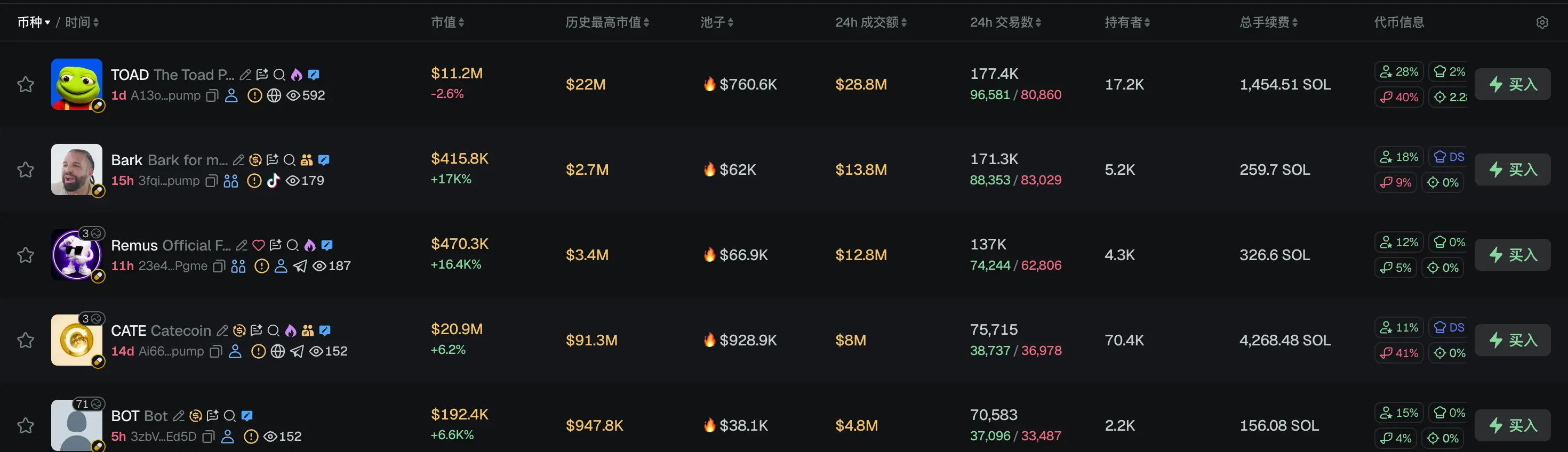
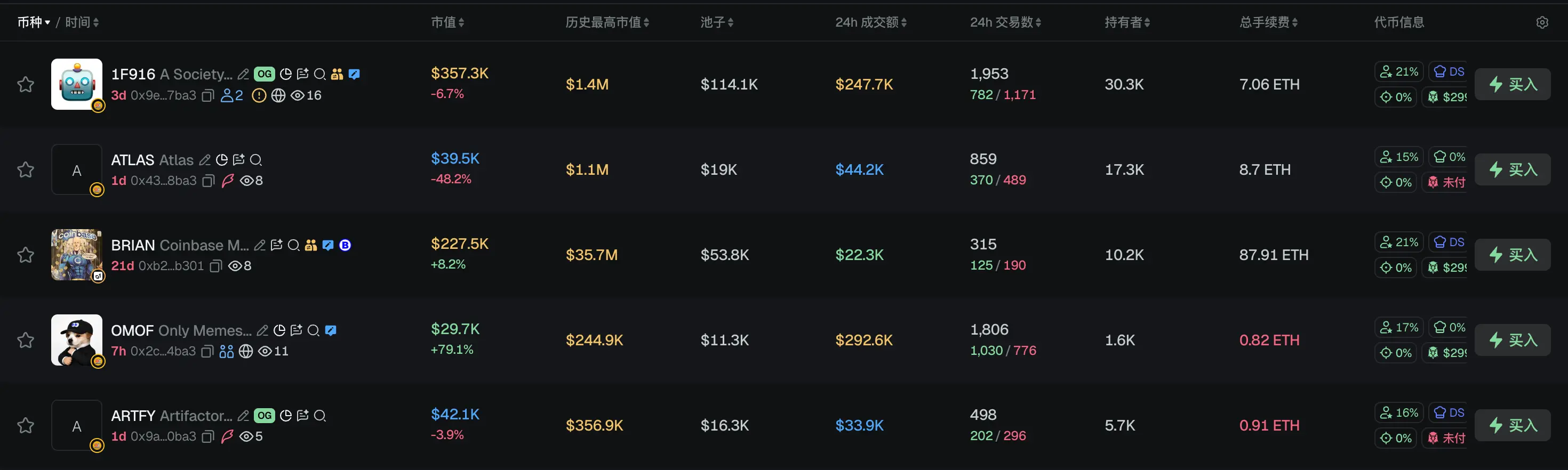
According to meme token tracking and analysis platform GMGN market data, as of August 10, 08:45,
The top five popular ETH tokens in the past 24 hours are: HORACE, V4, UNI, ZAMA, LINK
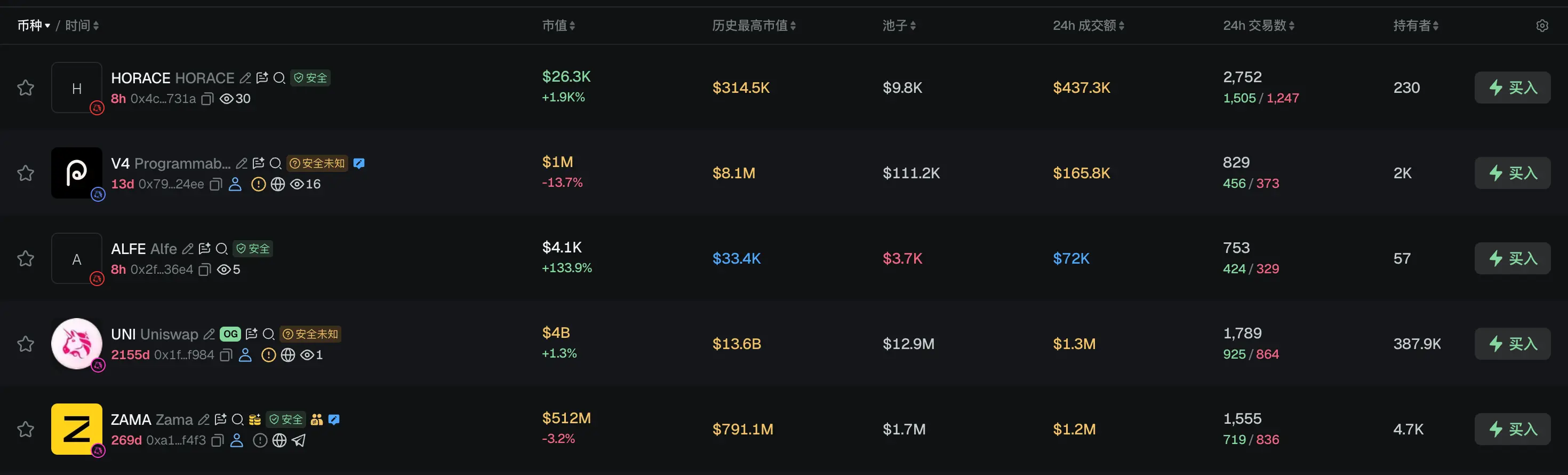
The top five popular Solana tokens in the past 24 hours are: TOAD, Bark, Remus, CATE, BOT
The top five popular Base tokens in the past 24 hours are: QUID, ELSA, 1F916, ATLAS, COOKIE
What are some noteworthy articles to read in the past 24 hours?
A relatively objective analysis of Coinbase
2/ Compared to the Circle+BTC=1:1 allocation, Coinbase can be understood as a tool for bullish trading of altcoins during a bull market, but in the long run, the altcoin market will underperform BTC (fundraising cannot keep up), and Coinbase's share in this will decline (regulatory clarity) is a given fact, inferring that in the long run, Coinbase is likely to underperform the Circle+BTC 1:1 allocation. 3/ The ratio of Coin/BTC has been in a box range for a long time, but running flat does not mean one should hold Coin, as Coin carries a higher volatility on a unit return basis, and the risk-reward ratio essentially continues to underperform BTC in the long term.
Outlook on Bitcoin's prospects
In my view, there are several allocation strategies moving forward. Of course, this is not investment advice. The simplest strategy is to consider gradually buying Bitcoin spot through dollar-cost averaging over the next few months. You could also wait for the final round of declines or act after the market regains vitality and upward momentum. Another strategy is to start allocating now. Given that implied volatility is very cheap, you can also utilize the options market to hedge against any potential last round of declines that might shake you out of your position. Personally, I have not yet pulled the trigger, but I will likely start to act in some way soon. I hope this article brings some valuable thoughts and sparks discussions on how others are viewing these issues. Perhaps the "four-year cycle" proves that we live in a simulated world. In any case, the movements of this orange coin seem to be quite interesting in the coming months.
The situation is still deteriorating. The UAE's national oil company ADNOC reported that three ships have been attacked by missiles or drones in the past week, bringing the total to 15 ships hit since the outbreak of war. The UAE attributed the latest attack on the 8th to the Revolutionary Guard. Last weekend, Trump halted a new round of military strikes aimed at breaking the deadlock, citing "progress in negotiations." Iranian President Pezeshkian also stated, "Now may be the right time to advance negotiations." However, mediators revealed that negotiations have recently stalled due to Iran's economic relief demands and the U.S. insistence on freedom of navigation. Zolghadr's hardline statements and the continued attacks on ships have deepened concerns among mediators—hardliners are delaying the approval of the agreement.
 Risk warning