Daily Observation of Cryptocurrency Concept Stocks: Robinhood CEO Calls for Advancement of U.S. Stock Tokenization, Breaking the Century-Old Securities Law Framework

 Released on August 20, 2026. The wave of tokenization of real-world assets (RWA) is knocking on the door of traditional finance. Vlad Tenev, co-founder and CEO of internet brokerage giant Robinhood, recently published a lengthy article titled "Tokenized Stocks in America," stating that the world is currently in the early stages of a tokenization supercycle, while there are still regulatory and market gaps in the field of stock tokenization in the U.S. He calls on regulators to accelerate the modernization of rules, achieve real-time settlement and round-the-clock trading through tokenization, and fundamentally restructure the underlying efficiency of capital markets.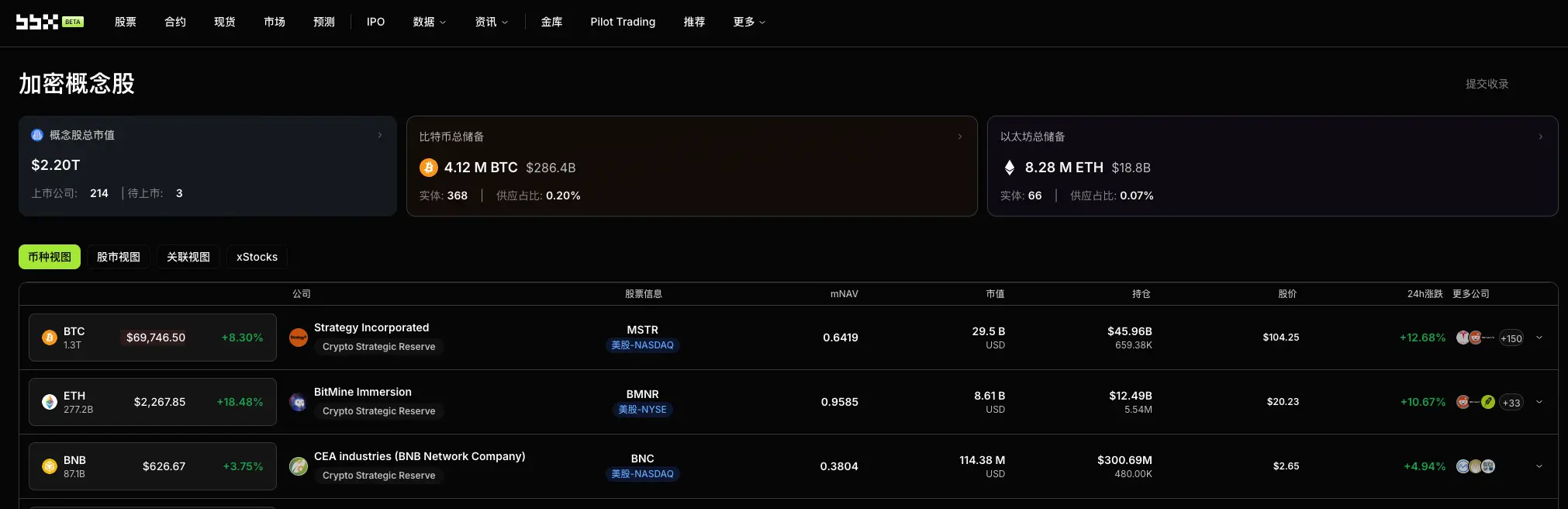
Robinhood Chain Breaks 100 Million Transactions: Offshore Tokenized Stocks Take the Lead
In the lengthy article, Vlad Tenev first showcases Robinhood's achievements in tokenized infrastructure.
The Robinhood Chain mainnet, launched over a month ago in London, has become the fastest EVM-compatible chain to reach 100 million transactions. Currently, the stock tokens on this chain provide economic exposure to over 190 high-quality U.S. stocks for users in more than 120 countries and regions worldwide, with all underlying assets supported by a 1:1 reserve of real stocks. However, Tenev pointed out that this efficient financial tool has yet to be compliant and accessible to residents in the U.S. domestic market, exposing significant policy lag.
Addressing Traditional Pain Points: Real-Time Settlement, 24/7 Trading, and Asset Self-Custody
Tenev elaborated on the three core benefits that tokenized stocks could bring to U.S. domestic investors and the financial system:
Real-Time Settlement: Eliminating counterparty risk and liquidity friction caused by traditional T+1/T+2 settlement cycles. Tenev specifically noted that real-time settlement can fundamentally avoid the tragic liquidity squeeze at clearinghouses seen during the GameStop incident;
24/7 Trading: Breaking the physical barriers of fixed trading hours at traditional exchanges to meet global liquidity demands;
Asset Self-Custody and Cross-Platform Free Transfer: Granting investors complete ownership of their securities assets, enabling seamless transfers across protocols and platforms.
Institutional Reform is Urgent: Breaking Out of Century-Old Regulations to Welcome "Complete Tokenized Equity"
In response to the current regulatory obstacles in the U.S., Tenev candidly pointed out that the existing securities regulatory framework, which has been in place for over a century, is entirely built on outdated paper certificates and centralized intermediary market structures. Policymakers must accelerate the modernization and restructuring of these rules.
He envisioned that as the regulatory framework matures, future stock token designs should not be limited to providing synthetic "economic exposure," but should evolve into "Tokenized Equity" that possesses complete voting rights and dividend rights akin to traditional stocks. On this basis, asset classes with extremely limited liquidity, such as private equity, will become the focal point for the next phase of the tokenization supercycle.
Brokerage Giants Transition to Web3 Native Clearing Infrastructure
Based on industry trends from late August, Robinhood's call for tokenized stocks represents the ambition of a new generation of fintech giants on Wall Street to reconstruct the traditional financial clearing system. From being a mere retail trading entry point to launching its own EVM public chain and attempting to issue tokenized securities, Robinhood is trying to replace the settlement functions of traditional depository trust companies (DTCC) with blockchain technology. As mainstream brokerages begin to push tokenized equity from offshore to domestic markets, the global capital markets in the second half of 2026 will witness a profound transformation in asset on-chain systems.
Data Source: https://bbx.com/ Cryptocurrency Concept Stock Information Database, compiled based on announcements from global listed companies and SEC/TSE disclosure documents from last weekend.
 Risk warning


Popular articles