"One Year Anniversary of the October 11 Crash: What Changes Have Occurred in the Cryptocurrency Market?"
 Core Viewpoint

 What form will the new cycle begin in?
Author: Zhou, ChainCatcher
On October 6 last year, BTC reached an all-time high of $126,080. Four days later, U.S. President Trump announced a 100% tariff on Chinese goods, leading to the largest liquidation in the history of the crypto market. According to CoinGlass statistics, approximately $19.16 billion in leveraged positions were liquidated within 24 hours, affecting over 1.6 million traders.
Looking back, October 11 became the watershed moment for this round of bull-bear transition. In the following year, BTC never returned to its previous high, as the market experienced capital withdrawal, leverage contraction, and industry clearing, while also welcoming some new products and rules.
On the first anniversary of October 11, this article takes that day as a starting point to review the changes that occurred in the crypto market over the past year.
BTC Drops by One-Third, Tariff Trigger Never Took Effect
On the night of October 11, BTC quickly fell from about $121,000, with intraday lows across exchanges ranging between $102,000 and $110,000. The on-chain derivatives exchange Hyperliquid liquidated approximately $10.3 billion that night, making it the platform with the largest liquidation scale.
Although the price rebounded afterward, it continued to oscillate downward in the following months. By the end of 2025, BTC had fallen below $90,000. In February this year, BTC dropped from $97,000 to $62,900 in less than three weeks, and on June 30, it set a new low for the year at $58,500, marking a maximum drawdown of about 54% from its historical high.
Compared to previous bear markets, the extent of this round's drawdown has been relatively mild. In past cycles, BTC typically experienced declines of over 75% from peak to trough.
Entering the second half of the year, BTC gradually rebounded, reclaiming $75,000 in September, and as of October 10, it was reported at about $82,700, still down about 34% from its peak.
Opinions on whether the bottom has already appeared are mixed in the market. BIT Research believes that, based on technical signals, market positions, and macro factors, the cycle low may have occurred in June; analyst Benjamin Cowen, however, thinks the market may revisit the lows again in October.
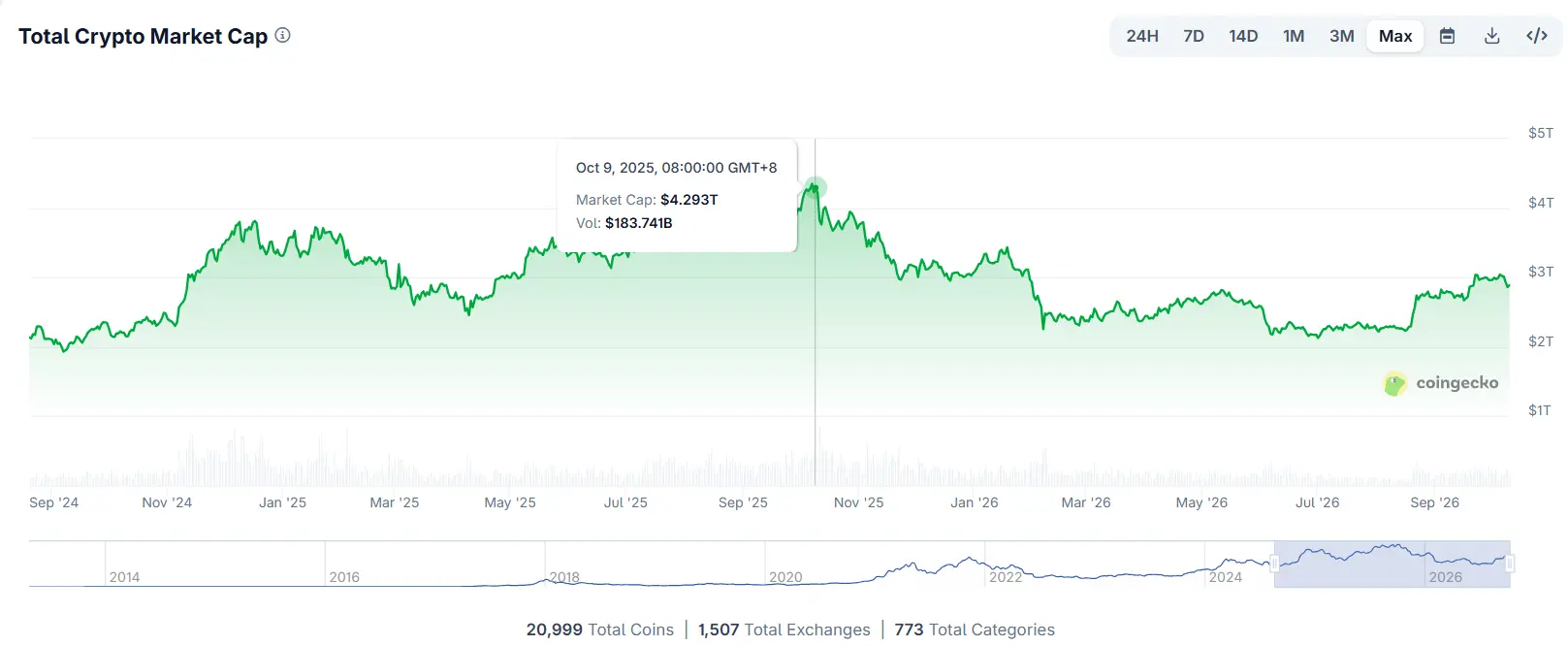
From a broader market perspective, according to CoinGecko data, the total market capitalization of cryptocurrencies dropped from $4.29 trillion a year ago to $2.88 trillion.
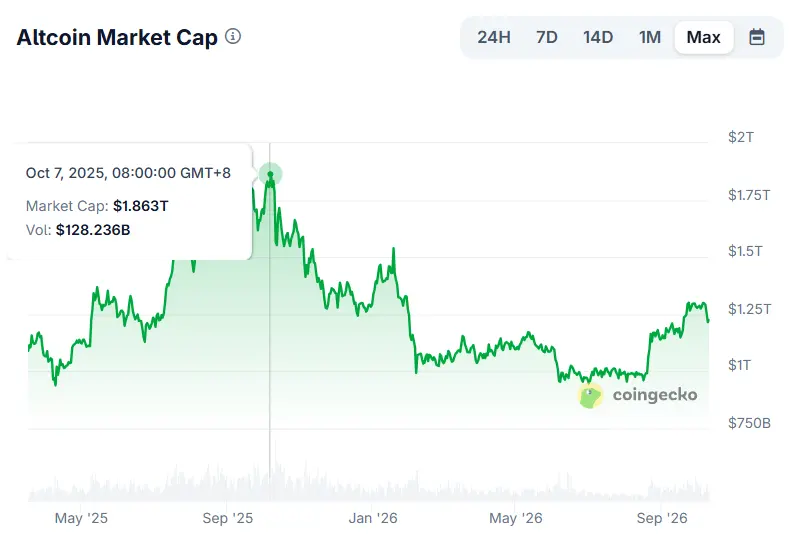
 Altcoins experienced even deeper declines, with the total market capitalization of altcoins falling from $1.86 trillion a year ago to $1.23 trillion, shrinking by about 40% when excluding stablecoins.
The 100% tariff that triggered this liquidation ultimately did not take effect; after a meeting between the U.S. and Chinese leaders in Busan on October 30 last year, a consensus was reached. In February this year, the U.S. Supreme Court ruled that the International Emergency Economic Powers Act does not authorize the president to impose tariffs.
Institutional Buying Cools, Premiums for Treasury Companies Disappear
Behind the price decline is a contraction in institutional buying. According to SoSoValue data, the historical cumulative net inflow of the U.S. spot BTC ETF as of October 10, 2025, was $62.77 billion, which has now decreased to $57.08 billion, resulting in a net outflow of about $5.7 billion over the year. The asset scale shrank from $158.97 billion to $105.22 billion, a reduction of about one-third.
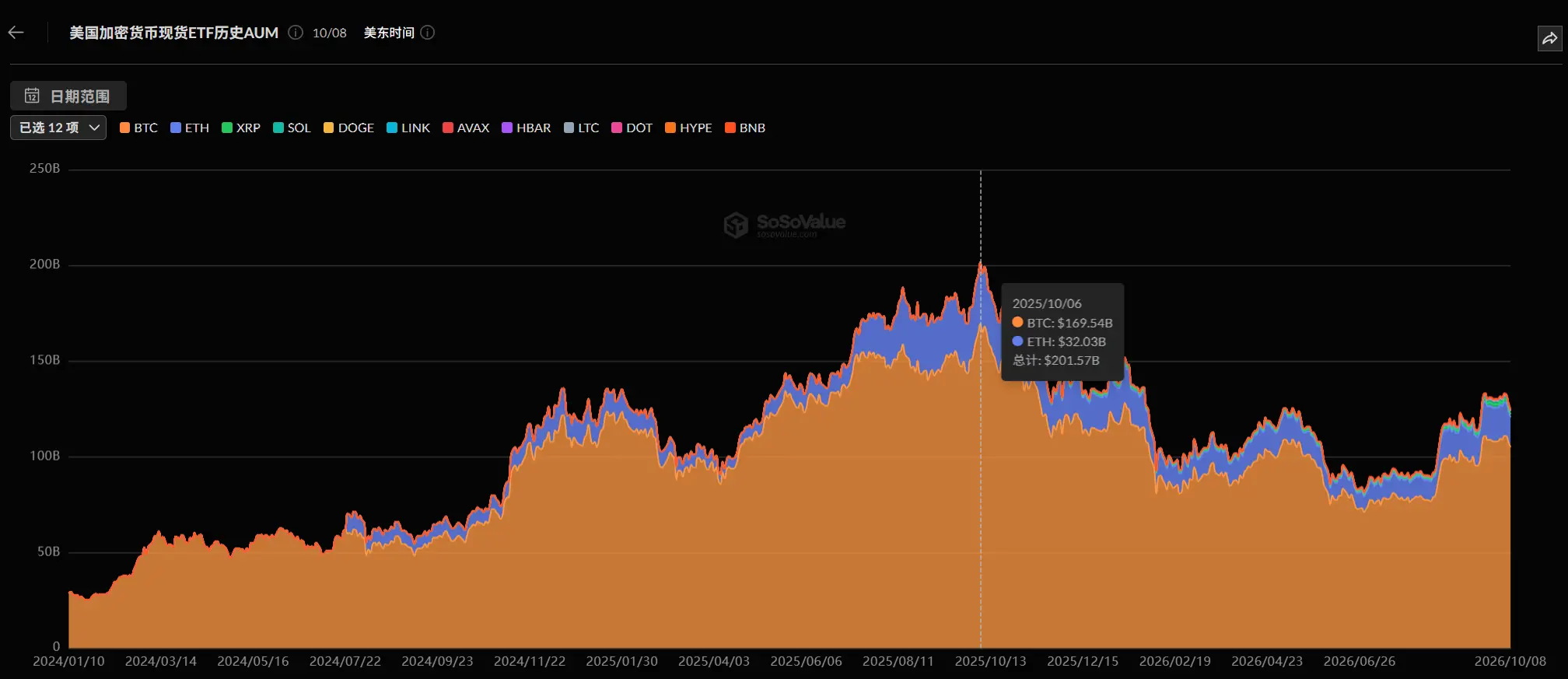
The outflow was most concentrated at the end of 2025, with a total net outflow of $4.57 billion in November and December, marking the largest two-month outflow since the BTC ETF was listed. After entering 2026, funds continued to flow out, with a net outflow of $5.4 billion in the first half of the year, marking the first time a half-year net outflow occurred since the BTC ETF was listed.
It wasn't until August this year that funds began to flow back in; as of the week of September 25, the BTC ETF recorded a net inflow of $2.4 billion, setting a weekly record. However, this round of inflow has not yet compensated for the previous outflow.
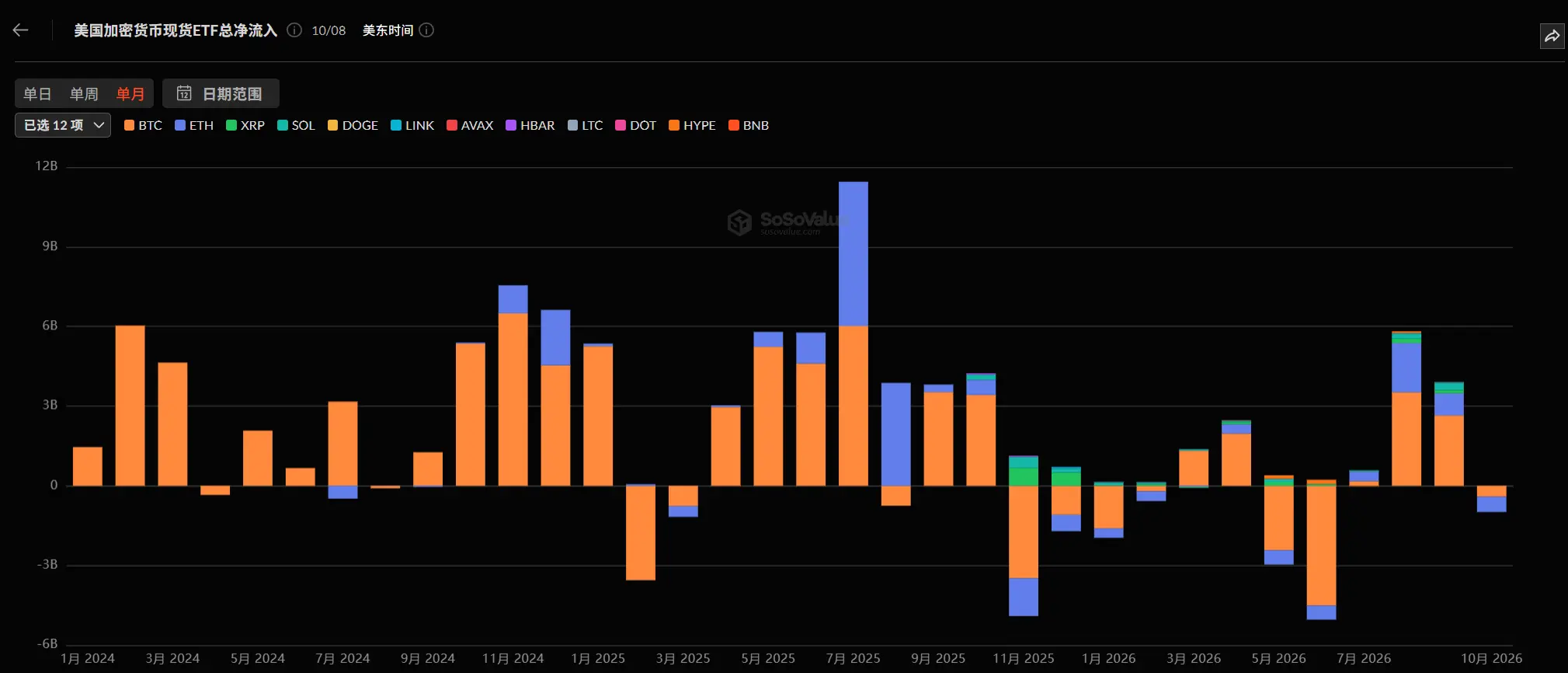
The situation for the ETH ETF is even worse. According to SoSoValue data, the asset scale of the ETH spot ETF has fallen from about $32 billion a year ago to about $15.7 billion, shrinking by nearly half.
Meanwhile, some funds have flowed into newly listed altcoin ETFs, with the cumulative net inflow for the SOL and XRP spot ETFs reaching approximately $1.58 billion and $1.81 billion, respectively.
Alongside the cooling of ETFs, digital asset treasury companies have also faced challenges. Strategy's holdings increased from about 640,000 BTC to 848,000 BTC over the year, but its mNAV dropped to 0.63 in June this year, meaning its stock market value was only about 60% of the value of its holdings.
At the end of May this year, Strategy sold 32 BTC to pay dividends, marking the first time the company sold coins since 2022. As BTC rebounded in the second half of the year, Strategy's average holding price of about $75,440 has once again fallen below the market price.
Leverage Slowly Rebuilds, Both Positions and Targets Have Changed
The high leverage accumulated at the peak of the bull market has significantly declined over this year. According to CoinGecko statistics, the total open interest of perpetual contracts in the entire market peaked at $210 billion on October 7, 2025, and fell to about $99.1 billion by April this year, nearly halving.
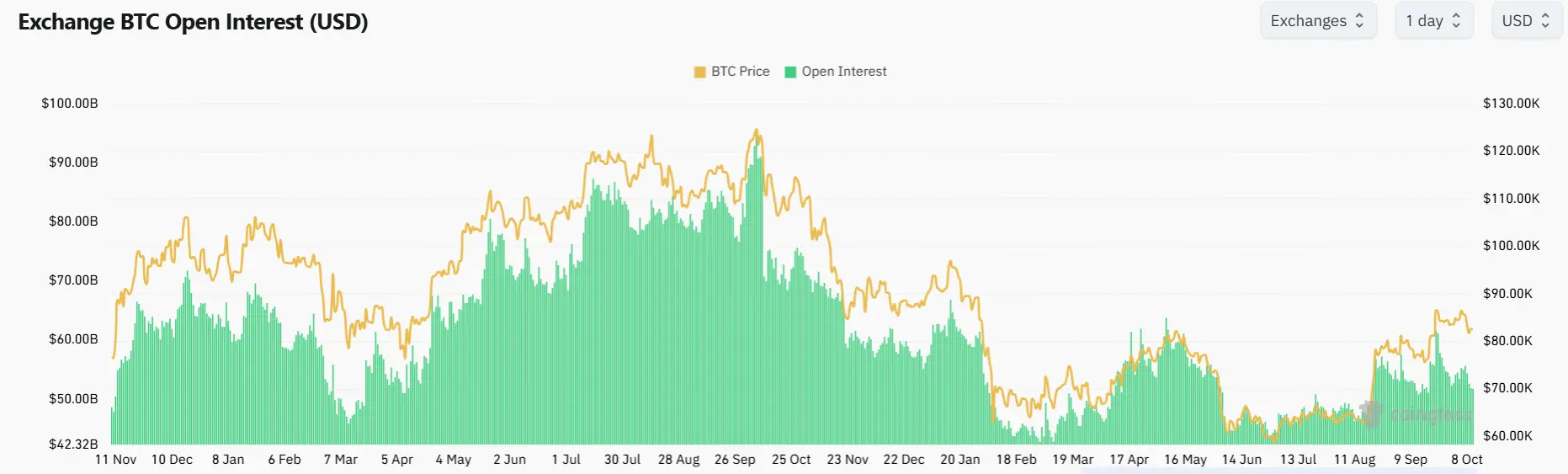
BTC's situation is similar; at the beginning of October 2025, the open interest of BTC futures was about $94 billion, and it is currently around $52 billion. Rough estimates indicate that, excluding the impact of price declines, the positions calculated in coins are still about 20% less than a year ago.
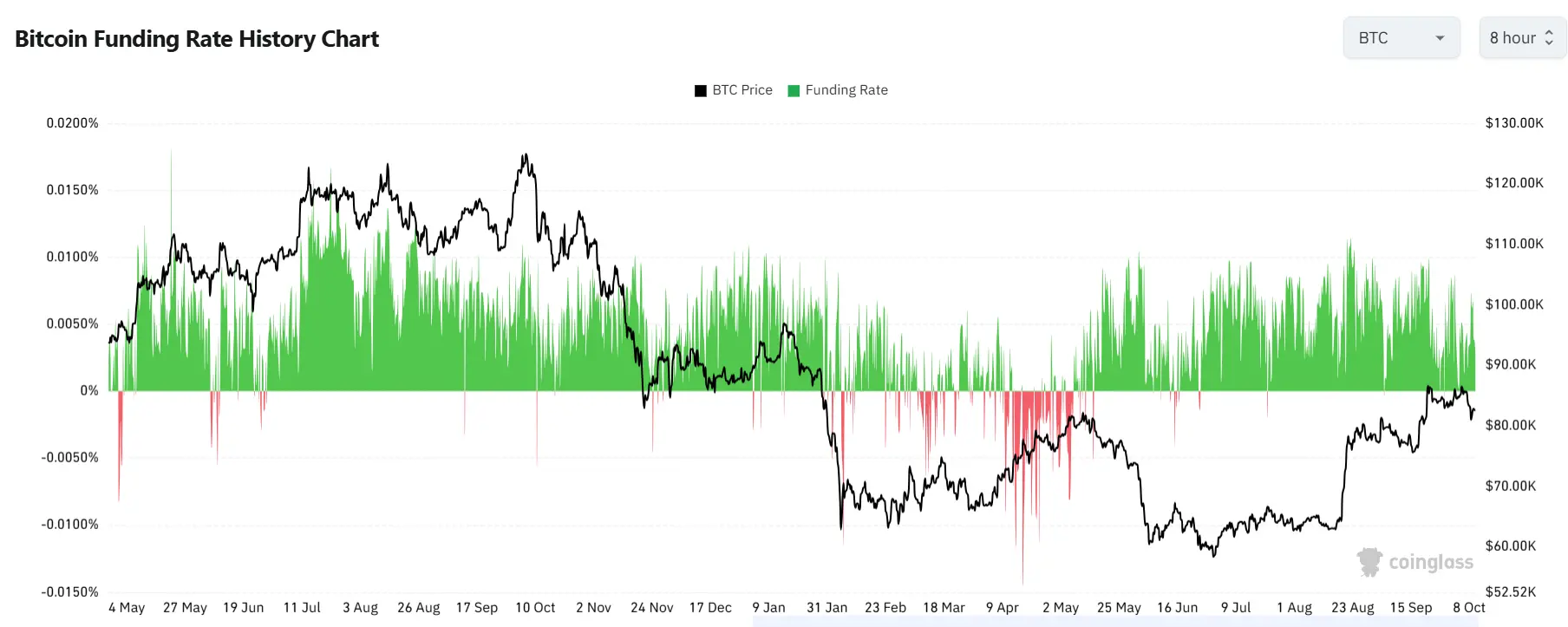
The trend of funding rates corresponds to this. From February to April this year, BTC funding rates turned negative multiple times, with short-selling demand temporarily exceeding long positions. After August, the rates turned positive again, but for most of the time, they remained below the levels of a year ago.
During the rebuilding process, a considerable amount of leverage has flowed onto the blockchain. According to CoinGecko statistics, the proportion of open interest in perpetual contract DEXs rose from less than 4% at the beginning of 2025 to 13.5% in April this year.
Data from Castle Labs shows that as of September, the total open interest of perpetual contract DEXs was about $14.6 billion, with Hyperliquid accounting for 56.8% of that.
The trading targets have also expanded beyond crypto assets. Perpetual contracts for traditional assets such as gold and semiconductor ETFs have entered the top ten in crypto derivatives trading volume. The trading volume of on-chain RWA perpetual contracts has grown even faster, reaching about $147.5 billion in July this year, accounting for nearly 20% of the total trading volume of on-chain perpetual contracts that month.
These new targets have also brought new sources of volatility. In April this year, international oil prices surged due to the situation in Iran, leading to approximately $400 million in liquidations in the crypto market in a single day, with the largest single liquidation being a crude oil position on Hyperliquid worth about $17.17 million.
Yield-bearing Dollars Retreat, USDe Shrinks by Two-Thirds
As leverage contracts, the yield-bearing synthetic dollars that rapidly expanded during the bull market are also retreating. USDe, issued by Ethena, relies on holding spot assets while shorting perpetual contracts to earn funding rates, achieving high yields during the bull market and rapidly expanding in scale.
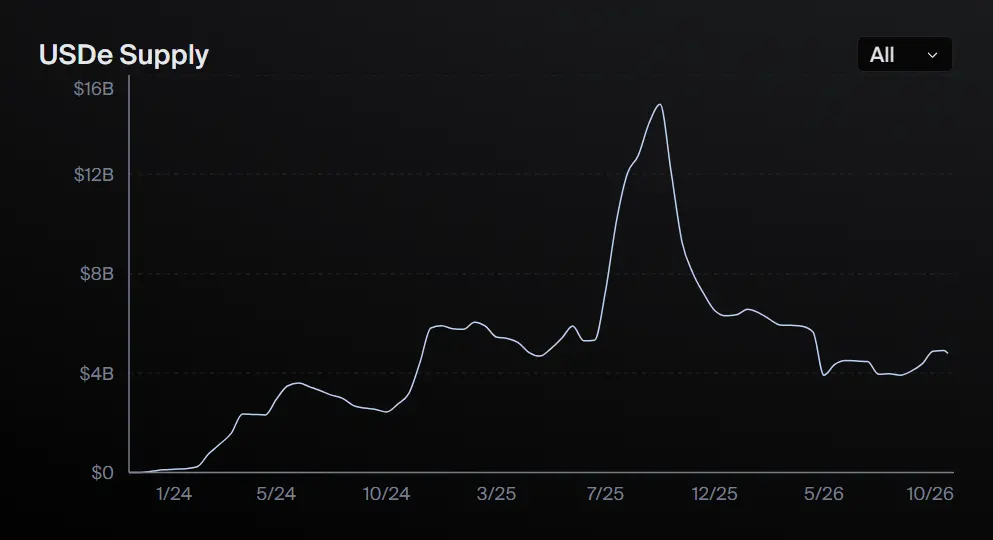
On the night of October 11, USDe briefly fell to $0.65 on Binance, and its scale has continued to shrink since then. According to official data from Ethena, the supply of USDe peaked at $14.82 billion on October 5, 2025, and is currently about $4.79 billion, a reduction of about two-thirds.
In November 2025, Balancer suffered an attack resulting in a loss of about $128 million, triggering liquidity tensions in DeFi. Stream Finance subsequently disclosed a loss of $93 million, with its synthetic dollar xUSD becoming unpegged, leading to liabilities of about $285 million for various DeFi lenders. Elixir also announced the closure of its synthetic dollar deUSD.
By April this year, USDe experienced significant shrinkage due to another theft incident. On April 18, Kelp DAO was hacked for about $292 million, and the attacker deposited the stolen funds into the lending protocol Aave, triggering a bank run. Aave's total locked value dropped from about $26 billion to $14.2 billion within five days, pushing the utilization rates of several liquidity pools to 100%.
Users using USDe for circular borrowing on Aave were forced to liquidate, and the circulation of USDe decreased by about $2 billion in the following ten days. Ethena itself had no exposure to rsETH, and minting and redemption were not interrupted. Shane Molidor, founder of the Web3 investment bank Forgd, believes this incident interrupted the arbitrage trades supporting the demand for sUSDe, and the yield of unleveraged sUSDe has now become comparable to that of U.S. Treasury bonds.
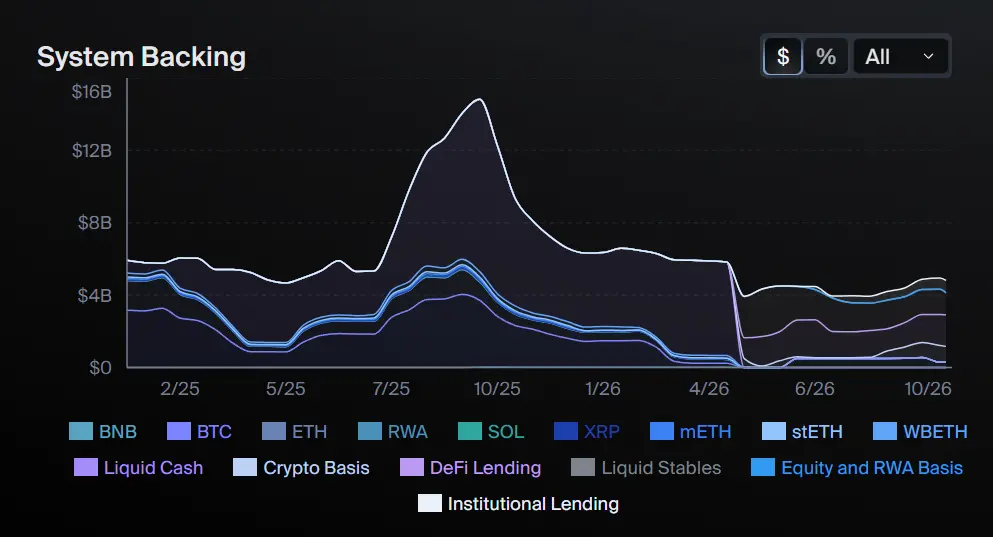
After the scale shrank, the underlying assets of USDe were also adjusted. A year ago, the collateral for USDe primarily consisted of cash and hedged BTC and ETH. According to Ethena's disclosure, currently, DeFi lending and institutional lending account for more than half of its collateral assets, with crypto basis trading accounting for about 18%.
During the same period, the total supply of stablecoins also stopped expanding. According to Artemis data, from August 2024 to October 2025, the total supply of stablecoins increased from about $150 billion to about $305 billion, and thereafter remained around $300 billion for the next year.
In terms of market structure, USDT and USDC still account for over 80% of the share. According to CoinMarketCap data, the current circulation of USDT is approximately $183.3 billion, and USDC is about $73.7 billion, with USDC's scale remaining roughly the same as a year ago.
Frequent Thefts and Bankruptcies, Cold Wallets No Longer Safe
The theft of Kelp DAO mentioned earlier is just one of many security incidents this year. According to TRM Labs, there were a total of 207 hacking incidents in the first half of this year, setting a record, with stolen amounts around $972 million, less than half of the same period last year.
However, the situation has clearly worsened in the second half of the year. According to CertiK, the amount stolen in September exceeded $766 million, making it the month with the heaviest losses this year, with approximately $352 million in assets affected at the exchange Bitget and about $319 million stolen from Liquid Network. As of now, the total amount stolen this year, according to various security agencies, is estimated to be between $1.7 billion and $2.7 billion.
The targets have also extended to hardware wallets in the hands of individual users. At the end of July, vulnerabilities in the firmware of the hardware wallet Coldcard were exposed, where some devices used weaker random numbers when generating mnemonic phrases, allowing attackers to deduce users' mnemonic phrases in bulk without needing to access the devices. According to TRM Labs, about 1,800 BTC were transferred away, involving over 5,200 addresses.
Some users claimed their devices were never connected to the internet, and their mnemonic phrases were never leaked, yet their assets were still stolen. Coinkite, the parent company of Coldcard, stated that all mnemonic phrases generated on its devices since March 2021 should be considered potentially compromised, and users need to transfer their assets as soon as possible.
On October 9, there was another large-scale theft involving Ledger users. According to on-chain analyst Specter, losses exceeded $86 million, involving hundreds of wallets across multiple chains including Ethereum, TRON, and Bitcoin, with many victims purchasing devices through the Southeast Asian distributor CryptoBilis.
Ledger has requested the distributor to suspend sales and advised users who purchased devices through that channel recently to change their mnemonic phrases. Mark Karpelès, former CEO of Mt. Gox, revealed that a Ledger he purchased in Malaysia contained a suspicious module with a SIM card chip, but the specific cause of the incident is still under investigation.
The combination of thefts and a bear market has led to a number of companies not surviving this year. According to incomplete statistics, over 60 crypto companies and projects closed or went bankrupt in the first seven months of this year. Among exchanges, AscendEX ceased operations in early July, BitMart announced its closure in July, and CoinEx will completely shut down on December 22.
The most notable is BitMEX. One of the earliest exchanges to launch 100x leveraged perpetual contracts permanently closed on September 23, ending 11 years of operation. BitMEX stated that the platform's assets exceed its liabilities and that it has never lost customer funds due to hacking incidents.
Additionally, Movement Labs and mining pool Poolin have filed for bankruptcy, while Step Finance in the Solana ecosystem ceased operations after being hacked for about $40 million.
On-Chain US Stocks and Prediction Markets Rapidly Rising
As old players exit, some new products have rapidly grown this year, with on-chain stocks launched by exchanges being one of them.
Among them, Binance launched the tokenized stock product bStocks on June 11 this year. According to official data, the asset scale of bStocks surpassed $500 million within seven weeks of its launch, with Generation Z contributing 44% of the trading volume, and 41.5% of users encountering traditional financial investments for the first time through bStocks. Platforms like Kraken and Bybit have also launched tokenized stocks and allowed users to use them as collateral.
Unlike traditional US stocks, these tokens can be traded around the clock. According to Binance, after US stock market hours, bStocks accounted for 58% of its stock-related trading volume, with prices during off-hours primarily determined by internal buy and sell orders.
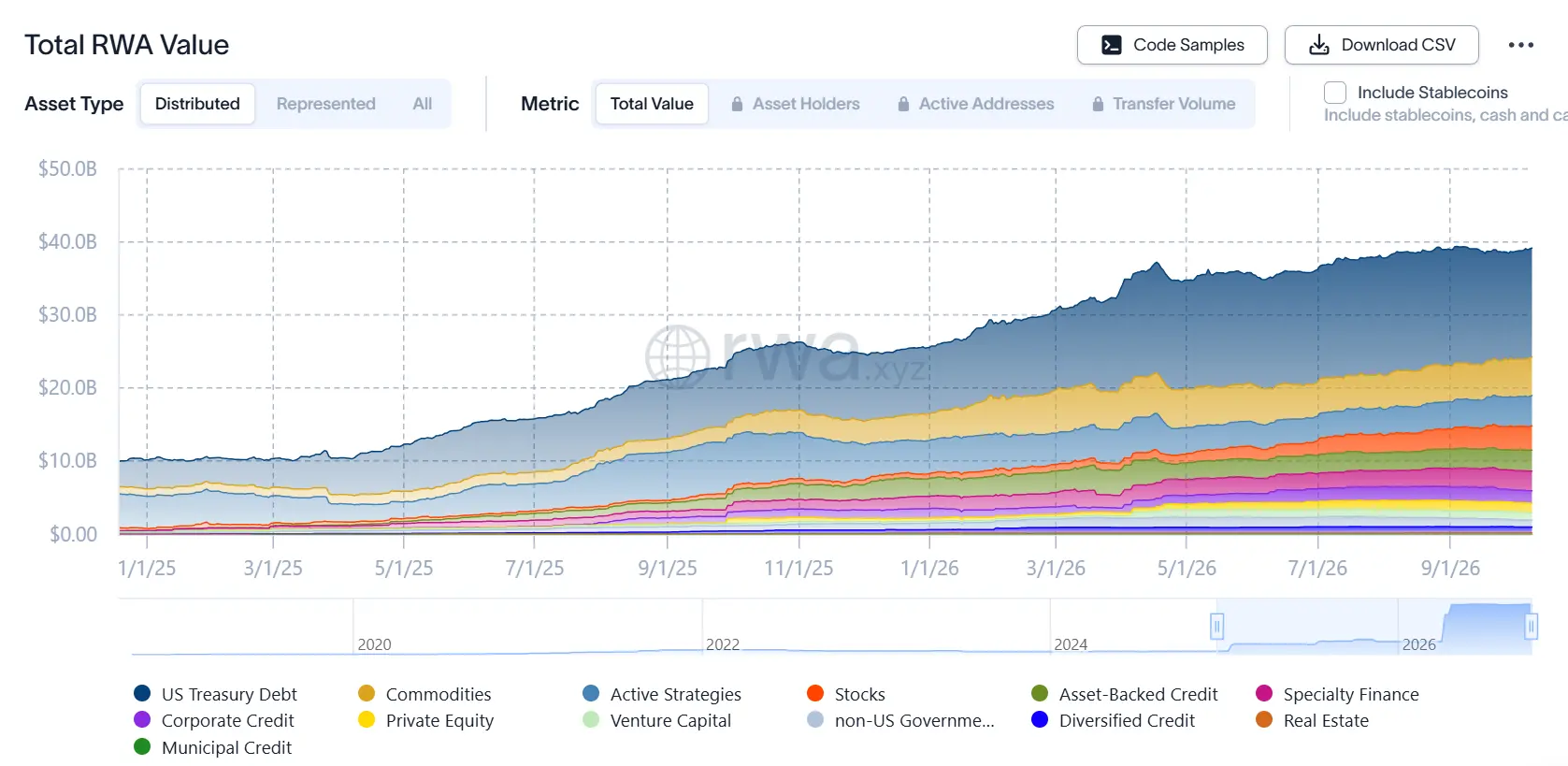
In addition to on-chain US stocks, a broader range of tokenized assets is also growing. According to rwa.xyz data, as of October 9, the value of RWA distributed on-chain is approximately $39.1 billion, with tokenized US Treasury bonds being the largest category.
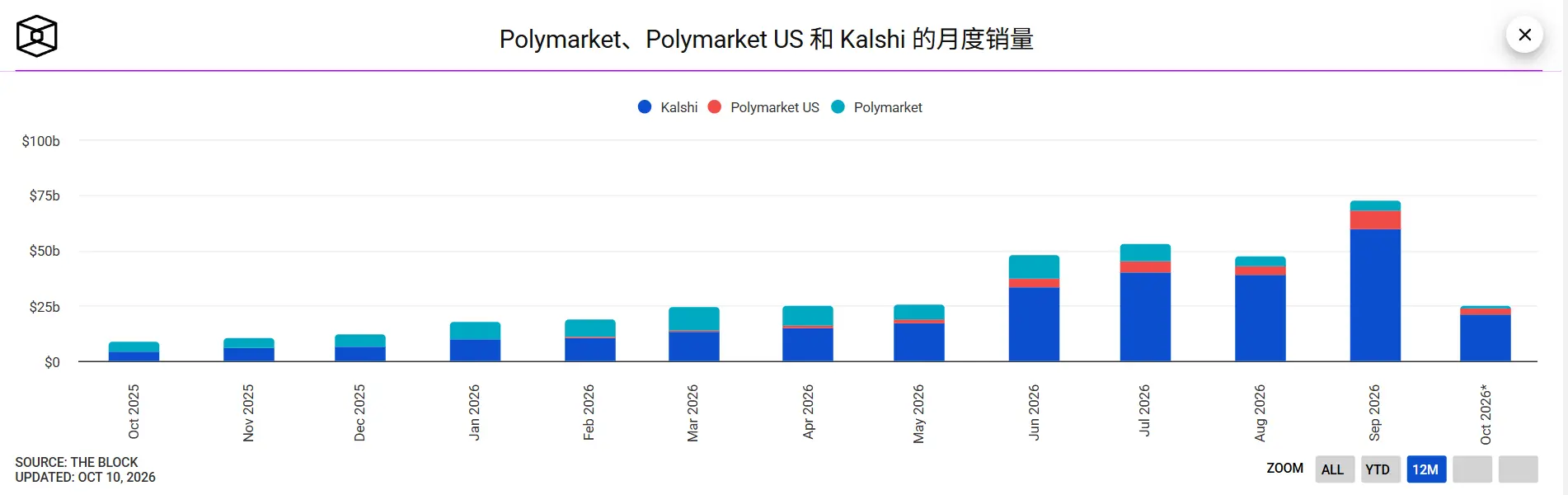
Prediction markets have also exploded this year. According to The Block data, the combined monthly trading volume of Kalshi and Polymarket increased from about $8.5 billion in October 2025 to about $72.3 billion in September 2026, growing nearly tenfold in a year.
The valuations of the two leading platforms have also risen sharply, but rapid expansion has embroiled prediction markets in regulatory disputes, focusing on whether sports contracts should be federally or state-regulated. In April this year, the Third Circuit Court of Appeals ruled that New Jersey had no authority to regulate Kalshi's sports contracts, but the Ninth and Sixth Circuit Courts issued contradictory rulings in August and September.
Currently, the CFTC has sued several states, claiming exclusive regulatory authority over event contracts, while 44 states have jointly written to the CFTC expressing opposition. New York State also sued Polymarket for operating gambling without a license in September. It is widely expected that this issue will ultimately be decided by the Supreme Court.
Interest Rate Cuts Turn to Hikes, Legislation Stalled in Congress
At the beginning of this year, the market generally bet on the Federal Reserve cutting interest rates, but due to the Middle East situation driving up oil prices and persistent high inflation, the Federal Reserve raised rates to 3.75% to 4% in September, marking the first rate hike of 2023 and the first major decision made by Warsh since taking over as chair.
The Federal Reserve expects inflation to return to the 2% target by 2029. The next monetary policy meeting will be held from October 27 to 28.
Tariffs also remain an uncertain factor. In February this year, the U.S. Supreme Court ruled that IEEPA does not authorize the president to impose tariffs, rendering previously imposed tariffs under that law ineffective. Subsequently, the U.S. government used other laws to authorize tariff imposition, and related litigation is still ongoing.
In addition to interest rate hikes, the anticipated legislation in the crypto industry has not seen breakthroughs. The market structure bill CLARITY failed to advance in a procedural vote in the Senate on September 15, with a vote of 49 to 50, and Senate Republican chief negotiator Cynthia Lummis subsequently stated that the bill was unlikely to pass. With the midterm elections approaching in November, the likelihood of passage in this Congress is very low.
Although the stablecoin bill GENIUS was signed in July 2025, the accompanying rules are lagging behind. Federal agencies missed the rule-making deadline of July 18 this year, and the Treasury did not issue its first binding rule until September 30, with the bill expected to take effect in January 2027.
In the absence of progress in Congress, the regulatory framework is mainly driven by the executive branch. The SEC and CFTC jointly released a token classification framework in March, categorizing digital assets into five categories. The SEC proposed exemptions for crypto asset issuance in August, launched an innovation exemption on September 17 allowing tokenized US stocks to be traded on-chain, and proposed crypto asset custody rules in October. The CFTC also submitted crypto market rules for White House review in September.
Conclusion
Looking back at this year, from the liquidation of 1011 to the closure of BitMEX, a number of old players have exited, leverage has shifted from centralized exchanges to on-chain, and trading targets have extended from crypto assets to US stocks and oil, with ETFs, tokenization, and prediction markets further tightening the connection between the crypto market and traditional finance. In what form will the new cycle begin?

 Risk warning


Popular articles