Scan to download
BTC $78,803.25 +4.61%
ETH $2,391.19 +4.20%
BNB $644.41 +2.51%
XRP $1.45 +2.07%
SOL $87.94 +3.47%
TRX $0.3283 -0.94%
DOGE $0.0971 +3.36%
ADA $0.2530 +3.23%
BCH $463.88 +4.47%
LINK $9.44 +1.57%
HYPE $40.86 +3.11%
AAVE $94.17 +3.23%
SUI $0.9631 +3.34%
XLM $0.1800 +1.94%
ZEC $324.72 +3.08%
BTC $78,803.25 +4.61%
ETH $2,391.19 +4.20%
BNB $644.41 +2.51%
XRP $1.45 +2.07%
SOL $87.94 +3.47%
TRX $0.3283 -0.94%
DOGE $0.0971 +3.36%
ADA $0.2530 +3.23%
BCH $463.88 +4.47%
LINK $9.44 +1.57%
HYPE $40.86 +3.11%
AAVE $94.17 +3.23%
SUI $0.9631 +3.34%
XLM $0.1800 +1.94%
ZEC $324.72 +3.08%

web

Illustration of Zero Hash's 28 Web3 business partners: Connecting cryptocurrency and fiat currency settlement with compliant licenses

The Web3 asset data platform RootData has outlined the Web3 business partners of Zero Hash, whose partners cover key areas such as asset management institutions, payment channels, public chain infrastructure, and stablecoin systems, and are building a cooperative network centered on compliance clearing and asset access.Structurally, Zero Hash is committed to becoming a B-end crypto financial infrastructure provider, offering institutions a one-stop capability of "fiat currency → crypto assets → multi-chain circulation → stablecoin settlement":Upstream, it connects asset management and financial platforms such as Morgan Stanley, Franklin Templeton, and Republic; on the funding entry side, it interfaces with payment and fiat channels like Stripe, Ramp, and Transak; at the infrastructure level, it covers multi-chain infrastructures such as Ethereum, Solana, Polygon, Avalanche, and Aptos; at the same time, it connects with stablecoin systems like Circle, Tether, Paxos, as well as PYUSD and RLUSD, completing clearing and settlement support.In addition, Zero Hash, as one of the few infrastructure providers holding money transmission licenses (MTL) in multiple U.S. states and possessing complete regulatory framework adaptation capabilities, has a very clear common characteristic among its partners: funding entry (banks/payments), asset carriers (stablecoins/public chains), or distribution platforms (financial products/applications). Related collection 【Zero Hash Web3 Partner Network Collection (Continuously Updated)】Crypto projects actively showcasing their partner networks has become a key way to enhance transparency and market trust. It is reported that RootData welcomes Web3 project parties to claim data and continues to track and open more project business relationship disclosure channels. The platform has continuously released multiple versions of the crypto project ecosystem map, nominating Web3 ecological partners for upstream clients such as Visa, Mastercard, and Coinbase.If you wish to nominate your project in future ecosystem maps, please fill out the 【RootData 2026 Industry Ecosystem Mapping】 form to supplement your important clients and partners.

Sun Yuchen appeared online at the HTX Genesis Hackathon: AI Agent is the core driving force for Web3 to move towards intelligence

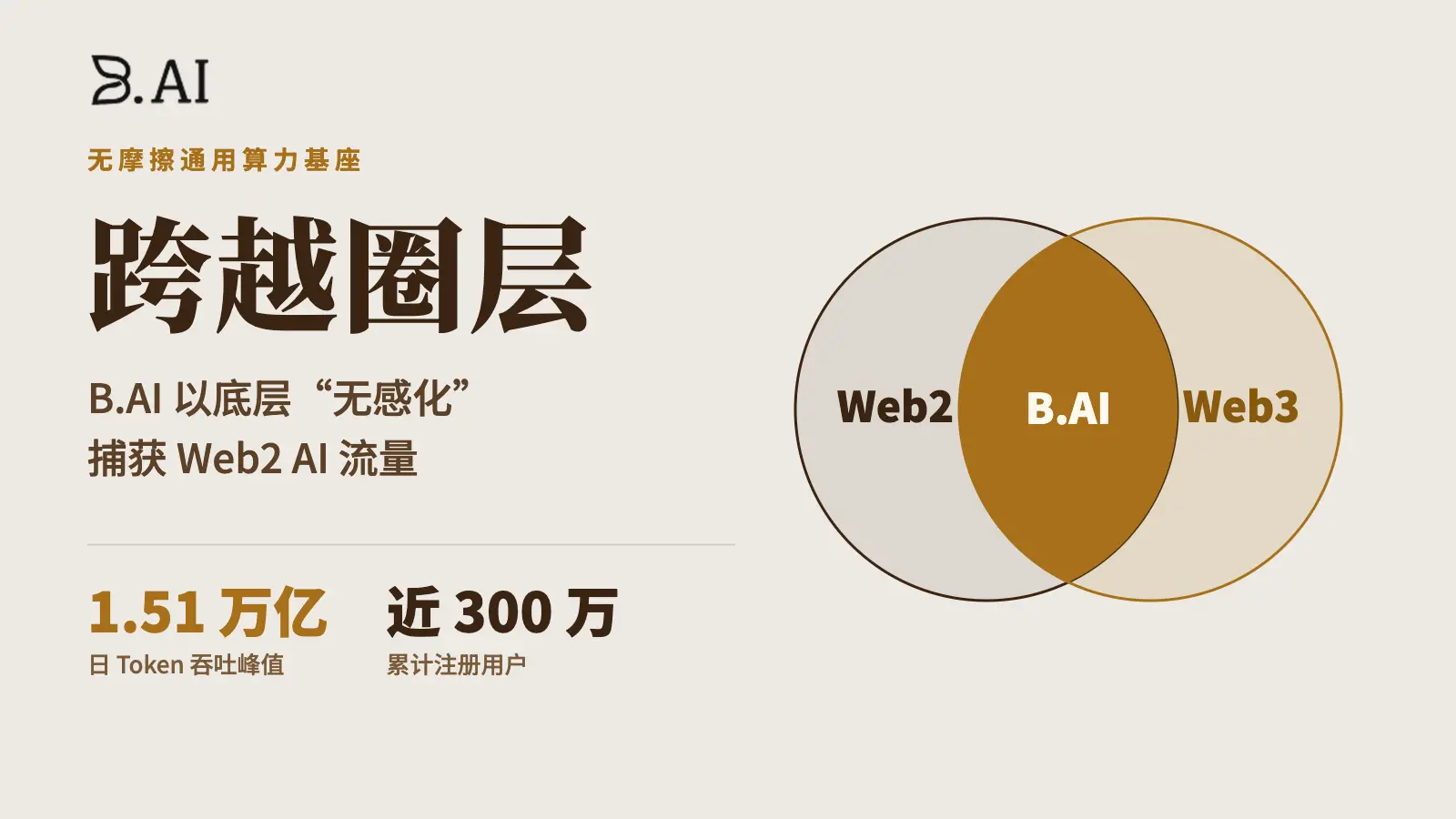
Huobi HTX global advisor Sun Yuchen made a significant appearance at the HTX Genesis Hackathon opening ceremony in Hong Kong in an online format, sharing his latest insights on the application prospects of AI Agent technology in the Web3 field and the future development direction of the industry. He pointed out that AI Agent will replace traditional interaction methods and become the core driving force of the next phase of the Web3 ecosystem.He explained that past Web3 applications often came with extremely high learning thresholds and complex on-chain interactions, while the introduction of AI Agent will drive decentralized applications (DApps) to evolve from "manual operation" to "intention-driven" based on natural language. This means that AI Agents can autonomously understand user needs, automatically plan paths, and complete complex on-chain settlements such as cross-chain transactions. This paradigm shift towards intelligence and autonomy will not only greatly unleash on-chain productivity but also become a new breakthrough point to break the bottleneck of Web3 user growth and lead the industry toward true mass adoption.It is reported that the HTX Genesis Hackathon is hosted by HTX DAO and B.AI, co-hosted by TinTinLand and OpenCity, attracting numerous developer communities, investment institutions, project parties, trading platforms, and public chain ecosystems to participate.

first_img HK Web3 Feastival Roundtable: From Wall Street to Blockchain, the Practical Logic and Future Vision of Global RWA Issuance

ChainCatcher reported live that Li Baiwei, Partner at HashKey Tokenisation, John Cahill, Chief Operating Officer of Galaxy Digital Asia, Abdelhamid Bizid, Managing Director of BlackRock, and Min Lin, Managing Director and Head of Global Business Development at Ondo Finance, attended the HK Web3 Feastival roundtable to share insights on "From Wall Street to Blockchain: The Practical Logic and Future Landscape of Global RWA Issuance."The attendees generally agreed that the core value of RWA and asset tokenization is no longer just an innovative narrative at the conceptual level, but a realistic path for upgrading financial market infrastructure. John Cahill stated that blockchain is essentially a superior "underlying pipeline" for financial markets, and in the long run, the ultimate goal of financial markets will be "tokenization of everything"; what truly needs attention is not whether tokenization will happen, but whether market participants have already begun preparing for this endgame.Abdelhamid Bizid pointed out that from the perspective of traditional asset management institutions, the current tokenized products primarily serve clients who do not wish to move funds out of the on-chain ecosystem but want to achieve stable returns and compliant asset allocation tools. BlackRock has seen a clear demand for on-chain yield products and will continue to launch more new products. However, he also emphasized that the real bottleneck in the industry at this stage is not technology, but rather institutional adoption, demand validation, liquidity depth, regulatory clarity, and non-technical barriers such as costs and taxation.Min Lin, drawing from Ondo's practice, stated that the key to tokenized stocks is not just moving U.S. stocks onto the blockchain, but transforming stocks that are originally static in brokerage accounts into programmable financial instruments that can serve as collateral, margin, and lending assets in DeFi, further unlocking capital efficiency. He mentioned that the main demand currently observed by Ondo still comes from retail and crypto-native funds in regions like Asia, Southeast Asia, and Latin America, which find it difficult to directly access the U.S. stock market. This indicates that tokenized stocks at this stage are more like "global asset access tools" rather than mainstream trading venues for institutional funds.

first_img HK Web3 Feastival Roundtable: The "RWA Moment" in Asia-Pacific: Hong Kong vs Singapore

ChainCatcher reported live that Celine Tan, Head of Liquidity Distribution at BNY Mellon Investment Management Hong Kong Limited, Kelly Sohn, Head of Digital Asset Strategy at Mirae Asset Securities (HK) Limited, Victor Jung, Head of Digital Assets at Hamilton Lane, and Xu Ping, Managing Director of Global Investment Banking at JPMorgan, attended the HK Web3 Feastival roundtable to share "The RWA Moment in Asia-Pacific: Hong Kong vs Singapore."The attendees generally believe that RWA is currently transitioning from proof of concept to broader implementation, driven mainly by the gradual maturity of technology, increasingly clear regulatory frameworks, and the rising market demand for stable, yield-generating asset allocations.Kelly Sohn stated that this round of RWA warming is different from the past, not driven by a single factor, but rather the result of the combined effects of technology, regulation, and capital flow. She also pointed out that the assets currently more suitable for tokenization include standardized products such as money market funds and commodities, and the combination of stablecoins and tokenized assets will further enhance on-chain transaction and settlement efficiency.Xu Ping mentioned that Singapore has become more cautious overall after the FTX incident, with a greater focus on institutional investors; in contrast, Hong Kong has advantages in retail access, licensing systems, and market innovation inclusiveness, making it more attractive to exchanges, stablecoin issuers, and custodians. She also noted that banks will play a key role in infrastructure, custody, and payment settlement within the RWA ecosystem.Victor Jung indicated that the market has previously focused too much on the institutional narrative, but the retail side is also an important source of demand for tokenization. He summarized the current demand into two categories: one is to obtain more yield through on-chain solutions, and the other is to reduce costs by improving efficiency. In his view, the industry driving force has gradually shifted from early technology supply to being driven by real investor demand.The roundtable discussion also mentioned that for RWA to further expand its application in the next phase, it still needs to address issues such as regulatory clarity, institutional infrastructure readiness, and investor education, as these factors remain key variables affecting the further development of the market.

first_img HK Web3 Feastival Roundtable: From "Asset Registration" to "On-chain Issuance", Bridging the Last Mile of RWA Cross-border Compliance

ChainCatcher reported live that Tang Bo, Assistant Dean of the Financial Research Institute at the Hong Kong University of Science and Technology, Fei Si, Partner at King & Wood Mallesons, Diao Zhi Hai, Head of International Wealth Management at China International Capital Corporation, and Gavin Wang, Managing Partner and Chief Investment Officer of SNZ Holding & SNZ Capital, jointly attended the HK Web3 Feastival roundtable discussion, sharing insights on "from asset registration" to "on-chain issuance," bridging the last mile of RWA cross-border compliance.Fei Si pointed out that the so-called "from asset registration to on-chain issuance" essentially establishes a replicable, sustainable, and legally compliant channel for "domestic assets, overseas issuance." He believes that the most critical aspect at this stage is to first establish a solid transaction structure and top-level product design, clarifying whether the product is classified as equity or debt, as this will directly determine the corresponding regulatory authorities, communication methods, and subsequent legal document arrangements.Diao Zhi Hai approached the issue from the practical perspective of traditional financial institutions, stating that the biggest challenge currently is not a single isolated pain point, but how to systematically connect multiple compliance nodes to form a truly implementable closed-loop mechanism. He indicated that RWA cross-border projects involve not only financial regulation but also data cross-border, cybersecurity, foreign exchange management, and other departmental collaborations. Therefore, it is essential to examine whether the underlying assets can be clearly defined and mapped on-chain, who qualifies as the issuer and controlling entity, and whether the non-financial regulatory requirements throughout the process have been incorporated into the plan.Gavin Wang entered the discussion from the investment and market demand perspective, emphasizing that the global trend of asset tokenization is certain, and that high-quality Chinese assets are still significantly undervalued overseas. This means that as long as the cross-border compliance path is opened, market demand genuinely exists. He believes that investment institutions are most concerned with whether the entire project has clear compliance boundaries and marketability: red lines cannot be crossed, and gray areas must be approached with caution. What is truly worth investing in are those asset types with clearer regulatory expectations that investors can more easily understand and accept. In the long term, he is optimistic about two types of Chinese cross-border RWA targets: one type is large, high-quality Chinese assets that are easily understood by overseas investors, and the other type includes high-end manufacturing, robotics, AI, and pharmaceutical pipelines that are still undervalued overseas but possess global competitiveness.

first_img HK Web3 Feastival Roundtable: From the Ground Up to the Entry Point, the Path of Crypto Assets to Mainstream Finance

ChainCatcher reported live that Franklin Bi, partner at Pantera Capital, Mykolas Majauskas, senior policy director at Bybit, and Zeng Yuchao, managing director at Futu Group, jointly attended the HK Web3 Feastival roundtable to share "From the Ground Up to the Entry Point: The Path of Crypto Assets to Mainstream Finance."Zeng Yuchao introduced that Futu is the largest retail brokerage in Hong Kong, with a market share of over 50%. In January this year, it obtained the VATP license, and last month removed all additional conditions to achieve full integration of securities brokerage and crypto trading. Last year, Futu collaborated with Huaxia Fund to issue a tokenized money market fund, allowing T+0 same-day subscriptions and redemptions. In terms of AI, Futu has launched the Agent skill feature, enabling users to set strategies through natural language and execute trades automatically. He believes that in the future, there will be a transformation from graphical interfaces to AI interfaces.Mykolas Majauskas pointed out that companies currently complaining about regulation will miss this honeymoon period in the future, as larger-scale regulation is on the way. He analyzed global regulatory differences: Europe leads with MiCA, the U.S. supports private issuance, China supports government digital currency, and Hong Kong serves as a tokenization gateway. He warned that many native crypto companies claim to disrupt traditional finance but are actually being acquired by traditional institutions. He believes the fundamental change in AI is at the front end: users only need to express their intentions, and AI autonomously decides to execute strategies. Bybit is building a one-stop financial platform that integrates IBAN, cards, payments, and investments. He believes many traditional wealth management companies will be eliminated because they have historically made you feel wealthy rather than truly helping you accumulate wealth.Franklin Bi stated that blockchain is the perfect technology for building financial systems for AI Agents. When Agents choose between traditional accounts and stablecoins, they are opting for stablecoins, marking the beginning of an exponential trend.

Dr. Han will give a speech at the University of Hong Kong, focusing on the integration trends of Web3 and AI

Dr. Han, the founder and CEO of Gate, has been invited to give a keynote speech at the main campus of the University of Hong Kong on the evening of April 21, and to participate in a fireside chat and open Q&A session.The event is titled "Web3 Dialogues @ HKU - Academia x Industry," supported by the School of Computing and Data Science at HKU in collaboration with the HKU Innovation and Entrepreneurship Centre and the Core Curriculum Office, and organized by Blockchain@HKU. It is primarily open to students interested in Web3, blockchain, digital finance, and emerging technologies. As a collaborative academic event, such activities are rare at HKU.The event will focus on core topics such as the evolution of Web3 technology, the integration of AI and digital assets, and industry regulatory trends, exploring these issues in depth from both academic research and industry practice perspectives. In addition to the keynote speech, Dr. Han will engage in a fireside chat with HKU professors and discuss topics such as industry development paths, technological transformation, and career planning with the attending students.As Web3 and artificial intelligence technologies continue to intersect, the interaction between academia and industry is becoming an important aspect of talent development and cognitive renewal. Such exchanges not only provide students with opportunities to gain firsthand industry experience but also help expand their understanding of technological application scenarios and future career directions, further promoting the connection between academia and industry.

first_img HK Web3 Feastival Roundtable: The Present and Future of Cross-Border Payments and Asset Digitization

ChainCatcher reported live that KGA Managing Partner Kevin M. Goldstein, Binance Co-CEO Richard Teng, Stable CEO Brian Mehler, JPMorgan Asia Pacific (Payments) Fintech Industry Head Akhil Devmurari, and Bitstamp by Robinhood President Leonard Hoh jointly attended the 2026 Hong Kong Web3 Carnival roundtable discussion, focusing on "The Present and Future of Cross-Border Payments and Asset Digitization."Richard Teng pointed out that the existing financial infrastructure is extremely outdated, with bank transfers taking two to three days and high fees, while cross-border remittance rates can be as high as 11%. In contrast, stablecoin transfers are instant and cost very little. He revealed that with the passage of the U.S. Genius Act, stablecoin transaction volume has increased by over 70% year-on-year, surpassing Visa's transaction volume, and its market capitalization has grown by over 50% year-on-year. He also mentioned that Binance started trading precious metals in January this year, and within three months, its trading volume has exceeded that of many traditional commodity exchanges. Additionally, it has launched products such as petrochemical products, stock tokens, and Pre-IPO offerings, aiming to create a multi-jurisdictional, multi-asset trading platform serving over 310 million users. Regarding AI, he believes that stablecoins will become the native currency of AI, with the payment ecosystem for intelligent agents built around blockchain and AI.Akhil Devmurari pointed out from JPMorgan's perspective that the Asia-Pacific region has a population of 4.8 billion and over 90% fintech adoption rate, with cross-border payments being the biggest pain point. Digital currencies present a significant opportunity as an alternative payment track. He stated that JPMorgan's payment platform processes $12 trillion daily, focusing on tokenized deposits and tokenized assets, and applying blockchain technology to fund flows to reduce friction. He emphasized that the current market capitalization of digital currencies accounts for only about 1% of total payment volume, with 99% still in fiat currency, indicating huge growth potential, but compliance is a key link in ecological development. He defined the relationship between traditional finance and crypto as "co-opetition," stating that banks need to collaborate with the industry to drive ecological growth.Leonard Hoh stated that Bitstamp, as an exchange and infrastructure provider, has observed that trading and payment counterparties are adopting a "stablecoin-first" strategy, whether for prepayments, settlements, or credit collateral, with both traditional finance and crypto-native institutions feeling secure about this technology. He pointed out that the industry currently faces growing pains from excessive fragmentation—there is an oversupply of stablecoin issuers, Layer 1 solutions, and regulatory frameworks relative to market size, and exchanges need to address interoperability challenges across chains and borders. He believes that the key to unlocking the next stage lies in the development of non-U.S. dollar stablecoins and on-chain foreign exchange markets.Brian Mehler pointed out from the perspective of Layer 1 public chains that the technology itself is already functioning normally, with traditional cross-border payments charging about 6.5% fees for a $200 transaction, while on-chain it only requires 1% or even less. The real issue lies in the fragmentation of compliance, as regulatory frameworks in different countries operate independently. Therefore, compliance elements such as whitelist, blacklist, and travel rules must be embedded in the infrastructure layer of the chain to achieve true global interoperability. He also mentioned that PayPal has introduced PYUSD to the Stable chain, and traditional financial institutions are actively seeking to establish a presence on-chain, with Layer 1 not aiming to replace banks but to become a settlement layer.
app_icon
ChainCatcher Building the Web3 world with innovations.