BTC $70,242.42 -4.70%
ETH $1,991.08 -3.10%
BNB $647.17 -4.75%
XRP $1.02 -2.91%
SOL $80.16 -3.84%
TRX $0.3149 -0.66%
DOGE $0.0654 -2.94%
ADA $0.1714 -1.30%
BCH $223.14 -2.79%
LINK $9.94 -1.91%
HYPE $72.23 +0.09%
AAVE $113.02 -4.89%
SUI $0.7913 -3.61%
XLM $0.1454 -1.23%
ZEC $950.47 -4.14%
AAPL $356.40 +0.18%
AMZN $268.58 +1.00%
GOOGL $301.12 +1.92%
MSFT $521.79 +0.08%
META $626.72 -0.64%
NVDA $166.01 +2.52%
TSLA $400.18 +3.19%
SNDK $943.99 -2.75%
INTC $61.72 +0.54%
SPCX $141.19 +0.71%
MU $805.79 +0.75%
AMD $582.15 +2.06%

gemini

Gemini is a digital asset trading and custody service company that allows users to buy, sell, and store cryptocurrencies.
All
Article
Flash

first_img Gemini's revenue in the third quarter fell to 40.9 million USD, with trading volume decreasing by 73% year-on-year

Cryptocurrency exchange Gemini announced its third-quarter financial report, with total revenue for the quarter at $40.9 million, a year-over-year decrease of 19% and a quarter-over-quarter decrease of 10%, compared to $50.6 million in the same period last year. The net loss narrowed to $58.6 million, down from nearly $160 million in the same period last year and $107.7 million in the second quarter. After the financial report was released, Gemini Space Station Inc. (GEMI) saw its stock price rise 6.5% in after-hours trading to $2.79, but the cumulative decline for the year remains around 75%.The trading business is under significant pressure. Affected by the drop in trading volume from $16.4 billion in the same period last year to $4.5 billion, exchange business revenue fell 47% to $13.4 million, although trading volume increased by 18% quarter-over-quarter. Revenue from credit card operations decreased by 4% quarter-over-quarter to $15.5 million, while platform assets grew from $8.4 billion in the second quarter to $13.4 billion. Operating expenses decreased by 30% year-over-year to approximately $120 million. CEO Tyler Winklevoss stated that operating expenses have decreased for the third consecutive quarter, maintaining spending discipline while investing in growth.Forecasting market operations became a highlight, contributing $800,000 in revenue for the quarter, a quarter-over-quarter increase of 52%. The company is pushing to open its exchange and clearinghouse to brokers wishing to offer event contracts and signed a letter of intent with Apex Fintech Solutions in August to provide cryptocurrency event contracts, although this deal has not yet been finalized. President Cameron Winklevoss stated that Gemini 2 bets on platforms that can sustain themselves long-term will control the underlying regulated infrastructure.

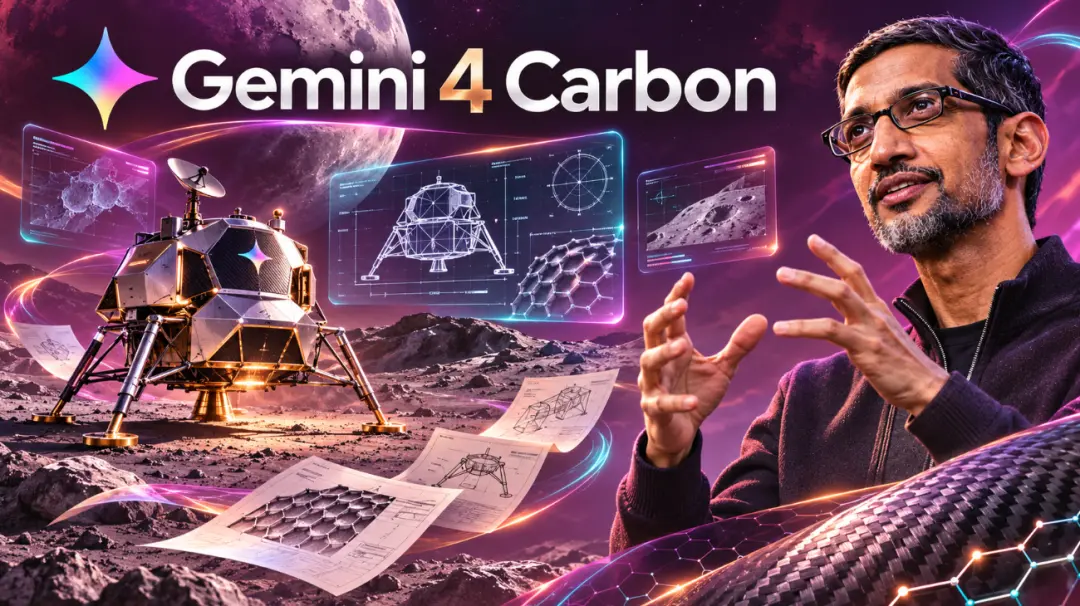
first_img Google opens Gemini 4 Carbon, API prices will double starting in December

On Tuesday, Google announced that its cutting-edge artificial intelligence model, Gemini 4 Carbon, is now open to paid developers and enterprise customers. Google stated that the model is capable of handling complex programming, cybersecurity, and scientific research tasks that involve multiple steps. Gemini 4 Carbon was released on October 28, having previously been available to select cybersecurity defense agencies through the Fairwind program. Following this opening, paid developers can use the model via the Gemini API in Google AI Studio, while enterprise customers can access it through Gemini for business. Google AI Ultra subscribers will also gradually gain access to the Gemini application, Google Search AI mode, and Antigravity.In early tests, OpenCode software engineer Kit Langton reported that the team submitted a list of requirements to Carbon before the end of the workday, requesting solutions for consistency issues between the application interface and the existing UI framework. After running overnight, Carbon built a Rust UI library from scratch, rewrote the OpenCode desktop application, and provided a runnable demo version. The Wiz team under Google stated that while using Carbon for cyber to scan two large software service providers, the model identified zero-day vulnerabilities within two hours and subsequently collaborated with the affected agencies to complete the fixes. Google did not disclose the names of these service providers or the details of the vulnerabilities. Researchers also combined Carbon with other models, using the AlphaProof Code intelligent agent framework to complete the formal verification of the security properties of the underlying code of the Signal encryption protocol within weeks.In terms of pricing, Google set the initial experience price for Carbon's API at $2 per million input tokens and $10 per million output tokens, the same as Gemini 4 Argon. This offer lasts until November 30, after which the price will double, adjusting to $4 per million input tokens and $20 per million output tokens, applicable to the publicly available Carbon model. Google stated that Carbon ranked first in three benchmark tests: CursorBench 4.0, Perplexity WANDR, and Zapier AutomationBench, with the cost of single-task performance being less than half that of the next best external models. Google also mentioned that the model intercepted 99% of attack paths in a simulated cyberattack test, and achieved a 0% success rate in another prompt injection test.

first_img Google allows schools to disable AI, but they will also lose search services after doing so

On Tuesday, Google announced that its AI products will be disabled by default for K-12 student accounts unless school administrators actively enable them. However, schools that wish to completely disable AI must also turn off Google Search, which is a tool that millions of students rely on for their daily research. Chris Phillips, Vice President and General Manager of Google Education, stated during a meeting with educators that Search and AI are deeply integrated, and schools that are uncomfortable with AI can choose not to enable Search at all.Google stated that administrators can enable or disable Gemini, Gemini Notebook, Gemini in Classroom, and Search separately. This means that schools can block the standalone chatbot while retaining the search function, but they cannot remove AI from the search itself. According to The New York Times, starting in early 2027, schools that enable Search will receive versions with regular AI features such as AI Overviews and AI Mode, or an education-focused Guided Learning experience, neither of which will offer a traditional search experience without generative AI.The announcement has sparked criticism. New York City Mayor Zohran Mamdani accused Google of trying to impose AI on public schools using its monopoly power; former Federal Trade Commission Chair Lina Khan also criticized Google for using its search monopoly to force schools to adopt AI. Currently, New York City has implemented a one-year generative AI ban for students in eighth grade and below, affecting nearly 600,000 students, while Los Angeles has also restricted the technology, with local officials originally hoping to retain Google Search and remove AI summaries. In 2024, a federal court ruled that Google illegally monopolized the U.S. search market.

first_img Chrome enhances autofill access to Gmail, Gemini extracts order information

On Wednesday, Google announced that the Chrome browser has launched the "Enhanced Autofill" feature, which can call Personal Intelligence through Gemini to retrieve order numbers, logistics tracking information, and flight booking information from users' Gmail, providing autofill suggestions when needed in web forms. This feature is available to U.S. users who have enabled Personal Intelligence, covering desktop, Android, and iOS; Google has not announced the launch time for other countries and regions.In the announcement, Google only listed the three types of data from Gmail mentioned above. Credit card numbers and addresses still fall under Chrome's standard autofill, sourced from information already saved by users in the browser; the announcement did not specify whether the new feature would extract this content from the inbox. Chrome Product Manager Amanda Lim stated that users can manage whether to enable Enhanced Autofill and the data it can access in Chrome settings, with sensitive data being encrypted, allowing users to maintain control.Regarding privacy, Google previously stated that Gemini and AI Mode will not directly use users' Gmail inbox or Google Photos library for training. Users can choose whether to connect the application and can turn it off at any time, but Google will use limited information such as specific prompts and model responses for training. Google also revised its privacy policy on October 16, adding an exception clause: if users choose to provide Gmail, Drive, and Photos content to other Google services that support personalized advertising, the relevant data may be used for personalized ads; Google claims this data is not used for ad targeting by default, and advertisers cannot access this content. Chrome holds about 65% of the browser market share.

first_img Gemini founder's PAC invested $81,000 in advertising to support Paxton's campaign for Texas Senator

The super political action committee Digital Freedom Fund, initiated by Gemini co-founders Cameron Winklevoss and Tyler Winklevoss in 2025, submitted documents to the Federal Election Commission on Tuesday, reporting for the first time advertising expenses exceeding $81,000 to support Republican candidate Ken Paxton's campaign for the Texas Senate seat, while opposing Democratic candidate James Talarico. Early voting in Texas began on October 19, with Election Day on November 3.As of September 30, the PAC has raised approximately $34 million, and its expenditures are not limited to Texas. Documents show its involvement in the Ohio Senate race between Republican candidate Jon Husted and Democratic candidate Sherrod Brown, bringing its total support for Husted to about $7 million. Another crypto industry PAC, Fairshake, also reported over $13 million in direct mail advertising expenditures this week, with approximately $9 million supporting Husted and over $4 million opposing independent candidate Dan Osborn in the Nebraska Senate election.These expenditures indicate potential support for candidates who favor crypto policies and legislation. Prediction contracts from Kalshi and Polymarket suggest that Democrats are favored to regain majority control of the House and Senate by 2027, and the majority party in both chambers will influence the legislative process for bills like the Digital Asset Market Structure Act, which failed to pass procedural voting in the Senate last month. Paxton previously defeated incumbent Senator John Cornyn in the May Republican primary, receiving over $500,000 in advertising support from the Fellowship PAC, backed by Anchorage Digital and Cantor Fitzgerald, with the funds executed through the Nxum Group co-founded by Bo Hines.
app_icon
ChainCatcher Building the Web3 world with innovations.