BTC $62,608.09 -2.42%
ETH $1,776.67 -2.00%
BNB $569.53 -1.98%
XRP $1.07 -2.31%
SOL $75.98 -1.87%
TRX $0.3259 -1.53%
DOGE $0.0723 -1.36%
ADA $0.1597 -2.97%
BCH $238.25 -2.92%
LINK $7.95 -1.18%
HYPE $64.16 -4.52%
AAVE $95.44 -3.56%
SUI $0.7308 -1.72%
XLM $0.1834 -1.93%
ZEC $512.88 -3.29%
BTC $62,608.09 -2.42%
ETH $1,776.67 -2.00%
BNB $569.53 -1.98%
XRP $1.07 -2.31%
SOL $75.98 -1.87%
TRX $0.3259 -1.53%
DOGE $0.0723 -1.36%
ADA $0.1597 -2.97%
BCH $238.25 -2.92%
LINK $7.95 -1.18%
HYPE $64.16 -4.52%
AAVE $95.44 -3.56%
SUI $0.7308 -1.72%
XLM $0.1834 -1.93%
ZEC $512.88 -3.29%

openai

OpenAI is an American company dedicated to artificial intelligence research and development, with the mission of creating safe and beneficial general artificial intelligence (AGI). Its most well-known products are ChatGPT and the GPT series of large language models.
All
Article
Flash

Myanmar's electric fraud AI industrialization exposed: Starlink becomes a key infrastructure, with encrypted payments and OpenAI/Google models included in the toolchain

According to a report from Hongxing News, an investigation report leaked from a scam park in Myanmar shows that global telecom fraud is accelerating towards an "AI industrialization + cross-border encrypted payment" system. The scam network completes fund circulation through cryptocurrency and uses automated tools based on large models for multi-language script generation, identity disguise, and emotional manipulation.According to the investigation analysis, these systems extensively utilize OpenAI's ChatGPT and Google's Gemini at the functional level to support "scaled social fraud." The funding side achieves rapid laundering and transfer through on-chain payments and cross-border channels, forming a dual structure of "AI customer acquisition + encrypted settlement," which gives the fraud industry a high degree of automation and transnational diffusion capability. In addition, Starlink, owned by Musk, has become the number one network service provider for the scam park in Myanmar, with American ISP providers carrying nearly one-fifth of the park's traffic.In response to the related accusations, OpenAI stated that the behavior of scammers using ChatGPT is highly similar to that of ordinary users, making identification difficult. However, they have banned about 100,000 suspicious accounts monthly through behavioral pattern recognition and risk control systems. Google stated that its AI models have safety barriers in place and emphasized its commitment to "responsible AI development" to limit the tools' use for fraud and other illegal purposes.

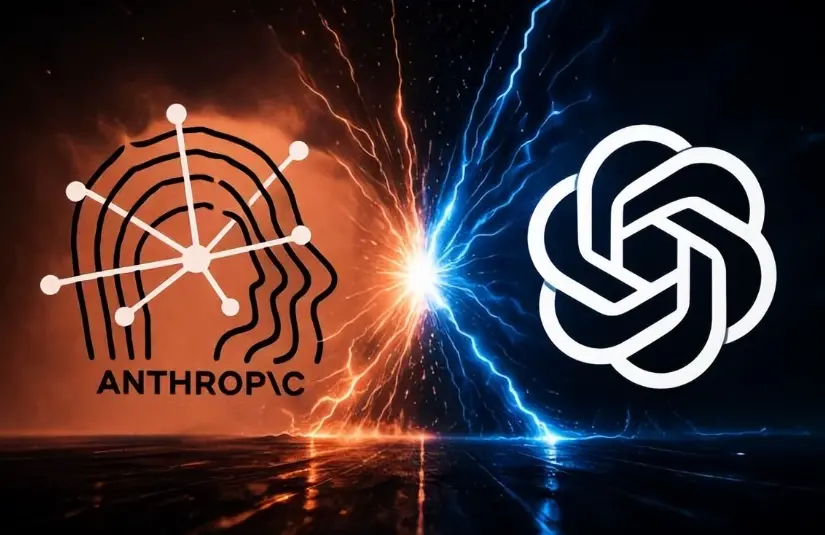
first_img The Ramp AI report shows that the adoption rate of Anthropic has surpassed that of OpenAI, with top companies' employees averaging an AI monthly expenditure of $7,449

The economic laboratory of the fintech company Ramp has released a new version of the Ramp AI Adoption Index report. Based on spending data analysis from over 70,000 U.S. enterprise customers, the adoption rate of enterprise-level AI for Anthropic increased by 2.5 percentage points to 41%, officially surpassing OpenAI, which slightly decreased to 39.5%, establishing a leading position in the field of commercial applications.The report focuses on analyzing the spending trends of top enterprises that "deeply adopt AI." Data shows that the top 1% of enterprises spend as much as $7,449 per employee per month on AI, with this figure still achieving a 14.1% increase last month; in contrast, the top 10% of enterprises have an average monthly spending of $611 per employee, while the median enterprise spends only $11.38 (approximately equal to the cost of a single basic subscription).Additionally, the research points out that enterprises that deeply apply AI do not experience "vendor lock-in" and generally adopt multiple cutting-edge large models, open-source platforms, and vertical AI solutions simultaneously. Although enterprises are beginning to experiment with more cost-effective models (such as DeepSeek) in the face of cost pressures, overall AI spending remains on an upward trend.

OpenAI has launched the next generation GPT-5.6 series models, currently available only to trusted partners using Codex and the API

According to official news, OpenAI has officially launched the preview version of the next-generation GPT-5.6 series models, including the flagship model Sol, the balanced model Terra, and the fast low-cost model Luna. GPT-5.6 introduces a brand new maximum reasoning effort and features a super strong mode that accelerates complex tasks through sub-agents.The flagship model Sol introduces the Ultra mode, which combines maximum reasoning intensity with sub-agent collaboration. In the Terminal-Bench 2.1 command line workflow test, Sol achieved a score of 88.8%, which increased to 91.9% in Ultra mode, surpassing GPT-5.5's 83.4% and Claude Fable 5's 88.0%. The mid-range model Terra performs close to GPT-5.5 while being priced at half, and the lightest model Luna is designed specifically for everyday automation tasks. Sol is priced at $5 per million input tokens and $30 for output, and it supports reducing secondary call costs by utilizing prompt caching.In terms of security, the security assessment confirmed that Sol did not exceed the critical thresholds of the Preparedness Framework cybersecurity. OpenAI has invested over 700,000 A100 equivalent GPU hours in automated red team exercises, equipping the entire series of models with a defense stack that includes rejection mechanisms, real-time abuse classifiers, and account-level audits. Although the current limited release follows the U.S. government's security framework, OpenAI emphasizes that it does not want a government-led access mechanism to become the long-term default model, as it would limit defenders' access to cutting-edge tools.

OpenAI's confidential IPO documents revealed: zero liabilities on the books, off-balance-sheet computing power and infrastructure commitments amounting to $665 billion

According to a report by The Information, the confidential IPO registration draft submitted by OpenAI shows that as of the end of March 2026, OpenAI's balance sheet exhibits "light asset" characteristics, with zero debt on the books and capital expenditures of only $46 million in the first quarter. However, in reality, the company has placed substantial infrastructure expenditures off the books, with future procurement commitments in chips, energy, and data centers reaching up to $665 billion. Financial data indicates that OpenAI's actual net loss in the first quarter was approximately $8.5 billion, with revenue costs amounting to $3.5 billion.Additionally, OpenAI demonstrates a very high characteristic of related-party funding cycles. In the first quarter, 72% of its revenue costs and 45% of total expenditures flowed to related parties (expected to be primarily Microsoft), and it directly used $488 million in equity to settle part of its computing power bills. In the data center joint venture project within its consolidated financial statements, nearly $5 billion in book losses is accounted for as belonging to external partners. The documents also reveal that its main competitor, Anthropic, is similarly engaging in large-scale off-balance-sheet expansion, including $4.5 billion in data center service commitments and $35 billion in chip leasing orders.

OpenAI expands its cybersecurity program Daybreak, launching a dedicated defense model GPT-5.5-Cyber

OpenAI announced a comprehensive expansion of its cybersecurity program Daybreak, aimed at leveraging artificial intelligence to accelerate the discovery and automatic remediation of software vulnerabilities. The core of this expansion is the full version dedicated model GPT-5.5-Cyber launched for trusted defenders. It is reported that this model has set the highest score records in multiple cybersecurity benchmark tests, surpassing GPT-5.5's 81.8% and competitor Mythos 5's 83.8%, significantly improving the accuracy of vulnerability scanning and patch generation. At the same time, the synchronously updated Codex Security plugin has been deeply integrated into the developer workflow, supporting fully automated codebase scanning, threat modeling, and patch generation.In terms of ecosystem development, OpenAI has launched an exclusive partner program, allowing compliant security service providers to integrate GPT-5.5 with specific permissions into their commercial products; and has initiated the "Patch the Planet" program in collaboration with organizations like Trail of Bits to assist over 30 foundational open-source projects such as Python and Go in implementing vulnerability fixes. In addition, OpenAI revealed that it is currently engaged in deep cooperation with governments and institutions from multiple countries, including the United States, the United Kingdom, France, and Japan, to jointly enhance the cybersecurity capabilities of global critical infrastructure.
app_icon
ChainCatcher Building the Web3 world with innovations.