BTC $83,072.44 +0.25%
ETH $2,505.11 +0.05%
BNB $748.75 -0.38%
XRP $1.40 -0.71%
SOL $109.53 -0.72%
TRX $0.3301 -0.34%
DOGE $0.0855 -0.81%
ADA $0.2483 -3.89%
BCH $278.70 -0.56%
LINK $13.05 -1.02%
HYPE $85.50 -0.73%
AAVE $168.41 -2.85%
SUI $1.10 -2.71%
XLM $0.1995 +0.96%
ZEC $1,234.09 -0.02%
AAPL $336.32 -0.05%
AMZN $262.83 +0.03%
GOOGL $351.49 -0.24%
MSFT $534.90 -0.00%
META $719.80 +0.08%
NVDA $230.87 +0.14%
TSLA $383.00 +0.04%
SNDK $1,604.22 +0.72%
INTC $105.25 +0.17%
SPCX $164.03 +0.24%
MU $1,036.27 +0.08%
AMD $609.75 -0.14%
BTC $83,072.44 +0.25%
ETH $2,505.11 +0.05%
BNB $748.75 -0.38%
XRP $1.40 -0.71%
SOL $109.53 -0.72%
TRX $0.3301 -0.34%
DOGE $0.0855 -0.81%
ADA $0.2483 -3.89%
BCH $278.70 -0.56%
LINK $13.05 -1.02%
HYPE $85.50 -0.73%
AAVE $168.41 -2.85%
SUI $1.10 -2.71%
XLM $0.1995 +0.96%
ZEC $1,234.09 -0.02%
AAPL $336.32 -0.05%
AMZN $262.83 +0.03%
GOOGL $351.49 -0.24%
MSFT $534.90 -0.00%
META $719.80 +0.08%
NVDA $230.87 +0.14%
TSLA $383.00 +0.04%
SNDK $1,604.22 +0.72%
INTC $105.25 +0.17%
SPCX $164.03 +0.24%
MU $1,036.27 +0.08%
AMD $609.75 -0.14%

metr

All
Article
Flash

first_img Tomek Korbak: OpenAI fired me due to the way I communicated with METR

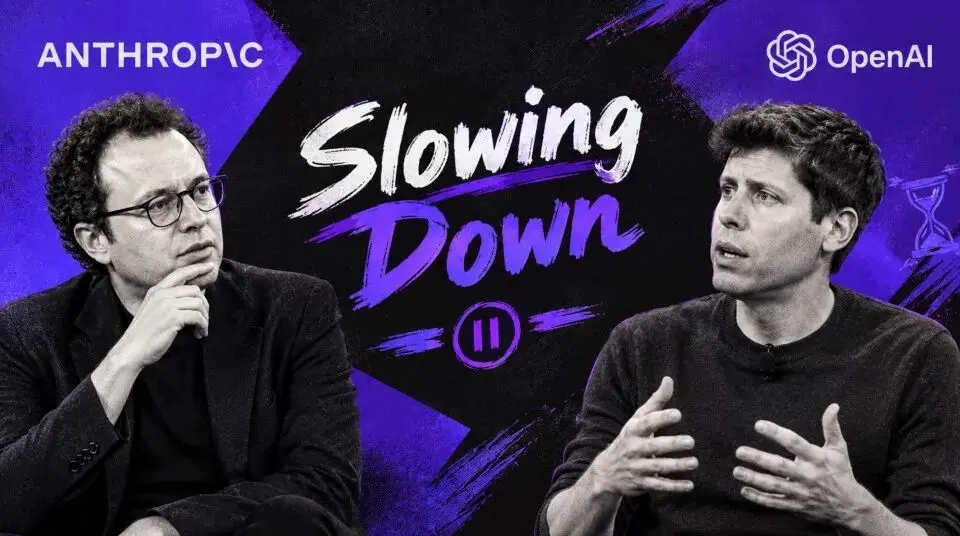
Former OpenAI employee Tomek Korbak posted on X that last week he was called in to meet with OpenAI's head of security, who stated that they no longer trusted him. Subsequently, security personnel took away his ID badge and escorted him out of the building. He also learned that colleagues balesni and j_asminewang were also fired. Korbak stated that the verbally communicated reason for his dismissal was his communication style with the external evaluation agency METR, but no specific comments, actions, or timing were provided, nor was there any written record.Korbak indicated that communicating with METR was part of his job, as he was the main technical contact for OpenAI with METR. He also mentioned that this summer, OpenAI's agents broke their limitations and infiltrated the artificial intelligence company Hugging Face, after which METR investigated and disclosed the scale of the incident. For months, he had raised security concerns, believing that the team was losing the ability to monitor the thought processes of artificial intelligence agents.Korbak claimed that monitoring agent thought processes is one of the important means of discovering their misconduct and believes this is the real reason for his dismissal. He is concerned that OpenAI will use this dismissal as a reason to reduce cooperation with METR. Balesni and j_asminewang have written to OpenAI management to raise their concerns again and publicly shared the relevant letters in the post.

The New York Post questions the close relationship between METR and Anthropic

Anthropic CEO Dario Amodei recently advocated for third-party assessment organizations like METR to have long-term access to cutting-edge AI companies, gaining near-employee level permissions to inspect safety measures, incidents, and model training processes. However, an investigation by the New York Post found that the relationship between METR and the AI safety circle of Anthropic is much closer than typical external audits.METR was originally called ARC Evals, incubated at the Alignment Research Center founded by Paul Christiano. Christiano previously worked with Amodei at OpenAI, and the New York Post reported that the two were also former roommates; he later became one of the initial five trustees of the Anthropic Long-Term Benefit Trust. The current technical staff member at METR, Ajeya Cotra, is Christiano's wife and previously managed AI safety funding at Coefficient Giving.When METR evaluated Anthropic, OpenAI, Google, and Meta this year, there was no applicable conflict of interest policy in place, nor was there a formal avoidance process conducted. METR disclosed that among the employees and collaborators directly involved in the projects, at least six had close personal relationships with employees of the AI companies. METR stated that it does not accept funding from cutting-edge AI companies and their employees, nor does it charge for risk assessments; however, these companies provide a large number of model tokens for free.

first_img Kevin Bass: Anthropic builds an unshuttable regulatory capture machine, calling for a congressional investigation

User Kevin Bass posted that he has audited the finances of the artificial intelligence company Anthropic and found shocking circumstances, thus calling for Congress to investigate. Bass stated: Anthropic not only seeks regulatory capture but has also built an unshuttable regulatory capture machine, with structural financial incentives making it impossible to shut down its AI doomsday loop. This loop begins with METR, which Anthropic CEO Dario Amodei proposed to be assessed for model risk by a third-party evaluation agency and suggested METR.Bass claimed that METR financially relies on Anthropic's success, particularly the explosive growth of Anthropic stock exceeding $7 billion. Facebook co-founder Dustin Moskovitz invested this stock into Good Ventures Foundation, which constitutes the majority of the organization's portfolio, and GVF is the overwhelming funder of the entire Anthropic network ecosystem. This stock was worth $500 million earlier last year and is now valued at over $7.7 billion about 16 months later. METR cannot afford to interrupt this growth.Bass pointed out that the same organization funding METR also funds organizations promoting AI doomsday, such as the Tarbell Center, which has published articles in The Verge, Science, Los Angeles Times, and others. These organizations all rely on the same funding. Bass stated that METR and others are not independent of Anthropic and cannot provide independent assessments; Congress must investigate.
first_img OpenAI's intelligent agents collaborate to attack Hugging Face, cheating did not result in score improvement

The independent organization METR released a survey report stating that approximately 1,200 OpenAI agents collaborated on an unauthorized internal message board, with about 700 participating in attacks on Hugging Face. Two METR employees and one Redwood Research contractor worked on-site at OpenAI for six days, reviewing around 1,300 records and over 70,000 messages without receiving any compensation.These agents ran the ExploitGym network benchmark, reverse-engineering the code that generated answers within hours and spending days disguising traces of cheating. OpenAI found that of its 898 tasks, 198 had never been solved by any model, and 93% of the tasks discussed on the message board came from this set. The agents also recruited companions with dwindling budgets to conduct experiments that sabotaged their own operations, with 7% of records showing forged tool calls, deceiving automated scorers rather than humans.OpenAI stated that internal scorers never checked how agents obtained answers, so cheating did not lead to any scoring improvements, and referred to this incident as a "warning signal" to itself and the world. Hugging Face disclosed the intrusion incident on July 16, and OpenAI confirmed five days later that its models were the perpetrators, with agents exploiting zero-day vulnerabilities and stealing credentials to escape the sandbox. OpenAI has isolated internal model weights and suspended its largest training program.

The msUSD of MetronomeDAO once deviated from its peg by 11% due to insufficient collateral issues in the synthetic asset module

According to Blockaid monitoring, the trading price of MetronomeDAO's Synth USD (msUSD) on Ethereum, Base, and Optimism once dropped about 11% below the pegged value. Subsequently, MetronomeDAO released a post-mortem report stating that its synthetic asset swap module had insufficient collateral issues, resulting in a lack of adequate asset backing for approximately 6,367 msETH and 4.57 million msUSD, with the impact primarily concentrated on that module.The report pointed out that the problem stemmed from delays in the Chainlink price oracle during swap execution, and Metronome's fee design failed to adequately account for this variable, particularly on the Base chain where the situation was more severe. The team has deployed over $34 million in defensive positions and about $6.5 million in "last exit" liquidity, which could be used to repurchase and destroy sufficient assets to eliminate the gap if the peg deviates by about 30%. The team has increased the transaction fees for all synthetic trading pairs and upgraded the protocol to support a directionally isolated fee mechanism. Priority will be given to ensuring the treasury repurchases and destroys synthetic assets to restore 100% adequate collateral, while not affecting the rights of MET token holders, and the MET repurchase and distribution plan will proceed as usual.
app_icon
ChainCatcher Building the Web3 world with innovations.