Scan to download
BTC $70,411.30 +1.34%
ETH $2,067.19 -0.44%
BNB $632.89 -1.37%
XRP $1.43 +0.97%
SOL $85.91 -1.19%
TRX $0.2781 +0.51%
DOGE $0.0953 -1.35%
ADA $0.2697 -0.25%
BCH $522.80 -0.01%
LINK $8.75 -0.73%
HYPE $32.46 +4.61%
AAVE $112.55 +0.25%
SUI $0.9718 -1.46%
XLM $0.1606 +0.22%
ZEC $233.64 -2.52%
BTC $70,411.30 +1.34%
ETH $2,067.19 -0.44%
BNB $632.89 -1.37%
XRP $1.43 +0.97%
SOL $85.91 -1.19%
TRX $0.2781 +0.51%
DOGE $0.0953 -1.35%
ADA $0.2697 -0.25%
BCH $522.80 -0.01%
LINK $8.75 -0.73%
HYPE $32.46 +4.61%
AAVE $112.55 +0.25%
SUI $0.9718 -1.46%
XLM $0.1606 +0.22%
ZEC $233.64 -2.52%

scalability

Vitalik questions the L2 scaling path, Arbitrum, Optimism, and Base collectively respond in the direction of de-homogenization

According to Cointelegraph, after Ethereum co-founder Vitalik Buterin commented that "the original vision of Layer 2 as the primary scaling engine is no longer applicable," several L2 builders responded, generally agreeing that Rollup needs to move beyond the positioning of "a cheaper Ethereum," but there are disagreements on whether scaling should still be its core role.Optimism co-founder Karl Floersch welcomed the challenge of building a modular L2 stack that supports "full-spectrum decentralization," while acknowledging that there are still major obstacles such as long withdrawal periods, second-stage proofs not being production-ready, and insufficient cross-chain application tools. He supports the native Rollup precompiled solutions emphasized by Buterin.Steven Goldfeder, co-founder of Arbitrum developer Offchain Labs, took a firmer stance, arguing that although the Rollup model has evolved, scaling remains the core value of L2. He pointed out that Arbitrum was not built as "a service of Ethereum," but because Ethereum provides a highly secure and low-cost settlement layer, making large-scale Rollups possible. He warned that if Ethereum is seen as hostile to Rollups, institutions might choose to launch independent Layer 1 chains instead of deploying on Ethereum.Base head Jesse Pollak stated that scaling Ethereum L1 is "a victory for the entire ecosystem," agreeing that L2 cannot just be "a cheaper Ethereum." He mentioned that Base is differentiating itself through applications, account abstraction, and privacy features, and is working towards decentralization in the second stage.StarkWare CEO Eli Ben-Sasson hinted that some ZK-native L2s (like Starknet) believe they already fit the specialized role described by Buterin. The entire Ethereum ecosystem is facing a roadmap adjustment: the base layer aims to enhance its capabilities, while L2 is repositioning itself as a dedicated environment serving different technical needs.
Vitalik: The core difficulties of blockchain scalability are computation, data, and state

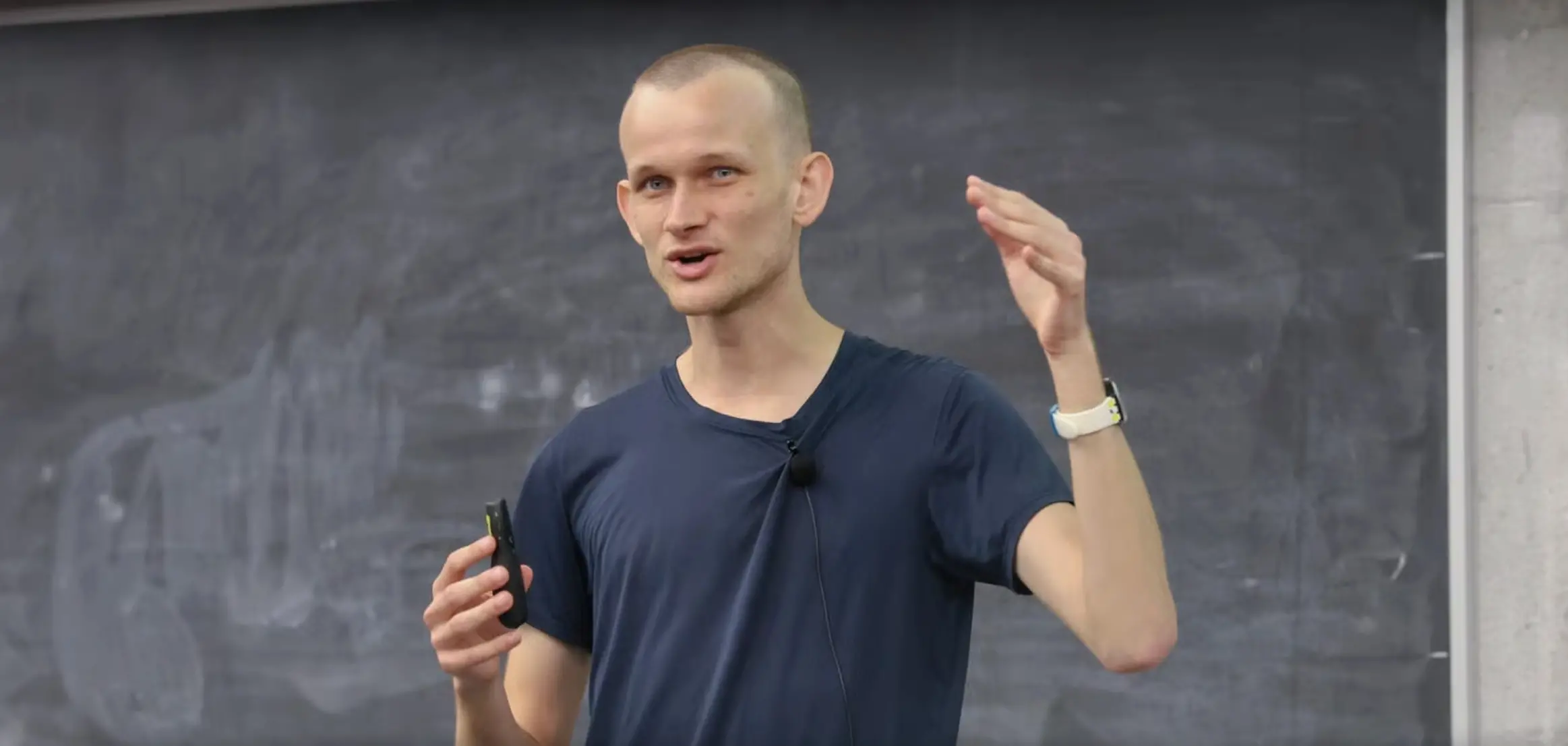
Vitalik Buterin published an article explaining his layered understanding of blockchain scalability, pointing out that the difficulty of scaling blockchains increases from low to high in terms of computation, data, and state.Vitalik stated that computation is the easiest to scale, which can be achieved through parallelization, introducing "hints" provided by block builders, or replacing extensive computation with proofs such as zero-knowledge proofs. Data scalability is of medium difficulty; if the system requires data availability guarantees, this requirement cannot be avoided, but it can be optimized through data sharding, erasure coding (like PeerDAS), and supporting "graceful degradation," meaning that blocks of a corresponding size can still be generated even when node data capabilities are lower.In contrast, state is the most challenging part to scale. Vitalik pointed out that to validate even a single transaction, nodes require the complete state; even if the state is abstracted as a tree and only the root node is saved, updating that root still relies on the complete state. Although there are methods for state sharding, they typically require significant architectural changes and are not universal solutions.Based on this, Vitalik concluded that if data can replace state without introducing new centralization assumptions, it should be prioritized; similarly, if computation can replace data without introducing new centralization assumptions, it should also be taken seriously.

2026 will mark a turning point for Ethereum's ZK scaling, as the verification mechanism undergoes a transformation akin to the merge

Researchers and developers expect that 2026 will be a key year for Ethereum to achieve exponential scalability through zero-knowledge proofs (ZK). By then, some Ethereum validators will no longer re-execute transactions but will directly verify ZK proofs, fundamentally changing the way the blockchain operates, with scalability comparable to Ethereum's transition from PoW to PoS in "The Merge" in 2022.Ethereum researcher Justin Drake stated that the first validators will begin to verify ZK proofs for each block instead of re-executing all transactions, which will bring immediate scalability benefits to Layer 1 and lay the groundwork for 10,000 TPS in the future. Currently, the Ethereum mainnet has a throughput of about 30 TPS. During Devconnect, Drake demonstrated that ZK proof verification could be completed using an old laptop, and it is expected that by the end of 2026, about 10% of validators will switch to ZK verification mode (Lean Execution Phase 1). This transition will significantly reduce the hardware requirements for validating nodes while maintaining network decentralization.Ethereum Besu client engineer Gary Schulte pointed out that future compute-intensive tasks will mainly be handled by block builders and ZK provers, while regular validators will only need to perform lightweight checks, creating conditions for increasing gas limits and overall throughput. On the roadmap, Ethereum is currently still in Phase 0 (voluntary validation), expected to enter Phase 1 (partial validator switch) in 2026, and move into Phase 2 in 2027, which will require block producers to generate ZK proofs, achieving fully ZK execution.
app_icon
ChainCatcher Building the Web3 world with innovations.