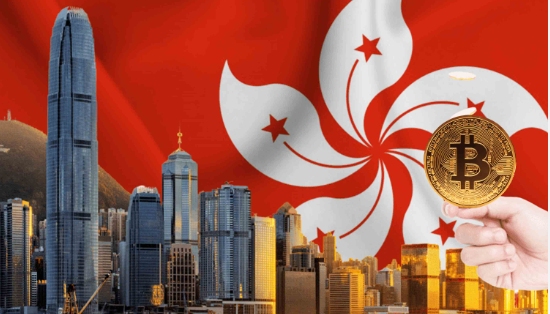
On-chain Hong Kong, where are the opportunities?
 In this emerging digital economy landscape, Hong Kong is both the starting point and the destination.
Author: Deep Tide TechFlow
The familiar Hong Kong is back!
Once dubbed the "financial wasteland," Hong Kong has made an astonishing comeback in just one year.
The Hong Kong stock market is buzzing, with 43 new stocks listed in six months, raising HKD 106.71 billion, reclaiming the top spot in global IPO fundraising. Giants like CATL and Heng Rui Medicine have flocked to the market, while Pop Mart, Mixue Ice City, and Lao Pu Gold have ignited a bull market for consumer stocks.
Alongside the recovery of the capital market, there is also a wave of digital assets.
In May, Hong Kong passed the "Stablecoin Ordinance," establishing a licensing system for stablecoin issuance, which will officially take effect on August 1.
In June, the Hong Kong government released the "Digital Asset Policy Declaration 2.0," paving the way for the development of stablecoins and real-world assets (RWA). And just today, the signing of a partnership between Hong Kong Polytechnic University and Ant Group to co-establish an AI+Web3 joint laboratory adds the latest footnote to this revival.
In a café in Central, the familiar scene has reappeared: on one side, investment banking elites excitedly discuss investment opportunities in Hong Kong and U.S. stocks, while on the other, entrepreneurs and lawyers passionately debate the issuance of stablecoins and RWAs, as well as cross-border settlements.
The aroma of coffee mingles with various financial terms, as if we have returned to the vibrant golden age of Hong Kong.
In the "On-chain Hong Kong" era, where are the opportunities for entrepreneurs?
Digital Asset Policy Declaration 2.0
Following the release of the first policy declaration by the Hong Kong SAR government in October 2022, the "Hong Kong Digital Asset Development Policy Declaration 2.0" was officially launched on June 26, reaffirming the goal of making Hong Kong a global hub for digital asset innovation.
Notably, the new declaration upgrades the term "virtual assets" to "digital assets," which is not just a simple change in wording but signifies that the regulatory perspective extends beyond cryptocurrencies like Bitcoin and Ethereum, and stablecoins, to include token forms closely linked to real-world assets, namely the recently widely discussed RWAs.
To express the policy vision more clearly, the Hong Kong SAR government has adopted a dynamic English acronym "LEAP" in the new declaration, representing four strategic pillars—Legal & Regulatory, Expanding tokenised products, Advancing use cases & collaboration, and People & Partnership.
In terms of legal and regulatory aspects, Hong Kong will be led by the Securities and Futures Commission to establish a unified regulatory framework covering key areas such as digital asset trading platforms, custody services, and stablecoins; at the same time, the Financial Services and the Treasury Bureau and the Monetary Authority will promote legal reforms to support the registration, settlement, and issuance of physical assets like bonds and gold on-chain.
In the area of tokenised products, the government has explicitly stated its intention to normalize the tokenization of government bonds and provide stamp duty incentives for ETF tokenized products. Additionally, the policy encourages the tokenization of various real-world assets such as precious metals (e.g., gold), non-ferrous metals, and even renewable energy (e.g., solar equipment).
Regarding practical applications, this policy declaration has clarified a key timeline: starting from August 1, stablecoin issuers can officially apply for licenses, and the government particularly encourages pilot applications of stablecoins in real business scenarios such as payments and cross-border settlements, as well as establishing special funds to support the implementation of blockchain projects.
At the "On-chain Hong Kong 2.0" ecological roundtable event, Ant Group's Vice President and President of Ant Group's blockchain business, Bian Zhuoqun, pointed out: "In the new policy, I see three keywords: digital assets, legal framework, and infrastructure. If we have such a large compliance framework for our technological infrastructure, and then introduce more assets, including industrial assets and financial assets, based on our own advanced technology, we can form a new digital asset exchange that can gather excellent global assets and funds in Hong Kong."
Qi Haiying, CEO of Guotai Junan International, noted that the new declaration is globally leading in three dimensions: regulatory framework, market mechanisms, and tax incentives. She specifically mentioned that stablecoins and RWAs serve as the "dual pillars" of digital assets, reflecting the foresight and inclusiveness of Hong Kong's regulatory authorities.
Where are the Opportunities for Stablecoins and RWAs?
Li Yuan, a serial entrepreneur from Shenzhen, has recently been frequently traveling between Shenzhen and Hong Kong.
He previously ran a manufacturing company and is now involved in the new energy charging pile sector, beginning to explore RWAs. After the Hong Kong government released the "Policy Declaration 2.0," he quickly set about researching every statement within it, trying to find his own "runway."
Among the various policies, he is most focused on the parts concerning the combination of "stablecoins" and "RWAs" (real-world assets).
"The issuance of stablecoins is a game for the giants, but the landing of scenarios is the opportunity for ordinary entrepreneurs," Li Yuan said.
In his view, stablecoins serve as a medium, while RWAs act as a carrier, meaning that China's industrial assets, especially those in green energy and infrastructure sectors currently facing capacity pressures, have the opportunity to reach global markets through "on-chain going overseas." He even likens RWAs to "a new round of Chinese assets going overseas," a new export system supported by blockchain technology and using stablecoins as a channel.
This line of thinking is becoming a consensus.
Gan Tian, CEO of Huaxia Fund Hong Kong, stated: "In the next 5 to 10 years, traditional financial assets will move on-chain, and RWAs will address current market pain points. Hong Kong will play a leading role in redefining the global asset circulation pattern."
This policy direction has been clearly articulated in Hong Kong's policy documents, with multiple contents encouraging the tokenization of real-world assets, particularly mentioning the new energy sector:
"We actively encourage innovative application scenarios, including the tokenization of traditional financial products (such as money market funds and other funds) and the revenue streams of real-world assets (such as electric vehicle charging stations)."
"The government will intensify efforts to expand tokenization schemes, … including diverse applications of precious metals (such as gold), non-ferrous metals, and renewable energy (such as solar panels)."
In this field, Fei Zhi, Vice Chairman of the energy company GCL Group, has firsthand observations. He pointed out that photovoltaic assets possess characteristics such as legality, clear cash flow, defined ownership, and compliance with ESG standards, making them the most representative type of "on-chain assets." Through RWAs, these green assets can provide solid value support for stablecoins.
Yang Leiming, Chief Financial Officer of Hong Kong and China Gas, also noted that RWAs can not only help energy companies manage the tokenization of fixed-income assets, improving asset circulation efficiency, but also, in conjunction with the international settlement function of stablecoins, are expected to expand the global trade landscape.
In the practice of new energy RWAs, Ant Group is at the forefront of the industry.
Since August 2024, Ant Group has collaborated with multiple new energy companies to put assets such as charging piles and household photovoltaics on-chain, transforming them into tradable RWA assets.
The first project was launched in Hong Kong, partnering with Longxin Technology, using approximately 9,000 charging piles as the underlying assets to complete financing of around RMB 100 million. Subsequently, in December 2024, Ant Group collaborated with GCL Energy to launch the country's first photovoltaic green asset RWA project, with financing exceeding RMB 200 million. In March 2025, they partnered with Xunying Group to tokenize battery swap cabinets and lithium battery assets on-chain, involving a funding scale of tens of millions of HKD.
In the Ensemble sandbox program led by the Hong Kong Monetary Authority, Ant Group has connected over 15 million energy devices through blockchain + IoT technology, creating the world's largest new energy on-chain asset platform.
As power generation assets, energy storage systems, and green financial instruments are gradually tokenized, a cross-border circulating on-chain financial ecosystem has quietly taken shape. In the future, new energy RWAs are expected to give rise to credit products, financial derivatives, and carbon asset trading, constructing a global digital financial system anchored by power assets.
Chinese Assets, On-chain in Hong Kong
For Li Yuan, Hong Kong is not just a city, but a bridge to the world.
Leveraging Hong Kong's legal system, financial openness, and international environment, he can more efficiently connect with international capital and compliance institutions, which is the best channel for "going overseas" in the digital asset era.
With the release of the "Digital Asset Development Policy Declaration 2.0," Hong Kong is transitioning from a local financial center to a global output location for digital asset regulations, creating an Eastern model for stablecoins and RWAs.
"We regard Hong Kong as the overseas headquarters of Ant Group, radiating to the Middle East and Europe, while also serving Chinese companies going overseas, ultimately bringing funds and trust back to Hong Kong," said Bian Zhuoqun, Vice President of Ant Group, defining Hong Kong's strategic role.
In fact, Hong Kong's accumulation in blockchain infrastructure development is not a short-term endeavor.
Since 2016, Hong Kong has promoted the application of blockchain technology in trade financing, payment clearing, and virtual asset regulation, with the establishment of Cyberport laying the foundation for ecological development. Entering 2020, the Hong Kong government successively launched virtual bank licenses and the "Guidelines for the Operation of Virtual Asset Trading Platforms," providing a clear regulatory path for digital asset trading. In 2023, the "Digital Hong Kong Dollar" project was initiated to explore the synergistic effects of central bank digital currency (CBDC) and tokenized assets.
In 2024, Ant Group launched the "Two Chains and One Bridge" RWA platform to promote the on-chain and trading of new energy assets in Hong Kong, with Longxin Technology, GCL Energy, and Xunying Group successfully putting energy assets on-chain in Hong Kong, completing cross-border financing.
In June 2025, following the release of the "Policy Declaration 2.0," Ant Group simultaneously opened Layer 2 networks, large model tools, blockchain + IoT architecture, and institutional-level Web3 wallets. In July, a strategic cooperation was reached with Hong Kong Polytechnic University to create a global technology innovation source around AI and Web3 technologies.
It can be said that Hong Kong has become a pioneering demonstration area for "on-chain—financing—trading—cross-border circulation" of China's new energy assets.
For mainland entrepreneurs like Li Yuan, Hong Kong is no longer just a traditional financing transfer station, but a bastion that can push their technology and assets into the global market. "Chinese assets, on-chain in Hong Kong, going global" may become a new choice for Chinese entrepreneurs.
In this emerging digital economic landscape, Hong Kong is both the starting point and the destination.
Recommended Reading:
Solana and Base Founders Start a Debate: Does Content on Zora Have "Fundamental Value"?
Paradigm Incubation, Ventuals Attempts to Bridge the "Last Mile" of Private Equity On-chain Trading
The Fall Trilogy of Pump.fun: Legal Hunting, Price Halving, Trust Collapse
 Risk warning
 Risk warning