Morning Report | Grayscale: If the Federal Reserve stops raising interest rates, Bitcoin may have already hit bottom; tokenized stock market capitalization reaches a new high of $2.3 billion, major platforms set multiple historical records on the same day
 July 23 Market Important Events Overview
Compiled by: ChainCatcher
What important events have occurred in the past 24 hours?
Grayscale: If the Federal Reserve stops raising interest rates, Bitcoin may have already bottomed out
According to ChainCatcher, Grayscale's research director Zach Pandl stated that there are currently two main views on when the Bitcoin bear market will end: one follows the "four-year cycle," and the other sees Bitcoin as a mature asset driven by macro factors. The "four-year cycle" view believes that the halving event remains the core driving factor of Bitcoin's price cycle. Historically, Bitcoin usually bottoms out about a year after the cycle peak and about 2.5 years after the halving, with an average cumulative drawdown of about 80%. According to this pattern, Bitcoin may still decline further this time and form a bottom in September or October. The other view suggests that Bitcoin's price will be more influenced by economic growth, real interest rates, and changes in Federal Reserve policy, similar to other major assets. Previous Bitcoin bear markets have typically coincided with economic slowdowns or rising real interest rates, and this decline is also occurring against a backdrop of rising interest rate expectations and actual interest rate increases. Pandl expressed that he aligns more with the macro-driven perspective. If the Federal Reserve stops raising interest rates and economic growth remains stable, Bitcoin's price may have already bottomed out.
BlackRock, Strategy, and others jointly establish a Bitcoin Security Alliance, committing to provide $15 million in funding for core developers and quantum resistance research over three years
According to ChainCatcher, nine financial institutions and Bitcoin companies announced the establishment of a Bitcoin Security Alliance, with founding members including Anchorage Digital, ARK Invest, BlackRock, Block, Blockstream, Coinbase, Fidelity, Galaxy, and Strategy, covering the entire chain of custody, trading, infrastructure, payment, and asset management. The alliance commits to providing a total of $15 million in funding over the next three years to support developers and researchers in the field of Bitcoin security, including long-term work to prepare Bitcoin for the future quantum computing era. Each member independently decides which developers, researchers, or organizations to direct their funding towards. The daily operations of the alliance are coordinated voluntarily by Mike Schmidt, Executive Director of Brink, a nonprofit organization that funds Bitcoin open-source developers. The alliance explicitly states that it does not set or direct Bitcoin protocol, does not express opinions on specific protocol changes, and does not represent Bitcoin or its developers—Bitcoin development continues to be carried out by a globally decentralized contributor community. Its positioning is to emulate industry organizations that have long supported open-source software, providing resources and attention to developers without controlling the underlying work. Strategy CEO Phong Le stated, "As long-term holders, ensuring the security of Bitcoin for generations is our greatest incentive"; BlackRock's Global Head of Digital Assets Robert Mitchnick pointed out that the work of Bitcoin core developers is "extremely important," and this commitment will provide "significant additional funding" for Bitcoin's long-term security needs. The alliance will also serve as a reliable source of information for investors, the public, and the media in the field of Bitcoin security, with plans to publish and continuously update Bitcoin security-related materials in the coming months.
The South Korean Financial Services Commission plans to include digital asset custody under independent business regulation
According to ChainCatcher, the South Korean Financial Services Commission stated that it will soon submit the second phase legislative government bill for the "Digital Asset Basic Law" and will coordinate the publication of guidelines for corporate crypto asset trading with the legislative process. It also plans to include digital asset custody under independent business regulation and is cautious about requiring exchanges to separate custody businesses. Additionally, South Korea will reference EU practices to provide a more convenient access mechanism for traditional financial institutions applying for virtual asset service provider licenses. Regarding the market's concern about the separation of exchange custody businesses, the South Korean Financial Services Commission stated that there are currently few mandatory split cases overseas and prefers to prevent conflicts of interest through improved behavioral regulation rather than requiring exchanges to operate custody businesses independently.
Bitwise CIO: The crypto market shows signs of bottoming out, the next bull market will be driven by the integration of on-chain and traditional finance
According to ChainCatcher, Bitwise Chief Investment Officer Matt Hougan analyzed that the crypto market is showing signs of bottoming out—since July 1, Bitcoin has risen 9% while the Nasdaq has fallen 6%, and ETF fund flows have turned positive, improving market sentiment. Hougan believes the next bull market will be driven by the integration of on-chain finance and traditional finance, with core sectors being stablecoins, tokenization, 24/7 trading, instant settlement, and institutional DeFi. He suggests focusing on two types of opportunities: one represented by Hyperliquid (HYPE), a crypto-native application with real revenue and a strong token economic model (99% of revenue is used for buybacks and burns), which has risen 146% this year; the other represented by Robinhood (HOOD), a traditional financial institution whose Layer 2 blockchain Robinhood Chain attracted over $300 million in deposits within two weeks of launch, processing an average of 3.6 million transactions daily and supporting 120 countries for 24/7 trading of tokenized stocks. Hougan is optimistic about mainstream assets like Bitcoin, Ethereum, and Solana, as well as crypto stocks, while paying attention to institutions like Coinbase, Figure, BlackRock, Visa, Stripe, and JPMorgan that are scaling their presence in the crypto space.
Pendle announces H2 roadmap, intensifying focus on RWA and institutional markets, Boros will focus on on-chain interest rate derivatives
According to ChainCatcher, Pendle co-founder TN and growth lead Dan reviewed the development situation for the first half of 2026 in the latest community meeting and announced the roadmap for the second half of the year. The team stated that in the first half of the year, Pendle's ecosystem focused on building fixed income infrastructure, with Pendle V2 continuing to solidify its position as an on-chain fixed income protocol, while Boros has made preliminary progress in the on-chain interest rate derivatives market. Data shows that Pendle V2's average daily TVL in the first half of the year was about $1.3 billion, and currently, 9 out of 11 major markets on the platform have adopted real-world assets (RWA) as collateral, reflecting that institutional funds are continuously flowing into the RWA sector. Additionally, Pendle has launched on the Monad network and has become one of the top five protocols by TVL on that network in less than a month, locking in about $150 million. In terms of protocol upgrades, Pendle has completed the migration from vePENDLE to sPENDLE, with about 36% of PENDLE staked, of which 93% of stakers have not yet unstaked. The protocol has also used revenue to complete a buyback of about 2 million PENDLE and significantly reduced weekly liquidity incentives from about 90,000 to 21,000, further enhancing capital efficiency. Meanwhile, Pendle has introduced an in-app one-click Loop feature to simplify the operational process of leveraged yield strategies. Another core product, Boros, has accumulated a trading volume of over $14 billion in less than a year, with the number of users increasing by 50% since the beginning of the year, and has added tools such as four-leg arbitrage strategies, acceptance of block trades, and funding rate data dashboards to meet professional trading needs. Looking ahead to the second half of 2026, Pendle will focus on advancing curation infrastructure, allowing external teams to create PT/YT markets, and promoting PT assets as collateral for lending protocols; it will also collaborate with partners like Morpho to launch Pendle-branded yield vaults to expand the distribution channels for fixed income products. In terms of institutional business, the team is working with several RWA issuers in New York to plan the introduction of tokenized ETFs and single bonds as on-chain yield products into Pendle, creating a platform for institutional RWA yield discovery and distribution. Boros will shift its strategic focus to cross-platform funding rate arbitrage, prioritizing services for institutional arbitrageurs, and plans to launch a peer-to-peer acceptance market, funding rate visualization tools, and one-click strategy products for ordinary users, further improving the on-chain interest rate derivatives ecosystem.
Coinbase's Singapore office officially opens, plans to increase local staff to about 200 by the end of the year
According to ChainCatcher, Coinbase officially opened its office at Raffles Quay No. 1 in Singapore on July 22. Singapore Country Director Hassan Ahmed stated in an interview with The Business Times that the plan is to increase local staff from about 150 to about 200 by the end of 2026, with the fastest-growing positions concentrated in engineering, customer service, relationship management, and institutional sales. Ahmed noted that Singapore is one of the most trusted financial centers in the world and one of Coinbase's fastest-growing international markets. This expansion contrasts with Coinbase's global layoff of about 14% in May this year. Ahmed explained that the company is optimistic about the adoption prospects of crypto and stablecoins in Singapore and the Asian region, with the local clear regulatory framework, friendly business environment, and strong capital flow being attractive factors. Coinbase obtained a full major payment institution license under Singapore's Payment Services Act in October 2023 and is currently exploring the intersection of AI and digital assets, including equipping stablecoin wallets for AI agents.
Fixed-rate lending protocol Tenor completes seed round financing, Variant leads the investment
According to ChainCatcher, non-custodial fixed-rate lending platform Tenor announced the completion of its seed round financing, led by Variant, with participation from Nascent, Prelude, Coinbase Ventures, Lattice, Very Early, and several angel investors continuing to provide support. The amount of financing has not been disclosed. Tenor is built on Morpho's fixed-rate lending underlying protocol Midnight and is currently live on the Base network, with plans to expand to more chains, supporting features such as automatic extensions, OTC quotes, and floating interest rate calculations for pending orders. The platform currently supports crypto asset collateralized lending and plans to expand into foreign exchange and credit markets.
Mizuho: The Clarity Act may exacerbate stablecoin competition in the long term, negatively impacting Circle
According to ChainCatcher, Mizuho analysts stated that if the Clarity Act, a structural bill for the U.S. crypto market, is passed, it may generally benefit the digital asset industry, but the long-term impact on Circle may be negative. Their reasoning is that regulatory clarity will attract more large institutions into the stablecoin market, further accelerating the commodification of stablecoins and eroding the revenue space of Circle's USDC. Mizuho believes that the main pressure Circle has faced recently comes from Open USD. This stablecoin project is supported by an alliance of over 140 financial, technology, and crypto companies, including Visa, Mastercard, Stripe, BlackRock, and Coinbase. Unlike Circle's model of retaining about 38% of USDC reserve earnings, Open USD adopts a "pass-through" model, distributing nearly all reserve earnings to distributors while retaining only a small management fee. Analysts also pointed out that Coinbase, as the largest distributor of USDC, also supports Open USD, which may give it stronger bargaining power when renegotiating revenue-sharing agreements with Circle in the future. The distribution agreement between the two parties may be renegotiated as early as next month.
Bitcoin treasury company Empery Digital makes a strategic investment of $20 million in Cardinal Data Power
According to ChainCatcher, Empery Digital Inc. (NASDAQ: EMPD), a U.S. listed company that adopts a Bitcoin fund management strategy, announced that it completed a $20 million preferred stock investment in Cardinal Data Power, Inc. (referred to as "CDP") on July 20, 2026, holding approximately 8% of its equity. CDP is affiliated with Hunt Properties and focuses on building power-driven data center parks, dedicated to providing power and construction for next-generation gigawatt-level data center parks in West Texas and West Virginia. This investment is part of CDP's approximately $70 million Series A financing, aimed at supporting its first park project in West Texas, which spans over 3,500 acres, with phase one scheduled to be operational by 2027 and a total installed capacity expected to reach about 1 gigawatt by 2029, with future plans to expand to over 5 gigawatts. The Series A financing is led by Hood River Capital Management.
Shenzhen reports a batch of self-media accounts involved in virtual currency violations, multiple accounts permanently closed
According to ChainCatcher, the People's Bank of China's Shenzhen branch, Shenzhen Securities Regulatory Bureau, Municipal Internet Information Office, and Municipal Local Financial Supervision Bureau have continuously carried out special rectifications, urging local website platforms to strictly implement their responsibilities and legally handle a batch of illegal self-media accounts. Some typical cases include: "USDT Merchant Group," "Group to Play Virtual Currency," "Search Bitcoin," "WeChat Quick Exchange," "Zhongchain Old Nine," "Medicine Break Good Sleep," "Little Goldfish 9884," "User 0767527971," and other accounts that illegally provided marketing and promotional information related to virtual currency business activities within the country, inducing the public to participate in illegal financial activities involving virtual currency. According to the relevant policies such as the "Notice on Further Preventing and Handling Risks Related to Virtual Currency," the above accounts have been permanently closed by the platform in accordance with the law.
Future Asset Consulting will hold 97.15% of South Korean crypto exchange Korbit, transaction expected to complete on July 24
According to ChainCatcher, according to Yonhap News Agency, Future Asset Consulting, a non-financial subsidiary of Future Asset Group, will acquire a total of 97.15% of the shares of South Korean crypto exchange Korbit. Korbit stated on July 23 that Future Asset Consulting completed the acquisition of 91.7% of the shares on the 22nd and is expected to acquire the remaining 5.42% of shares on the 24th to complete the transaction. Previously, Future Asset Consulting announced on the 21st that it would acquire 1,589,900 shares of Korbit for approximately 7.887 billion Korean won, increasing its total holdings from about 26,905,800 shares to about 28,495,700 shares, with total investment increasing from about 133.48 billion Korean won to about 141.367 billion Korean won. Korbit stated that it will continue to provide existing services, and user deposits and crypto assets will be managed separately in accordance with the "Virtual Asset User Protection Law," with Korbit remaining the entity responsible for personal information processing, and the purposes and scope of processing remaining unchanged.
B² Network suffers a hack, losing approximately $3.86 million
According to ChainCatcher, on-chain analyst Specter monitored that B² Network on BNB Chain suffered a hack, losing approximately 8.591 million B2 tokens (about $3.86 million). The attacker exchanged them for 5,409 WBNB (about $3.11 million) and then cross-chained to Ethereum, currently transferring funds to Zcash via NEAR Intents. The team subsequently contacted the attacker on-chain, stating that if they could return at least 10% of the stolen funds (about $386,000) to the official address within 24 hours, the team would consider it a good faith act and would not initiate legal proceedings.
The probability of the Federal Reserve maintaining interest rates in July is 65.3%, and the probability of a rate hike in September is 54.9%
According to ChainCatcher, according to Jinshi reports, CME's "Fed Watch" shows that the probability of the Federal Reserve maintaining interest rates in July is 65.3%, and the probability of a cumulative rate hike of 25 basis points is 34.7%. By September, the probability of maintaining interest rates is 22%, while the probability of a cumulative rate hike of 25 basis points is 54.9%, and the probability of a cumulative rate hike of 50 basis points is 23%.
Zhao Changpeng: BitMEX did not survive the Biden administration's "crypto war," having pioneered 100x crypto contracts back in 2014
According to ChainCatcher, Binance founder Zhao Changpeng paid tribute to BitMEX founder Arthur Hayes in a post. It is regrettable to see BitMEX close. Some thoughts: BitMEX was the first to launch 100x cryptocurrency trading back in 2014. Delivery futures had already existed before this, making Friday's trading exceptionally lively. BitMEX only accepted Bitcoin deposits, supported only one chain, allowed withdrawals once a day, and required multi-signature wallets. These seemingly inconvenient restrictions actually protected them from hacker attacks. After 18 months of struggle, the four founders ultimately admitted to violating the Bank Secrecy Act (BSA) a month before their trial. They were each fined $10 million and placed under house arrest. No one went to jail as a result. However, their business ultimately did not survive the "crypto war" initiated by the Biden administration. In the end, BitMEX's liquidation process appears orderly, and users can withdraw their assets. A tribute to Arthur Hayes.
Coinbase invests in Abu Dhabi sovereign wealth fund Mubadala's tokenized products
According to ChainCatcher, Mubadala Capital, the Abu Dhabi sovereign wealth fund, announced a partnership with Coinbase and infrastructure provider KAIO to tokenize its evergreen private market fund, issuing compliant on-chain tokens to qualified investors. Coinbase will use its Base blockchain as one of the underlying networks and will personally purchase the token, incorporating the Mubadala fund into its balance sheet. This is reportedly the first time a major U.S. listed company has used compliant tokenized assets for native on-chain financial management. The product has attracted about $75 million in funding, with investors including traditional institutions and crypto-native allocators. Mubadala manages assets totaling nearly $400 billion, and this tokenization aims to break through the high barriers of traditional private equity and expand the potential investor base.
K25.ai completes Series A financing and doubles its valuation to $200 million, receiving strategic support from Amber Group
According to ChainCatcher, AI-native live prediction market K25.ai announced the completion of its Series A financing, receiving strategic support from Amber Group, with a post-investment valuation reaching $200 million, doubling in less than 60 days. This round of investment will accelerate K25.ai's product development, global expansion, institutional liquidity infrastructure, and creator ecosystem development. Amber Group will provide support to K25.ai in market infrastructure, liquidity strategies, ecosystem development, and digital assets. K25.ai combines AI with live content, allowing users to predict the trends of sports, esports, and entertainment scenarios in real-time, achieving real-time market generation, content monitoring, and outcome adjudication through self-developed AI infrastructure. Previously, its Pre-A round was led by Nasdaq-listed NewGenIVF Group.
The market value of tokenized stocks reaches a new high of $2.3 billion, with major platforms setting multiple historical records on the same day
According to ChainCatcher, data from Token Terminal shows that the market value of tokenized stocks reached a record $2.3 billion in mid-July, nearly doubling since it first broke through $1 billion in March. On July 21, the circulation of tokenized stocks on Ondo Finance (514.5 million shares) and the number of holders (93,880), the tokenized market value of Backed Finance ($579.4 million), and the number of tokenized stocks on Robinhood Chain (126,720 shares) and the number of holders (36,170) all set historical highs. The tokenized stock exchange Arcus, launched by the dYdX team, recorded a daily perpetual contract trading volume of $11.9 million and a new high of $6.8 million in open contracts on the same day. In terms of chain distribution, Ethereum accounts for 34% of the tokenized stock market share, BNB Chain accounts for 30%, and Solana accounts for 23%. Ondo Finance leads with an on-chain stock scale of $955 million, recently collaborating with Japan's SBI Group to tokenize Japanese stocks and enabling 24/7 minting, redemption, and voting rights features. xStocks has surpassed $25 billion in cumulative trading volume within eight months of launch. Ondo executives previously estimated that the market value of tokenized stocks would reach $2.5 to $3 billion by the end of the year.
Grayscale files disclose that 100 wallets hold 90% of Worldcoin's circulation
According to ChainCatcher, Grayscale's SEC filing for the Worldcoin ETF reveals that about 90% of circulating WLD tokens are concentrated in 100 wallets, contrasting with the project's vision of "fairly distributing to as many people as possible around the world." The document also acknowledges that the World Chain's sequencer operates in a centralized manner, with upgrade functions coordinated and controlled by a few participants from the World Foundation, Tools for Humanity, and Optimism, and governance "is still primarily guided by the World Foundation."
Bitget completes registration as a financial service provider (FSPR) in New Zealand
According to ChainCatcher, Bitget announced that it has completed registration in New Zealand's Financial Service Provider Register (FSPR), covering services such as foreign exchange, cross-border remittances, asset custody, portfolio management, and execution of trades in financial products like stocks and ETFs on behalf of clients. Meanwhile, Bitget has joined New Zealand's IFSO dispute resolution scheme to provide users with an independent dispute handling channel. This move further enhances Bitget's global compliance infrastructure and supports the expansion of traditional financial tools and tokenized RWA business. Previously, Bitget had obtained DASP licenses in El Salvador and FSCA licenses in South Africa. On the product side, Bitget has launched rToken, a U.S. stock token that mirrors traditional market liquidity like Nasdaq 1:1, and has launched direct brokerage services for U.S. stocks, supporting trading of over 10,000 U.S. stocks and options.
Robinhood Chain surpasses Base in daily active users three weeks after launch, TVL skyrockets from under $5 million to $589 million
According to ChainCatcher, Robinhood Chain recorded 323,969 daily active users on July 21, surpassing Base's 274,520, marking the second time it has exceeded Base since its mainnet launch on July 1. On the same day, TVL reached a new high of $589 million, growing 14% in a single day, while this metric was less than $5 million at the end of June. Morpho accounted for $260.6 million, or 44% of TVL, while Ethena accounted for 26%. The on-chain stablecoin supply reached $438.8 million, increasing by 30% weekly. The 24-hour trading volume of the spot DEX also exceeded Base's at $624 million compared to Base's $603 million. However, the main driver of activity was meme coin trading rather than the tokenized stocks that the chain focuses on, with the market value of tokenized stocks only at $19.3 million. Base still significantly leads in most metrics: DeFi TVL of about $4.64 billion is 15 times that of Robinhood Chain, stablecoin supply of $4.84 billion is 11 times, and perpetual contract trading volume of $255.5 million far exceeds its $13.5 million. Robinhood Markets' stock price rose over 8% on the launch day, closing at $107.55 on July 21.
Tesla's Q2 revenue exceeds expectations but EPS falls short, free cash flow turns negative at $1.1 billion
According to ChainCatcher, Tesla released its Q2 financial report, with revenue of $28.24 billion, exceeding market expectations of $25.71 billion, a year-on-year increase of 26%; adjusted EPS was $0.33, far below the expected $0.51; net profit was $1.11 billion, down 5% year-on-year. Gross margin fell to 16.8%, lower than 17.2% in the same period last year and market expectations of 19.4%. Operating expenses surged 47% year-on-year to $4.35 billion, and operating profit margin plummeted from 4.1% to 1.4%, primarily due to AI and R&D investments. Free cash flow turned negative at $1.1 billion, compared to positive $146 million in the same period last year, with capital expenditures soaring 142% year-on-year to $5.79 billion. The company stated that capacity building and infrastructure investments in AI computing power, battery materials, and semiconductor manufacturing are ongoing. Revenue from the automotive business was $20.52 billion, a year-on-year increase of 23%, energy business revenue was $3.14 billion, a 13% increase, and service and other business revenue was $4.58 billion, a 50% increase. FSD subscription users reached 1.48 million, a 56% quarter-on-quarter increase. Tesla's stock price has fallen about 17% year-to-date.
Data: Abraxas Capital transferred over $223.5 million in crypto assets to exchanges in the past 7 hours
According to ChainCatcher, monitoring by Onchain Lens shows that investment firm Abraxas Capital transferred approximately $223.53 million worth of crypto assets to multiple cryptocurrency exchanges in the past 7 hours, including: 2,211 BTC transferred to Kraken, worth about $143.88 million; 30,825 ETH transferred to Binance, worth about $59.2 million; 11.5 million USDC and 690,000 USDT transferred to Binance, worth about $12.19 million; 5.89 million USDT transferred to Bitstamp; and 2.365 million USDC transferred to Kraken. During the same period, Abraxas Capital also withdrew about $26.42 million in assets from exchanges, including 5,137 ETH (about $9.81 million) and $16.61 million in stablecoins withdrawn from Binance.
Robot company Atoms completes $1.7 billion financing, led by a16z
According to ChainCatcher, robot company Atoms, founded by Uber co-founder Travis Kalanick, has completed a $1.7 billion financing round led by Andreessen Horowitz (a16z), with Ben Horowitz joining the board. This round of equity investors includes Bain Capital, Fifth Wall, Chemistry, A*, K5 Global, Abstract, SV Angel, Alpha Square Group, and Uber. Horowitz focused the logic of this investment on specialized robots rather than humanoid robots. He pointed out that in heavy industry, specialized robots are far more suitable for completing most tasks than humanoid robots.
The European Central Bank will focus on rising energy prices, with a possible rate hike of 21 basis points in September
According to ChainCatcher, Helaba analysts stated that the escalation of the situation in the Arabian Gulf region and rising energy prices have raised concerns among central bank officials. The European Central Bank will announce its monetary policy decision later today, and analysts noted that there are currently no clear signs indicating that the European Central Bank is about to raise interest rates. The money market expects the European Central Bank to raise rates by 21 basis points in September, and it is anticipated that the wording of the statement will not undergo significant changes.
RootData stock derivatives exchange rankings: Bybit rises to second place for the first time, but its open interest remains the lowest among the top three
According to ChainCatcher, as of July 23, according to RootData stock derivatives exchange ranking data, Binance, Bybit, and Bitget ranked in the top three. This ranking comprehensively scores exchanges supporting stock derivatives trading based on trading volume, open interest, spreads, depth, trading costs, and data collectability, with Binance scoring 92, supporting 143 contracts, with an open interest of about $2.713 billion, and a 24-hour trading volume of about $17.685 billion, with a funding rate of +0.0003%. Bybit scored 91.3, supporting 131 contracts, with an open interest of about $95.958 million, and a 24-hour trading volume of about $920 million, with a funding rate of +0.0004%. Bitget scored 91.2, supporting 252 contracts, with an open interest of about $757 million, and a 24-hour trading volume of about $2.123 billion, with a funding rate of +0.0003%. Notably, Bybit entered the top two for the first time, but its open interest of about $95.958 million remains the lowest among the top three exchanges, significantly lagging behind the open interest of Binance and Bitget.
Analysis: Binance's 30-day Bitcoin net flow trends towards balance, large deposits have not translated into sustained selling pressure
According to ChainCatcher, analysis by XWIN Japan shows that despite occasional surges in daily Bitcoin deposit volumes, Binance's 30-day net flow trends towards balance, with withdrawals largely offsetting deposits. This indicates that large deposits have not translated into sustained net inflows—incoming BTC is either absorbed by market buying or withdrawn to long-term custody. Analysts point out that neutral or negative net flows typically reflect holding behavior rather than selling intent. Current data suggests that investors may be using Binance more for liquidity rather than preparing for large-scale selling. Although short-term surges in deposits may still lead to price volatility, the overall picture does not point to sustained selling pressure.
Meme Popularity Rankings
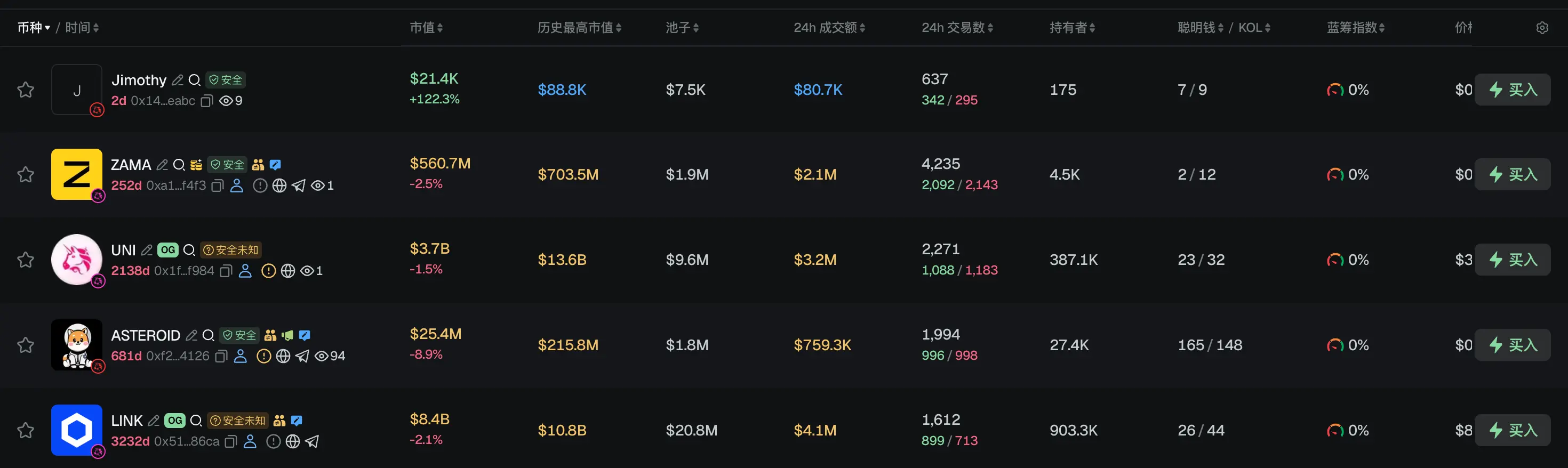
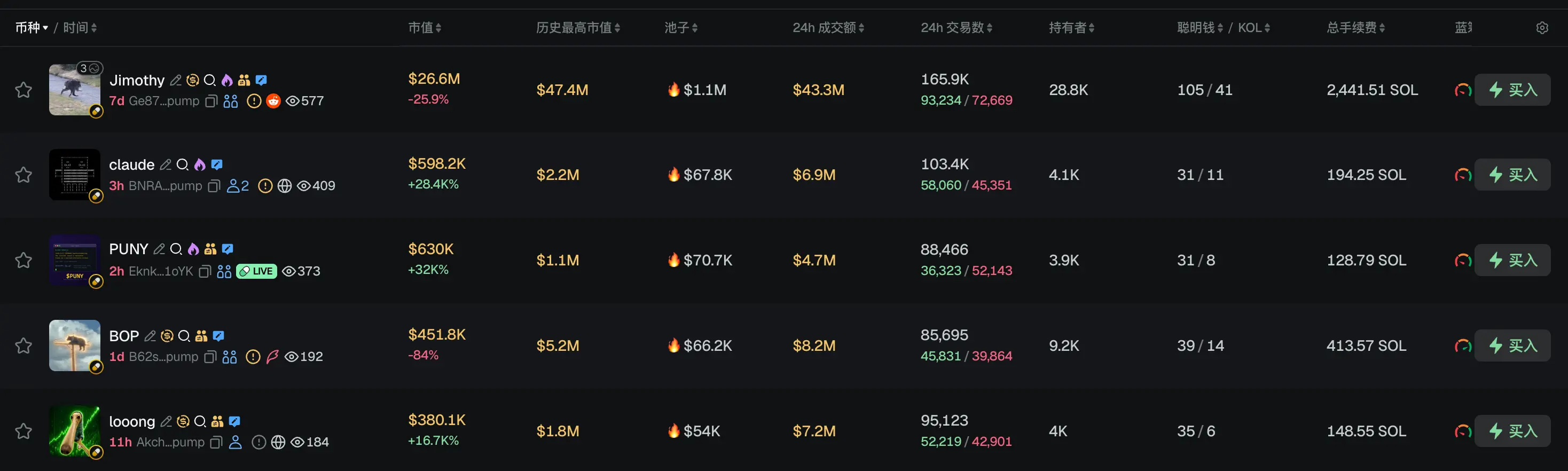
According to the meme token tracking and analysis platform GMGN, as of July 24, 09:30,
The top five popular ETH tokens in the past 24 hours are: Jimothy, ZAMA, UNI, ASTEROID, LINK
The top five popular Solana tokens in the past 24 hours are: Jimothy, claude, BOP, looong, PUNY
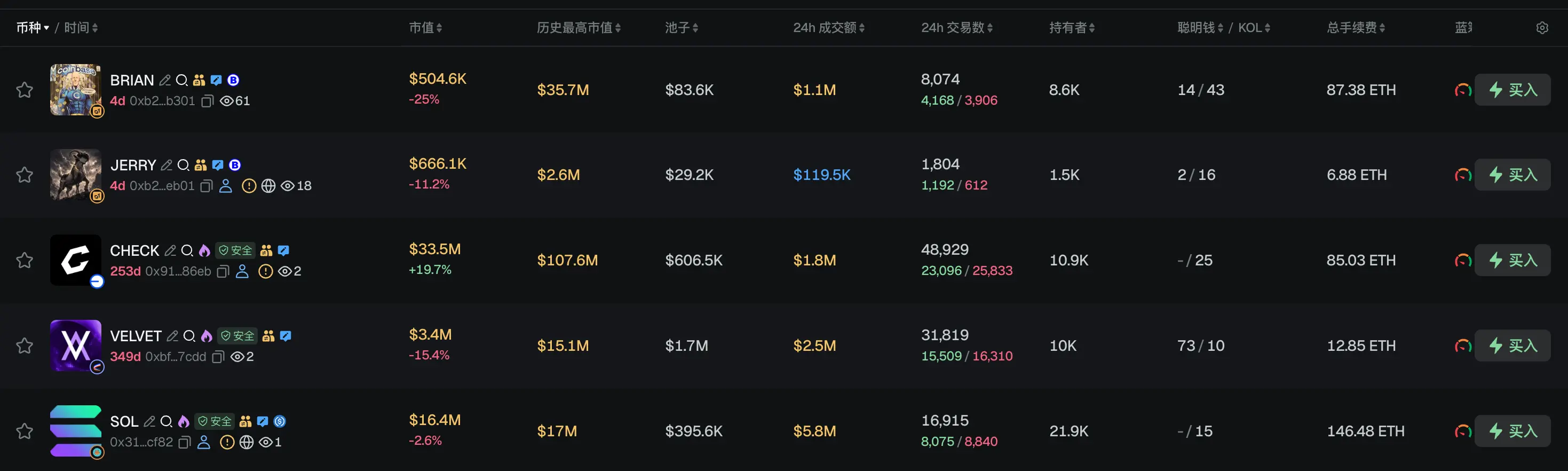
The top five popular Base tokens in the past 24 hours are: BRIAN, JERRY, SOSO, BNKR, COBIE
What are some noteworthy articles to read in the past 24 hours?
The platform that invented it announced its closure two months later. As former OKX listing business head Charles said, the era of BitMEX has long ended; it defined the previous generation of crypto derivatives trading, but it was later Chinese exchanges that took operational and product iteration to the extreme. This also explains why the sale process took over a year with no one taking over. The invention rights, brand, tech stack, and licenses are still there, but liquidity is not, and what buyers really want to buy may just be the latter.
Bitwise CIO: Two driving factors for the next bull market
Robinhood has learned more from real-time on-chain data across 120 countries than any pilot project could provide. The institutions I focus on include Coinbase, Figure, and BlackRock; I would also consider Visa, Stripe, and even JPMorgan—despite their public stance being reserved, they are actually doing a lot. There are other companies, but these are the real players involved. Looking for points of integration, the crypto world has long held a belief: its greatest success will occur when it is most "invisible"—when blockchain technology is deeply embedded in the financial system architecture to the point that people do not even realize it exists. I am more convinced than ever that the next bull market will come when traditional finance and crypto are completely inseparable. Until then, investors would do well to position themselves accordingly.
The most "chilling" question is that the Phemex exchange was also hacked for over $70 million in January 2025, which external analysts speculated was likely the work of North Korean hackers. At that time, the Phemex team stated that user assets would not be affected, and the platform would bear the losses caused by the incident, quickly restoring normal withdrawal processes. During the launch of the AFX product, Phemex clearly prepared for risk isolation in advance; there is no public connection between the two in terms of brand, stock, etc., but the close relationship between the two cannot be hidden. Now, the tragedy of losing tens of millions of dollars has replayed. Whether this is a repeat of North Korean hackers' tactics or an insider's scheme remains to be seen with more evidence and analysis.
a16z Crypto: Three charts to understand the development trend of tokenized stocks
In early July, Robinhood's own public chain mainnet launched, placing traditional markets, crypto assets, and real-world assets on the same open network. On June 22, the parent company of the New York Stock Exchange, Intercontinental Exchange (ICE), announced a joint venture with OKX to provide tokenized NYSE-listed stocks to users, still awaiting regulatory approval. A week earlier, on June 16, Coinbase announced that it would offer 1:1 fully backed U.S. stock tokens to non-U.S. users, complete with dividends, full shareholder rights, and 24/7 trading. Binance launched its version a few days prior. Compared to traditional stocks, the volume of tokenized stocks is still small, with monthly trading volumes in the hundreds of trillions. But the trend is clear: more and more issuers and platforms are moving stocks on-chain, and this category is growing.
Due to a significant increase in capital expenditures, free cash flow for the quarter turned negative at -$5.855 billion, but free cash flow over the past 12 months still reached $53.273 billion. Meanwhile, the four major cloud giants (Google, Meta, Microsoft, Amazon) are expected to collectively exceed $725 billion in capital expenditures in 2026, and the free cash flow of the entire tech industry has fallen to a ten-year low. Overall, this financial report presents a distinct "duality": explosive growth in the cloud business and backlogged orders exceeding $500 billion confirm that AI investments are beginning to yield commercial returns; however, the first negative free cash flow, along with the second upward revision of capital expenditures this year, keeps the market highly alert to the sustainability of this AI arms race. Whether Google can continue to walk the tightrope between competing for AI leadership and maintaining financial health will be the core issue investors focus on in the coming quarters.
4 hours, 118 responses, Liang Wenfeng internally addresses everything
- AI currently lacks taste and intuition; what it lacks is the ability to learn continuously. AI's taste and intuition are not an issue. If you ask it to write an article, I believe its taste and intuition are fine. 117. We hope to focus on just one area. I think AI is a vast field and does not require me… I will only focus on one area. If we focus, and I believe the business interests here are already large enough, then if it is the AI era, many trillion-dollar companies will emerge, and I believe we will be one of them. 118. We hope to support more people, but we do not have that much energy. We have this willingness and there will be no conflict of interest, but whether we do it is another matter. But at least there is no conflict of interest here; we hope for a win-win cooperation.
AI is turning nuclear energy from a "national project" into a replicable commercial product
The value of nuclear energy is not just in electricity generation. Heating, industrial steam, hydrogen production, seawater desalination, and even stable energy supply for high-energy-consuming manufacturing may become new commercial scenarios. Behind this corresponds not only to the nuclear power plants themselves but also to the entire supply chain, including fuel, forgings, instrumentation, and high-temperature superconducting magnets. Of course, nuclear energy is not without risks. Construction cycles, cost overruns, nuclear waste, fuel supply, regulation, and project financing—any one of these issues could turn a project from a long-term asset into a stranded asset; fusion still needs time to achieve true commercialization. So my current judgment on nuclear energy is: AI has not made nuclear energy mature overnight, but it is providing unprecedented commercial demand, capital support, and real orders for nuclear energy. In the next decade, nuclear energy may not be the most attractive narrative in the AI industry, but it could become one of the most easily underestimated infrastructures…
Why is Google still falling despite exceeding performance expectations and a booming cloud business?
The report raised the 2026 net revenue forecast by 2% to $433.6 billion, with EPS raised by 4% to $20.58; the 2027 net revenue forecast was raised by 3% to $552.8 billion, with EPS raised by 2% to $15.01. At around $332 in after-hours trading, Alphabet's price-to-earnings ratio for 2027 GAAP EPS is about 22 times, in line with the company's 10-year historical average, but Bank of America Securities expects 2027 revenue growth to reach 27%, far exceeding the average of 14% from 2023 to 2025. From a segment valuation perspective, excluding assets such as YouTube, cloud business, Waymo, and cash, the implied valuation of Google's core advertising and Play business is only 13 times the expected earnings for 2026, lower than the S&P 500's 20 times.
 Risk warning

Popular articles