Morning Report | Hyperliquid seeks to enter the US perpetual contract market; GSR market director: Many tokenized platforms lack real trading volume, speculation has exceeded actual usage

 August 12 Market Important Events Overview
Compiled by: ChainCatcher
What important events have occurred in the past 24 hours?
10x Research: Bitcoin may break correlation with S&P 500, if summer employment weakens, Bitcoin and gold are expected to benefit
According to ChainCatcher news, 10x Research analysis suggests that Bitcoin may be breaking away from its correlation with the S&P 500. If the Federal Reserve lowers interest rates in September due to weakening summer employment, Bitcoin is expected to benefit alongside gold. The analysis states that after the FOMC meeting at the end of July 2026, bond traders were once convinced that the Fed would raise rates in September, with the market pricing in two rate hikes before the end of the year. However, the institution believes that four voters who leaned towards maintaining rates in July suddenly shifted to a high threshold for rate hikes within six weeks. More importantly, seasonal factors indicate that the labor market has historically performed poorly in the summer, which has previously driven rate cuts in September 2024 and September 2025. With the World Cup over, similar employment weakness may force bond market traders to reassess rate hike expectations, at which point gold and Bitcoin are expected to benefit.
GSR Market Director: Many tokenization platforms lack real trading volume, speculation has exceeded actual usage
According to ChainCatcher news, Spencer Hallarn, GSR market director, stated in an interview reported by Cryptonomist that the speculation around tokenization has exceeded the actual usage of many platforms. The issue lies not in market demand for tokenized assets, but in the design of the platforms themselves. He pointed out that many walled-garden tokenization platforms with strict KYC requirements generally lack meaningful trading volume, as cumbersome access and compliance processes limit activity. Hallarn believes that the real opportunity lies not in tokenizing for the sake of tokenization, but in fixing the underlying pipelines of traditional banking and settlement systems, which is the infrastructure for transferring funds and assets between institutions. This would make tokenization more of an infrastructure fix rather than merely a narrative of crypto products. He also mentioned that the stagnation in the crypto market this year is largely due to funds shifting towards AI infrastructure, with large tech companies raising substantial funds for AI infrastructure through equity financing, tightening liquidity across various assets, including crypto. If AI investments cool down and the Fed lowers rates, liquidity is expected to improve and support Bitcoin prices.
Famous trader: The Clarity Act will play the role of the crypto ETF in the last cycle, BTC may bottom out before the bill is passed
According to ChainCatcher news, famous trader Killa stated in a post that Bitcoin began to recover from its lows before the ETF rumors and official approvals during the last bull market, emphasizing that the market often reflects positive news in advance. Therefore, this cycle may be similar, as the current "Clarity Act" is forming a new narrative. "If it indeed becomes a catalyst, it is likely to mark the beginning of BTC's first meaningful upward phase after the first bear market recovery, and the approval itself will soon push BTC towards a new ATH (just like the ETF approval)." Killa, a quantitative trader focused on BTC, predicted the peak of this bull market in May 2025 and has over 200,000 followers on the X platform. In mid-April, he shorted Bitcoin at $74,688 and turned bullish during the market-wide decline on June 5.
Federal Reserve "mouthpiece": Inflation cooling alleviates rate hike pressure, hawkish voices have not faded
According to ChainCatcher news, Federal Reserve mouthpiece Nick Timiraos stated that the July inflation report was largely in line with market expectations, alleviating the pressure for the Fed to raise rates next month. Wall Street is focused on CPI data, with some officials believing it is necessary to maintain higher rates, arguing that the current rate levels are restrictive and that high inflation is due to external shocks rather than loose monetary policy.
Bitcoin mining company MARA pledges 18,750 BTC to secure $750 million loan for AI and energy infrastructure expansion
According to ChainCatcher news, Bitcoin mining company MARA Holdings disclosed in its latest quarterly SEC filing that it has pledged 18,750 BTC to secure two Bitcoin-backed loans, with a total principal of $750 million. The financing provided by Coinbase Credit includes refinancing an existing $150 million credit line and an additional $300 million; Two Prime Lending also provided a $300 million loan. Both loans have been fully drawn, with a combined financing cost of approximately 7.56%, primarily maturing in August 2028. The pledged 18,750 BTC was worth about $1.2 billion at the time of the transaction. If the price of Bitcoin falls and the collateralization ratio drops below the agreed level, MARA may face additional collateral requirements, or the related BTC may be at risk of liquidation. The new funds will primarily be used for general corporate purposes and to support MARA's acquisition of Long Ridge Energy & Power. The transaction values the company at approximately $1.5 billion, with Long Ridge owning a natural gas power plant in Ohio with an expected installed capacity of 505 MW and over 1,600 acres of industrial land. MARA plans to further develop the area into a base for Bitcoin mining, AI, and high-performance computing infrastructure.
New York City Council investigating advertising practices of prediction markets, platforms like Polymarket facing regulatory pressure
According to ChainCatcher news, U.S. media reports that the New York City Council is investigating the advertising practices of four major prediction market platforms, opening a new battleground for the legal controversies facing this rapidly developing industry. New York City Council Speaker Julie Menin sent an inquiry letter containing numerous questions to Polymarket, Kalshi, Coinbase Global Inc., and the prediction market platform Titan under Gemini Space Station, as part of a so-called legislative investigation aimed at examining whether existing city laws are sufficient to protect residents from false or deceptive marketing by these emerging platforms. The City Council is also studying the formulation of relevant policies to address products that may lead users to "compulsively bet on event contracts." In a letter to Polymarket, the City Council stated: "The City Council is investigating the relevant allegations involving Polymarket, and more importantly, is investigating the prevalence of similar marketing practices in the broader prediction market industry and the associated social harms to New York City residents."
Attestable achieves breakthrough in AI verifiable technology, secures $20 million seed round financing
According to ChainCatcher news, AI security startup Attestable announced its official establishment and completion of a $20 million seed round financing. This round of financing was led by Jamin Ball of Altimeter Capital and Yonatan Mandelbaum of TLV Partners, with participation from Halcyon Futures, Cerca Partners, and several investors. Attestable founder Yogi stated that as AI gradually enters critical infrastructure, national security, and large enterprise systems, how to verify the credibility of AI operations has become an important global issue. The company aims to build a universal verification layer for cutting-edge AI laboratories, critical infrastructure, and national-level applications. It was introduced that Attestable uses Zero-Knowledge Proof technology to shift trust in AI systems from data centers to mathematical verification mechanisms. This technology can prove that a certain approved model, model weights, input data, and operational strategies indeed generated specific outputs, while not disclosing model parameters or user privacy data, and without needing to rerun the model for verification. Attestable stated that its technology has currently achieved verification inference of the Meta Muse Glimmer 30B model on a single NVIDIA H100 GPU, reaching a speed of 85 tokens per second. The generated proof documents are small and possess quantum-safe features, allowing for rapid verification. In response, Ethereum co-founder Vitalik Buterin stated that this achievement means that the performance loss of Zero-Knowledge Proof for large language models has approached single-digit levels. He mentioned that the next challenge is to further reduce the performance overhead of technologies like Fully Homomorphic Encryption (FHE).
Goldman Sachs plans to acquire ETF provider Neos Investments for up to $2.25 billion
According to ChainCatcher news, Bloomberg reports that Goldman Sachs Group will acquire ETF provider Neos Investments for up to $2.25 billion in cash and equity to expand its presence in the actively managed ETF market. Neos, founded in 2022, currently offers nearly 20 income-generating ETFs based on options strategies, managing approximately $32 billion in assets. After the transaction is completed, Goldman Sachs' ETF asset scale is expected to increase to about $130 billion. Neos co-founders Troy Cates and Garrett Paolella will become partners in Goldman Sachs Asset Management after the transaction is completed, and the Neos team is also expected to join. Goldman Sachs' Asset and Wealth Management division had over $4 trillion in regulated assets as of the end of the second quarter, an increase of over $700 billion from a year ago, with revenue in this division growing by 20% year-on-year.
Arkham: Bitmine ETH holdings nearing 5% target, likely to slow buying rather than stop after reaching target
According to ChainCatcher news, Arkham research indicates that Bitmine, the world's largest Ethereum treasury company, currently holds approximately 5.81 million ETH, valued at nearly $11 billion. After 14 months of continuous accumulation, its holdings have reached 4.8% of the ETH supply, completing about 96% of its publicly set 5% acquisition target. Unlike Strategy and other Bitcoin treasury companies, Bitmine has staked over 5 million ETH for yield, with an annualized staking income estimated at approximately $257 million based on a yield rate of about 2.63%. According to Arkham analysis, the most likely scenario for Bitmine after reaching the 5% target is to slow down buying. On-chain data shows that its acquisition pace has already slowed this year, and after crossing 5%, it may shift towards balance sheet management and maximizing staking yields. The second most likely scenario is to continue buying at the same pace, considering that Fundstrat co-founder Tom Lee, who dominates this strategy, is consistently bullish, and he may continue to accumulate after breaking through 5%. The least likely scenario is to completely stop buying; if the largest enterprise-level ETH buyer in the market exits the demand side, it may temporarily weaken bullish sentiment. However, even if no new purchases are made, its staked holdings will still passively grow through network rewards.
Coldcard vulnerability incident drives over 330,000 new Bitcoin addresses in a week
According to ChainCatcher news, The Block reports that due to wallet migrations triggered by the Coldcard vulnerability, the number of new Bitcoin addresses surged from about 260,000 to over 330,000 last week, reversing most of the downward trend observed in 2026. Since July 30, Coinkite hardware wallet users have lost at least 1,816 BTC (approximately $116 million) across four waves of attacks. The vulnerability stemmed from a firmware defect in 2021, where a weak software random number generator was used to generate mnemonic phrases instead of the device's built-in hardware entropy source, allowing attackers to brute-force wallets generated offline. Coinkite has advised users who generated wallets between March 2021 and the release of the security patch to migrate to new wallets. This incident highlights the risks of self-custody, as users reassess the pros and cons of self-custody versus custodial solutions like centralized exchanges or ETFs.
Stablecoin card issuer Rain acquires merchant wallet company Ansa
According to ChainCatcher news, stablecoin card issuer and payment platform Rain announced the acquisition of brand prepaid and closed-loop payment platform Ansa, with the Ansa team joining Rain and its founder and CEO Sophia Goldberg taking on the role of head of payments at Rain. Ansa provides merchants with branded prepaid wallets and incentive tools, supporting the use of stored value balances through Mastercard rails at existing POS terminals. Rain plans to combine its Visa and Mastercard issuing capabilities to expand stored value balances to more merchant scenarios and integrate with wallet, rewards, and stablecoin functionalities. Ansa previously raised approximately $19.4 million.
SEC and CFTC sue Goliath Ventures and its founder over $400 million crypto Ponzi scheme
According to ChainCatcher news, the U.S. Securities and Exchange Commission (SEC) and the U.S. Commodity Futures Trading Commission (CFTC) have filed civil lawsuits against Goliath Ventures and its founder Christopher Delgado, accusing them of operating a crypto Ponzi scheme with a scale of approximately $400 million. The SEC stated that the company raised at least $425 million from over 1,300 investors through unregistered securities offerings. The SEC claims that Goliath Ventures promised to invest the funds in crypto liquidity pools and provide monthly returns of 3% to 10%, but did not invest any funds or crypto assets, and Christopher Delgado misappropriated at least $51 million for personal expenses. The CFTC stated that approximately 1,600 clients invested at least $397 million in Bitcoin and Ethereum trading. Christopher Delgado has agreed to settle the SEC case, with specific terms pending court approval; the CFTC is seeking the return of funds, restitution, civil penalties, and a permanent injunction. Previously, he pleaded guilty to conspiracy to commit telecommunications fraud, telecommunications fraud, and money laundering, admitting to causing at least $250 million in losses to investors.
Empery Digital sells 1,635 Bitcoins, cashing out $102.2 million, reducing holdings to 1,279 Bitcoins
According to ChainCatcher news, Empery Digital sold 1,635 Bitcoins between July 1 and August 6, cashing out $102.2 million and reducing its holdings to 1,279 Bitcoins. Of these, 954 Bitcoins have been pledged to secure $35 million in debt, leaving only 325 Bitcoins unrestricted, a significant decrease from 1,375 Bitcoins on June 30. In the first half of this year, Empery Digital also sold 1,167 Bitcoins, raising $80.1 million, and spent $54 million to repurchase shares, repaying $50 million under a repurchase financing agreement and another $10 million loan. The company repaid $20 million in debt after June 30, with lenders returning 585 Bitcoins, reducing the pledged amount from 1,539 to 954 Bitcoins. Empery Digital has invested $2.9 million in the independent real estate project EMHU managed by Texstack, and if the acquisition is completed, it may require an additional investment of $62.1 million. The company has also completed a $20 million investment in Cardinal Data Power, acquiring approximately 8% equity; as of June 30, the company held $3.7 million in cash, including restricted cash, with a working capital shortfall of $5.7 million.
AI investment platform Thrive Holdings completes $2 billion financing, with participation from SoftBank and others
According to ChainCatcher news, Thrive Holdings, an AI investment platform, announced the completion of $2 billion in financing, bringing the company's valuation to $12 billion, with participation from SoftBank, D1 Capital Partners, and Altimeter Capital. Thrive Holdings was founded in 2025 by Thrive Capital founder Joshua Kushner. Unlike traditional investment firms, it does not directly invest in AI large model R&D companies but primarily acquires traditional service companies and integrates AI technology into their business processes to achieve efficiency improvements. Its goal is to build platforms and products that bring cutting-edge AI into key industries that millions of businesses and individuals rely on daily. The company previously secured approximately $1 billion in initial funding.
Hyperliquid seeks to enter the U.S. perpetual contract market
According to ChainCatcher news, The Information reports that Hyperliquid is seeking compliance pathways to enter the U.S. market for its perpetual contract business, as the platform is currently not open to U.S. users. Previously, the Hyper Foundation-funded Hyperliquid Policy Center has been conducting policy research and advocacy work in Washington to promote the establishment of a regulated access framework for on-chain perpetual contracts and decentralized market infrastructure in the U.S. If relevant regulatory pathways are clarified, it will create conditions for Hyperliquid to offer perpetual contracts and other products to U.S. users.
Data: Publicly listed mining companies have sold 28,000 BTC this year, becoming a $1.78 billion source of overlooked selling pressure in the Bitcoin market
According to ChainCatcher news, CoinDesk reports that Blockware Intelligence data shows that publicly listed Bitcoin miners held a total of 127,000 BTC at the beginning of the year, which has now decreased to 99,000 BTC, with a cumulative sale of approximately 28,000 BTC this year, valued at about $1.78 billion at current prices. The analysis points out that although the scale of this sale is smaller than the net outflow of over $4.4 billion from U.S. spot Bitcoin ETFs, the continuous and stable marginal selling pressure is often underestimated in the context of a market downturn and weak buying. BTC has cumulatively fallen 27% since the beginning of 2026, underperforming major assets including the S&P 500. Additionally, due to narrowing mining profits (the current average production cost of a single BTC is about $74,300), more miners are transitioning to AI computing power businesses. Meanwhile, the overall mining difficulty has decreased by about 18% from the peak in November, resulting in an approximately 18% increase in mining revenue for remaining miners, reshaping the competitive landscape of the industry.
Fidelity plans to add staking features and quarterly cash distributions to its Ethereum ETF
According to ChainCatcher news, CoinDesk reports that Fidelity plans to add ETH staking features and a quarterly cash distribution mechanism to its spot Ethereum ETF—Fidelity Ethereum Fund (FETH). FETH currently has a net asset size of approximately $898 million, and under normal circumstances, up to 100% of the held ETH can be staked. According to the arrangement, Fidelity will retain 85% of the staking income, with the remaining 15% distributed to the fund sponsor, custodian, and node operators (including Blockdaemon, Figment, and Galaxy). The net staking income will be prioritized to cover the fund's operating expenses, with the remaining portion distributed to investors as cash quarterly. This move is driven by a safe harbor announcement issued by the U.S. IRS in November 2025, which allows eligible crypto trusts to stake without losing grantor trust tax status.
Crypto KOL: Bitget will restart its CNY/RMB related C2C business that has been suspended for 3 years
According to ChainCatcher news, crypto KOL KUAI DONG tweeted that after verifying multiple sources, Bitget will restart its CNY/RMB related C2C business that has been suspended for 3 years. The exchange has recently hired many related practitioners at high salaries, viewing this business as one of the most important this year after its U.S. stock business. The reason behind this is to streamline the entire process for individuals seeking to invest in U.S. stocks, from funding, acquiring stablecoins to investing in U.S. stocks. Earlier, Bitget's Chinese region head Xie Jiayin tweeted, "The most important thing of this year is coming soon, perhaps you will look forward to it, and you won't have to trouble yourself anymore."
Data: Bitcoin spot ETFs saw a total net inflow of $4.8862 million yesterday, only BlackRock's ETF IBIT achieved net inflow
According to ChainCatcher news, SoSoValue data shows that Bitcoin spot ETFs had a total net inflow of $4.8862 million. The Bitcoin spot ETF with the highest single-day net inflow was BlackRock's ETF IBIT, with a single-day net inflow of $50.1956 million, bringing IBIT's historical total net inflow to $61.172 billion. The Bitcoin spot ETF with the highest single-day net outflow was Franklin Bitcoin ETF EZBC, with a single-day net outflow of $16.4616 million, bringing EZBC's historical total net inflow to $310 million. As of the time of publication, the total net asset value of Bitcoin spot ETFs was $77.457 billion, with an ETF net asset ratio (market cap relative to total Bitcoin market cap) of 6.06%, and historical cumulative net inflow reaching $52.038 billion.
Coreum cross-chain bridge attacked, nearly 200,000 XRP stolen
According to ChainCatcher news, the cross-chain bridge connecting XRP Ledger and Coreum was attacked on August 9, with attackers stealing approximately 199,900 XRP through a validation logic vulnerability, causing the bridged asset balance to drop from about 200,400 XRP to 493.5 XRP. This attack did not involve private key leakage and did not target the XRP Ledger protocol itself. The attackers forged deposit operations, causing the bridging system to recognize them as real deposits and triggering the other end of the bridge wallet to send them real XRP. On-chain data shows that the attackers completed the fund transfer through 94 multi-signature authorization transactions within 97 minutes. These transactions required signatures from 17 of the 28 relay node keys, allowing the attackers to bypass the verification mechanism of the bridging system. As of August 11, the Coreum cross-chain bridge remains paused, and the Coreum development foundation has not released an official incident report. The XRP mainnet and user private keys have not been affected.
Kalshi annualized revenue exceeds $4 billion, seeking financing at a $40 billion valuation
According to ChainCatcher news, ChianCatcher news reports that prediction market platform Kalshi's annualized revenue has exceeded $4 billion, doubling from two months ago, and is currently seeking new financing at a $40 billion valuation, a significant increase of 82% from its $22 billion valuation during the F series financing in May. Additionally, the company has recently invested heavily in marketing, with reports indicating that Kalshi's operating expenses in June reached $300 million, primarily related to marketing promotions.
Analysis: Bitcoin perpetual contract trading volume falls to a three-year low, market enters "hibernation" state
According to ChainCatcher news, The Block reports that according to a K33 research report, the 30-day average trading volume of BTC/USDT perpetual contracts on Binance and Bybit has fallen to $10.8 billion, the lowest level since 2023, with only 5% of trading days recording lower volumes. Meanwhile, the average daily trading volume of Bitcoin spot has declined by 18% from last week to $1.8 billion, and the 7-day volatility has also dropped to 0.6%, the lowest since Christmas 2025. K33 research director Vetle Lunde pointed out that low trading activity creates a self-reinforcing "hibernation cycle" in the market. Notably, the open interest in Bitcoin perpetual contracts remains high, averaging about 300,000 BTC from June to August, above the average for 2025-2026, indicating a high risk of liquidation-driven volatility. The market is currently awaiting the release of U.S. July CPI data on Wednesday, with economists expecting a year-on-year increase of 3.4% in CPI and a 2.5% increase in core CPI. CME FedWatch shows a probability of about 50% for a 25 basis point rate hike in September. Bitcoin has oscillated between $60,000 and $80,000 for six consecutive months, a decline of about 50% from the historical high in October 2025.
Santiment: Chainlink whale activity hits five-month high, 246 transactions over $100,000 in 24 hours
According to ChainCatcher news, Santiment data shows that Chainlink (LINK) whale activity has significantly increased, with 246 transactions exceeding $100,000 in LINK occurring within 24 hours, the highest single-day level in five months. Meanwhile, wallets holding between 100,000 and 10 million LINK currently hold approximately 466.3 million LINK, accounting for 46.57% of the total supply, indicating that this round of whale activity is accompanied by a growth in balances. Santiment points out that Chainlink is continuously expanding in areas such as CCIP, tokenized assets, stablecoins, institutional data, and new cross-chain channels, with official indicators still positioning the network as the core oracle infrastructure for on-chain finance.
World's largest sovereign wealth fund discloses SpaceX holdings for the first time, valued at over $1.2 billion
According to ChainCatcher news, CNBC reports that Norway's sovereign wealth fund, which has a scale of $2.34 trillion, recorded over $182 billion in profits in the first half of the year, a historical high for the same period, with an investment return rate of 9.4%. Nicolai Tangen, CEO of Norges Bank Investment Management (NBIM), stated that the performance was primarily driven by strong stock market performance, particularly in Asian tech stocks. In the latest semi-annual report, the fund disclosed its holdings in SpaceX for the first time, with a holding ratio of approximately 0.05%, valued at slightly over $1.2 billion as of June 30. In comparison, it holds about 1.3% of Nvidia shares, valued at $61.8 billion, and about 1.2% of Apple shares, valued at $52.7 billion. The NBIM-managed Norwegian sovereign wealth fund was established in the 1990s, primarily investing the country's oil and gas revenues. The fund currently invests in over 7,000 companies in more than 50 countries worldwide, holding approximately 1.5% of the shares of publicly listed companies globally. Stock assets account for more than two-thirds of its overall investment portfolio, with U.S. stocks making up about 40% of the total investment portfolio.
Australian regulator shuts down digital asset platform Yepbit, denies freezing user funds
According to ChainCatcher news, the Australian Securities and Investments Commission (ASIC) announced that it has shut down multiple websites of the digital asset platform Yepbit and warned users not to trade with the platform. ASIC received reports from multiple investors stating that they were unable to withdraw funds from the platform. Yepbit claims to provide digital asset and futures trading services globally, including for Australian investors. ASIC stated that Yepbit fabricated claims of "ASIC freezing funds" to delay investors' refund requests. Yepbit does not hold an Australian financial services license and is not registered with AUSTRAC as a virtual asset service provider. ASIC reminds investors to verify whether platforms hold licenses and to be extremely cautious with unverifiable investment opportunities.
Data: Bitwise continues to increase holdings in HYPE, buying over $5 million in the past week
According to ChainCatcher news, Arkham monitoring shows that Bitwise has been continuously buying Hyperliquid (HYPE) and has not sold any HYPE tokens since last month. Since August this year, Bitwise has only conducted HYPE buying operations. Data shows that Bitwise's HYPE ETF clients have cumulatively bought over $5 million worth of HYPE in the past week. Bitwise has previously launched investment products targeting Hyperliquid (HYPE), providing institutional investors with HYPE exposure.
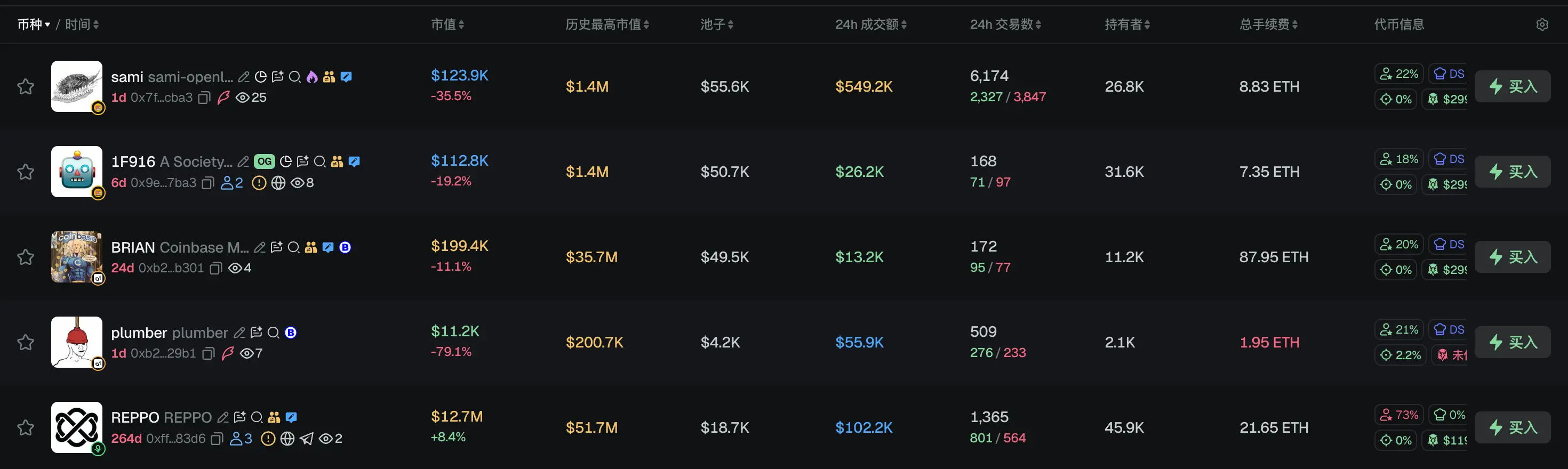
Meme Popularity Rankings
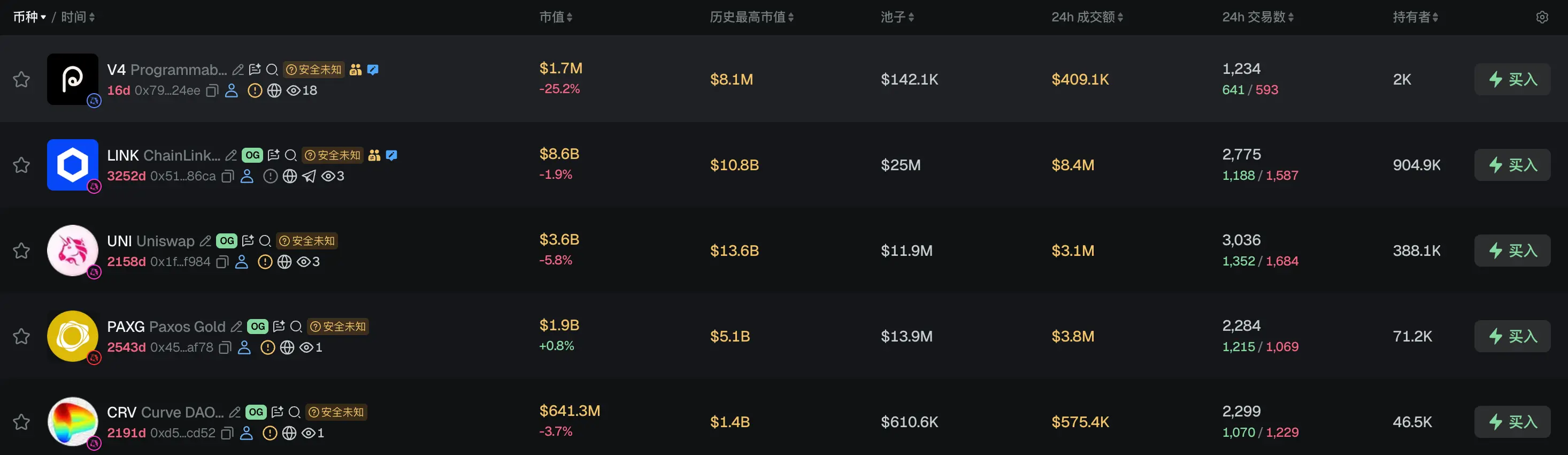
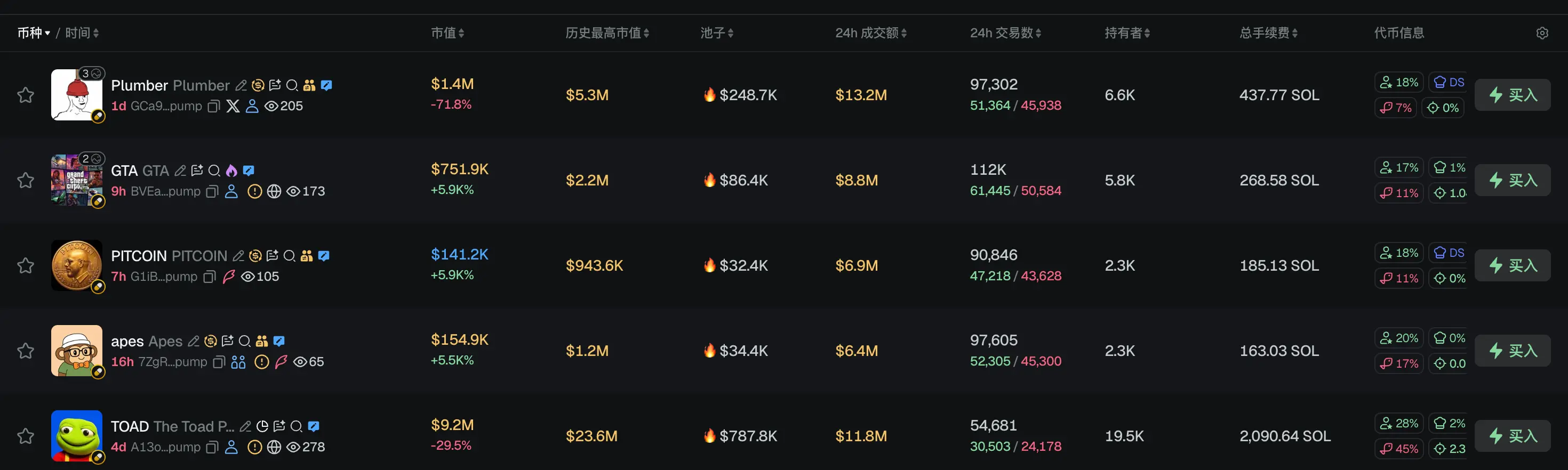
According to the meme token tracking and analysis platform GMGN market data, as of August 13, 08:45,
The top five popular ETH tokens in the past 24 hours are: V4, LINK, UNI, PAXG, CRV
The top five popular Solana tokens in the past 24 hours are: Plumber, GTA, PITCOIN, TOAD, apes
The top five popular Base tokens in the past 24 hours are: QUID, CHECK, sami, VELVET, ELSA
What are some interesting articles worth reading in the past 24 hours?
VCs will disappear, prediction markets are overvalued, who can challenge Hyperliquid in Perp DEX?
Victor & Mr. Z: Thank you very much to Teacher Lao Bai for joining our Space today, we really talked a lot, from the history of Crypto to future tracks, and observations on AI, all with deep insights. Thanks to every listener who has listened to this point, if you liked this episode, feel free to follow 168X on X, Substack, and YouTube, and share the program with more friends interested in Crypto, AI, and macro. See you in the next episode.
Of course, all of the above does not mean that this platform has failed. ARK research data shows that as of July 31, Hyperliquid and Pump.fun together accounted for 67% of total revenue from crypto applications. Grayscale has also compared Hyperliquid to Amazon AWS: external developers build products on the platform, and the platform takes a cut from all transactions. But this analogy precisely points out the existing problem. In the first four weeks of the third quarter of 2026, Hyperliquid's total revenue was about $45 million, and if this pace continues, total revenue for this quarter will approach $150 million, marking the fourth consecutive quarter of revenue decline; and the buying power supporting the HYPE token will further weaken.
Kalshi CEO talks about Polymarket: it's not competition, it's a difference in philosophy
Question: What is your most contrarian view? Answer: I believe that the success of any great company does not fundamentally depend on its executives. Question: Do you consider yourself a manager? Answer: No, I am not good at managing others. Question: What is the most recent question you asked AI? Answer: I asked ChatGPT about the winning probability of the 2028 midterm elections; nowadays, AI can retrieve Kalshi's data for inference. Question: What is the worst advice that young entrepreneurs are most likely to hear? Answer: Many people will advise entrepreneurs to collect various suggestions everywhere. But there is no universal formula for entrepreneurship. People overly rely on others' opinions; at the same time, many people are eager to point out others to gain a sense of superiority, but most advice is not valuable. Question: What advice would you give to young entrepreneurs? Answer: Don't take my words as gospel. In controllable ranges…
From Polymarket to U.S. stock trading: how events map to asset prices
Choose to trade, hedge, or refrain from participating based on pricing deviations. The truly valuable signals are often not "the probability of a certain event happening is high," but rather that there are inconsistencies between the event probabilities, related assets, and other markets. Conclusion: Polymarket's most reasonable positioning is as an event expectation observer, cross-market verification tool, and tail risk reference. What it truly helps traders solve are three questions: what the market has currently priced in, which low-probability outcomes could lead to larger price shocks, and whether there are worth studying reactions between event probabilities and related assets. The key to professionally using Polymarket is not to trade immediately upon seeing probability changes, but to place those probability changes within the asset pricing framework of interest rates, earnings, and risk premiums, and then use real market prices to complete verification. After all, don't just look at what experts and big players say, but look at the market…
What if Ethereum had never transitioned from PoW to PoS: a game that never happened
Continuing with PoW, Ethereum might have become a digital commodity network with smart contract capabilities; transitioning to PoS has allowed it to gain the potential to become the global open settlement and digital economy infrastructure. The arrival of the AI era has only made this already concluded choice interesting again—because many GPUs that were eliminated back then have now become one of the world's most scarce computing resources. History cannot be repeated, nor can it prove that another path would have been better. But it can be confirmed that Ethereum's choice of PoS back then was not a simple "technical upgrade," but a long-term strategic bet on energy, security, capital efficiency, computing power, and future industry direction. The real question today is no longer "where did the GPUs of that year go," but whether Ethereum can capture enough economic value in the development of AI, stablecoins, RWA, and global on-chain finance using the path it has chosen.
The endpoint of payment, why is it an account?
Conclusion: Payment is the entry point, Account is the relationship. Accounts are heavier, more difficult, and carry greater regulatory responsibilities; why do people keep moving towards them? Because: Payment solves Move Money, Account solves Manage Money. Payment is a transaction, Account is a relationship. Whoever controls the Account is closer to the customer's next Payment, FX, Financing, and Treasury Decision. Therefore, what truly makes an Account valuable is never the Account Number itself. Rather, it is: it is inherently closer to the customer's next financial action.
Kalshi founder: What will your real life look like in the next 12 months
This culture is also very direct: if colleagues dislike a certain job, they will say it clearly on the spot. The company spent three to four years seeking regulatory approval, and after two years of communication, sued its own regulatory agency, ultimately securing space in the election market. Luana summarizes this experience with a simple principle: do everything you can to avoid finding out after failure that you actually left a step undone. In conclusion, 73% is worth serious consideration, but should only be regarded as 73%. The more useful action for individuals is to rewrite worries into verifiable questions: which steps in your work have been taken over by Agents, which judgments still rely on experience, and what changes have been made to the team's hiring standards recently. Probability will not decide your next step, but it can remind you not to plan today with the security of two years ago.
 Risk warning