Scan to download
BTC $76,305.02 -0.98%
ETH $2,264.30 -1.96%
BNB $615.83 -1.09%
XRP $1.37 -0.58%
SOL $83.26 -0.96%
TRX $0.3259 +0.87%
DOGE $0.1066 -0.33%
ADA $0.2464 -0.91%
BCH $445.39 -1.37%
LINK $9.15 -1.11%
HYPE $38.99 -2.29%
AAVE $93.24 -2.32%
SUI $0.9086 -1.27%
XLM $0.1597 -1.10%
ZEC $334.54 +0.64%
BTC $76,305.02 -0.98%
ETH $2,264.30 -1.96%
BNB $615.83 -1.09%
XRP $1.37 -0.58%
SOL $83.26 -0.96%
TRX $0.3259 +0.87%
DOGE $0.1066 -0.33%
ADA $0.2464 -0.91%
BCH $445.39 -1.37%
LINK $9.15 -1.11%
HYPE $38.99 -2.29%
AAVE $93.24 -2.32%
SUI $0.9086 -1.27%
XLM $0.1597 -1.10%
ZEC $334.54 +0.64%

institutions

Funds are accelerating towards leading liquidity platforms, with Gate institutions facilitating efficient trading and strategy execution

According to the latest weekly report released by Gate, in the past week (from April 20 to April 26), driven by the easing of geopolitical tensions and rising expectations for interest rate cuts, BTC rose from $68,000 to above $77,000, with market sentiment remaining "cautiously optimistic." ETF funds continued to see net inflows, indicating that institutions are steadily increasing their positions amid fluctuations, with capital accelerating towards high liquidity assets and deep trading platforms.There was a noticeable rotation of on-chain funds: PancakeSwap's trading volume approached $36 billion, the supply of USDT was nearly $200 billion, while USDe saw a net outflow of about $2 billion; in the DeFi sector, Aave's lending balance decreased, with liquidity shifting towards Spark. In terms of derivatives, the funding rate for BTC remains negative, while the activity and volatility of options have increased. The market will pay attention to the FOMC interest rate meeting and the volatility effects brought by the unlocking of OP, SUI, and ENA.Against this backdrop, Gate continues to strengthen its institutional service capabilities, providing high-performance matching, deep liquidity, and multi-exchange strategy support to meet high-frequency and arbitrage demands. At the same time, through a comprehensive asset security and custody system, combined with a one-stop solution for spot, contract, and multi-asset trading, it helps institutions execute efficiently and lay out robust strategies in a volatile market.

21Shares executives: Bitcoin may hit $100,000 this year, institutions are accelerating their entry

According to CoinDesk, 21Shares Chief Investment Officer Adrian Fritz stated that the spot Bitcoin ETF continues to attract inflows, reinforcing Bitcoin's core position in institutional asset allocation, even as prices remain fluctuating below $80,000. Adrian Fritz pointed out that since the beginning of this year, Bitcoin ETFs have accumulated nearly $2 billion in funds, with sources including retail investors, institutions, and hedge fund arbitrage and options strategy trading.As traditional asset management institutions like Morgan Stanley accelerate their layouts, crypto assets are being more widely incorporated into multi-asset portfolio allocations. Bitcoin's current daily trading volume has exceeded $50 billion, and liquidity levels are approaching those of large tech stocks like Nvidia. The ETF mechanism simultaneously provides liquidity in both primary and secondary markets, gradually giving it "institutional-grade asset" attributes.Although the market is still suppressed by macro and interest rate environments, Adrian Fritz believes that ETF inflows have shifted from being driven by speculation to structural demand. He expects that with improvements in geopolitical conditions, continued inflows, and short covering, Bitcoin is likely to challenge the $100,000 mark within the year. Meanwhile, the differentiation among altcoins is intensifying, and the market is shifting towards a logic of asset selection that emphasizes fundamentals and cash flow.

The Humanity Foundation announced adjustments to the H token vesting plan and set a deadline, with some institutions publicly disclosing their choice to unlock at a discount immediately

The Humanity Foundation has recently made significant adjustments to the $H token allocation plan, requiring investors to make a final choice between two options by April 26 at 09:00 UTC: one, extend the distribution, pushing the Cliff to September 25, 2026, and changing to equal distribution over 12 quarters; two, a 3:10 discounted immediate unlock, replacing the original 16,666,666 tokens with 5,000,000 $H (a 70% reduction), to be fully distributed on June 25, 2026.It is understood that the Humanity Foundation has sent adjustment notifications to over 100 investors. Early investment firm Trix Ventures has publicly disclosed its choice of the discounted immediate unlock.It is reported that this firm invested during the project's valuation phase of approximately $60 million, and even after the 3:10 discounted replacement, it can still achieve about 7 times return. Notably, the Humanity Protocol previously reached an in-depth cooperation with payment giant Mastercard, and the project's fundamentals have received endorsement from traditional financial institutions. The on-chain identity verification sector it belongs to is currently in its early market stage, but with the continuous expansion of AI-generated content and automated accounts, the demand for on-chain real identity verification is widely believed to grow exponentially, giving this sector long-term potential to become a leading project in the Web3 infrastructure field.The project is about to face a test of significant selling pressure from a one-time massive unlock, and whether it can grow explosively alongside the AI sector is crucial. Analysts point out that choosing the one-time unlock on June 25 is a safer decision. In the current market cycle, "certain liquidity" far outweighs paper numbers. The deferred plan extends the cycle to 3 years, with huge uncertainties regarding the protocol's survival and team stability.From a market structure perspective, June 25 faces obvious concentrated selling pressure risks: the Sablier contract release node is transparent on-chain, and quantitative and short-selling funds will precisely target this node; institutions may lock in profits by hedging in advance during the two-month window; market makers may withdraw buy depth in advance, causing the actual realization value to be less than 10% of the nominal value. Historically, large-scale concentrated unlocks of Starknet (STRK) and ApeCoin (APE) have triggered severe selling pressure, with the former dropping over 95% from its peak and the latter declining 77% within 7 months.

first_img HashKey Exchange Group CEO Ru Haiyang: Traditional payment institutions have recognized that the trend of blockchain is irreversible, and the integration of global compliant exchanges is accelerating

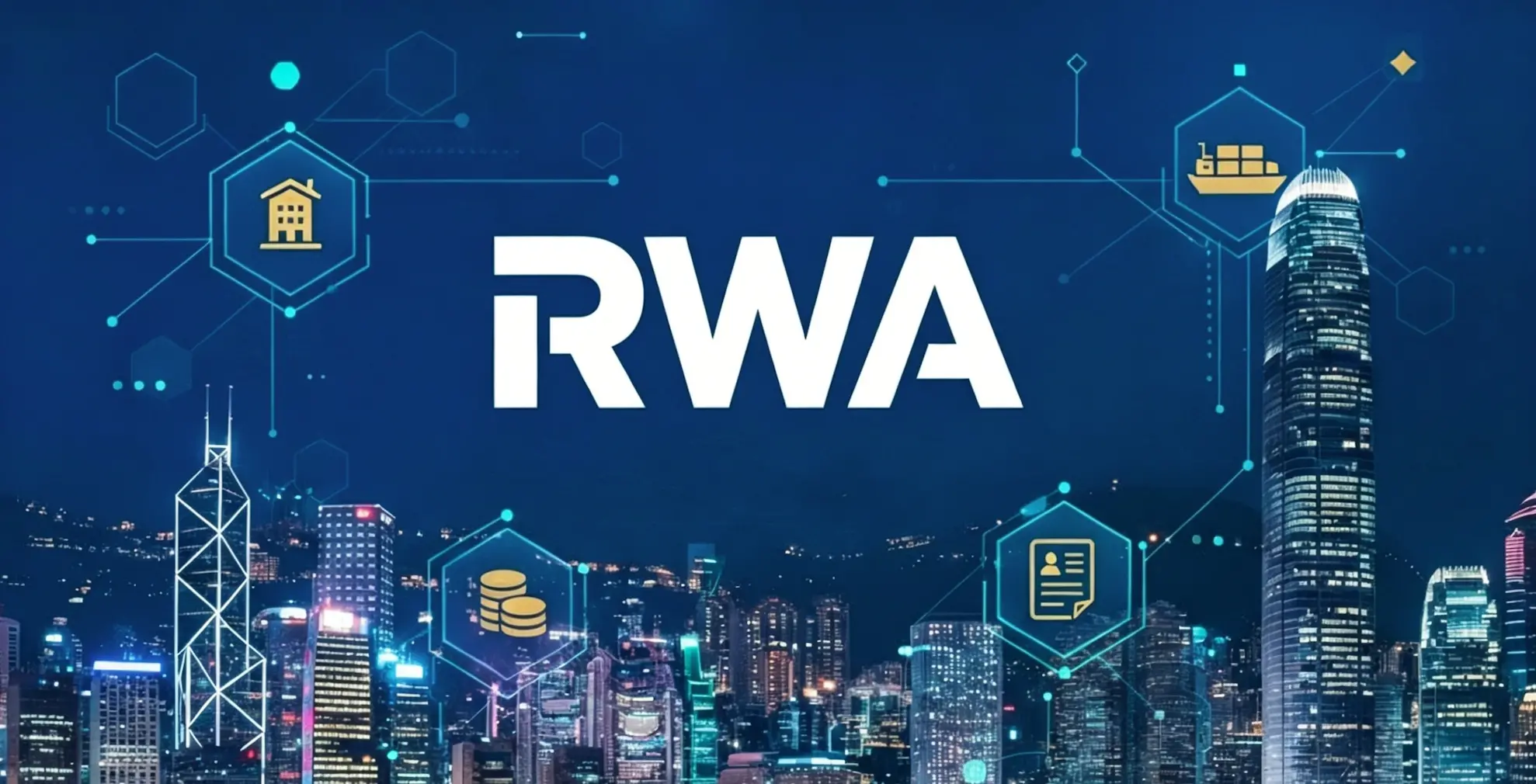
ChainCatcher reported live that Ru Haiyang, CEO of HashKey Exchange Group, delivered a keynote speech at the 2026 Hong Kong Web3 Carnival, focusing on three key themes: RWA, payments, and Asian connectivity. He announced that HashKey Exchange officially launched Hong Kong's first physical gold ETF that day, fully compliant with trading and custody regulations in Hong Kong. He also revealed that HashKey has received approval from the Hong Kong Monetary Authority to jointly issue Asia's first true co-branded credit card with Shanghai Commercial Bank.Regarding industry trends, he pointed out that DTCC has received a no-action letter from the U.S. SEC to intervene in the custody and settlement of tokenized assets, Kraken has become the first cryptocurrency institution to connect to the Federal Reserve's FedWire, and Mastercard has acquired the UK blockchain payment company BVNK at an $1.8 billion valuation, indicating that traditional payment institutions have recognized the irreversible trend.In terms of expansion in Asia, he announced that HashKey officially announced its investment in the Vietnamese market on April 10, planning to jointly invest in VPBank, one of Vietnam's largest commercial banks, to help it become one of the first licensed exchanges. HashKey has also signed memorandums of understanding with leading Asian institutions such as Coins.ph in the Philippines, Indodex in Indonesia, Hata in Malaysia, and Bitazza in Thailand to explore cooperation in liquidity integration, cross-border payments, stablecoins, and asset tokenization distribution.
app_icon
ChainCatcher Building the Web3 world with innovations.