BTC $79,913.36 -0.09%
ETH $2,504.16 +0.14%
BNB $747.32 -2.43%
XRP $1.41 -0.77%
SOL $105.53 +1.74%
TRX $0.3351 +0.28%
DOGE $0.0901 -0.51%
ADA $0.2218 -0.24%
BCH $257.86 -0.23%
LINK $13.09 +6.66%
HYPE $87.17 +1.23%
AAVE $134.46 -2.80%
SUI $0.8003 -0.66%
XLM $0.1869 +0.90%
ZEC $1,189.13 +11.22%
BTC $79,913.36 -0.09%
ETH $2,504.16 +0.14%
BNB $747.32 -2.43%
XRP $1.41 -0.77%
SOL $105.53 +1.74%
TRX $0.3351 +0.28%
DOGE $0.0901 -0.51%
ADA $0.2218 -0.24%
BCH $257.86 -0.23%
LINK $13.09 +6.66%
HYPE $87.17 +1.23%
AAVE $134.46 -2.80%
SUI $0.8003 -0.66%
XLM $0.1869 +0.90%
ZEC $1,189.13 +11.22%

institutions

All
Article
Flash

Market volatility and capital differentiation continue, and Gate's multi-asset trading capabilities for institutions are continuously improving

In the past week, inflationary pressures in the United States have eased somewhat, but weakening retail sales have raised concerns in the market about economic growth. Overall, U.S. stocks have maintained resilience, while the cryptocurrency market has been relatively weak. BTC ETF saw a weekly net outflow of approximately $385 million, and institutional allocations have cooled; BTC OI rose to about $12.3 billion, with funding rates remaining positive. Meanwhile, DEX weekly trading volume decreased by 5.2%, and the on-chain and DeFi markets have generally become more cautious.Against the backdrop of differentiated market risk appetite, Gate TradFi trading remains active, with weekly trading volume maintaining a high level of approximately $115 billion. Perp trading continues to grow, and the proportion of Korean stock trading has significantly rebounded. In terms of stocks, the latest exchange rankings from RootData show that Gate's stock spot and futures businesses have both entered the industry's top two, currently covering core markets such as U.S. stocks, Hong Kong stocks, and Korean stocks, further connecting traditional finance with digital assets.Based on the needs of professional investors, Gate has comprehensively upgraded its diverse service system covering TradFi, spot, and derivatives, providing a one-stop institutional-level trading infrastructure to assist global institutional investors in efficiently allocating various assets. In the face of market volatility and cross-market allocation needs, Gate continues to promote the construction of multi-market trading infrastructure. Its subsidiary, Gate CrossEx, has supported multiple mainstream venues, providing unified management of accounts, funds, positions, and trading across exchanges, significantly reducing multi-platform operating costs.

Analysis: The era of BTC against banks is coming to an end, and trillion-dollar financial institutions are accelerating their embrace of crypto assets

According to CoinDesk, as Wall Street and global financial institutions accelerate their entry into the digital asset space, the boundaries between traditional finance (TradFi) and decentralized finance (DeFi) are gradually blurring. Bitwise CEO Hunter Horsley stated, "The era of 'going long on Bitcoin and shorting bankers' is over," as financial institutions are turning to the other side of the crypto industry, promoting the adoption of digital assets.Hunter Horsley mentioned that this summer, two financial institutions managing over $1 trillion in assets approved the launch of crypto products in a bear market environment, indicating that large institutions are expanding channels for clients to access digital assets. "This year, everyone is wearing the crypto industry's jersey. Now, everyone is working for the crypto industry," Horsley said. He pointed out that these financial institutions, which manage over a trillion dollars in client assets, previously would not have opened related services during the downturn of the crypto market in 2022, but now they are actively embracing this field.Sygnum Chief Investment Officer Fabian Dori also believes that the relationship between banks and the crypto industry has undergone a structural change. "The past trades of 'going long on Bitcoin and shorting bankers' are over; banks have shifted from resisting digital assets to building, supporting, and distributing digital assets through custody, tokenization, and compliant trading." This change is primarily driven by growing customer demand and gradually clarified regulatory rules, rather than short-term market cycle changes.Anchorage Digital CEO Nathan McCauley stated that over the past two years, its client structure increasingly reflects the trend of integration between traditional finance and crypto finance. Large financial institutions typically choose to collaborate with specialized crypto infrastructure companies rather than building their own technology systems.In recent years, more and more financial institutions have entered the crypto space, including Swissquote, DBS, BBVA, BNY Mellon, Credit Suisse-related institutions, as well as Morgan Stanley and Charles Schwab.

Macroeconomic policy expectations continue to change, and Gate institutions are continuously upgrading their professional trading infrastructure

In July, the US CPI rose by 0.1% month-on-month and 3.4% year-on-year, while the core CPI increased by 2.5% year-on-year, overall in line with market expectations. As the market continues to assess the Federal Reserve's subsequent policy path, the impact of macro changes on asset allocation and trading strategies is continuously strengthening, further enhancing institutions' focus on liquidity management and trading execution efficiency.Against this backdrop, Gate institutions are continuously improving professional trading infrastructure. According to the transparency report released by the platform in July, Gate CrossEx added one mainstream exchange and 23 trading pairs, launched RPI Orders, reduced the highest fees of multiple exchanges by 50%, and introduced new APIs for market data, funding rates, batch order cancellations, and several WebSocket features; by optimizing concurrent order placement and execution feedback delays, system performance improved by 50%, while the launch of Colo services further reduced trading latency.In addition, SuperLink continues to optimize Fireblocks Gas management and settlement processes, further enhancing institutions' cross-platform asset management and trading collaboration capabilities. In the future, Gate institutions will continue to advance infrastructure upgrades around core capabilities such as trading execution, liquidity, and cross-platform collaboration, providing professional investors with more efficient and stable institutional-level trading services.

Bitget launches a $300 million "Archimedes Plan" to provide special funding support for quantitative and asset management institutions

Bitget announced the launch of the "Project Archimedes," establishing a special fund with a total scale of $300 million to provide capital support for quantitative trading firms, asset management institutions, and market makers. The plan includes two sub-projects: a $100 million "Capital Support Program," which focuses on supporting emerging and growth-oriented quantitative institutions that adopt market-neutral strategies; and a $200 million "Interest-Free Lending Program," aimed at institutions with mature strategies and a certain trading scale, which can obtain interest-free funds by meeting corresponding trading volume or position standards to reduce financing costs and expand strategy scale.Bitget CEO Gracy Chen stated that as competition in institutional trading intensifies, capital, execution efficiency, and risk control are becoming important factors in whether strategies can achieve scalability. The Archimedes plan aims to help capable teams expand their strategy scale through capital support, with expectations to support over 50 projects in the next six months. Meanwhile, relying on Bitget's Unified Trading Account (UTA), institutions can use rToken spot positions as collateral for derivatives, allowing them to maintain tokenized stock exposure and contract strategies simultaneously without cross-account transfers, further enhancing capital efficiency.The Archimedes plan will adopt a long-term cooperation framework, implementing rolling access and phased deployment, and will regularly disclose progress such as the number of participating institutions, capital deployment scale, and strategy distribution.

Wintermute: Capital rotation is withdrawing from the Bitcoin narrative, institutions may be accumulating as planned

Wintermute released a report stating that the upcoming U.S. CPI data to be announced on Wednesday will be key in testing whether the recent interest rate repricing can be sustained. The cryptocurrency market has joined the ranks of rising risk appetite. The U.S. spot Bitcoin ETF has seen a net inflow for five consecutive trading days, totaling $853.5 million, marking the best weekly performance since mid-April; the Ethereum ETF has also seen a net inflow for the fifth consecutive week, increasing by $244.9 million, with BlackRock accounting for over 80% of the combined inflow of $1.1 billion for both.These inflows occurred against a backdrop of relatively low trading volume, more characteristic of institutional planned allocations rather than aggressive momentum buying, and reversed the narrative of fund rotation away from Bitcoin over the past two weeks, indicating that ETF demand is being matched by supply from elsewhere.On the institutional front, Wells Fargo announced it will launch a tokenized deposit business this fall, starting with the USD-GBP corridor and operating on its own chain, joining the ranks of JPMorgan and Citigroup to bring settlement rails on-chain.Meanwhile, the Senate Majority Leader submitted a motion to end debate on the CLARITY Act early Saturday morning, which will undergo procedural voting on September 15, requiring support from at least seven non-Republican senators. The improvement in ETF inflows is encouraging but still represents a preliminary signal. A strong weekly performance alone is insufficient to confirm a structural shift; the entire risk asset sector has just been repriced due to one piece of data. If Wednesday's CPI exceeds expectations and pushes the probability of a rate hike in September back above 50%, it could quickly alter the core logic supporting the current upward trend.Recent key catalysts include the CPI on August 12, the PPI on the 13th, retail sales data on the 14th, followed by the Jackson Hole meeting from August 27-29, and the vote to end debate on the CLARITY Act on September 15. Until ETF inflows and digital asset treasury activities prove their sustainability throughout the remainder of the summer, it is advisable to remain cautious, even as the market increasingly trades on institutional terms.

first_img SharpLink opposes Ethereum EIP-8363, stating that zero returns will undermine the core reason for institutions to choose ETH

Joseph Chalom, CEO of the Ethereum treasury company SharpLink, posted in opposition to Ethereum Improvement Proposal EIP-8363. According to his disclosure, the current network issues new ETH to validators as staking rewards at a variable yield rate of about 2.75%. If the proposal is passed, it will be implemented in phases over approximately a year and a half, gradually destroying part of the issuance rewards as the staking amount increases. When about 50% of ETH is staked, the staking yield will drop to 0%, and validators will only be able to rely on transaction fees, which currently account for only 15% of staking rewards, to sustain themselves.Chalom presented four points of opposition:Staking yield is the factual benchmark for all on-chain interest rates. The approximately $35 billion TVL of liquid staking tokens is the core collateral for on-chain lending. A yield of zero will raise on-chain capital costs, making actual yields approach or even become negative. Collateral will migrate to assets that still generate yields, and independent stakers and small to medium operators will be the first to be squeezed out.The native yield characteristic is precisely the key reason institutions choose ETH over Bitcoin. Erasing this difference is equivalent to voluntarily giving up its competitive advantage just as ETH is outperforming Bitcoin.Issuance is not a cost to external parties but a transfer of value to security maintainers and builders within the network. Destroying it is a destruction of value rather than a redistribution of this portion of value.The current timing is the worst; Ethereum is in a rising phase of institutional adoption, and destruction incentives will suppress this wave of adoption momentum.He stated that SharpLink agrees with the proposal authors' goal of making ETH scarce and stabilizing the staking rate at a reasonable level, but believes this should be achieved through the existing base fee destruction mechanism rather than altering the economic foundation of the protocol.

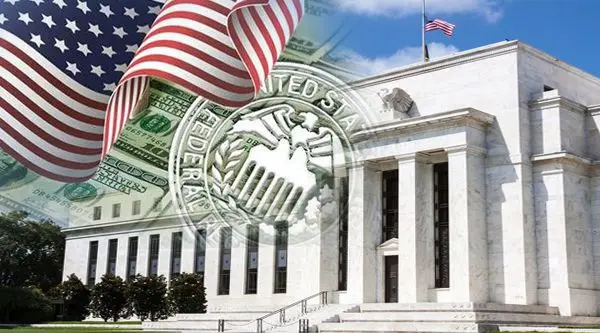
The Federal Reserve's hawkish expectations are rising, and Gate institutions are helping professional users seize cross-market allocation opportunities

According to Gate's latest weekly report, the Federal Reserve maintained interest rates, but hawkish expectations have risen. The high interest rate environment combined with the deleveraging effects of derivatives has put overall pressure on the crypto market, with BTC and ETH dropping approximately 2.8% and 3.6%, respectively. Meanwhile, U.S. stocks continued to recover last week. In terms of capital flow, BTC spot ETFs have turned to net outflows, while ETH spot ETFs still maintain a slight net inflow, showing some resilience in institutional capital allocation.On-chain, PancakeSwap's weekly trading volume surpassed Uniswap, and the Robinhood Chain, RWA, and Meme ecosystems remain active. In the derivatives market, BTC open interest (OI) rose and then fell, with funding rates remaining positive, and DVOL continuing to decline, while the market overall still maintains high-level fluctuations.In response to the evolving macro policies, institutional capital flows, and on-chain ecosystems, Gate is continuously building a multi-asset trading system covering digital assets, stocks, indices, foreign exchange, and commodities. Relying on institutional-level trading, liquidity, custody, lending, asset management, and API services, it provides professional investors with a one-stop institutional solution.At the same time, Gate is continuously improving its global institutional ecosystem layout, strengthening trading execution efficiency, cross-market liquidity, and risk management capabilities, helping institutional clients respond more efficiently to market fluctuations and seize global asset allocation and structural trading opportunities.
app_icon
ChainCatcher Building the Web3 world with innovations.