BTC $81,581.05 -0.23%
ETH $2,395.54 -0.15%
BNB $744.75 +1.61%
XRP $1.32 -0.80%
SOL $104.06 -0.36%
TRX $0.3301 -0.08%
DOGE $0.0801 +1.11%
ADA $0.2160 -0.54%
BCH $283.94 +2.70%
LINK $12.06 -0.09%
HYPE $77.66 -1.01%
AAVE $148.12 +0.36%
SUI $0.9906 +0.24%
XLM $0.1762 -1.08%
ZEC $1,216.33 -3.54%
AAPL $347.99 +1.26%
AMZN $250.08 -3.07%
GOOGL $323.58 -1.36%
MSFT $519.23 -1.77%
META $646.34 -4.78%
NVDA $213.10 -2.06%
TSLA $375.67 +0.91%
SNDK $1,287.60 -3.00%
INTC $86.17 -3.29%
SPCX $147.65 -5.17%
MU $867.12 -2.25%
AMD $511.89 -3.61%

nse

All
Article
Flash

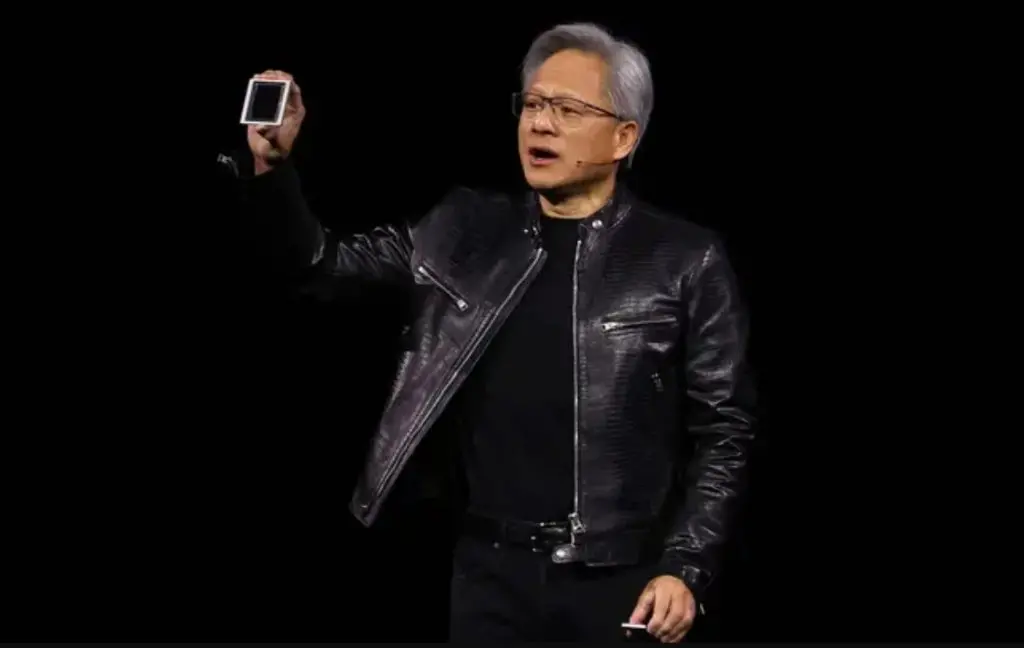
first_img Jensen Huang: The likelihood of a memory supply surplus before 2029 is low

According to the Science and Technology Innovation Board Daily, Nvidia CEO Jensen Huang stated during a media interview at the GTC conference in Berlin on Thursday that the likelihood of a memory supply surplus by 2029 is low. He mentioned that one great aspect of memory is that there is always more that can be used, and he noted that HBM will continue to be applied in the coming years.Jensen Huang also stated that Nvidia is the first company in the world to introduce LPDDR memory, used in mobile phones, into data centers, which doubles its energy efficiency compared to any current global solution, thus it will continue to use this type of memory extensively. He mentioned last Thursday that customer demand for AI chip orders continues to exceed the company's supply capacity, with new orders pouring in almost weekly, if not daily.In the past week, storage chip stocks faced sell-offs due to market concerns over supply surplus and weak demand. A well-known media outlet in South Korea published a column last week, citing two experts who predicted that by 2029, there will be a significant increase in semiconductor supply, and the storage chip market may turn into a red ocean. On Thursday, the Nasdaq Composite Index closed down 2.6%, at 26008.86 points; SanDisk fell 8.51%, SK Hynix fell 8.07%, Seagate Technology fell 7.86%, Western Digital fell 6.43%, and Micron Technology fell 6.23%.

first_img Jensen Huang: neocloud demand is extremely high, but capital is insufficient

NVIDIA CEO Jensen Huang stated during an interview with CNBC reporter Arjun Kharpal at the GTC conference in Berlin on Thursday that the demand for neocloud is extremely high and its capabilities are extraordinary, but insufficient working capital is restricting growth. He mentioned that there is huge demand in multiple fields of artificial intelligence, and the capital demand far exceeds supply, a problem that will be resolved.Jensen Huang indicated that electricity is the main constraint on the expansion of artificial intelligence, with European electricity prices being higher. He believes that allocating scarce energy to companies like Nebius and Mistral is crucial for their growth. Investment can enter Europe, but local infrastructure must be established first; if European neocloud can build infrastructure locally, the artificial intelligence ecosystem and economy can start and remain in Europe. He added that the whole of Europe still needs more neocloud.NVIDIA is conducting media activities in Europe this month and has committed nearly $10 billion in investments to local companies, universities, and research institutions. Jensen Huang announced last week during his visit to London that the company has invested over $1 billion in five UK startups and is also investing in several French startups. He stated that NVIDIA is trying to kickstart the artificial intelligence economy in Europe, which has a wealth of technology, industrial experience, and research capabilities, and is ready to participate in and build a local artificial intelligence economy.

Meta Q3 Financial Report: Revenue grew by 26%, meeting expectations, while the billion-dollar legal expenses and AI capital expenditures pose a dual challenge

Meta announced its third-quarter 2026 performance early this morning Beijing time, with revenue of $64.601 billion, a year-on-year increase of 26%, exceeding market consensus expectations (approximately $63.3 to $63.7 billion). Net profit was $9.860 billion, a year-on-year increase of 264%, with a GAAP diluted earnings per share of $3.83.Operating profit decreased by 37% year-on-year to $12.988 billion, and the operating profit margin fell to about 20% (compared to about 40% in the same period last year), mainly due to a legal expense of $9.89 billion. This expense is related to the agreement reached with the attorneys general of various states in the U.S. regarding lawsuits related to youth mental health and social media, with a total payment cap of approximately $18.59 billion. Excluding this expense, operating profit was $22.88 billion, corresponding to an adjusted diluted earnings per share of approximately $7.40.The significant year-on-year growth in net profit was also influenced by the low base effect of the previous year's effective tax rate, which was as high as 87%; the effective tax rate for this quarter was 24%. Ad impressions increased by 10% year-on-year, and the average ad price rose by 14%. Family daily active people were approximately 3.64 billion, a year-on-year increase of 3%. Family of Apps revenue was approximately $64.16 billion, of which ad revenue was about $63.06 billion; Reality Labs revenue was approximately $443 million, with an operating loss of about $4.13 billion.Capital expenditures for the third quarter (including principal payments on finance leases) were approximately $34.9 billion, with free cash flow of negative $2.12 billion, and cash, cash equivalents, and marketable securities at the end of the quarter were approximately $82.4 billion. The company expects fourth-quarter revenue to be between $73 billion and $76 billion. The full-year capital expenditure guidance has been narrowed to $135 billion to $145 billion, and the full-year expense guidance has been raised to $175 billion to $179 billion, mainly due to the inclusion of legal expenses; excluding this expense, full-year operating profit is still expected to be higher than in 2025. The company also expects Reality Labs operating losses in 2026 to be approximately $18 to $19 billion, with hopes of narrowing next year.According to Gate market data, possibly influenced by the earnings report information, META's stock price rose by 2.17% in after-hours trading.

Tesla Q3 financial report: Revenue remains flat year-on-year, net profit down 43%, operating expenses surged 39%

Tesla announced its third-quarter performance for 2026. The quarterly revenue was $28.046 billion, essentially flat year-on-year; the net profit attributable to common shareholders was $787 million, a decrease of about 43% year-on-year. GAAP diluted earnings per share were $0.22, down from $0.39 in the same period last year. Operating profit decreased by about 56% year-on-year to $718 million, with an operating profit margin of 2.6%, down 3.2 percentage points year-on-year. The company stated that increased R&D and other operating expenses, reduced regulatory credit income, and declining gross margins in the energy business put pressure on operating profit, with operating expenses rising by about 39%.Overall GAAP gross margin rose to 19.6%, an increase of about 1.6 percentage points year-on-year, and also higher than the previous quarter. The automotive gross margin, excluding regulatory credits, was about 18.1%, improving compared to the previous quarter and the same period last year. The number of vehicle deliveries for the quarter was 486,500, a decrease of 2% year-on-year; production was 464,400 vehicles, an increase of 4% year-on-year. Revenue from the automotive business decreased by about 3% year-on-year, while revenue from energy generation and storage decreased by about 16%, and service and other revenue grew by about 33%.Operating cash flow for the third quarter was $6.263 billion, and free cash flow was $1.531 billion, down from $3.990 billion in the same period last year. The company stated that battery supply continues to limit the increase in vehicle production; mass production of the Semi has started in Nevada, and production of Optimus has begun in Fremont, while Cybercab has been put into operation in the Austin Robotaxi fleet. According to BIT market data, SPCX fell 3.32% in after-hours trading.

Anthropic CEO published a lengthy response to safety concerns, stating that it is necessary to stay at the forefront of technology

Anthropic recently submitted a draft AI safety bill to U.S. lawmakers, which has been questioned by U.S. AI safety advocates. The draft sets a high threshold for the government to urgently halt dangerous models, requiring that risks involve scenarios such as biological weapons, cyberattacks, or AI going out of control, and potentially causing more than 50 deaths or serious injuries, or losses exceeding $1 billion; some provisions may also limit state government regulatory authority.Nathan Calvin, the strategic head of the AI safety organization Encode, subsequently compiled Anthropic's decisions over the past year. In February of this year, the company modified its previously strict safety policy: it had previously committed to pausing training or releases if safety measures did not keep pace with model capabilities, but the new policy no longer requires the company to independently halt R&D at higher risk stages, citing that competitors might take advantage of the opportunity. During the same period, the company invested heavily in computing power, formed a chip team, and allowed Claude to take on more AI R&D tasks.On October 21, Anthropic CEO Dario Amodei posted a lengthy rebuttal on X. He acknowledged that the company had made some mistakes but insisted that competing for cutting-edge AI capabilities did not violate its safety mission, stating that the company adheres to a race-to-the-top approach, believing that only by staying at the forefront of technology can it drive the industry to raise safety standards. He listed nine safety decisions that had cost the company commercially, including restricting the Mythos-level model's open access for months and strictly limiting biology-related requests. The safety roadmap updated by the company on October 19 states that existing policies mainly target the deployment of dangerous models, and in the future, it may be necessary to directly limit the speed of R&D, with plans to propose relevant policy options by January 15, 2027, or explain why none were proposed.

first_img The court of Kazakhstan issued a ban on six unlicensed platforms including Coinbase and BingX

According to Cointelegraph, the Astana International Financial Centre Court (AIFC) in Kazakhstan has issued an injunction against six unlicensed cryptocurrency platforms, prohibiting them from providing digital asset services locally and expanding access restrictions to app stores. The Astana Financial Services Authority (AFSA) stated on Tuesday that the court made this ruling after the regulatory agency sued the operators of the relevant platforms for providing digital asset services without authorization.The order issued on September 15 specifically named BingX, Bitcoin.com, Huobi Global (HTX), BitMart, Coinbase, LBank, and WEEX; a three-day later amendment removed LBank from the list, as its operator had blocked access for users in Kazakhstan. Google and Apple, as app store operators, were also included and are required to implement regional access restrictions for the remaining platforms.AFSA stated that users of unlicensed platforms lack the protections that licensed institutions should provide, including asset protection, information disclosure, complaint handling, and dispute resolution. The National Bank of Kazakhstan is responsible for regulating digital asset service providers outside of the AIFC.AFSA CEO Evgeniya Bogdanova stated that this court ruling is the result of the agency's long-term efforts by its supervision and enforcement team to address the activities of unlicensed crypto platforms that advertise without authorization and provide digital asset-related services in Kazakhstan without a license.AFSA noted that it had issued warnings to over 20 platforms by 2025, nine of which voluntarily restricted app access in the country, and seven expressed intent to apply for licenses. The agency has withdrawn its claims against these nine, and the injunction will be enforced against the remaining six. Cointelegraph previously reported that the financial regulator in Kazakhstan had blocked nearly 1,000 unregistered cryptocurrency exchanges that were providing services to citizens of the country in 2023.
app_icon
ChainCatcher Building the Web3 world with innovations.