BTC $81,661.10 -1.92%
ETH $2,416.76 -3.46%
BNB $729.20 -1.73%
XRP $1.33 -2.99%
SOL $104.43 -2.53%
TRX $0.3316 +0.67%
DOGE $0.0816 -3.46%
ADA $0.2280 -3.73%
BCH $268.66 -2.82%
LINK $12.38 -4.40%
HYPE $80.26 -2.63%
AAVE $153.74 -4.74%
SUI $1.02 -3.22%
XLM $0.1825 -3.86%
ZEC $1,141.07 -9.22%
AAPL $345.31 +1.22%
AMZN $250.87 -2.96%
GOOGL $342.34 -3.54%
MSFT $531.63 -2.15%
META $730.19 -4.51%
NVDA $218.43 -4.78%
TSLA $363.52 -3.29%
SNDK $1,354.06 -8.09%
INTC $95.86 -7.07%
SPCX $150.13 -4.72%
MU $889.20 -6.93%
AMD $560.63 -8.01%
BTC $81,661.10 -1.92%
ETH $2,416.76 -3.46%
BNB $729.20 -1.73%
XRP $1.33 -2.99%
SOL $104.43 -2.53%
TRX $0.3316 +0.67%
DOGE $0.0816 -3.46%
ADA $0.2280 -3.73%
BCH $268.66 -2.82%
LINK $12.38 -4.40%
HYPE $80.26 -2.63%
AAVE $153.74 -4.74%
SUI $1.02 -3.22%
XLM $0.1825 -3.86%
ZEC $1,141.07 -9.22%
AAPL $345.31 +1.22%
AMZN $250.87 -2.96%
GOOGL $342.34 -3.54%
MSFT $531.63 -2.15%
META $730.19 -4.51%
NVDA $218.43 -4.78%
TSLA $363.52 -3.29%
SNDK $1,354.06 -8.09%
INTC $95.86 -7.07%
SPCX $150.13 -4.72%
MU $889.20 -6.93%
AMD $560.63 -8.01%

test

All
Article
Flash

Tencent's internal testing personal investment analysis assistant "Rena Lancaic", supports connecting to WeChat

According to "Du Jia," Tencent is conducting a small-scale test of its personal investment analysis assistant "Rena Lan Cai," which has a PC version and a WeChat mini-program, supporting connection to WeChat. This product is positioned as an AI assistant for individual investors, helping users obtain and understand market and company information, and is currently in a small-scale testing phase.The web version breaks down the investment research workflow into visual modules, with core features including market quick reads, individual stock tracking, and AI Q&A. The market quick read summarizes global market dynamics, continuously updated in the morning, noon, closing, and evening, and associates market information with the user's watchlist; the left sidebar allows users to customize stocks of interest and displays real-time market data, while the right side features an intelligent Q&A panel linked to the day's quick read content, supporting follow-up questions about industry rankings, cash flow in financial reports, and more. In addition to the PC version, Rena Lan Cai is also launched as a WeChat mini-program, with basic functionality aligned across both platforms and conversation records shared. The product also appears in the WeChat chat list as a WeChat ClawBot intelligent entity, allowing users to directly access investment research capabilities in the chat window.The report states that Alibaba is also internally testing its AI investment research product Qovest, and Baidu's previously released Kuku AI is also focusing on investment research, as major companies collectively enter the personal investor AI investment research space. Rena Lan Cai essentially serves as an investment research assistance tool, not providing investment advice and avoiding direct trading compliance red lines.

Huobi HTX Chief Analyst Cloud: The direction of Bitcoin awaits the determination of CPI, with the lower edge of $81,000 likely to be tested first

Bitcoin has retreated from around $86,000 at the beginning of October, fluctuating in the range of $81,000 to $84,000 in recent days, while the US dollar has strengthened and US Treasury yields remain high. Cloud, the chief analyst at Huobi HTX, believes that the likelihood of breaking down from the fluctuation range is greater.The ISM services price index rose to 74.0 in September, the highest since July 2022, and the one-year inflation expectation from the University of Michigan rose to 4.7% in October. The rise in price components and inflation expectations indicates that the probability of CPI exceeding expectations this Thursday is not low; if this materializes, the pricing for interest rate hikes at the end of the year will be further strengthened, and the lower bound of $81,000 will be tested first. Only if CPI is below expectations will the breakthrough of the upper bound of $84,000 have sustainability.The recent decline in chip stocks is mainly due to the repricing of AI capital expenditures and hardware profit expectations. The retracement of Bitcoin is smaller, indicating that its pricing is more aligned with macro liquidity, and its correlation with the AI narrative is weakening; however, this divergence is temporary. Once the US dollar and long-term interest rates regain dominance in pricing, the linkage will quickly strengthen, with the CPI announcement on Thursday evening serving as a recent testing window.

Trump plans to transfer senior officials from the AI testing agency to the White House, with a 40-person team evaluating top models

The Trump administration plans to transfer three senior officials from the U.S. artificial intelligence model testing agency CAISSI to the White House, reporting directly to White House technology policy director Michael Kratsios and national cyber director Sean Cairncross. The government had previously considered moving the entire agency to the White House but ultimately only adjusted part of the senior leadership; the related transfers have not yet been completed, and the identities of the three officials have not been disclosed. Since its establishment by the Biden administration, the agency has used three different names in less than two years, and Chris Fall, the head, resigned just three months after taking office in July of this year, with a successor yet to be determined.CAISSI is affiliated with the National Institute of Standards and Technology (NIST) under the U.S. Department of Commerce, has about 40 employees, and an annual budget of approximately $15 million, responsible for model safety assessments. According to informed sources, the agency is collaborating with the National Security Agency to test OpenAI's Astra and Anthropic's Mythos before public release; it has previously assessed DeepSeek V4 Pro and Zhiyuan GLM-5.3. Google confirmed that Gemini 4 Argon has participated in the voluntary testing process before the U.S. government release. The White House hopes that this adjustment will allow model testing experts to be more directly involved in policy decision-making.

The success rate of the Zhipu legal model is nearly three times higher, and the testing cost is about one-seventieth of that of its competitors

The artificial intelligence company Zhipu released a legal-specific model GLM-Legal, which is further trained based on GLM-5.3-Flash. In the Harvey LAB evaluation covering 24 categories of legal services, the task pass rate increased from 6.7% to 19.2%, nearly tripling the original version, surpassing models like Kimi K3 and Claude Fable 5, and ranking seventh on the Vals AI leaderboard.When reviewing software service contracts, GLM-Legal suggested shortening the termination notice period from 60 days to 30 days and required service providers to offer up to 90 days of handover support. In another software project dispute involving 40 documents, it found that the company reported to the client that the project was 60% complete, while internal records indicated only about 41%. It also identified emails from the CEO requesting to conceal risks and continue charging, and analyzed potential legal liabilities in conjunction with contract terms.According to independent evaluations by Vals AI, the cost for GLM-Legal to complete a test is $0.15, while the closely performing Gemini 4 Argon costs $10.55, a cost difference of about 70 times. GLM-Legal took an average of 72 minutes, while the latter took 44 minutes. Zhipu stated that the model was trained specifically on legal data and conducted reinforcement learning in tens of thousands of simulated legal environments. Currently, GLM-Legal requires an API trial application.
first_img Binance launched an AI trading interface, with approximately 150,000 users participating in the testing

Cryptocurrency exchange Binance announced the official launch of the personalized trading interface Binance AI for global English users. This free tool is based on generative UI and can customize market information, portfolio tracking, and trading functions according to users' interests and trading experience levels, with more language versions being rolled out gradually. A Binance spokesperson revealed to The Block that since testing began on September 7, approximately 150,000 users have participated in the trial.The features of Binance AI include AI-generated portfolio performance summaries, analysis of popular volatile assets, voice alerts, and on-demand text or audio market briefings. The product was demonstrated in a live broadcast last week, alongside the upcoming Binance AI Pro. Binance's Vice President of Product, Jeff Li, stated that the market is becoming increasingly complex, but tools for understanding the market should be easier to use. This interface aims to make market information more accessible to users, whether they are novice traders or managing more complex positions.Binance Co-CEO Richard Teng described the product in an announcement on October 5 as part of the company's efforts to make financial information more accessible. He stated that finance has always been built for those who already understand it, blockchain allows everyone to enter the market, and AI empowers everyone with the knowledge to navigate the market. In April of this year, Teng discussed the company's super app strategy with The Block, which includes plans on how to utilize artificial intelligence.

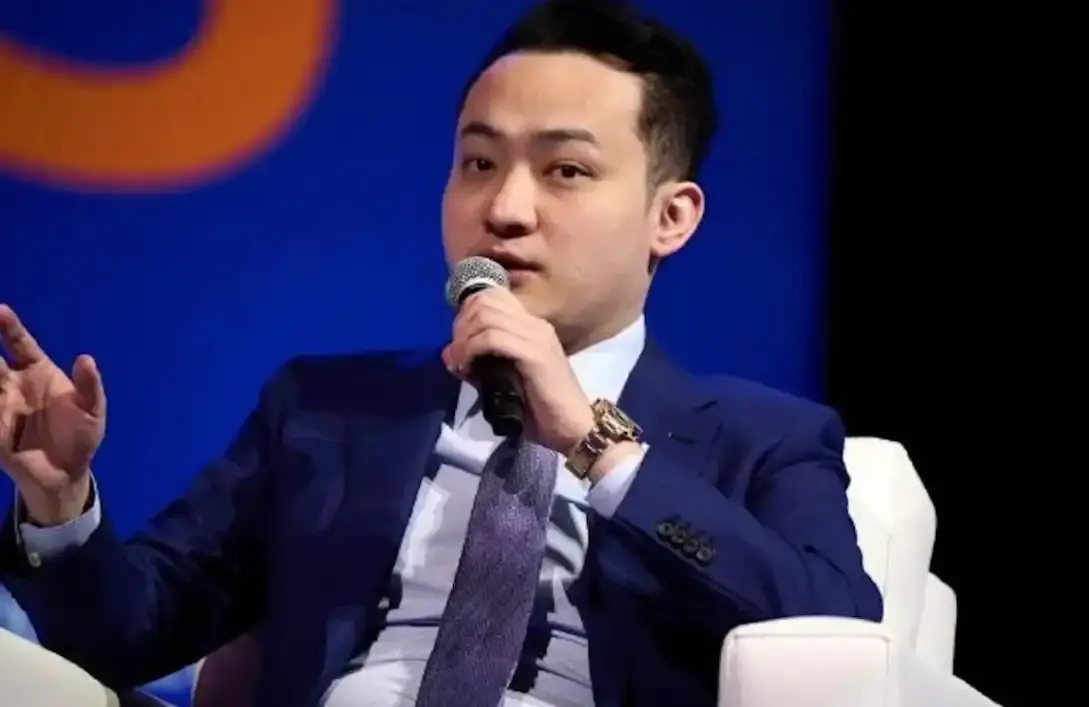
first_img Justin Sun: TRON's anti-quantum cryptography has gone live on the test network

According to Cointelegraph, Tron founder Justin Sun stated on X that Tron’s post-quantum cryptography has been launched on the testnet. He mentioned that the team is closely monitoring the progress of quantum computing and AI, ready to deploy post-quantum capabilities to the mainnet at any time, and is committed to ensuring the security of user assets. Tron is expected to become one of the few mainstream blockchains to achieve post-quantum readiness before Q-Day. Q-Day refers to the day when quantum computing is powerful enough to break current security standards.Developers are increasingly focused on post-quantum cryptography, as sufficiently powerful quantum computers could eventually break the elliptic curve cryptography used to secure blockchain networks like Bitcoin and Ethereum. Earlier this year, a consortium led by Strategy pledged $15 million to fund Bitcoin quantum security research, the Ethereum Foundation released a proposal to migrate accounts to post-quantum cryptography, and Algorand plans to introduce post-quantum accounts by 2027.In addition, blockchain security company AmericanFortress previously announced a cryptographic solution that can protect crypto wallets from future quantum attacks without requiring users to transfer funds, rotate keys, or change wallet addresses. This solution has been published in the form of a technical paper on Cryptography ePrint Archive and has not yet been peer-reviewed.

first_img Tokenized fund platform OpenETF launches Hyperliquid testnet

The tokenized fund platform OpenETF launched its testnet system on October 6, 2026, creating a fund from the Hyperliquid portfolio, with shares existing in the form of tokens held in wallets. Currently, the deployment uses worthless test assets, and the documentation states that real funds should not enter the system. Each fund has a name, symbol, public terms, and shares in the form of ERC-20 compatible tokens.The manager trades the portfolio on Hyperliquid, and investors hold shares in their own wallets. The initial offering is subscribed in USDC at net asset value, with a minimum amount of 100 USDC, and the manager may set a higher threshold. The fund is a treasury across HyperCore and HyperEVM, with the treasury contract on HyperEVM issuing shares and pricing for subscriptions and redemptions, while the same treasury holds and trades the portfolio as a trading account on HyperCore. Investors hold share tokens, the manager directs trades, but does not obtain the treasury trading keys.Creating a fund requires no approval or creation fee. The manager must purchase at least 100 USDC worth of shares and choose a commitment ratio of at least 5%. Performance fees can be selected from 0% to 50% of consolidated profits, with a default of 20%; the management fee is 0% to 2% per year, with a default of 0%, and the two rates are frozen after shares are issued. The testnet charges an exit adjustment fee for the priced redemption portion, starting from 0.1%, with an additional 0.05% for each unit of nominal leverage, capped at 1%, with fees remaining in the fund. The documentation describes this deployment as a testnet only, with no timeline provided for mainnet launch.

first_img HSBC and Ant Group test AI agent tokenized deposit payments

HSBC and Ant Group tested a system that allows AI agents to access digital services and complete small payments using tokenized bank deposits, with transactions settled in real-time on a blockchain test network. This test combined HSBC's tokenized deposit service, Ant Group's Anvita Flow network, and the layer two blockchain testing environment Jovay Testnet. HSBC provided settlement capabilities and real-time risk checks, while Ant Group's network coordinated service access and payments. In the demonstration, an AI agent selected a digital service and completed the payment, with both parties referring to such transactions as small payments, typically defined as being under $2. Both companies stated that this test was limited to technical validation and does not represent a commercial release or actual services for customers.Currently, several banks are testing AI agents to initiate financial transactions on behalf of clients. In March, Spain's Santander Bank completed AI agent-initiated payments in a controlled test using Mastercard's Agent Pay infrastructure, involving the bank's real-time payment system. In May, Swiss digital asset bank Sygnum tested AI agent-driven transactions on the main blockchain network, requiring client approval and signature for each transaction. Spain's CaixaBank also completed AI agent-initiated card transactions using Visa Intelligent Commerce with existing merchant payment systems. However, Augustus Bank CEO Ferdinand Dabitz believes that traditional clearing banks rely on systems designed for manual operations decades ago, making it difficult to adapt to the demands of automated, round-the-clock transactions.
app_icon
ChainCatcher Building the Web3 world with innovations.