BTC $81,532.94 -0.29%
ETH $2,396.07 -0.33%
BNB $745.64 +1.70%
XRP $1.32 -0.60%
SOL $104.47 +0.16%
TRX $0.3300 -0.20%
DOGE $0.0801 +1.04%
ADA $0.2165 -0.13%
BCH $284.24 +3.07%
LINK $12.07 +0.22%
HYPE $77.83 -0.38%
AAVE $147.96 +0.63%
SUI $0.9945 +0.90%
XLM $0.1766 -0.63%
ZEC $1,228.25 -2.11%
AAPL $347.99 +1.23%
AMZN $249.84 -2.91%
GOOGL $322.95 -1.81%
MSFT $518.89 -2.35%
META $644.28 -4.87%
NVDA $212.75 -2.18%
TSLA $375.10 +0.71%
SNDK $1,287.38 -2.43%
INTC $86.23 -2.76%
SPCX $148.37 -3.81%
MU $869.27 -1.74%
AMD $511.57 -3.57%

bbl

All
Article
Flash

first_img U.S. Treasury Secretary Janet Yellen: Artificial Intelligence cannot be compared to the Internet bubble

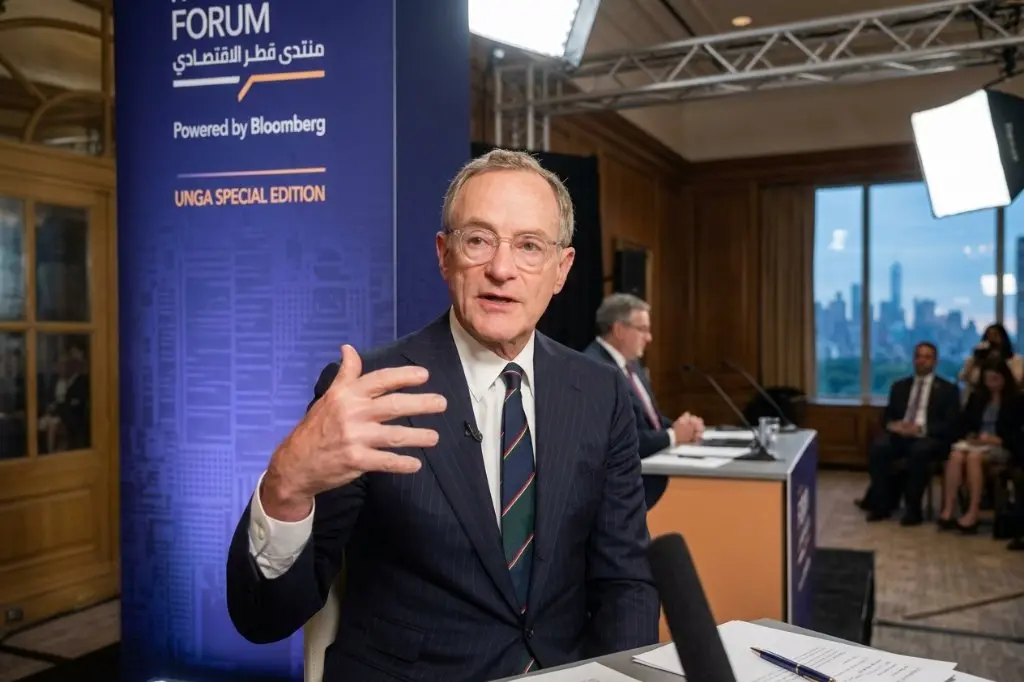
According to attendees, U.S. Treasury Secretary Bessent stated during a closed-door meeting on Wednesday that there are no systemic issues in the artificial intelligence industry, and it cannot be compared to the internet bubble at the turn of the century. Bessent expressed an optimistic attitude towards this cutting-edge technology, believing that technological advancements will benefit the United States, but also acknowledged that data centers and AI companies have not done enough to explain the benefits of this technology to the average American.The closed-door meeting attracted over a hundred executives and investors from the financial industry, with ticket prices starting at $7,500 and top sponsorship packages costing up to $100,000. Proceeds from the meeting are used for charity. This year marks the 14th edition, having raised nearly $72 million in total. Bessent has publicly predicted multiple times that the development of artificial intelligence will significantly increase productivity and greatly boost U.S. economic growth. Currently, there is growing concern in American society regarding investments in artificial intelligence and data centers, leading to a sell-off of AI stocks.Former U.S. Treasury Secretary Yellen pointed out that she always confirms the presence of the media and issues public reports when she gives speeches. Bessent's office responded that his views expressed at the closed-door meeting had been publicly stated before and do not involve issues of transparency; in addition to artificial intelligence, he also discussed his views on the U.S. economy. More and more regions are beginning to oppose the construction of data centers, which is affecting the upcoming U.S. midterm elections, leading to a decline in support for U.S. President Trump and the Republican Party.

BlackRock and Deutsche Bank CEOs say the fiscal deficit is more urgent than the AI bubble

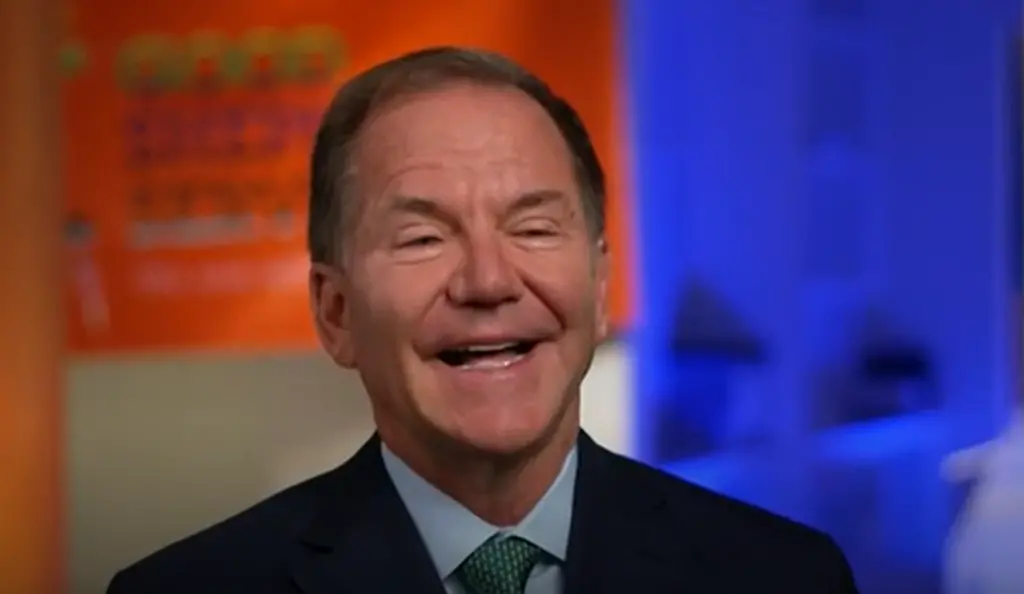
According to Bloomberg, financial executives have differing opinions on whether AI has become a bubble. Ken Griffin previously warned that AI investors are almost certainly in a bubble and should prepare for setbacks, stating that significant economic transformations are often accompanied by bubbles. Recently, the market has been concerned that the time it takes for the massive upfront capital expenditures in AI to translate into profits and productivity gains may be longer than expected. Deutsche Bank CEO Christian Sewing stated that there is no reason to worry about a sharp reversal in asset prices in the short term; individual companies may face setbacks, but he does not believe the market is in a bursting bubble.Sewing distinguished between a bubble and ongoing volatility, mentioning geopolitical tensions. He stated that if the regulatory framework is appropriate, the industrial application of AI will become a century opportunity for Germany. BlackRock CEO Larry Fink advocated for accelerating the construction of AI data centers, warning that delays could threaten economic growth and exacerbate inflation due to high computing costs. He previously mentioned that AI faces a supply shortage, with demand growth exceeding expectations, and stated that the faster more data centers are built and more computing power is available, the quicker costs can be reduced.Federated Hermes Chief Investment Officer for Global Equities Steve Chiavarone said that investors worried about an AI bubble may be correct in their judgment, but it is several years too early; infrastructure still has several years of growth potential, after which the risk of overbuilding will become more pressing. The market is still differentiating which companies can secure funding and at what interest rates, which is contrary to the bubble period.Compared to the AI bubble, both Fink and Sewing view the fiscal deficit as a more pressing concern, especially as the AI industry competes with the government for investment funds. The U.S. fiscal deficit is nearing $2 trillion, and U.S. Treasury yields have risen to decades-high levels.Fink stated that the current level of capital competition is the highest he has seen in his career. Regarding the rising risk of French government bonds, Sewing said it cannot yet be called a debt crisis, but it serves as a warning for public finances, emphasizing the importance of budget discipline.

Bubblemaps: Attackers stole 50 million USD in NES, but actually only profited 60,000 USD

Bubblemaps posted on platform X that attackers exploited a vulnerability in the Cosmos EVM shared module to steal $50 million worth of NES tokens, but ultimately only profited about $60,000. Previously, Cosmos Labs reported security vulnerabilities in its shared Cosmos EVM software, affecting multiple chains built on this module, including Nesa.According to disclosures, the main attacker with an address starting with 0x9AE7 previously spent $250,000 to purchase NES and cross-chain to Nesa Chain, then exploited the vulnerability to inflate the account balance by 200 times and transferred $50 million NES back to Ethereum, with the initial funds coming from Monero. The attacker then dispersed the tokens to multiple wallet addresses, exchanged NES for ETH on a DEX, and deposited the profits into a centralized exchange.Due to the rapid withdrawal of funds from the liquidity pool, most of the attacker’s exchange transactions encountered severe slippage, resulting in an actual expenditure of $255,000 to initiate the attack, cashing out only $315,000, with a net profit of about $60,000.Bubblemaps stated that although another Cosmos EVM chain had also suffered a similar attack of $1.4 million the day before, the differences in funding sources and operational methods suggest that the two incidents may have originated from different attackers. The report also mentioned that the price of NES tokens once plummeted by 90%, but has since significantly rebounded, with the team believing that the rebound is mainly due to arbitrage activities caused by price mismatches between DEX and CEX after the attack.

first_img Unitree's stock price has fallen about 45% from its peak after going public, raising concerns about a bubble

According to a report by Reuters, after the Chinese robot manufacturer Unitree was listed on the Shanghai Star Market, its stock price has cumulatively dropped about 45% from the peak on its first day of trading. The market value once soared to $66 billion before retreating by about $30 billion, raising concerns about bubble risks, retail investor losses, and the IPO mechanism. On its first day of listing, it closed up 460%, far exceeding the average first-day increase of 226% for new stocks in China over the past three years, and then fell for three consecutive days, with the stock price stabilizing somewhat on Tuesday.Unitree is one of the world's leading manufacturers of quadruped and humanoid robots, capable of performing actions such as running, dancing, and martial arts, but broader commercialization remains limited, competing with companies like Tesla and Boston Dynamics. The prospectus shows that the adjusted net profit for the first quarter of 2026 decreased by 53% year-on-year to 40 million yuan, and there are also signs of profit slowing in the first half of the year. The company was listed through a fast-track process on the Star Market, which may set a precedent for other domestic peers.Analysts point out that investors are driven by the "technology revolution narrative," and the first-day performance reflects market sentiment. The discrepancy between IPO pricing and opening price indicates that at least one party is misaligned; there are also views that the rise is more due to motives for raising prices for unloading, with short selling being restricted and retail investors exacerbating volatility. Some institutions believe that robot companies have high R&D investments and that orders have not yet been realized on a large scale, making it inappropriate to focus solely on short-term profits, similar to the early electric vehicle industry.
app_icon
ChainCatcher Building the Web3 world with innovations.