BTC $63,966.61 -1.51%
ETH $1,855.89 -1.47%
BNB $565.21 -0.32%
XRP $1.08 -1.47%
SOL $73.89 -2.05%
TRX $0.3295 -0.48%
DOGE $0.0694 -0.38%
ADA $0.1623 -2.48%
BCH $210.24 +0.04%
LINK $8.30 -2.06%
HYPE $57.59 -1.38%
AAVE $90.97 -4.97%
SUI $0.7050 -3.86%
XLM $0.1768 -3.10%
ZEC $477.10 -4.98%
BTC $63,966.61 -1.51%
ETH $1,855.89 -1.47%
BNB $565.21 -0.32%
XRP $1.08 -1.47%
SOL $73.89 -2.05%
TRX $0.3295 -0.48%
DOGE $0.0694 -0.38%
ADA $0.1623 -2.48%
BCH $210.24 +0.04%
LINK $8.30 -2.06%
HYPE $57.59 -1.38%
AAVE $90.97 -4.97%
SUI $0.7050 -3.86%
XLM $0.1768 -3.10%
ZEC $477.10 -4.98%

bear

All
Article
Flash

Morgan Stanley missed the lead underwriting qualification for SK Hynix's $26.5 billion IPO, having previously released multiple bearish reports on the South Korean semiconductor industry

According to South Korean media outlet Chosun Ilbo, Morgan Stanley was not selected as the sole lead underwriter for SK Hynix's American Depositary Receipts (ADR) listing. The transaction size is approximately $26.5 billion (about 40 trillion Korean won), making it the largest IPO for foreign capital in the U.S. The commission, calculated at a 0.5% underwriting fee rate, is about $130 million. The final underwriting syndicate consists of Bank of America, Citigroup, Goldman Sachs, and JPMorgan Chase. Industry insiders generally believe that Morgan Stanley's exclusion is related to its repeated issuance of bearish reports on South Korean semiconductors.The report's author is Korean-American Managing Director Shawn Kim, who has repeatedly downgraded the stock ratings of memory stocks such as Samsung Electronics, SK Hynix, and Micron in research reports published in 2017, 2021, 2024, and on June 6 of this year, with the 2021 report titled "Memory, Winter is Coming." Additionally, Morgan Stanley has recently faced setbacks in South Korea: as a co-underwriter for the SpaceX IPO, Korea's Mirae Asset applied for $1.14 billion in subscriptions but received zero allocation; the sale of IGIS Asset Management, promoted in conjunction with Goldman Sachs, also ended in failure. Morgan Stanley's largest shareholder is Japan's Mitsubishi UFJ Financial Group (MUFG), which holds approximately 24% of the shares.

Wintermute: Bitcoin shows "bearish but not falling" bottoming characteristics, key resistance level at $67,250

Wintermute released a market analysis stating that under multiple geopolitical shocks such as the U.S. airstrikes on Iran and the closure of the Strait of Hormuz, Bitcoin has still maintained the critical support level of $62,000, showing strong resilience in the market.Last week, as U.S.-Iran negotiations were paused due to related issues, Iran attacked commercial vessels, and the U.S. launched a new round of airstrikes. Tehran announced the indefinite closure of the Strait of Hormuz, leading to a significant rise in international oil prices, with Brent crude oil seeing a weekly increase of 6.3%, and the yield on 10-year U.S. Treasuries rising to 4.57%. The market has readjusted the probability of a Fed rate hike in September to about 61%, and the U.S. CPI data to be released this week will be a key indicator affecting expectations for the July FOMC meeting.In the cryptocurrency market, Bitcoin has maintained a stable trend despite facing consecutive geopolitical risk events, holding the $62,000 area after a minimum pullback and gradually rising to around $64,000. Ethereum performed even stronger, with prices nearing $1,805.Meanwhile, the eight-week trend of ETF fund outflows has finally ended, with Bitcoin and Ethereum-related products recording a total inflow of about $282 million last week. Although the weekly inflow is still insufficient to confirm a trend reversal, combined with the recent continuous accumulation by whales and the market's weakened reaction to negative news, marginal selling pressure is easing, and the market may be forming a phase bottom.Additionally, the market's reaction to Strategy selling Bitcoin has been muted, contrasting sharply with two months ago when the sale of just 32 BTC triggered a sell-off, indicating that investor concerns about potential selling pressure have significantly decreased.Currently, Bitcoin has shown a "not falling on bad news" bottoming characteristic, but the market still needs to wait for further confirmation. Key factors going forward include the performance of U.S. CPI, whether ETF funds can continue to flow in, and the developments in the Strait of Hormuz situation. If inflation data cools, fund flows continue to improve, and progress is made on the CLARITY Act, Bitcoin is expected to challenge the key resistance level of $67,250; conversely, if oil prices continue to rise and macro pressures intensify, the $60,000 support may face another test.

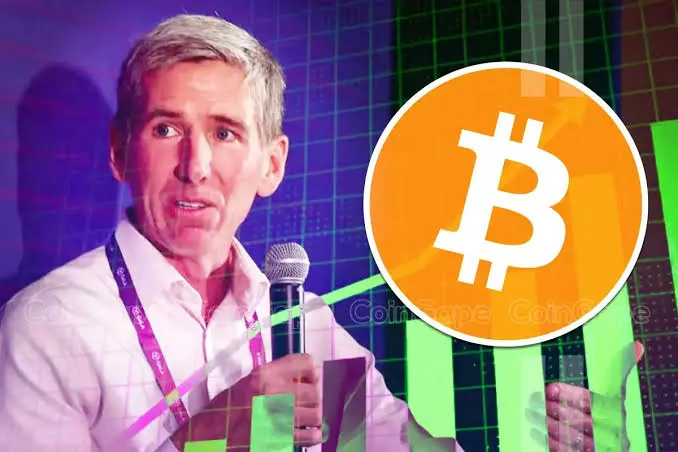
Analyst: Bitcoin may be entering the end of a bear market, expected to rise to $250,000 in the next two to three years

Real Vision's Chief Crypto Analyst Jamie Coutts stated that Bitcoin may be entering the later stages of this bear market. Although the bear market has not ended, the downward momentum has begun to weaken. The current BTC price has fallen about 50% from the historical high of $126,100 set in October 2025. Coutts referred to the current trend as a "typical bear market" and pointed out that Bitcoin's volatility has decreased by about 50% compared to the previous cycle, which suggests that this decline may not be as severe as the previous bear market. However, he cautioned that all current trend indicators are still clearly bearish, and the market will not mechanically replicate historical cycles.He noted that longer-term momentum indicators are beginning to show bullish divergence, indicating that negative momentum is slowing down, but this does not mean that Bitcoin has technically exited the bear market. In addition to the tightening of global liquidity, the deterioration of on-chain demand has also been a significant reason for Bitcoin's decline. Regarding long-term price predictions, Coutts is cautious about Bitcoin reaching $1 million by 2030. He prefers to predict that BTC will rise to between $200,000 and $250,000 in the next two to three years. He also warned that the Bitcoin community needs to more clearly address the potential threat of quantum computing before 2027, as significant protocol upgrades may take about five years.
app_icon
ChainCatcher Building the Web3 world with innovations.