Scan to download
BTC $77,638.55 -0.32%
ETH $2,319.66 +0.08%
BNB $638.27 +0.11%
XRP $1.43 +0.17%
SOL $86.62 +1.38%
TRX $0.3227 -1.58%
DOGE $0.0984 +0.55%
ADA $0.2520 +0.98%
BCH $454.87 -0.44%
LINK $9.40 +1.10%
HYPE $41.23 +0.29%
AAVE $95.29 +2.23%
SUI $0.9514 +0.55%
XLM $0.1729 -1.21%
ZEC $355.74 +3.69%
BTC $77,638.55 -0.32%
ETH $2,319.66 +0.08%
BNB $638.27 +0.11%
XRP $1.43 +0.17%
SOL $86.62 +1.38%
TRX $0.3227 -1.58%
DOGE $0.0984 +0.55%
ADA $0.2520 +0.98%
BCH $454.87 -0.44%
LINK $9.40 +1.10%
HYPE $41.23 +0.29%
AAVE $95.29 +2.23%
SUI $0.9514 +0.55%
XLM $0.1729 -1.21%
ZEC $355.74 +3.69%

co-founder

first_img Mysten Labs co-founder: Sui will achieve zero transaction fees across the network, becoming the global commercial settlement layer for the AI intelligent economy

ChainCatcher reported live that Adeniyi Abiodun, co-founder and Chief Product Officer of Mysten Labs, delivered a keynote speech at the 2026 Hong Kong Web3 Carnival. He stated that the core team members come from Facebook and were responsible for launching the global payment network Libra, aiming to make fund transfers as simple as sending messages. He announced that Sui will be the first high-speed public blockchain to achieve zero transaction fees for transfers across the network, regardless of the transfer amount ranging from $0.0005 to $1 billion, covering all stablecoins such as USDC, USDT, and Sui Dollar.In terms of privacy, Sui will provide bank-grade on-chain privacy, utilizing advanced cryptography to ensure that transaction history and balances are not visible to third parties, while fully compliant with regulatory requirements. Regarding yields, he introduced the Sui Dollar launched in collaboration with Stripe, which generates approximately 3.5% returns that will be directly reinvested into the network ecosystem and users, rather than flowing to intermediaries.He also announced the launch of the Bitcoin DeFi protocol Hashi aimed at institutions, allowing sovereign wealth funds, hedge funds, and ETF holders to deploy Bitcoin into DeFi for yields without triggering taxable events, supported by legal opinions from top U.S. law firm Fenwick & West. Additionally, Sui's on-chain deep order book DeepBook supports large transactions with extremely low slippage for instant on-chain exchanges between assets such as BTC, gold, USD, and EUR.In the AI agent economy, he pointed out that Stripe estimates a need for processing capacity of 1 billion transactions per second in the future, while Sui employs a horizontally scalable architecture similar to that of Google Search and Facebook infrastructure, capable of scaling on demand to millions or even tens of millions of TPS. The full-stack atomic composability provided by Sui is its core differentiated advantage, allowing agents to execute multiple cross-application transactions simultaneously and settle them in one go, which cannot be achieved on AWS, Google, or any existing Web3 platform. He also announced a partnership with RedotPay, enabling users to spend Sui Dollars at over 130 million merchants worldwide and positioning Sui as an alternative to SWIFT.

Monad Co-founders: If a rate limit is set on collateral supply, today's rsETH event could prevent a loss of about 200 million dollars

Keone Hon from Monad Lianchuang stated: "I feel that the lending protocol for the liquidity pool should set rate limits on the supply of assets deposited as collateral. For example, if the current supply is 100 million and the supply cap is 300 million, then in the next 10 minutes, the maximum allowed increase should be to 110 million, rather than allowing a one-time deposit of the full 200 million. In reality, no one needs to complete such a large deposit all at once.This is important because when certain exotic assets are attacked, the impact depends on the scale of the exit channels for that asset. Especially in many cases where attacks belong to infinite issuance vulnerabilities, the scale of the exit that can be made essentially determines the upper limit of the attack losses. Lending protocols are often the largest exit channels. If a smart cap is introduced, where the initial cap is slightly above the current supply and is gradually adjusted to the real cap over several hours, it would have a huge effect. With such a mechanism, rsETH depositors could have avoided about 200 million dollars in losses.This also raises a point: the asset issuers themselves should support such mechanisms. If you are issuing redeemable tokens with redemption delays, you are not worried about hackers redeeming directly from you, but you need to compress the scale of external exit paths as much as possible without affecting normal users. Therefore, a high supply cap should be seen as a risk rather than a symbol of strength. For example, the Hyperbridge DOT attack did not result in a 100 million dollar loss because there were very few exit paths; the Resolv attack loss was 24 million dollars instead of 200 million dollars because the scale of the exit path limited the loss cap. This is an obvious principle, but there are still immediately actionable measures: audit the supply caps of all assets and lower the caps when unnecessary."

Brevis co-founder and CEO Michael confirmed attendance at the ChainCatcher Hong Kong forum "Crypto 2026: From Cryptocurrency to Smart Economy."

Brevis co-founder and CEO Michael confirmed attendance at the "Crypto 2026: From Cryptocurrency to Smart Economy" themed forum to be held on April 19 in Hong Kong, and will participate in a roundtable discussion. This event is co-hosted by ChainCatcher and RootData and is one of the important peripheral activities of the Hong Kong Web3 Carnival.Brevis is a zero-knowledge verifiable computing platform for Web3, allowing applications to move complex and expensive computations off-chain while providing trustworthy proofs on-chain. Its core components include Pico zkVM, ZK data co-processor, and the decentralized proof market ProverNet, which has generated hundreds of millions of proofs for over 40 protocols, covering 6 mainstream blockchains. This forum will focus on the paradigm shift under the deep integration of AI technology and crypto networks, engaging in in-depth discussions on cutting-edge tracks such as AI Agent economy, smart payments, RWA, and crypto infrastructure. At the intersection of technological leaps and economic restructuring, this themed forum not only provides insights into the current state of the industry but also offers a forward-looking reflection on the future smart economic system.Event registration: https://luma.com/18v6vwpf

Bittensor co-founder accuses Covenant AI founder of betraying the community and plans to launch a locked staking mechanism

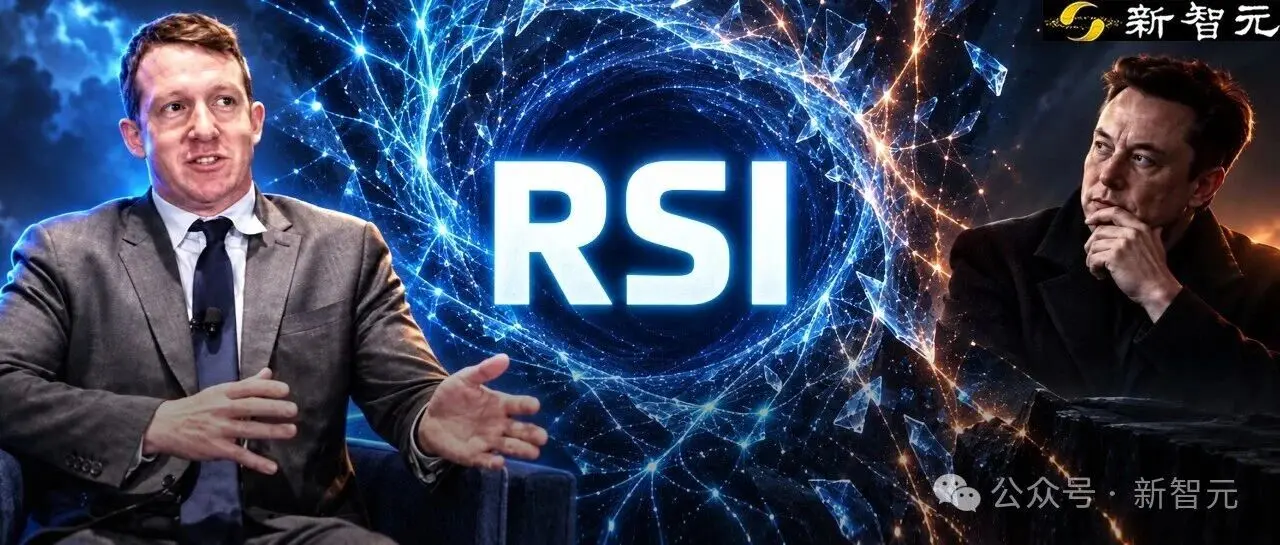
Bittensor co-founder Jacob Robert Steeves responded to the Covenant AI incident, stating that he was "deeply shocked" by the events of the past few days and accused Covenant AI founder Samuel Dare of causing serious harm to the protocol and community, betraying the trust of investors and users. He apologized to users who suffered losses due to the incident.Steeves stated that the original intention of Bittensor was to combat greed and selfishness in human nature, promoting AI to be collectively owned by all participants through a permissionless mechanism. He emphasized that while this incident exposed vulnerabilities in the system, it would also encourage the protocol and community to further enhance their risk resilience.Regarding future directions, Steeves proposed advancing the "Locked Stake" mechanism, introducing a "time + stake" commitment dimension at the protocol layer to improve transparency and investor protection, thereby reducing similar risks. He noted that this plan was originally designed with the participation of Samuel Dare.Additionally, he mentioned that the development related to subnets 3, 39, and 81 would continue to be driven by the community, and the overall functionality and vision would not change. Steeves emphasized that Bittensor remains one of the most decentralized AI protocols currently and will continue to promote the development of open AI, with plans to move towards training larger-scale models. In the future, they will train a 1 trillion parameter model.

Bittensor co-founder responds to Covenant AI's accusations: no authority to suspend subnet emissions, and the amount sold is less than 1% of the investment

Bittensor co-founder Const (@const_reborn) responded on Twitter to recent allegations regarding Covenant AI. Const stated that he has no authority to pause emissions, and that the previous sale of a portion of alpha positions in three subnetworks was because these subnetworks were not operational and were in a high ratio of code destruction state. The impact of this transaction on emissions is consistent with the buying and selling behavior of ordinary TAO holders, and he does not enjoy any special privileges.Regarding management authority, Const clarified that it was Samuel himself who abandoned his Discord channel, and he did not remove his administrator role; he only temporarily restricted his ability to delete posts that honestly criticize and then restored it. Additionally, he emphasized that the scale of the token sell-off was less than 1% of his total investment in the team, and stated that exercising the rights to buy and sell tokens under the dTao system is fundamental to supporting the operation of the system.According to previous reports from ChainCatcher, the main subnetwork developer on Bittensor, Covenant AI, announced its withdrawal from Bittensor. Covenant AI founder Sam Dare stated that the reason Bittensor attracts builders, miners, validators, and investors into this ecosystem is because of its promise not to be controlled by any single entity. But this promise is a lie.
app_icon
ChainCatcher Building the Web3 world with innovations.