Interest rate cuts are a certainty, but three major uncertainties remain to be resolved

 The true significance of this meeting lies in how it will set the tone for monetary policy in the last four months of 2025.
The Federal Reserve (Fed) held its Federal Open Market Committee (FOMC) meeting this Tuesday and Wednesday, which was described by renowned financial commentator Nick Timiraos as one of the most "peculiar" meetings in the institution's history.
The market almost unanimously expects that after the two-day policy meeting, the Fed will announce its first interest rate cut in nine months on Wednesday. According to CME's FedWatch tool, the probability of a 25 basis point cut to the 4.25%−4.50% range is as high as 96%, making it almost a certainty.
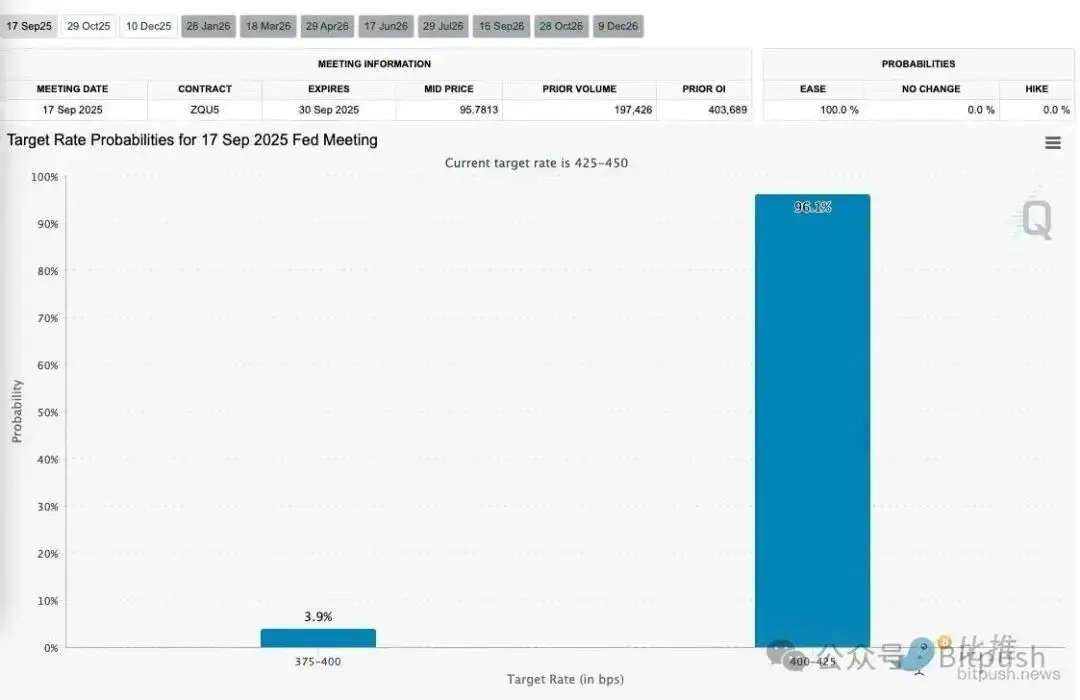
The Fed has finally decided to initiate a rate-cutting cycle, primarily due to the ongoing weakness in the U.S. labor market and increased confidence among officials that inflation caused by tariffs may only be a temporary phenomenon.
Data from the Labor Department shows that in the three months ending in August, the average number of new jobs added each month was only about 29,000, the weakest three-month increase since 2010 (excluding the pandemic period). Additionally, the number of unemployed individuals has now exceeded the number of job vacancies; initial claims for unemployment benefits have reached a nearly four-year high; and the number of long-term unemployed (those unemployed for more than 26 weeks) has hit its highest point since November 2021. Preliminary revisions to last week's employment data further indicate that the underlying conditions of the U.S. labor market have been weaker than previously thought since the summer began.

Moreover, Fed Chairman Jerome Powell laid the groundwork for this rate cut in a speech at the end of August, when he explicitly stated, "The risks to employment are rising." This reflects that concerns within the Fed about achieving its "full employment" mandate have now surpassed worries about inflation.
However, while the rate cut has become a foregone conclusion, the uncertainty surrounding this meeting and future monetary policy has reached unprecedented heights. These unresolved factors are the real keys influencing financial markets and asset pricing.
Suspense One: The Future Rate Path "Dot Plot" -- How Many More Rate Cuts This Year?
Since a 25 basis point cut has already been heavily priced in by the market, traders will no longer focus on "whether there will be a rate cut," but rather on the Fed's policy forecasts for the remainder of 2025.
Market's Anticipated Future Guidance
In Wednesday's announcement, Fed officials will release their latest economic forecasts, with the most attention on the "Dot Plot" -- which reflects FOMC members' expectations for future interest rate levels.
- Expectations for Continued Rate Cuts: Traders are boldly betting that the Fed will not "cut rates all at once," but will instead initiate a cycle. According to CME's FedWatch tool, the market believes there is over a 70% probability of further rate cuts in October and December.
- Potential Divergence Signals: Goldman Sachs economists expect the "Dot Plot" to show two rate cuts instead of three, but "the divergence will be small." If the Fed ultimately suggests that the pace of rate cuts is slower than the market expects, it could trigger a repricing and sell-off of risk assets. Conversely, if it suggests three or more cuts, it would be a significant dovish signal.
- The key for Goldman Sachs economists is whether the committee will hint that "this will be the first of a series of consecutive rate cuts." They expect the statement will not explicitly mention a rate cut in October, but Powell may "gently" hint in the press conference in that direction.
Divided Votes Between Hawks and Doves
The voting composition of this meeting is also filled with uncertainty. While a majority of members are expected to support a 25 basis point cut, there are clear divisions within the committee:
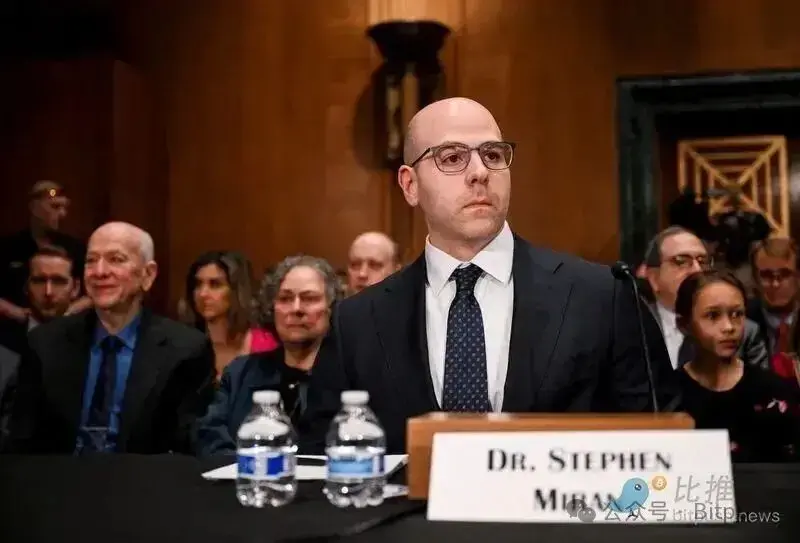
Voices calling for a "substantial" rate cut: Newly appointed Governor Stephen Miran is very likely to cast a dissenting vote, advocating for a larger cut. Treasury Secretary Scott Bessent has also publicly encouraged the Fed to implement a "comprehensive" rate cut.
Voices opposing the rate cut: Kansas City Fed President Jeffrey Schmid and St. Louis Fed President Alberto Musalem may oppose the cut, expressing concerns about inflation risks stemming from tariffs.
This division will highlight the increasingly intensifying policy disagreements within the committee, making the central bank's future actions even harder to predict.
Suspense Two: Powell's "Tone Setting" -- How to Balance Inflation and Employment?
After the interest rate decision is announced, Powell's choice of words at the press conference is usually more important than the FOMC statement itself, as he will be responsible for articulating the committee's thinking.
Is Inflation "Temporary" or "Persistent"?
Fed officials generally believe that the inflation rise caused by the Trump administration's tariff policies may only be temporary.
San Francisco Fed President Mary Daly stated, "Tariff-related price increases will be one-time." Other officials also expect that the effects of tariffs will be transmitted within the next two to three quarters, and the impact on inflation will subsequently fade. They believe that in the context of a weak labor market and an unstable economy, businesses have less flexibility to raise prices, thus reducing sustained inflationary pressures.
Powell's remarks must strike a balance between two mandates: full employment and price stability. He needs to convey a "pragmatic yet more dovish" tone. As a strategist from B. Riley Wealth Management noted, his tone will be "pragmatic but more dovish," indicating that the Fed needs to defend its full employment mandate more vigorously.
Data Dependence and Future Policy Flexibility
Traders will closely watch whether Powell provides any soft hints about actions in October. If he emphasizes "data dependence" and suggests that there is still significant room for policy adjustments in the future, it will leave the market in suspense, allowing asset prices to continue fluctuating with economic data.
Suspense Three: Unprecedented Political Interference -- Challenges to Fed Independence
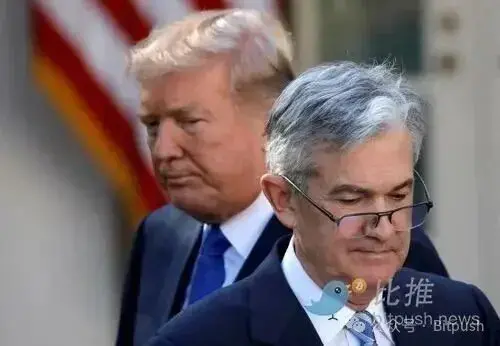
The uniqueness of this meeting partly stems from the political turmoil surrounding the core powers of the Fed. The ongoing pressure exerted by the Trump administration on its independence is the "elephant in the room" that cannot be ignored during the meeting.
Rapid Ascension of New Governors
Trump's chief economic advisor Stephen Miran was confirmed by the Senate on Monday and sworn in on Tuesday morning, just in time to gain voting rights for this FOMC meeting. This process, which typically takes months, was expedited and is seen as Trump’s desire to have Miran cast a key vote in support of a "substantial rate cut" at the September meeting. Miran himself stated that he would think independently, but his swift confirmation undoubtedly reflects the influence of political pressure on the Fed's operations.
The Cook Dismissal Controversy
Trump has publicly expressed a desire for Republicans to hold a majority on the Fed Board and attempted to dismiss Fed Governor Lisa Cook at the end of August, setting a historical precedent. Although an appeals court temporarily blocked Trump's dismissal order, Cook is still able to vote at this meeting, but her position remains uncertain as litigation is ongoing.
These changes highlight the significant challenges to the Fed's political independence. This means that any policy decision it makes will carry political shadows, and for investors relying on macro stability, this "noise" itself poses a risk.
Summary: The Market Awaits Signals, Not Decisions
A 25 basis point rate cut has become the market consensus. However, the true significance of this meeting lies in how it will set the tone for monetary policy for the last four months of 2025.
As BNY strategists noted, the Fed's "dual mandate goals are in a state of 'tension'," and the increasing politicization complicates the situation further. The market will closely monitor every word from Powell, seeking signals that will determine portfolio allocations.
Click to learn about ChainCatcher's job openings
Recommended Reading:
NAKA's stock price plummeted 54% in one day, is the market starting to tire of DAT?
Is the Base chain about to issue tokens? 6 projects worth paying attention to
 Risk warning
 Risk warning