Morning Report | Investors in Anthropic expect the IPO valuation to exceed $2 trillion, with the highest prediction reaching $3 trillion; Fidelity applies to add staking functionality for its Ethereum ETF FETH, allowing up to 100% ETH to be staked

 August 13 Market Important Events Overview
Compiled by: ChainCatcher
What important events have occurred in the past 24 hours?
Goldman Sachs: The Fed's decision to hold steady in July was absolutely correct, and it should remain open before September
According to ChainCatcher, Goldman Sachs analyst Robert Kaplan stated that the Federal Reserve's decision not to raise interest rates in July was "absolutely" correct and urged policymakers to maintain an open attitude before September, citing the complex factors affecting inflation and the counterproductive nature of rigid forward guidance. Kaplan said, "If I see meaningful improvement, I might be willing to hold steady, but I want to make the most of every moment before September to make judgments, avoiding rigidity or preconceived notions." He believes the current forces at play include inflationary pressures from AI development, tariffs, labor constraints, and soaring oil prices; meanwhile, AI applications act in the opposite direction, accelerating the trend of declining inflation. He stated that Walsh should use his speech at this month's Jackson Hole symposium to briefly explain the reasons for the Fed's decision to hold steady in July rather than deliver a purely "philosophical" speech. Kaplan expressed greater concern about long-term U.S. Treasury yields than about the federal funds rate itself. He noted that the global rise in long-term Treasury yields reflects a structural supply-demand imbalance driven by persistent wide fiscal deficits, rather than Fed policy.
Bullish Q2 Financial Report: Net loss of $280 million, digital asset trading volume of $32.6 billion
According to ChainCatcher, crypto asset trading platform Bullish reported its financial performance for Q2 2026, as reported by GlobeNewswire. The company stated that as the global securities market gradually shifts to public chains, Bullish plans to build a complete issuer-supported tokenized securities service system around issuance, listing, trading, and tracking. Bullish CEO Tom Farley stated that the nearly $300 trillion global securities market is moving towards public blockchain, and Bullish hopes to collaborate with issuers to drive this process. Following the proposed acquisition of Equiniti, the company will form an integrated platform covering securities token issuance, listing, trading, and tracking. Financial data shows that Bullish's digital asset sales in Q2 amounted to $32.6 billion, down from $58.6 billion in the same period last year; the net loss was $280 million, compared to a net profit of $108.3 million in the same period last year, corresponding to a diluted loss per share of $1.78. However, the company's core business performance improved. Adjusted revenue (non-IFRS) for Q2 reached $92.6 million, a year-on-year increase of 62%, surpassing $57 million in the same period last year; among them, subscription, service, and other revenues reached a record $62.7 million. Adjusted trading revenue was $29.9 million, a year-on-year increase of 24%; adjusted EBITDA was $29.5 million, compared to $8.1 million in the same period last year; adjusted net profit was $14.3 million, compared to a loss of $6 million in the same period last year. In terms of business progress, Bullish stated that the acquisition of UK fintech company Equiniti is progressing and is expected to be completed in early 2027, still subject to regulatory approvals and other customary conditions. Additionally, Bullish's CoinDesk Index continues to gain institutional adoption. Morgan Stanley launched Bitcoin, Ethereum, and Solana-related trading products based on the CoinDesk benchmark index, attracting over $400 million in inflows in Q2. On the regulatory front, Bullish has received approval from the Gibraltar Financial Services Commission (GFSC) to provide secondary trading services for tokenized securities, becoming one of the first regulated platforms to offer issuer-supported tokenized securities trading. The company also raised and refined its full-year guidance for 2026, expecting subscription, service, and other revenues (non-IFRS) to be between $225 million and $245 million, adjusted operating expenses to be between $225 million and $230 million, and financing costs to be between $52 million and $60 million.
Fidelity applies to add staking functionality to its Ethereum ETF FETH, allowing up to 100% ETH staking
According to ChainCatcher, Fidelity submitted a registration statement amendment to the SEC on August 11, applying to add ETH staking functionality to its spot Ethereum ETF, Fidelity Ethereum Fund (FETH). Under normal circumstances, FETH can stake up to 100% of its held ETH, but there is no minimum staking ratio. If approved by the SEC, the investment objective of FETH will also change. Currently, the fund primarily tracks the Fidelity Ethereum Reference Rate, deducting related fees; with the addition of staking, the fund's objective will shift to tracking that index while accounting for staking-generated income.
BitGo reports a net loss of $19 million in Q2, CFO to depart
According to ChainCatcher, digital asset infrastructure company BitGo disclosed on August 12 that Chief Financial Officer Edward Reginelli will officially leave on September 15. Reginelli notified the board on August 10, and the company stated that his departure is not due to disagreements regarding the company's operations, policies, or practices, and has initiated a formal search for his successor. At the same time, BitGo released its Q2 2026 financial report. The report showed total revenue increased by 79.6% year-on-year to $4.33 billion, but the net loss reached $19 million, compared to a profit of $38.3 million in the same period last year; the net loss narrowed from $60.7 million in the first quarter. Adjusted EBITDA shifted from a profit of $3 million in the same period last year to a loss of $4.2 million. The company stated that it laid off about 15% of its workforce in June, and the related investment focus and operational model adjustments are expected to yield approximately $15 million in annualized cash savings. As of the end of June, BitGo held $159 million in cash and 2,523 of its own bitcoins (valued at approximately $147.7 million), with no company-level debt.
Garrett Jin: SK Hynix has rebounded to the profit-taking zone, plans to buy Bitcoin on dips, and warns of remaining unlocks after SpaceX's short squeeze
According to ChainCatcher, Garrett Jin released this week's market report, characterizing the rebound in the Korean market as a wide-ranging fluctuation rather than a new trend. SK Hynix rebounded after retesting the 1.42 million won area, closing up 5.9% at 1,593,000 won, with the KOSPI up 20% from its July low entering a technical bull market, but foreign capital has not turned into long-term holdings, and the drag from leveraged ETFs remains. Garrett Jin set the first profit-taking level at $1,150 (approximately 1.63 million won), with the next target at $1,300 (1.85 million won). He also noted that gold recorded its strongest weekly gain since January this week at +7.8%, quoted at $4,388, driven by a reduction of 23,000 in July non-farm payrolls and a mild CPI that dampened September rate hike expectations, but it is now overbought in the short term, and a pullback could be an opportunity to accumulate in batches. Bitcoin has not reacted to the same macro positives and remains trapped between the support of $62,500 and resistance of $65,000-$70,000, with a bottom structure gradually forming since $57,700; Garrett Jin will wait for the next buying opportunity after a pullback. Regarding SpaceX, Garrett Jin believes the recent performance is a classic case of "bad news fully priced in + short squeeze," with the unlock itself becoming a washout rather than a starting point for a decline. However, the unlock window is not over, with an additional 319 million shares to be unlocked, approximately 700 million shares in September and October each. The current range to $160 is a profit-taking zone rather than a high-entry zone.
Brazilian Bitcoin treasury company OranjeBTC to launch Bitcoin eco-preferred stock ETF, expected to list in September
According to ChainCatcher, Brazilian Bitcoin treasury company OranjeBTC (B3: OBTC3) announced the launch of the Digital Yield ETF (DIGY11), which is being developed in collaboration with 3R Investimentos and MarketVector, and is expected to list on the Brazilian stock exchange B3 in early September. DIGY11 will initially invest in preferred shares issued by Strategy through STRC and preferred shares issued by Strive through SATA, distributing returns to investors monthly in Brazilian reais while providing daily liquidity and currency hedging. Under current market conditions, DIGY11 is expected to yield an annualized distribution return equivalent to CDI plus approximately 3% to 5%, but this estimate does not account for fluctuations in fund share prices and does not constitute a guarantee of returns. This ETF does not directly invest in Bitcoin but provides Brazilian investors with a localized channel to gain exposure to dollar-denominated returns and Bitcoin ecosystem assets by holding preferred shares related to Bitcoin treasury companies.
SEC allows Franklin Templeton to register funds using on-chain FOBXX to manage cash
According to ChainCatcher, as reported by CoinDesk, the U.S. SEC's Investment Management Division issued a no-action letter to Franklin Templeton, allowing its registered funds to use the on-chain money market fund FOBXX (also known as BENJI) to manage cash and collateral via blockchain, rather than following traditional custodial rules. This letter is based on Section 17(f) of the Investment Company Act of 1940 and Rule 17f-2, allowing registered funds to hold FOBXX shares without meeting certain physical vault requirements. This supports intraday trading, hourly net asset value calculations, and faster transaction processing. FOBXX primarily invests in U.S. government securities and aims to maintain a stable $1 share price, having expanded to multiple blockchains.
Securitize reports Q2 tokenized AUM reached $4.3 billion, revenue down 5% year-on-year
According to ChainCatcher, tokenization platform Securitize released its Q2 2026 financial report. The report showed that the average tokenized assets under management for the quarter reached a record $4.3 billion, a year-on-year increase of 16%, with approximately $1 billion in new tokenized assets added during the period. The aggregated trading volume reached $5.3 billion, a year-on-year increase of 147%. The fund services business managed assets of approximately $24.3 billion, servicing 663 active funds. The company's total revenue decreased by 5% year-on-year to $14.4 million, with tokenization business revenue down 12% to $7.8 million, while asset servicing revenue grew 3% to $6.6 million. The net loss widened to $21.7 million, and adjusted EBITDA shifted from a profit of $1.8 million in the same period last year to a loss of $5.5 million. Securitize went public on the New York Stock Exchange on July 2 through a merger with Cantor Equity Partners II, trading under the ticker SECZ. The company stated that it entered the third quarter with approximately $350 million in cash and no debt.
Circle executive: Most stablecoin issuers in the EU cannot custody their own tokens for customers
According to ChainCatcher, Circle's Senior Director of EU Strategy and Policy Patrick Hansen tweeted that among approximately 23 authorized electronic money token (EMT) issuers in the EU, only 9 are also authorized to provide crypto asset services (CASP). This means that only these 9 can provide custody and transfer services for the stablecoins they issue, while the remaining 14 can only mint or burn tokens directly to customer wallets and cannot hold or send stablecoins on behalf of customers. This greatly limits the range of services issuers can provide. Hansen stated that Circle has obtained the necessary CASP approval through the MiCA Article 60 notification process to offer custody or payment services related to USDC and EURC for institutional clients. He expressed surprise that more EMT issuers have not taken this step. The 9 that can provide some crypto asset services include Circle, Société Générale - Forge, CACEIS Bank, Banking Circle, Bridge, Fiat Republic, Newrails, Blue EMI, and Stable Mint.
U.S. SEC plans to launch "innovation exemption" for tokenized stocks, allowing stocks like Nvidia to trade on-chain around the clock
According to ChainCatcher, as reported by Decrypt, the U.S. Securities and Exchange Commission (SEC) plans to unveil two crypto-related initiatives in the coming days, while the Congressional CLARITY Act remains stalled until at least September. The SEC intends to propose "Regulation Crypto" at a public meeting on Friday, allowing projects to raise funds through token sales without completing full securities registration. The SEC also plans to introduce an "innovation exemption" for tokenized stocks, with details likely to be announced on Friday. This exemption would allow tokenized versions of stocks like Apple, Tesla, and Nvidia to trade on the blockchain around the clock, supporting fragmented trading and near-instant settlement. Such tokens typically track stock economic exposure but do not carry voting rights or dividend rights. This initiative is part of SEC Chairman Paul Atkins' "Project Crypto" agenda, with Robinhood Chain, Solana, and Base already advancing related on-chain markets.
AC: DeFi no longer exists, only on-chain finance remains
According to ChainCatcher, Andre Cronje, founder of the DeFi platform Flying Tulip and creator of the Fantom Network, stated that most DeFi protocols are no longer truly decentralized, with only a few niche areas still qualifying as DeFi. He believes that DeFi has evolved into "on-chain finance" or "open finance." He pointed out that true DeFi should possess characteristics such as decentralization, immutability, and lack of intermediaries, whereas most current protocols have intermediaries that have become companies, taking on roles of decision-makers and risk committees typical of traditional financial institutions. Cronje stated that this does not mean that true DeFi has disappeared; some protocols are still innovating. Data from DefiLlama shows that the total value locked in DeFi has dropped from $167 billion at the beginning of October 2025 to $75 billion at the time of this report, a decline of more than half. A working paper released by the European Central Bank (ECB) in March analyzed Aave, MakerDAO, Ampleforth, and Uniswap, finding that based on snapshots of holdings from November 2022 and May 2023, the top 100 addresses holding governance tokens in these protocols control over 80% of the token supply. The ECB thus questioned the decentralization of the relevant DAOs and whether they should continue to be regarded as "fully decentralized" services not subject to the Markets in Crypto-Assets Regulation (MiCA).
Data: Bitcoin spot ETFs saw a total net outflow of $61.1637 million yesterday, with BlackRock's IBIT leading the outflow at $14.3416 million
According to ChainCatcher, based on SoSoValue data, Bitcoin spot ETFs experienced a total net outflow of $61.1637 million. The Bitcoin spot ETF with the highest single-day net outflow was Fidelity's ETF FBTC, with a net outflow of $46.8221 million, currently having a historical total net inflow of $9.945 billion. Following that was BlackRock's ETF IBIT, with a single-day net outflow of $14.3416 million, currently having a historical total net inflow of $61.157 billion. As of the time of this report, the total net asset value of Bitcoin spot ETFs was $77.369 billion, with an ETF net asset ratio (market cap relative to total Bitcoin market cap) of 6.06%, and a historical cumulative net inflow of $51.977 billion.
Three major factors support the continued rise in Bitcoin adoption, short-term prices do not affect long-term logic
According to ChainCatcher, Grayscale Research Director Zach Pandl released a report stating that despite recent price pressures on Bitcoin, Grayscale believes its adoption rate will continue to rise in the medium to long term for three reasons: First, the unsustainable growth of U.S. government debt is raising inflation and currency devaluation risks, which may drive various investors toward scarce assets and value storage tools; second, stablecoins and tokenization will make blockchain ubiquitous in financial services, and as technology spreads, more intermediaries will have the infrastructure and regulatory conditions needed to hold and trade Bitcoin, thus Bitcoin will no longer be structurally isolated from the mainstream financial system; third, younger investors show a significantly higher preference for digital assets, and alternative investments have become a standard component of investment portfolios, with institutions, wealth management platforms, and individuals continuing to incorporate Bitcoin into diversified portfolios through exchange-traded products, a process that is already underway. Grayscale emphasizes that this bear market has not changed its expectations for the continued rise in Bitcoin adoption.
Researchers discovered Zoom vulnerabilities with fewer than 20 AI prompts, building an attack chain within 24 hours
According to ChainCatcher, as reported by Decrypt, Israeli cybersecurity company ASecurity released a report stating that a researcher used publicly available AI models to discover multiple vulnerabilities in Zoom's annotation tool with fewer than 20 prompts within 24 hours, constructing an exploitable attack chain. The vulnerabilities are numbered CVE-2026-53413, CVE-2026-53414, and CVE-2026-53415, allowing attackers to remotely execute code in meetings without any action from the victim, taking control of their devices and stealing data, or activating microphones or cameras. The attack was tested successfully on Windows, macOS, Linux, Android, and iOS versions of Zoom. ASecurity stated that it reached a "national-level" standard, as constructing such exploit tools previously required months of work from professional teams and substantial budgets. ASecurity reported the first vulnerability to Zoom on June 10, and Zoom released fixes between June 22 and July 20, but server-side protections in end-to-end encrypted meetings could not filter malicious messages, requiring users to update manually. A Zoom spokesperson confirmed that the issue has been resolved and advised users to keep their versions up to date.
Approximately 233,000 Bitcoins transferred for hedging, Coldcard involved in approximately $15 billion after attack
According to ChainCatcher, after a firmware vulnerability in the Coldcard hardware wallet was exploited, approximately 2,100 Bitcoins were stolen, resulting in losses close to $130 million. On-chain data shows that long-term holders' wallets transferred approximately 233,000 Bitcoins in the days before and after the incident, valued at about $15 billion. Casa CEO Nick Neuman stated that some of the transferred funds came from Coldcard users migrating to multi-signature wallets, and Ledger and Trezor users took similar measures after the incident. During the same period, approximately 22,000 Bitcoins were transferred to exchanges. Coinkite has requested that users who generated mnemonic phrases using firmware versions 4.1 to 4.1.9 consider the related wallets compromised and migrate to new mnemonic phrases. These versions cover from March 2021 to July 2026.
LTP strategically invests in Digital Prime Technologies, accelerating Tokenet's expansion in Asia-Pacific
According to ChainCatcher, institutional digital asset lending technology provider Digital Prime Technologies announced on August 12 that it has received a strategic investment from global institutional digital asset prime broker LTP. LTP will become its chief strategic partner in the Asia-Pacific region, helping Tokenet expand institutional participation in the Asia-Pacific market. Tokenet is Digital Prime Technologies' institutional-grade digital asset and tokenized asset lending platform. Following this investment, LTP will work with previously joined partners EquiLend, Galaxy Digital, and Marex to promote Tokenet's global institutional infrastructure development. LTP stated that it will leverage its institutional client network, prime brokerage capabilities, and financing expertise to accelerate Tokenet's adoption among financial institutions in the Asia-Pacific region.
Figure offers cryptocurrency loans with a maximum loan-to-value ratio of 75% based on collateral value
According to ChainCatcher, cryptocurrency lending institution Figure Lending LLC offers cryptocurrency-backed loans, allowing borrowers to use Bitcoin, Ethereum, or Solana as collateral, with a maximum loan amount of 75% of the collateral value while retaining ownership of the tokens. Borrowing typically does not constitute a sale and generally does not trigger capital gains events. Figure Lending LLC stated that borrowers should compare maximum loan-to-value ratios, fixed or floating rates, regulatory approvals, and liquidation terms. The institution offers fixed rates with a loan term of 12 months, with a maximum annualized interest rate of 12.62%, and supports same-day funding without requiring credit scores, with approval based on collateral. Figure offers an optional liquidation protection feature, applicable in some states, which can delay liquidation during the loan term due to price declines; however, liquidation may still occur if the loan is overdue. This feature does not apply to unpaid, defaulted, or breached loan terms, and a decline in cryptocurrency asset prices may still trigger margin calls.
Bill Ackman's Pershing Square prepares new venture capital fund, betting on high-growth AI companies pre-IPO
According to ChainCatcher, as reported by Bloomberg, with a surge of high-growth startups emerging in fields such as artificial intelligence and biotechnology, private equity and pre-IPO investment tools aimed at ordinary investors are rapidly increasing. Billionaire investor Bill Ackman's investment firm Pershing Square is preparing to launch a new fund to provide investors with opportunities to participate in high-growth companies that are not yet publicly listed. Pershing Square has initiated the process to establish "Pershing Square Ventures." The fund will adopt a "permanent capital" model, allowing for long-term holdings of investment targets and continued ownership of shares after the invested companies go public. Ackman and Pershing Square Chief Investment Officer Ryan Israel stated in a letter to shareholders that the new fund aims to capture investment opportunities in pre-IPO companies and expand the company's investment scope beyond the public market. Currently, Pershing Square has not disclosed the target size of the fund, investment strategy details, or specific fundraising timeline.
Data: There are 65,340 high-risk addresses on Ethereum and BNB Chain, associated losses exceed $574 million
According to ChainCatcher, a study published at USENIX Security '26 revealed that researchers identified 65,340 high-risk crypto addresses involved in abuse on Ethereum and BNB Chain, with associated native token losses amounting to 126,982.94 ETH and 17,726.7 BNB. The study estimates that the total losses associated with these addresses exceed $574.8 million, with two newly described active attack vectors directly leading to approximately $15.7 million in losses (accounting for 2.7%). The first type involves misuse of contract accounts and exploitation of deterministic contract addresses; the second type utilizes EIP-7702 to delegate accounts exposing keys to malicious code for direct fund transfers. The research team extracted over 16.3 million deduplicated private keys by mining 63,004 GitHub repositories from January 2015 to May 2025, achieving an overall accuracy rate of 99.11%.
UK MPs pressure major banks to clarify account restrictions for crypto businesses
According to ChainCatcher, as reported by Bitcoin.com, Gurinder Singh Josan, co-chair of the UK All-Party Parliamentary Group on Crypto and Digital Assets (APPG), and Lord Vaizey sent letters to the CEOs of major UK banks requesting clarification on whether they provide account services to crypto businesses, what restrictions are placed on digital asset transactions, and whether these policies will be adjusted with the implementation of the new UK regulatory framework. The MPs pointed out that bank access may be the single largest obstacle to the development of crypto and digital asset businesses in the UK, and if licensed crypto businesses cannot obtain basic banking services, the competitiveness goals of the new regulatory system will be difficult to achieve. Treasury Economic Secretary Lucy Rigby previously stated that banking service restrictions should not be imposed on FCA-authorized crypto businesses solely due to the nature of the industry. The deadline for submitting written evidence for this inquiry is August 31, and the APPG will use this to propose policy recommendations to the government.
Monaco submits Bill No. 1131, aiming to align with MiCA and FATF standards
According to ChainCatcher, the Monaco government submitted Bill No. 1131 to the National Assembly, intending to replace Law No. 1.528 passed in 2022 and bring the regulatory framework for crypto assets closer to the EU's Markets in Crypto-Assets Regulation (MiCA) and Financial Action Task Force (FATF) standards. The proposed regulation will clarify the crypto asset services that can be conducted in Monaco and enhance corporate governance, prudential safeguards, and professional conduct requirements. Service providers must obtain prior approval from the Commission de Contrôle des Activités Financières (CCAF), and relevant licenses will also require joint review by the Autorité Monégasque de Sécurité Financière and Agence Monégasque de Sécurité Numérique. The bill also expands the supervisory and enforcement powers of the CCAF. If approved by the National Assembly, Monaco will further develop supporting implementation details; Monaco has been placed on the FATF gray list since summer 2024 and has been included in the EU Commission's list of high-risk countries for money laundering.
Investors in Anthropic expect IPO valuation to exceed $2 trillion, with the highest prediction reaching $3 trillion
According to ChainCatcher, some existing investors expect that Anthropic's valuation could exceed $2 trillion when it goes public as early as October this year. Six interviewed investors believe that the demand for Claude and the rapid growth of the company's revenue could drive Anthropic's valuation to double from $965 billion in May of this year. Anthropic disclosed in May that its annualized revenue had surpassed $47 billion, with some investors predicting it could reach $100 billion to $120 billion by the end of the year. One investor calculated that based on a revenue multiple of about 30 times, Anthropic's valuation could potentially reach $3 trillion. However, these valuations are merely predictions from investors. Several investors indicated that Anthropic's management has not yet determined an IPO valuation target. Competition from low-cost AI models in China, relationships with the U.S. government, and corporate control over AI spending are still seen as potential risks.
Lenovo reports Q1 revenue of $26.9 billion, a record high with a year-on-year increase of 43%, adjusted net profit of $1.075 billion, a year-on-year increase of 176%
According to ChainCatcher, Lenovo Group released its Q1 financial report for the fiscal year 2026/27, reporting revenue of $26.9 billion, a year-on-year increase of 43%, setting a record high for a single quarter; gross margin was 16.5%, up 1.8 percentage points year-on-year; loss attributable to equity holders was $609 million, mainly due to a non-cash fair value loss of $1.7 billion from the revaluation of warrants. Adjusted profit attributable to equity holders was $1.075 billion, a year-on-year increase of 176%, surpassing the $1 billion mark for the first time; adjusted diluted earnings per share were 7.39 cents, a year-on-year increase of 176%. All three major business groups achieved record revenue for the first quarter. The Intelligent Devices Group reported revenue of $17.1 billion, a year-on-year increase of 27%, with a global PC market share of 24.2% and an AI PC market share of 25.1%; smartphone revenue also reached a record high for the first quarter. The Infrastructure Solutions Group reported revenue of $8.5 billion, a year-on-year increase of 98%, with an operating profit margin rising to 9.1%, and AI server order reserves reaching $54 billion, a quarter-on-quarter increase of 157%. The Solutions and Services Group reported revenue of $2.9 billion, a year-on-year increase of 28%, with an operating profit margin of 24.2%. AI-related revenue grew by 60% year-on-year, accounting for 35% of total revenue. As the official technology partner of the FIFA World Cup, the group deployed AI technology and over 25,000 devices for all 104 events. Regionally, revenue in the Americas grew by 58% year-on-year, the Central and Eastern European market grew by 53%, and China grew by 25%. The group ranked among the top five in Gartner's global supply chain rankings and rose to 153rd in the Fortune Global 500 rankings.
Data: Ethereum spot ETFs saw a total net inflow of $7.3791 million yesterday, with BlackRock's ETHA leading the inflow at $7.3791 million
According to ChainCatcher, based on SoSoValue data, Ethereum spot ETFs experienced a total net inflow of $7.3791 million. The Ethereum spot ETF with the highest single-day net inflow was BlackRock's ETF ETHA, with a net inflow of $7.3791 million, currently having a historical total net inflow of $11.634 billion. As of the time of this report, the total net asset value of Ethereum spot ETFs was $10.532 billion, with an ETF net asset ratio (market cap relative to total Ethereum market cap) of 4.63%, and a historical cumulative net inflow of $11.446 billion.
BlackRock's Bitcoin ETF BITA generates $344,800 in options income, offsetting only about $1.2 million in crypto asset losses
According to ChainCatcher, asset management company BlackRock's iShares Bitcoin Premium Income ETF (BITA) generated $344,800 in income during its first operational period through selling options, of which $79,100 was realized income and $265,800 was unrealized appreciation. The fund holds Bitcoin and the iShares Bitcoin Trust ETF (IBIT). As of June 30, 2026, BITA had unrealized losses of $782,200 on its Bitcoin holdings and unrealized losses of $417,600 on its IBIT position, totaling $1,199,800 in losses. Meanwhile, the realized and unrealized income from options amounted to $344,849, offsetting approximately 28.7% of the aforementioned losses. After adding a net investment loss of $5,337, the fund's operating activities ultimately led to a net asset decrease of $860,335. Additionally, according to disclosed documents, from the fund's first purchase of related assets on June 9 to the end of the quarter, Bitcoin prices fell by 4.43%, and IBIT fell by 4.75%. From BITA's official trading start on June 12 to June 30, the fund's total return rate was -5.61%.
Coinbase launches over 170 derivative contracts for UK professional investors, supporting up to 50x leverage
According to ChainCatcher, cryptocurrency exchange Coinbase will open over 170 derivative contracts to eligible UK professional investors, covering cryptocurrencies, commodities, stocks, and forex, with perpetual contracts supporting up to 50x leverage, and services will be gradually rolled out over the coming weeks to months. The products include futures, perpetual contracts, and cryptocurrency options. Perpetual contracts have no expiration date and support long, short, and neutral strategies; fixed-term futures support up to 20x leverage and have fixed settlement dates. Coinbase previously obtained UK investment services authorization in July, and the related derivatives business will operate under the investment services license of CB Payments Ltd. The first phase is limited to eligible UK professional investors, and the UK's Financial Conduct Authority (FCA) will impose requirements on financial soundness, capital, stress testing, and market integrity.
SanDisk: Expected gross margin of approximately 80% for FY 2028-2030, will return 100% of excess cash to shareholders
According to ChainCatcher, SanDisk's Chief Financial Officer stated that the company expects to receive a total contract amount of $93.9 billion from 8 clients during the contract period, with non-GAAP gross margins reaching approximately 80% for FY 2028-2030, and non-GAAP operating margins expected to reach approximately 75%, with adjusted free cash flow profit margins expected to remain at 50% during FY 2028-2030. The company stated that in the future, after fulfilling strategic investment and business development needs, it will return 100% of excess cash to shareholders. SanDisk expects that as the storage industry cycle improves and demand for high-performance computing (HPC) and AI infrastructure grows, the company's profitability will further enhance, and it will increase shareholder value through high-margin businesses and capital return strategies. This capital allocation plan indicates that SanDisk will prioritize business expansion and strategic investments while returning remaining cash to investors through stock buybacks, dividends, and other means.
Meme Popularity Rankings
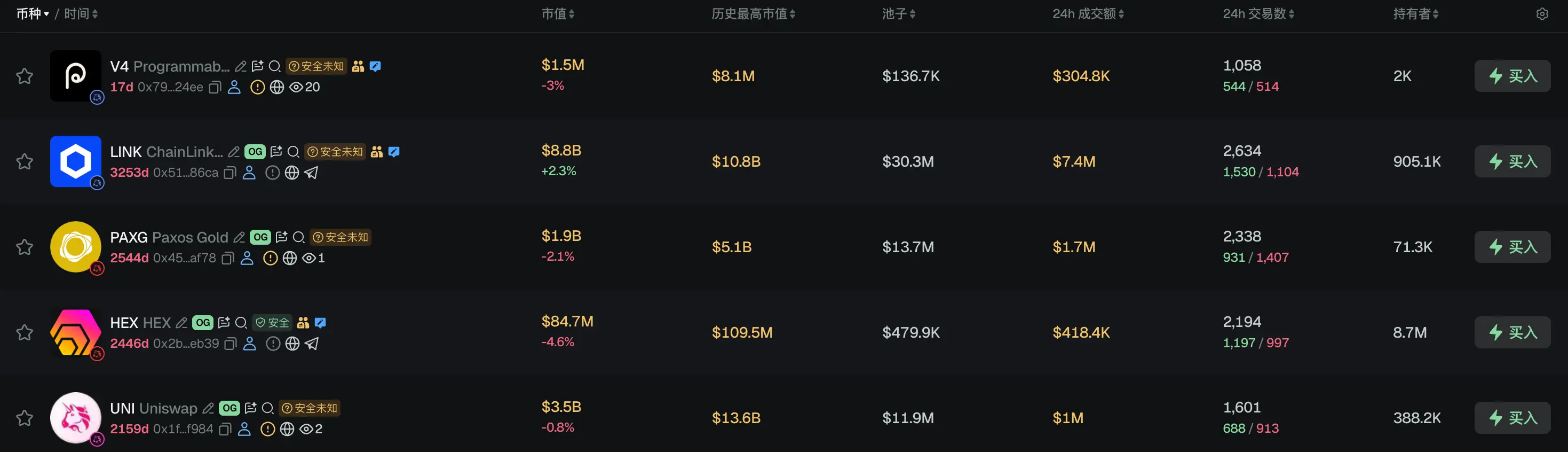
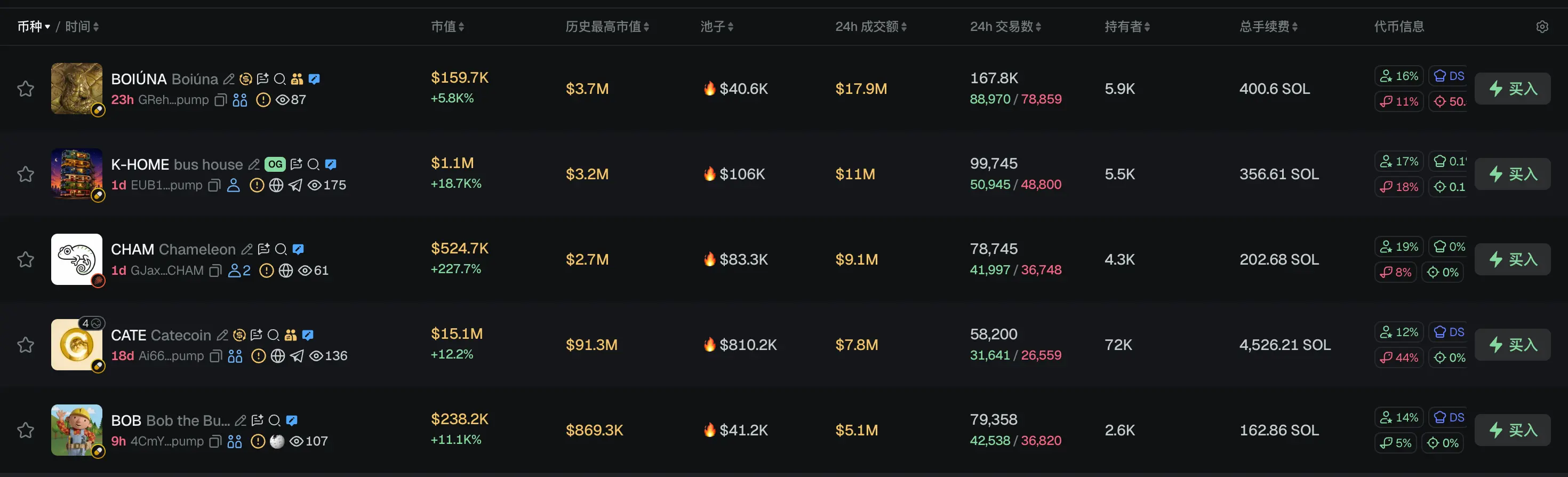
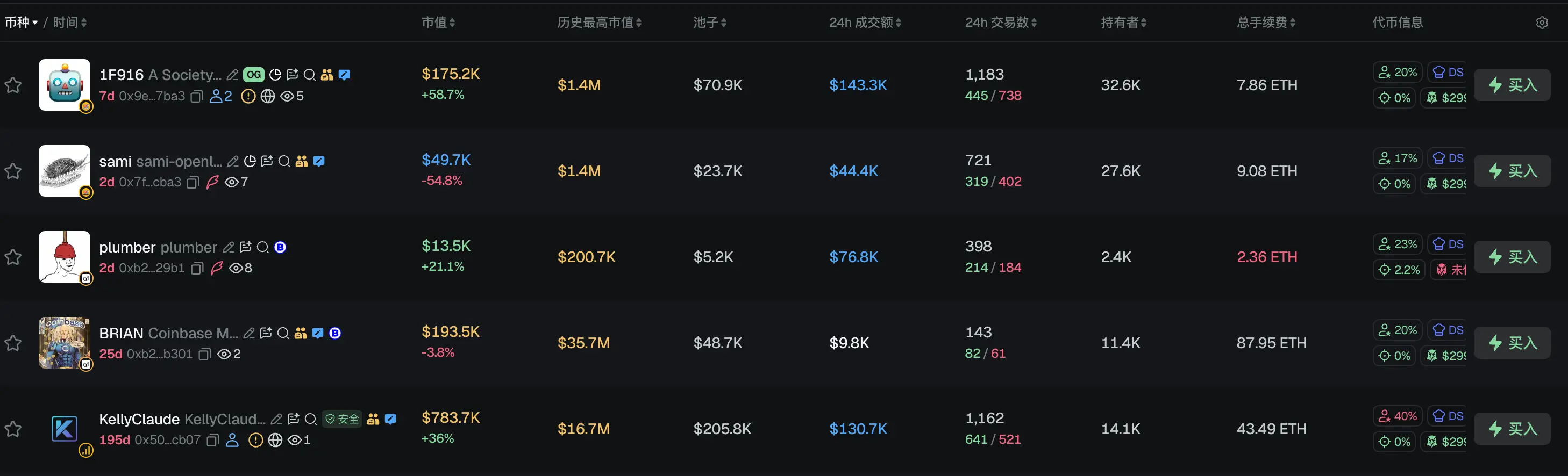
According to data from the meme token tracking and analysis platform GMGN, as of August 14, 08:45,
The top five popular tokens on ETH in the past 24 hours are: V4, LINK, PAXG, HEX, ETHFI
The top five popular tokens on Solana in the past 24 hours are: BOIÚNA, K-HOME, CHAM, BOB, CATE
The top five popular tokens on Base in the past 24 hours are: QUID, VELVET, ELSA, sami, 1F916
What are some interesting articles worth reading in the past 24 hours?
The Three-Layer Game of Tokenized Stocks: Issuance, Distribution, and Clearing
On-chain assets are essentially always shadows of real stocks. In fact, some have tried another path, making tokens no longer shadows but the registered shares themselves. For example, Superstate's Opening Bell allows listed companies to put already registered common shares directly on-chain, and Coinbase has obtained a license in Abu Dhabi ADGM to directly register and issue securities within a regulatory framework. This is a completely different set of rules from tracking certificates. If this path is successful, the premise of this competition will change. The pattern of issuers, exchanges, and brokers competing over "who issues shadows, who distributes shadows" will be reshuffled. Therefore, the rankings on the list, the ebb and flow of shares, and who replaces whom only record the pattern of this moment and may not represent the end of this competition. The real divide may not have arrived yet.
As of the end of June, the company's remaining performance obligations reached $25.4 billion, indicating a substantial scale of contracts signed but not yet recognized in revenue. The company stated that it plans to achieve revenue growth of over three times by 2027. Meanwhile, the company raised approximately $6.4 billion in this year's IPO, and as of the end of June, it had approximately $8.6 billion in cash, cash equivalents, restricted cash, and short-term investments, with a debt financing limit of $850 million. To fulfill these orders, the company is rapidly expanding its production capacity. Cerebras stated that its manufacturing capacity will expand more than tenfold by 2026, and it has already added production lines at Flex, Sanmina, and Rocket EMS; as of the end of June this year, the company has signed contracts, is building, or has already put into use data center capacity exceeding 600MW, which is planned to be delivered by the end of 2027.
MicroStrategy sells coins without a drop, is the STRC rebound really good news?
Bitfinex Long typically changes inversely with BTC prices. When BTC falls, large long positions on Bitfinex often increase; when BTC rises, these long positions gradually decrease. The market tends to view this inverse relationship as a position indicator to observe whether large funds are accumulating BTC in a weak price environment. Recently, the Bitfinex Long change rate (reversal) indicator has failed. The change rate of Bitfinex Long has dropped to its lowest level since the end of the 2022 bear market. BTC has been hovering above $60,000, and Bitfinex's long positions have neither significantly increased nor exited, failing to provide direction for the next trend. BTC's "savior" has now darkened into "Satan."
Holding shares can earn dividends? Hyperliquid is bringing traditional stock market rules on-chain
In recent years, discussions around tokenized stocks in the industry have often focused on "Can stocks be put on-chain?" However, if we really want to bring stocks on-chain, the issues extend far beyond this. After stock issuance, a series of corporate actions such as dividends, stock splits, mergers, and asset distributions will continuously occur. Therefore, a truly complete on-chain stock infrastructure not only needs to be able to "trade stocks" but also needs to handle changes in asset status beyond these transactions, which is precisely what Hyperliquid's recent update begins to touch upon. From this perspective, scaleWei seems to be filling a piece of the infrastructure puzzle for the next stage of Hyperliquid—making on-chain financial assets not just "tradable," but also capable of undergoing various corporate actions like real-world financial assets.
1confirmation: 5 consumer-grade crypto tracks worth re-examining
People trade memecoins related to certain individuals, bet on what political figures will do next, purchase star cards based on athletes' performances, and to some extent, trade a company's stock based on its founder. Therefore, the idea that "people are the market" may not be wrong; it's just that the previous implementation methods might have issues. Traders and fans may indeed want to build markets around certain individuals, but do the creators themselves really want to become a market? If they are unwilling, is there a way to build a market around a person without requiring that person to become a traded product? The next truly explosive consumer-grade crypto application is unlikely to come from what everyone is doing today. It is more likely to be an idea that failed five years ago, but now the infrastructure and timing have finally matured.
 Risk warning