Federal Reserve Chairman Waller's debut at Jackson Hole: the triple test of inflation, long-term bonds, and independence
 Core Viewpoint

 Federal Reserve Chairman Warsh appeared in Jackson Hole on Friday, and the FT reported that his communication style is creating a "certainty premium."
Original Title: Warsh goes to Jackson Hole
Original Author: Financial Times
Editor’s Note: Federal Reserve Chairman Kevin Warsh will deliver a speech at the Jackson Hole Global Central Bank Annual Meeting on Friday. Currently, U.S. inflation remains above the Federal Reserve's 2% target, the conflict in Iran and high oil prices have increased uncertainty about the inflation outlook, and long-term U.S. Treasury yields are near their highest levels since 2007. The market hopes to confirm how the Federal Reserve is prepared to handle the increasingly prominent contradictions between inflation, growth, and financial conditions from this speech.
The real question is not just whether Warsh will signal interest rates. Recently, he has emphasized that there should not be an over-reliance on forward guidance while providing little explanation of his policy framework. Meanwhile, the U.S. Treasury has begun to increase liquidity support for the long-term Treasury market. The intertwining of monetary policy, debt management, and the government's push to lower financing costs makes it more difficult for investors to judge the boundaries of U.S. policy.
The Financial Times editorial board believes that Warsh needs to clarify in this speech how he intends to achieve the 2% inflation target, how he views the role of long-term rates in tightening financial conditions, and how he will maintain the independence of the Federal Reserve. If these questions continue to lack clear explanations, the "uncertainty premium" demanded by the market may continue to be reflected in long-term Treasuries, the dollar, and even global financing costs.
Therefore, the Jackson Hole speech is not only a policy preview but also an opportunity for Warsh to repair communication with the market. What is worth observing next is not whether he provides a precise path for rate cuts, but whether he can propose a coherent, verifiable, and politically unmotivated policy framework.
The following is the original text compilation:
Every late August, nighttime temperatures in western Wyoming begin to drop, and the trout in the Snake River gather to feed before winter arrives. The good fishing conditions initially attracted former Federal Reserve Chairman Paul Volcker, and have contributed to the long-term establishment of the Federal Reserve's annual meeting here.
Today, the Jackson Hole Global Central Bank Annual Meeting has become an important occasion for central bank officials, finance ministers, and economists to discuss monetary policy. This year, the market's attention will focus on Federal Reserve Chairman Kevin Warsh's speech on Friday.
Investors hope to find an answer to a core question: In the face of inflationary pressures, rising long-term rates, and fiscal policy intervening in the bond market, how is Warsh prepared to formulate monetary policy?
Inflation Not Back to Target, Long-Term Rates Have Already Risen to High Levels
The policy environment Warsh faces in the coming months is not easy.
The ongoing conflict in Iran continues to disrupt global markets, and oil prices remain above pre-conflict levels; U.S. inflation continues to exceed the Federal Reserve's 2% target. Meanwhile, U.S. government debt continues to grow, and higher Treasury yields further exacerbate the fiscal interest burden.
The large-scale capital expenditures brought about by AI infrastructure development have also begun to enter the interest rate discussion. The Financial Times editorial board believes that AI investment may increase financing demand, push up borrowing costs, and create a certain crowding-out effect on other economic sectors. This judgment currently belongs more to a structural explanation, and the specific impact of AI capital expenditures on long-term rates is still difficult to completely separate from factors such as fiscal deficits, inflation expectations, and term premiums.
The Treasury's bond repurchase arrangements further complicate the interpretation of policy. On August 19, the U.S. Treasury announced that it would increase the single liquidity support repurchase scale for nominal coupon Treasury bonds with maturities of 10 to 20 years and 20 to 30 years from a maximum of $2 billion to at least $4 billion, with the new arrangement taking effect on September 9 and lasting until November 4.
This operation is mainly used to improve the liquidity of older bonds and is not equivalent to the quantitative easing implemented by the Federal Reserve through expanding its balance sheet. However, when long-term yields rise rapidly, the Treasury's increase in the scale of long-term Treasury repurchases will still affect the market's judgment on whether the government is paying more attention to long-end financing costs.
Warsh's Communication Style is Creating an "Uncertainty Premium"
The Financial Times believes that some of the difficulties Warsh faces stem from his own communication style.
Warsh has long opposed the excessive use of forward guidance by central banks, which involves signaling future interest rate paths to the market in advance. In his view, overly explicit policy commitments may weaken the central bank's ability to flexibly adjust policies based on economic data.
However, reducing forward guidance does not mean that the market no longer needs to understand the Federal Reserve's policy framework. When investors cannot judge how the central bank weighs inflation, employment, and financial stability, the market typically demands higher risk compensation.
This additional compensation can be understood as an "uncertainty premium": investors require higher yields to hold long-term bonds because they cannot judge the future policy direction. Its impact is not limited to U.S. Treasuries but may further transmit to housing mortgage loans, corporate financing, and emerging market sovereign debt.
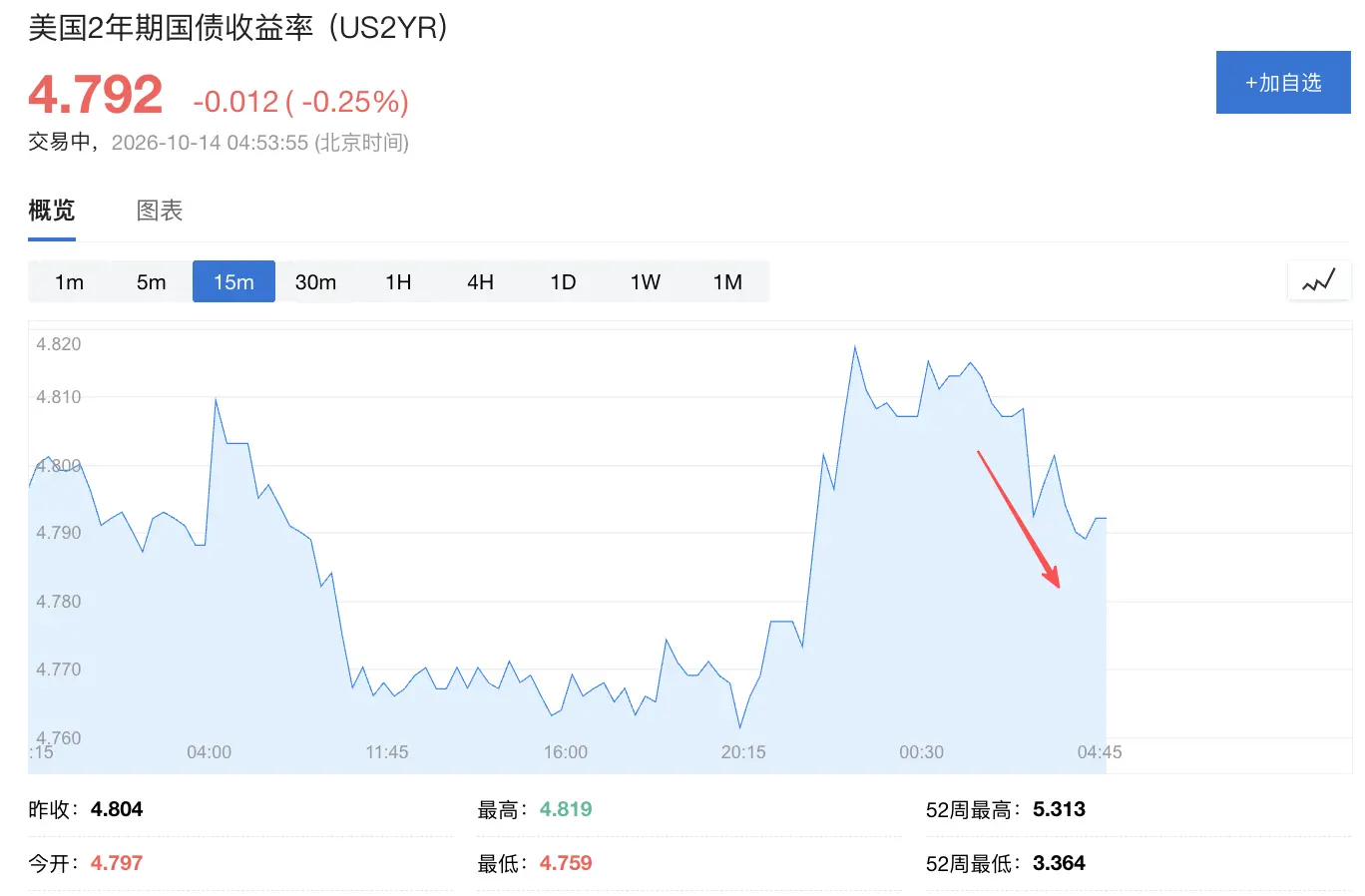
According to the Financial Times' explanation, Warsh's limited public communication has not allowed investors to fully understand his judgments on the economic situation and policy path. Under the influence of various factors, long-term U.S. Treasury yields have risen to their highest levels since 2007. It cannot simply be attributed to insufficient communication, but the lack of a clear framework may amplify market concerns about inflation, fiscal policy, and policy independence.
Letting Long-Term Rates "Replace Rate Hikes," the Risk is that Policy Boundaries Become Blurred
Warsh seems willing to let higher long-term rates take on part of the work of tightening financial conditions.
Rising long-term yields will increase the costs of housing loans, corporate debt, and other long-term financing, thereby suppressing borrowing and demand, theoretically helping to reduce inflationary pressures. In this framework, the Federal Reserve does not necessarily need to significantly raise short-term policy rates to achieve a certain degree of monetary tightening.
The Financial Times acknowledges that this line of thinking has some rationality. But the problem is that if Warsh avoids raising short-term rates while inflation remains above target, and caters to the Trump administration's preference for lowering short-term financing costs, the market may begin to question whether the Federal Reserve's policy decisions are influenced by politics.
Central bank independence depends on both institutional arrangements and market perceptions. Even if the policy itself has economic logic, as long as investors believe that the Federal Reserve is cooperating with the government to lower financing costs, long-term U.S. Treasuries and the dollar may also come under pressure due to a decline in credibility.
Recent actions by the Treasury have further amplified this concern. In addition to increasing liquidity support repurchases for long-term Treasuries, U.S. government officials have repeatedly expressed a desire to lower borrowing costs. Investor Stanley Druckenmiller, who has close ties with Warsh and Treasury Secretary Basant, has also warned against allowing the Treasury to take on too large a role in market pricing. His core judgment is that when the government tries to keep asset prices long-term deviating from fundamentals, policy interventions are often difficult to sustain.
This does not prove that the Federal Reserve and the Treasury have formed a formal agreement to suppress long-term rates, but the policy directions of both are beginning to be examined within the same framework by the market. Monetary policy is responsible for short-end rates, while the Treasury influences the supply and liquidity of Treasuries through issuance structure and repurchase arrangements, thus making the boundaries between the two policies more important.
Warsh Needs to Answer More than Just the Next Rate Decision
The Jackson Hole speech has historically been an important juncture for the Federal Reserve to adjust its policy narrative. In 2010, then-Federal Reserve Chairman Bernanke signaled further asset purchases at the meeting, paving the way for the subsequent launch of the second round of quantitative easing.
Warsh has repeatedly verbally committed to maintaining the independence of the Federal Reserve and the 2% inflation target, but the Financial Times believes that mere principled statements are not enough. The market needs to know what mechanisms he is prepared to use to achieve the target and how he will determine policy priorities when inflation, growth, and long-term financing costs conflict.
Therefore, the most important observation point in Friday's speech is not an isolated hint of a rate hike or cut, but whether Warsh can answer several more fundamental questions: How does the Federal Reserve judge to what extent long-term rates have tightened? Can higher long-end yields replace short-term rate hikes? Will the Treasury's debt management operations affect monetary policy judgments? In the face of the White House's request to lower financing costs, how will the Federal Reserve demonstrate that its decision-making remains independent?
If Warsh can provide a coherent policy framework, the speech may help reduce the market's uncertainty premium. If he continues to avoid specific mechanisms, investors will still need to infer the Federal Reserve's policy reaction function through economic data, Treasury operations, and political signals.
The so-called policy reaction function refers to the market's judgment of what actions the central bank may take in response to changes in inflation, employment, or financial conditions based on its past behavior and public statements. At present, what the market lacks is not necessarily an accurate interest rate roadmap, but a framework sufficient to explain how Warsh makes decisions.

 Risk warning