BTC $63,501.11 +0.16%
ETH $1,887.30 +0.60%
BNB $610.04 -0.07%
XRP $1.01 +0.75%
SOL $76.02 +0.71%
TRX $0.3342 -0.51%
DOGE $0.0702 +0.56%
ADA $0.1830 +0.79%
BCH $206.60 -3.41%
LINK $8.86 +2.62%
HYPE $57.40 +1.97%
AAVE $88.44 +0.63%
SUI $0.6877 +0.87%
XLM $0.1596 -0.02%
ZEC $490.13 +0.18%
BTC $63,501.11 +0.16%
ETH $1,887.30 +0.60%
BNB $610.04 -0.07%
XRP $1.01 +0.75%
SOL $76.02 +0.71%
TRX $0.3342 -0.51%
DOGE $0.0702 +0.56%
ADA $0.1830 +0.79%
BCH $206.60 -3.41%
LINK $8.86 +2.62%
HYPE $57.40 +1.97%
AAVE $88.44 +0.63%
SUI $0.6877 +0.87%
XLM $0.1596 -0.02%
ZEC $490.13 +0.18%

hynix

All
Article
Flash

Garrett Jin: Hynix has rebounded to the profit-taking zone, planning to buy on Bitcoin's pullback, and be cautious of the remaining unlocks after SpaceX's short squeeze

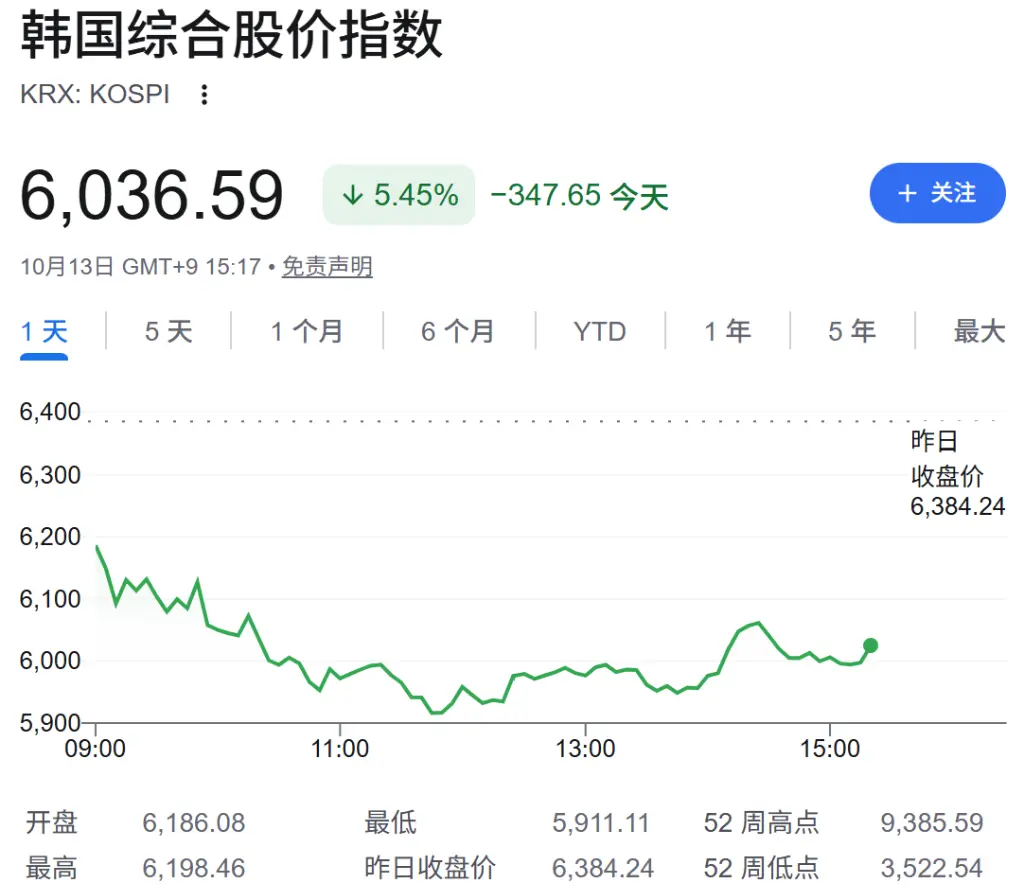
Garrett Jin released this week's market report, characterizing the rebound in the South Korean market as a wide-ranging fluctuation rather than a new trend. SK Hynix rebounded continuously after retesting the 1.42 million won area, closing up 5.9% at 1,593,000 won. The KOSPI has risen 20% from the July low, entering a technical bull market, but foreign capital has not shifted to long-term holdings, and the drag from leveraged ETFs remains. Garrett Jin set the first profit-taking level at $1,150 (approximately 1.63 million won), with the next target at $1,300 (1.85 million won).Garrett Jin also noted that gold recorded its strongest weekly gain since January this week at +7.8%, priced at $4,388. The driving factors were a decrease of 23,000 in July non-farm payrolls and a moderate CPI that dampened September rate hike expectations. However, it is currently overbought in the short term, and a pullback could present an opportunity for incremental accumulation. Bitcoin has shown no response to the same macro-positive factors, remaining trapped between the support at $62,500 and resistance at $65,000-$70,000, with the bottom structure since $57,700 gradually being built. Garrett Jin will wait for the next buying opportunity after a pullback.Regarding SpaceX, Garrett Jin believes the recent performance is a classic case of "bad news fully priced in + short squeeze," with the unlocking itself becoming a washout rather than the starting point of a decline. However, the unlocking window has not yet ended, with an additional 319 million shares to be unlocked, approximately 700 million shares each in September and October. The current range up to $160 is a profit-taking zone rather than a high-entry zone.

hot_img SK Hynix will expand its NAND production capacity in Dalian by about 50%, with the second factory in Dalian expected to start production in the first half of next year

SK Hynix has restarted the construction of its second NAND flash memory factory in Dalian, expecting to increase the monthly production capacity in the region by about 50%. The new production line is designed for a monthly capacity of approximately 50,000 wafers, combined with the existing Dalian Plant 1's monthly capacity of 100,000 wafers, bringing SK Hynix's total NAND production capacity in China to about 150,000 wafers per month. The factory began construction four years ago but was paused due to the downturn in the memory chip market and U.S. export restrictions on equipment to China, having only completed the structural framework.The investment in Dalian Plant 2 is driven by SK Hynix's NAND subsidiary Solidigm, with equipment installation expected to start as early as November this year, and plans to establish a mass production system in the first half of next year. Driven by the expansion of AI data centers, demand for enterprise-level SSDs has surged, with NAND prices rising nearly tenfold compared to a year ago, prompting the restart of investments. SK Hynix will adopt a dual-track strategy: the Dalian factory will use Intel's mature floating gate architecture to produce NAND at the hundred-layer level, while domestic factories like Cheongju M17 will focus on advanced NAND production of over 300 layers, the latter having announced an investment of 19.1 trillion won. Industry insiders expect that the equipment configuration of Dalian Plant 2 will be similar to that of Plant 1, maintaining a monthly production capacity in the range of 40,000 to 60,000 wafers.

hot_img SK Hynix: The competition in AI data centers is shifting from single chips to overall infrastructure architecture

SK Hynix stated in a recent article that the competition in AI is shifting from the performance of individual chips to the design and operation of the entire infrastructure architecture. The competitiveness of AI data centers no longer depends on individual components, but on whether the five key elements of computing, memory, storage, networking, and power cooling can be seamlessly integrated.The article points out that the continuous expansion of AI model scales has led to a surge in demand for computing power and data movement. Training requires repeatedly reading massive datasets, while inference relies on quickly retrieving user request information, both of which place higher demands on the system architecture of data centers. At the memory level, HBM, server DRAM, and others have formed a hierarchical system, each undertaking different bandwidth and capacity tasks. At the networking level, as large-scale training and inference rely on multi-server parallel processing, networking has become a key factor determining the scalability of data centers. System design is shifting from single-server to whole rack and cluster-level expansion.According to Omdia's forecast, the AI data center chip market will grow from $123 billion in 2024 to $207 billion in 2025, reaching $286 billion by 2030. SK Hynix also mentioned that Microsoft's Fairwater data center in Wisconsin is about the length of five football fields, indicating that infrastructure is being deployed on a larger scale. SK Hynix emphasizes that memory is becoming a key layer connecting computing and data.

SK Hynix plans to launch a shareholder return plan of approximately $71 billion, with a stock buyback scale of $28.4 billion

According to the Korea Economic Daily, SK Hynix is preparing a shareholder return plan that includes stock buybacks and cash dividends, with a total scale expected to be about 100 trillion won (approximately 71 billion USD).Among them, the stock buyback scale is expected to reach 40 trillion won (approximately 28.4 billion USD), accounting for more than 2% of the company's total issued shares. This scale is close to the proportion of new shares issued for the American Depositary Receipts (ADR) listing previously by SK Hynix.Compared to last year's shareholder return scale of about 14.3 trillion won (including about 2.1 trillion won in cash dividends and about 12.2 trillion won in stock cancellations), this plan's scale has increased by about 7 times.Behind SK Hynix's large-scale return plan is its leading position in the AI infrastructure core storage HBM (High Bandwidth Memory) market. The company expects revenue of about 345.6 trillion won this year, with operating profit of about 266.4 trillion won, representing year-on-year growth of approximately 256% and 464%, respectively.Previously, SK Hynix stated in its earnings call that HBM4 shipments will officially ramp up in the second half of the year, while advanced process DRAM shipments will also increase, with overall shipments expected to be higher than in the first half.Market institutions believe that as the demand for AI computing power continues to grow, SK Hynix's improved profitability may drive a recovery in the company's valuation. HSBC previously pointed out that the market's pricing of SK Hynix's profit cycle has been relatively pessimistic, and this shareholder return plan may become one of the important factors for valuation improvement.

"1011 Insider Whale" agent: SK Hynix's rebound may be due to short covering, AI storage cycle entering the return verification phase

"1011 Insider Whale" agent Garrett Jin released a weekly analysis stating that he previously suggested gradually positioning in storage chips and buying on dips, but the market did not experience the expected pullback. He has sold half of the previously rebounded positions during the surge, not because the investment logic has changed, but because he noticed the funding structure driving the rise, stating, "This is more like a short squeeze rather than a final confirmation of the market fundamentals." Rapid capital replenishment of short positions can create short-term increases in stocks like SK Hynix, but cannot solely support a sustained trend. The risks of Korean leveraged ETFs have not been fully released, but the decline in asset scale mainly comes from net value shrinkage rather than investor exit. Currently, the cumulative net subscription of related financial products remains at historical highs and has not turned negative.Garrett Jin emphasized that the decline in the scale of Korean leveraged ETFs does not indicate a bearish outlook on storage demand. SK Hynix's 2026 capacity is already sold out, and Micron's orders are covered until 2028, with strong demand expected to continue until the second half of 2027. However, the storage industry is essentially a cyclical industry, and stock prices have already risen by hundreds of percentage points in advance. Cyclical stocks are usually difficult to sustain long-term growth through valuation expansion. The current market is entering a new phase of the AI capital expenditure cycle, shifting from "rewarding investment" to "evaluating investment returns." Regarding Bitcoin, Garrett Jin stated that it continues to meet the bottoming conditions since the low in July and maintains the position view established around $60,000.
app_icon
ChainCatcher Building the Web3 world with innovations.