BTC $79,793.35 -0.06%
ETH $2,490.07 +0.28%
BNB $749.61 -3.09%
XRP $1.41 -0.33%
SOL $105.45 +1.94%
TRX $0.3348 +0.19%
DOGE $0.0896 -1.56%
ADA $0.2191 -0.43%
BCH $256.16 -0.16%
LINK $12.34 +2.74%
HYPE $87.22 +2.13%
AAVE $132.77 -1.61%
SUI $0.7967 -1.17%
XLM $0.1835 -0.50%
ZEC $1,217.79 +20.49%
BTC $79,793.35 -0.06%
ETH $2,490.07 +0.28%
BNB $749.61 -3.09%
XRP $1.41 -0.33%
SOL $105.45 +1.94%
TRX $0.3348 +0.19%
DOGE $0.0896 -1.56%
ADA $0.2191 -0.43%
BCH $256.16 -0.16%
LINK $12.34 +2.74%
HYPE $87.22 +2.13%
AAVE $132.77 -1.61%
SUI $0.7967 -1.17%
XLM $0.1835 -0.50%
ZEC $1,217.79 +20.49%

quant

All
Article
Flash

Cryptoquant Founder: The peak of this Bitcoin bull market cycle may be driven by global institutional and ETF demand

Cryptoquant founder and CEO Ki Young Ju stated that the peak of the current Bitcoin bull market cycle may be driven by institutional funds and ETF demand outside the United States. He pointed out that deeper stablecoin liquidity and tokenized asset infrastructure will expand global market participation. Using South Korea as an example, Ki Young Ju mentioned that the country currently does not have a spot Bitcoin ETF, retail investors cannot purchase overseas-listed spot Bitcoin ETFs, and most companies are unable to open trading accounts to buy BTC. South Korea has phased in corporate participation, with the Financial Services Commission (FSC) roadmap covering about 3,500 listed companies and qualified professional investors, but financial institutions and other companies are still excluded.Strategy's Bitcoin bank evaluated 25 major institutions covering trading, custody, digital asset products, financing, and corporate participation, with an overall adoption rate of 32%. RWA.xyz data shows that the global tokenized asset distributed asset value is $38.63 billion, an increase of 2.65% compared to 30 days ago. The Bank for International Settlements (BIS) stated that stablecoins have the potential to enable faster, programmable payments, but current designs may pose risks to financial integrity, liquidity, and currency. Ki Young Ju pointed out that the cumulative net inflow before the launch of the U.S. spot Bitcoin ETF was about $57 billion over two years, and the next phase will be global institutionalization, with more institutions adopting BTC as a strategic asset, and countries lacking ETFs will also improve related investment channels.

first_img Ripple has established a four-phase quantum-resistant migration plan for the XRP Ledger

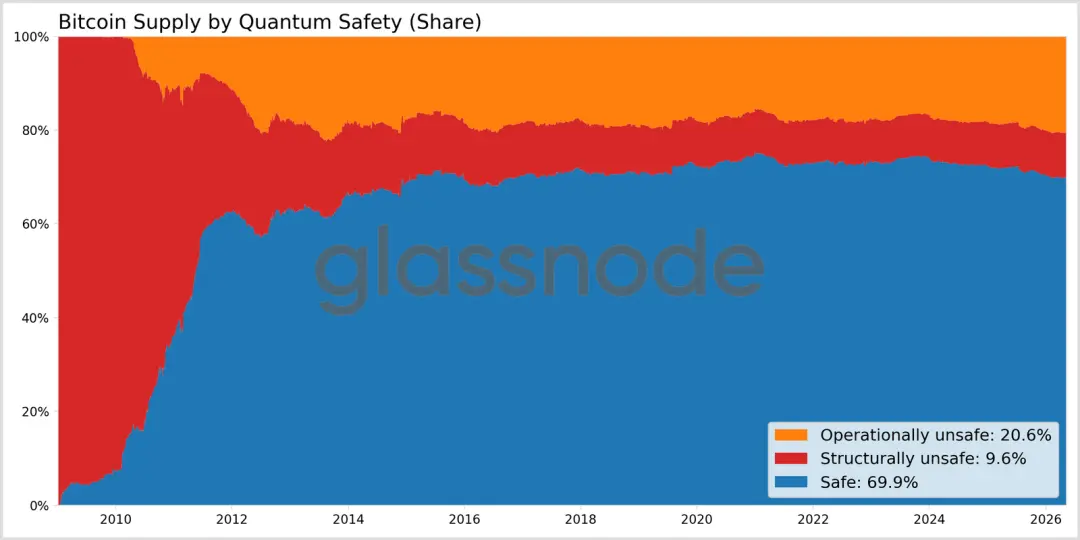
Ayo Akinyele, Senior Director of Engineering at Ripple, stated that the company is developing a four-phase quantum-resistant migration plan for the XRP Ledger, aiming to complete the transition before quantum computers become a real threat. The plan includes assessing the network's exposure, testing quantum-resistant cryptographic solutions, running existing security systems in parallel with quantum-resistant alternatives, and preparing emergency response pathways for scenarios where quantum computing advances exceed expectations.Akinyele emphasized that migration is not just about replacing a cryptographic algorithm, but requires more flexible infrastructure, stronger key management, and clearer upgrade paths. The XRP Ledger has supported changing the keys that control accounts without altering the accounts themselves, a feature that is expected to reduce the difficulty of future migrations, but independent validators on the network still need to coordinate any broader rule changes.Meanwhile, Anthropic's model last month reduced the workload required to break leading post-quantum signature candidates by 67 million times, and Bitcoin and Ethereum developers also released their respective migration plans this week. Akinyele pointed out that AI and quantum computing are different technologies, but they are driving financial infrastructure to evolve in the same direction, as AI agents begin to trade and pay autonomously, raising new requirements for payment infrastructure that is always online and natively internet-based.

first_img Ethereum developers propose upgrading the staking contract to defend against quantum attacks

According to CoinDesk, Ethereum researchers have proposed rebuilding the validator deposit contract to support a new cryptographic system and ultimately stop accepting deposits protected by the existing BLS signatures. This proposal targets the deposit contract, aiming to add a switch that prevents the network from accepting the currently relied-upon signature format.Currently, the contract only accepts BLS keys because their exact size is hardcoded, while the new draft allows for different key sizes, with each deposit tagged by the cryptographic system used, where BLS receives a tag of zero, reserving space for future schemes.If the proposal is approved, it will initially operate with BLS deposits, while other schemes can be registered simultaneously. Future decisions may permanently disable new BLS deposits, at which point validators who have staked using BLS keys will not disappear, but new validators will not be able to join using this method. Ethereum will ultimately need to change separately to inform validators how to check new signatures. This is part of the migration for validators, while another part is already in progress—EIP-8141 framework transaction proposals will allow regular Ethereum accounts to change the cryptographic method for approving transactions without changing their address.The urgency stems from research released in March by Google's Quantum AI research department, which outlined five quantum attack paths against Ethereum, putting over $100 billion in assets at potential risk. The Ethereum Foundation is advancing core protocol changes with a target around 2029. Currently, the amount of ETH staked in Ethereum is approximately 42.4 million, valued at about $10.4 billion.

first_img CryptoQuant analysts say that Bitcoin has emerged from the bear market and entered the early stage of a bull market

Analysts at the cryptocurrency research firm CryptoQuant believe that Bitcoin has emerged from the bear market, but a short-term pullback may occur. CryptoQuant founder Ki Young Ju posted on social media that Bitcoin has entered the early stage of a bull market and pointed out that the current trend is consistent with the market conditions before the last bull market.CryptoQuant's research shows that the inflow of funds to derivatives exchanges has resumed, confirming that traders have entered a risk-on mode, which has historically marked the beginning of a new bull market. The firm's analyst Theophiluspep stated that while Bitcoin is entering a bull market, spot demand, ETF fund flows, and market momentum have turned bullish, while high profit-taking, inflows to exchanges, and overbought conditions suggest a potential short-term cooling.Bitcoin continued to rise last week, increasing by 22% over the past 7 days, with the latest price at $78,716, briefly touching $81,160 on Monday. Previously, in June and July, Bitcoin mostly traded below $65,000. U.S. investors reversed direction last week and bought Bitcoin ETFs, achieving the best weekly performance since October, with data from Farside Investors showing that related funds managed by institutions such as BlackRock, Fidelity, Grayscale, and Morgan Stanley saw an inflow of $1.9 billion in new funds. Additionally, the U.S. Treasury announced last week that it would at least double its long-term Treasury bond repurchase scale, leading to a decline in yields, with Bitcoin and gold rising in tandem.
app_icon
ChainCatcher Building the Web3 world with innovations.