BTC $78,002.23 -0.19%
ETH $2,455.36 +0.21%
BNB $686.55 -0.08%
XRP $1.38 +0.62%
SOL $102.28 -0.75%
TRX $0.3262 -2.53%
DOGE $0.0828 +0.13%
ADA $0.1990 +1.15%
BCH $248.83 +0.89%
LINK $11.46 +1.59%
HYPE $83.63 +2.75%
AAVE $127.12 +3.11%
SUI $0.7294 +0.75%
XLM $0.1784 +1.23%
ZEC $857.02 +2.37%
BTC $78,002.23 -0.19%
ETH $2,455.36 +0.21%
BNB $686.55 -0.08%
XRP $1.38 +0.62%
SOL $102.28 -0.75%
TRX $0.3262 -2.53%
DOGE $0.0828 +0.13%
ADA $0.1990 +1.15%
BCH $248.83 +0.89%
LINK $11.46 +1.59%
HYPE $83.63 +2.75%
AAVE $127.12 +3.11%
SUI $0.7294 +0.75%
XLM $0.1784 +1.23%
ZEC $857.02 +2.37%

snarks

All
Article
Flash

first_img The Ethereum Foundation launches the better.codes challenge to advance the provable security of hash SNARKs

The open automated research challenge better.codes, created by the Ethereum Foundation's formal verification team in collaboration with Yukon and zkSecurity, is now live. This platform formalizes the self-contained problems from the Proximity Prize in Lean and places the machine-checked reliability bounds of koalaIRS12 on a public leaderboard, allowing anyone to contribute to improvements, advancing hash-based SNARK and post-quantum Ethereum-related security benchmarks.Solvers can bring their own AI agents to prove higher lower bounds of reliability for this Reed-Solomon proximity problem, moving towards a fixed target of 128 bits. The Lean kernel verifies each submission, and the promoted proofs will enhance the public bounds, with new lemmas, proof techniques, and impossibility results being synchronized upstream for reuse by all participants. Most hash SNARKs in production environments rely on related proximity gaps and related conclusion agreements, while the currently provable results remain below the benchmarks trusted by researchers; this challenge aims to narrow this gap in an open, incremental, and verifiable manner.koalaIRS12 originates from related papers and is end-to-end formalized in ArkLib. Participants can log in via GitHub and clone the challenge repository, submitting under fixed theorem statements and verification frameworks; results confirmed by the comparator and Lean kernel are recorded in a public repository, noting the solver and the model used. Today's launch features the reliability challenge that raises the proven lower bound of koalaIRS12 to 128 bits, with more problems potentially added later, subject to project terms.

Vitalik: The key goal of validators is to avoid power concentration, especially in aspects such as consensus rule validation and fork choice

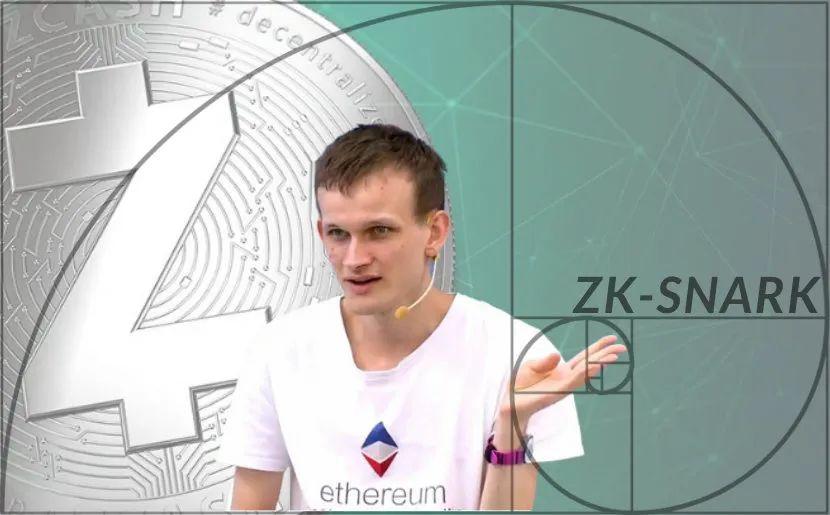
ChainCatcher news, Ethereum co-founder Vitalik Buterin recently responded to concerns raised by Ethereum core developer Péter Szilágyi regarding network decentralization and validation mechanisms.In response to how validators can obtain 32MB of blob transaction data every 12 seconds, Buterin proposed two possible strategies: each validator is responsible for building only 1/16 of the block, or validators only perform DAS checks without needing to fully download the data.Regarding the issue of Verkle tree design not deleting storage slots, Buterin stated that the impact of deleting storage slots is currently quite small. He denied claims about abandoning the transaction pool, emphasizing that this is an outdated idea that does not align with the current direction of Ethereum research.Buterin acknowledged that validation does not require an execution layer (EL), but stressed that this does not mean making it difficult for most people to run an EL. He pointed out that using SNARKs technology could enable more users to achieve full validation.Buterin emphasized that the key goal for validators is to avoid power concentration, especially in terms of consensus rule validation, fork choice, and transaction inclusion. He believes that during periods of only witnessing, there is no need to re-execute the EVM cycle.
app_icon
ChainCatcher Building the Web3 world with innovations.