BTC $83,083.39 +0.32%
ETH $2,504.64 +0.36%
BNB $748.67 +0.04%
XRP $1.39 -0.67%
SOL $109.61 -0.19%
TRX $0.3304 -0.18%
DOGE $0.0853 -0.57%
ADA $0.2470 -3.17%
BCH $278.06 -0.35%
LINK $12.90 -0.32%
HYPE $85.41 +1.43%
AAVE $166.83 -3.39%
SUI $1.09 -2.04%
XLM $0.1974 +0.36%
ZEC $1,235.01 +0.60%
AAPL $336.50 +0.00%
AMZN $262.63 +0.07%
GOOGL $350.96 -0.32%
MSFT $535.13 +0.07%
META $719.19 +0.08%
NVDA $230.73 +0.10%
TSLA $382.73 -0.07%
SNDK $1,596.30 +0.31%
INTC $105.04 +0.10%
SPCX $163.87 +0.28%
MU $1,034.72 +0.06%
AMD $608.78 -0.09%
BTC $83,083.39 +0.32%
ETH $2,504.64 +0.36%
BNB $748.67 +0.04%
XRP $1.39 -0.67%
SOL $109.61 -0.19%
TRX $0.3304 -0.18%
DOGE $0.0853 -0.57%
ADA $0.2470 -3.17%
BCH $278.06 -0.35%
LINK $12.90 -0.32%
HYPE $85.41 +1.43%
AAVE $166.83 -3.39%
SUI $1.09 -2.04%
XLM $0.1974 +0.36%
ZEC $1,235.01 +0.60%
AAPL $336.50 +0.00%
AMZN $262.63 +0.07%
GOOGL $350.96 -0.32%
MSFT $535.13 +0.07%
META $719.19 +0.08%
NVDA $230.73 +0.10%
TSLA $382.73 -0.07%
SNDK $1,596.30 +0.31%
INTC $105.04 +0.10%
SPCX $163.87 +0.28%
MU $1,034.72 +0.06%
AMD $608.78 -0.09%

sup

All
Article
Flash

first_img HyperEVM perpetual contract exchange Papertrade will launch on October 10, supporting 1000x leverage

HyperEVM perpetual contract exchange Papertrade is scheduled to open trading at 10 AM Eastern Time on October 10. According to DefiLlama data, it has accumulated approximately $85.3 million in deposits before its launch. The platform supports up to 1000x leverage, and traders do not match with counterparties but trade directly with the protocol's own liquidity pool. Papertrade stated in the announcement that website trading will start after the HyperEVM upgrade is completed, and deposits will be paused at 9:45 AM to prioritize trading; users need to deposit in advance to participate in the launch.The contracts on Papertrade use the midpoint of Hyperliquid's optimal buy and sell prices as the opening and closing price, with positions being synthetic trades against its liquidity pool, and there are no corresponding perpetual contracts on Hyperliquid. This design eliminates funding rates and reduces profits from closing positions through asymmetric impact discounts instead of charging fees based on position size. When the liquidity pool cannot cover profitable trades, unpaid profits will convert to queued debt, filled by subsequent traders' losses. Its PAPER token grants losing traders the right to claim related earnings from the liquidity pool, with an initial supply of zero, minted from realized losses, with no team or venture capital shares.In the initial phase of the launch, Papertrade will only open trading through the frontend and approved trading relays, and direct access to public contracts will not be supported. Platform administrators can pause new positions, freeze the market, and adjust fee parameters, with a 7-day time lock for contract upgrades. Initially, the PAPER token will only support staking and unstaking, and wallet-to-wallet transfers will not be supported;

Analysts rebut the argument that Ethereum's liquidity moat has been breached: ETH still holds value as a reserve asset, with 36% of the supply already staked

Blockworks analyst Jake Koch-Gallup published a rebuttal to the viewpoint that Ethereum is losing its liquidity moat, arguing that despite the challenges to ETH's value capture ability and stablecoin market share, its reserve asset characteristics, Layer 2 ecosystem, and institutional adoption still constitute a long-term competitive advantage.In response to the issue of low on-chain revenue for Ethereum, Jake pointed out that ETH's valuation depends not only on actual economic value (REV) but also includes reserve asset and collateral premiums, with ETH's market capitalization currently about 1,100 times the REV of the past 12 months. Additionally, the development of Layer 2 networks such as Robinhood Chain and Base can still strengthen the Ethereum ecosystem, rather than indicating that funds and applications are completely leaving Ethereum. Jake also noted that Ethereum currently accounts for about 65% of the total value locked (TVL) in DeFi, with approximately 45% of the on-chain managed scale in real-world assets (RWA), while spot ETFs and corporate treasuries collectively hold about 13% of the total ETH supply, and about 36% of the ETH supply is currently staked.Although Ethereum's stablecoin market share has gradually faced dilution pressure from around 51%, Jake believes that as the overall stablecoin market expands, its absolute scale may continue to grow. However, Jake also acknowledged that relying solely on ETH's reserve asset premium, without sufficient revenue and value return mechanisms, raises questions about its valuation sustainability.

first_img Apple Supply Chain: The total order volume for the iPhone 18 Pro has not changed significantly

On October 9, reports indicated that the significant increase in storage chip costs has forced Apple to raise prices and suppress demand. Apple has requested some suppliers to reduce the production of recently released iPhone 18 Pro and iPhone 18 Pro Max components. A journalist verified with an Apple supply chain company, where a representative stated that after Apple provided new shipping guidance, orders for the iPhone 18 Pro decreased, while orders for the iPhone 18 Pro Max increased, resulting in little overall change in order volume.Another supply chain representative mentioned that the rumors are clearly one-sided. Due to strong demand for the iPhone 18 Pro Max, Apple adjusted some iPhone 18 Pro orders to the iPhone 18 Pro Max, with the total not decreasing, which benefits the high-end supply chain for the Pro Max. In September, Apple released the iPhone 18 Pro series, and due to product planning adjustments, the basic model of the iPhone 18 has not yet been launched. The starting prices for the two models released this time are 9,999 yuan and 10,999 yuan, which is an increase compared to the iPhone 17 Pro series.During the initial sales in mid-September, a journalist observed outside the official Apple retail store in Shenzhen that the buyback market for the iPhone 18 Pro was relatively weak, with some scalpers not purchasing, and even the buyback price was lower than the official starting price. Currently, the supply of the iPhone 18 Pro is relatively sufficient, with staff indicating that only the black version of the 512GB model is in stock, while other memory versions have ample supply. The iPhone 18 Pro Max has not yet been made available for purchase offline.

first_img Robinhood Chain evaluates the paid trading ranking system, with technical support from Arbitrum

According to CoinDesk, the Layer 2 blockchain Robinhood Chain, designed for tokenizing real-world financial assets, is evaluating a transaction sorting system that allows users to pay fees for prioritizing specific transactions. This technology is developed by Arbitrum, the infrastructure provider for Robinhood Chain. Insiders say that Arbitrum's previously launched paid transaction sorting technology, Time Boost, could provide users with a 200-millisecond prioritization advantage, but it was replaced on September 24 by the new Priority Gas Auctions model, which allows traders to pay higher fees to prioritize individual transactions. This new version is what Robinhood Chain is currently evaluating.Currently, Robinhood Chain employs a first-come, first-served transaction sorting strategy and has not yet utilized Arbitrum's original Time Boost application. Since launching its Ethereum-compatible network in July, Robinhood Chain has rapidly gained popularity and has entered the top ten blockchains ranked by total locked value. Robinhood's traditional brokerage business has long profited through "payment for order flow," where market makers pay brokers for the routing rights of customer orders.The mechanism of on-chain paid transaction prioritization operates differently; it provides advantages to traders by accelerating transaction processing speeds, helping professional institutions compete for fleeting trading opportunities.

Binance targets a financial super app: integrating cryptocurrency trading, stock investment, payment, and banking-like services, with a goal of increasing the user base to 3 billion

Shunyet Jan, the head of trading and trading operations at Binance, stated that the future competition among financial platforms will no longer be limited to cryptocurrency asset trading, but will integrate services such as investment, payment, lending, and asset management, creating a comprehensive financial ecosystem that covers both traditional finance and the cryptocurrency market. Jan has worked for about 30 years at Goldman Sachs, Morgan Stanley, and JPMorgan Chase. He believes that traditional finance has advantages in regulation, risk management, and functional segregation, while the cryptocurrency industry is more competitive in 24-hour trading, fast settlement, and openness, and that the two will accelerate their integration in the future.Binance hopes to allow users to utilize their financial value without having to sell underlying assets through features such as unified accounts, cross-asset margin, tokenized assets, and stablecoin payments, and to explore using AI to simplify asset selection and risk management. Jan revealed that Binance currently has over 300 million users, most of whom come from emerging markets; among users of its direct stock and tokenized stock products, about 90% come from emerging markets. He stated that Binance's long-term goal is to expand its user base from 300 million to 3 billion and to become a financial infrastructure that more people can use.

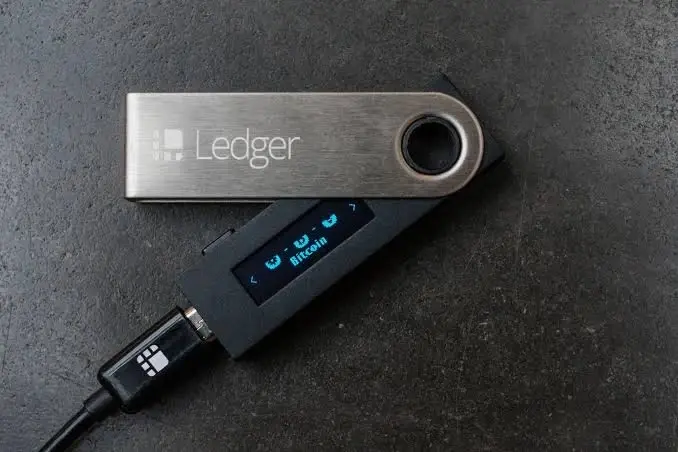
Zhao Changpeng warned about the risk of supply chain attacks on Ledger hardware wallets, suspected to involve a single distributor selling counterfeit or tampered devices

Zhao Changpeng issued a reminder for Ledger hardware wallet users to remain vigilant, especially those who have purchased devices recently. According to the information currently available, this incident appears to be limited to the supply chain, involving a supplier, and a few users may have purchased counterfeit or tampered Ledger devices.Zhao Changpeng stated that Ledger is a well-established and relatively secure hardware wallet brand in the industry, but such incidents can still occur. He anticipates and calls for the BNB ecosystem and the entire cryptocurrency industry to assist in tracking the stolen funds and promoting recovery.Previously, Ledger confirmed that it is investigating an asset theft incident involving Southeast Asian users, who had purchased devices through the distributor CryptoBilis. Ledger has requested CryptoBilis to suspend sales and shipments and advised users who purchased devices through this distributor in the past 90 days not to initialize their devices; if they have already completed the setup, they should create a new Ledger signing device using a new mnemonic phrase and transfer their assets to the new wallet.On-chain investigator Specter estimates that this incident has led to the theft of hundreds of wallets on the Bitcoin, Ethereum, and TRON networks, with losses exceeding 86 million dollars. Security researcher tanuki42 previously estimated the losses to be over 72 million dollars and stated that the amount is still increasing. Currently, the specific cause of the incident and whether the involved devices have security vulnerabilities are still under investigation.

first_img Zcash developer program supports quantum-resistant signatures in January, initial protection for transparent transactions

The Zcash development team plans to add post-quantum signature support to the network in January. Zakura engineer Roman Akhtariev stated in an engineering blog that the team plans to implement post-quantum signature opcodes in Zcash in January. These opcodes will enable Zcash to verify hash-based signatures, thereby resisting quantum computing attacks. The team has not yet confirmed a specific network activation date. This upgrade aims to prevent attackers from using current public keys to reverse-engineer and forge payment authorizations from wallet owners.The initial phase of this upgrade will protect transparent transactions. Zcash has two payment methods: shielded payments hide the sender, receiver, and amount; transparent payments are similar to Bitcoin, where addresses and amounts are visible on the chain. According to CoinDesk, based on ZecStats data, approximately 11.96 million of the 16.98 million issued ZEC are stored in the transparent pool, accounting for about 70%. The January plan primarily targets this public portion. Additionally, Zakura has developed a private query tool that allows wallets to check balances without exposing associated addresses to the server; the experimental version is available in the "Private queries" settings of the Zcash wallet Vizor.Before the release of Zakura's engineering article, Ethereum researcher Justin Drake warned holders on Thursday to prepare for what he called "bunker mode," stating that in the worst-case scenario, AI could find shortcuts to break the mathematical protections of Bitcoin and Ethereum wallets in "months rather than years."
app_icon
ChainCatcher Building the Web3 world with innovations.