BTC $80,799.77 -3.08%
ETH $2,355.48 -5.91%
BNB $715.76 -3.52%
XRP $1.31 -4.50%
SOL $102.02 -4.70%
TRX $0.3309 -0.12%
DOGE $0.0796 -5.81%
ADA $0.2200 -6.33%
BCH $260.43 -6.40%
LINK $12.04 -6.48%
HYPE $79.66 -2.64%
AAVE $149.71 -6.55%
SUI $0.9834 -6.27%
XLM $0.1789 -5.87%
ZEC $1,091.63 -12.92%
AAPL $344.56 +0.51%
AMZN $249.68 -3.90%
GOOGL $342.23 -4.12%
MSFT $528.11 -3.32%
META $726.84 -5.54%
NVDA $218.14 -4.76%
TSLA $361.51 -4.00%
SNDK $1,337.52 -8.04%
INTC $95.19 -7.27%
SPCX $149.16 -5.37%
MU $876.50 -7.50%
AMD $556.39 -8.11%
BTC $80,799.77 -3.08%
ETH $2,355.48 -5.91%
BNB $715.76 -3.52%
XRP $1.31 -4.50%
SOL $102.02 -4.70%
TRX $0.3309 -0.12%
DOGE $0.0796 -5.81%
ADA $0.2200 -6.33%
BCH $260.43 -6.40%
LINK $12.04 -6.48%
HYPE $79.66 -2.64%
AAVE $149.71 -6.55%
SUI $0.9834 -6.27%
XLM $0.1789 -5.87%
ZEC $1,091.63 -12.92%
AAPL $344.56 +0.51%
AMZN $249.68 -3.90%
GOOGL $342.23 -4.12%
MSFT $528.11 -3.32%
META $726.84 -5.54%
NVDA $218.14 -4.76%
TSLA $361.51 -4.00%
SNDK $1,337.52 -8.04%
INTC $95.19 -7.27%
SPCX $149.16 -5.37%
MU $876.50 -7.50%
AMD $556.39 -8.11%

self

All
Article
Flash

first_img Microsoft launched its self-developed AI chip Maia 300, with the key small chip using TSMC's 2-nanometer technology

According to a report by Central News Agency citing Reuters, Microsoft announced the launch of its third-generation self-developed AI chip, Maia 300, with plans to deploy over 1 million units next year to support internal AI services. The small chip responsible for key computing functions uses TSMC's 2-nanometer process. The Maia 300 can handle code writing and perform complex business tasks on behalf of users. The previous generation of chips has been used to run Microsoft's internal AI models and the OpenAI models provided through Microsoft Azure cloud computing services.Microsoft is taking a different technological approach compared to NVIDIA. The NVIDIA AI accelerator uses a large computing chip surrounded by high-bandwidth memory chips; the Maia 300 core processing unit is composed of small chips, with the small chips responsible for key computing functions using TSMC's 2-nanometer process, while other small chips use the lower-cost 3-nanometer process to handle data transmission out of the processor and transfer data to other locations within the system.The Maia 300 will be installed in cabinets, with each cabinet accommodating 96 chips and consuming about 167 kW of power. In contrast, NVIDIA's latest GB300 AI server cabinet is configured with 72 GPUs and consumes about 142 kW of power. Microsoft stated that it plans to deploy the Maia 300 on a large scale starting next year, reaching several gigawatts. Microsoft previously indicated that it expects its capital expenditures to exceed $175 billion this year.

first_img Anthropic: Small models may self-replicate on IoT devices

On October 12, 2026, William Zhou and Daniel Freeman, frontier red team researchers at the artificial intelligence company Anthropic, published a study. The article states that small models may have the ability to self-replicate on commercial IoT devices such as smart ovens and generic Android TV boxes within months. These replicas do not have a single shutdown point, and the doubling time may be measured in days, potentially adapting to unfamiliar devices on their own.Evaluation shows that a 9B model completed inference on 8 out of 9 hardware types. Models of 30B and below have been able to complete many single steps of replication, but errors occur when combined end-to-end; in simplified evaluations, GLM-5.2 and stronger models can achieve end-to-end replication. The team also distributed Gemma4-26B-A4B across 15 generic Android TV boxes, each costing about $55, operating at a speed of approximately 0.39 tokens/second, with each box holding two layers of the model.End-to-end testing was conducted on 8 GCP nodes behind a firewall, propagating through an unauthorized ADB port and setting up Llama 3.1-8B inference. Among the tested open-source models, only GLM-5.2 completed replication fully, transmitting to all 8 nodes in 4 out of 5 trials. The article divides autonomous replication and adaptation into four steps: discovering the target, obtaining execution, establishing inference, and continuing propagation from the new host, stating that there are currently no complete uncontrolled replicas.

first_img Sean Bowe: Justin Drake Quantum Early Warning Will Self-Undermine Credibility

Tachyon co-founder Sean Bowe posted on X, criticizing Ethereum Foundation researcher Justin Drake's recent warnings about quantum threats. He stated that such vague alerts would cause harm on multiple levels and become self-harm for their quantum advocacy work.Sean Bowe stated: The threats from quantum and artificial intelligence are real, and industry teams are making prudent decisions on how to practically address risks and help users deal with uncertainty. Some teams have strong judgment from cryptographers, while others need to refer to trusted experts; due to the complex dimensions involved, the relevant trade-offs are almost impossible to explain to non-cryptographers, and experts should remain calm and take corresponding responsibility.He also mentioned that once the situation is clarified, people may find that this is at most an unintentional promotional move, resulting in a significant loss of trust, and no one knows how to proceed afterward. He believes that the judgment regarding the relevant direction is correct, that previous warnings were meaningful, but they have gradually turned into uncontrolled predictions lacking feedback constraints, which will long-term affect trust in reasonable concerns about classical cryptography. He pointed out that the other party admitted that there was no new information driving this and asked Justin Drake to explain why he thought this approach was correct.

first_img Cuomo: The cryptocurrency industry bets heavily on the Republican Party, distancing itself from the Democratic Party

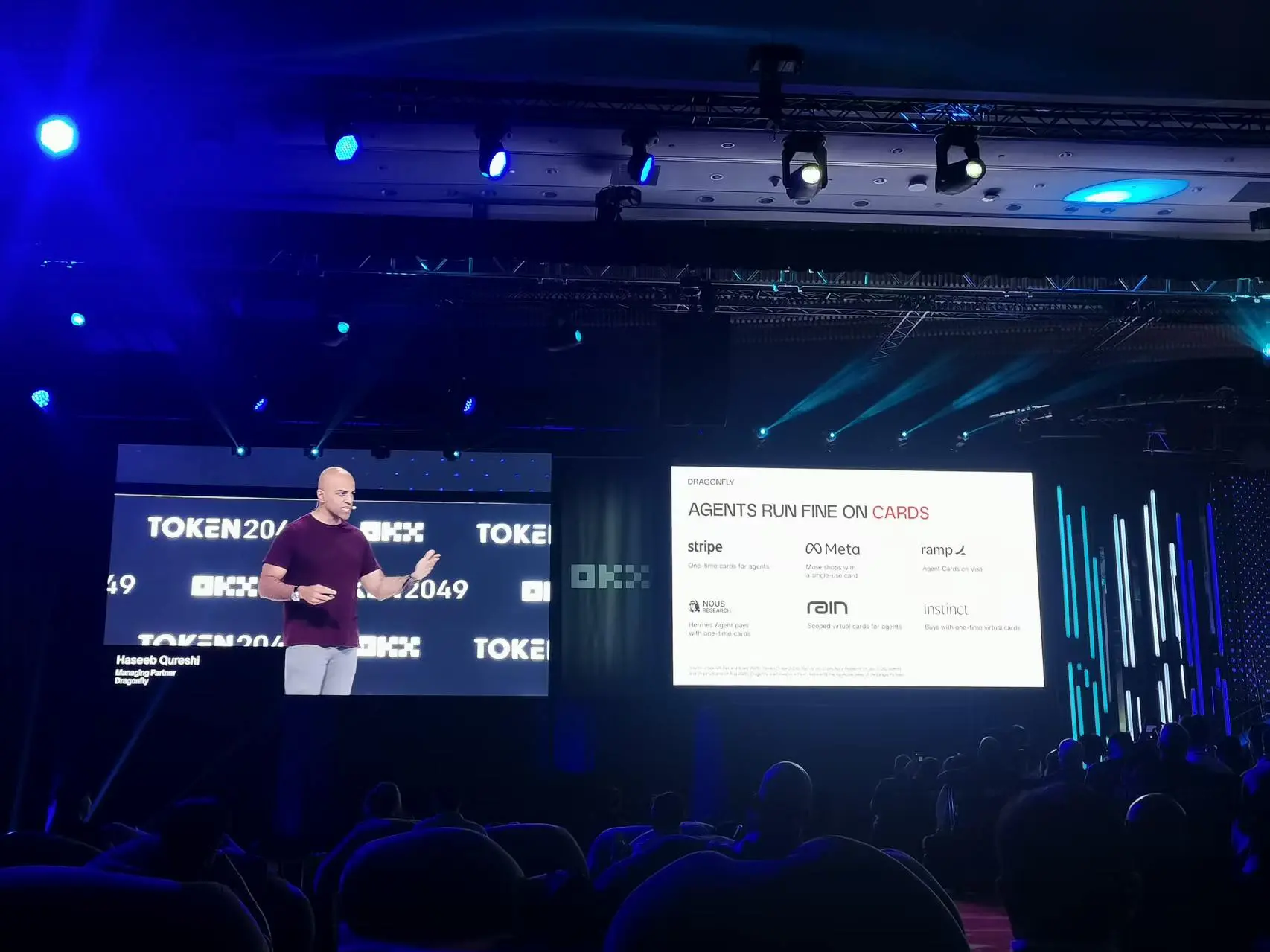
Former New York Governor Andrew Cuomo stated during a panel discussion at the Token2049 conference with OKX CEO Star Xu that if the cryptocurrency industry wants to push for federal-level cryptocurrency legislation, it must maintain a balance between supporting the Democratic and Republican parties. He pointed out that the industry previously "believed that heavy investment in the Republican Party" would help pass the CLARITY Act, but "when you heavily invest in the Republican Party, you inherently alienate the Democratic Party."According to data tracked by Tech Influence Watch, cryptocurrency-related political action committees have spent $54.3 million supporting the Republican Party and $26.2 million supporting the Democratic Party in the 2026 election cycle, with an additional $23.2 million spent opposing Democratic candidates. Cuomo stated that passing legislation requires support from both the Democratic and Republican parties and should be more balanced. He also refuted the notion that the Democratic Party is inherently opposed to cryptocurrency, arguing that cryptocurrency is actually well-suited for the Democratic Party because it empowers individuals who previously could not access financial products. Prediction market Kalshi data shows that the probability of the Democratic Party winning both houses of Congress is about 61%.In terms of background, the House of Representatives passed the CLARITY Act in July 2025 with the support of 78 Democratic representatives and 216 Republican representatives, while 134 Democratic representatives voted against it; in June 2025, the Senate passed the GENIUS Act with support from 18 Democratic senators.

first_img Matter Labs open-sources Prividium permission engine, German central bank tests self-hosted deployment

On September 8, the ZKsync development team Matter Labs announced that it has open-sourced the permission engine of its privacy blockchain platform Prividium for financial institutions under the Apache 2 license. This engine is responsible for managing roles and access permissions on the chain, determining who can read and write data. After the open-sourcing, institutions can run the permissioned chain in their own environment based on the public code without signing commercial agreements, and can independently inspect, run, and modify the core code, reducing reliance on a single vendor.The Deutsche Bundesbank became the first institution to test and deploy the open-source permission engine in its own infrastructure. Matter Labs stated that both parties will continue to collaborate on platform design and testing. Prividium achieves privacy by keeping transaction data within the institution, only recording zero-knowledge proofs that the ledger has been correctly updated on Ethereum or other compatible chains. Previously, the core of ZKsync OS, Atlas sequencer, Airbender prover, interoperability contracts, and block explorer and monitoring components have been open-sourced.Matter Labs CEO Alex Gluchowski stated that feedback from regulators indicated that relying solely on commercialized core components leads to unacceptable single vendor dependency, and the ability to run, inspect, and modify the code independently is a prerequisite for adoption. He also pointed out that this open-sourcing does not change the role of the ZK token, only adjusting which parts of the Prividium software are public code and which remain commercial products. Connectors such as management consoles, user access tools, and core banking system integrations remain paid products.

first_img Self-proclaimed "Godfather" Adam Iza was sentenced to 78 months for fraud against Meta and hiring police officers

The U.S. Attorney's Office for the Central District of California stated that a 26-year-old man, Adam Iza, who calls himself the "Godfather," has been sentenced to 78 months in prison and must pay $23.4 million in restitution. He pleaded guilty in January 2025 to charges of conspiracy to violate rights, wire fraud, and tax evasion, and has been in custody since September 2024. This sentence will run concurrently with the 15-year sentence he received last month for an attempted Bitcoin robbery, which will not increase his actual time served.From August 2021 to April 2022, Iza hired off-duty Los Angeles County police officers as private security and admitted to conspiring with them to obtain law enforcement confidential records and personal data of individuals he had disputes with, obtaining court-authorized search warrants to track these individuals, and having the officers intimidate and threaten them. The Department of Justice stated that five former officers have been convicted for working for him, including 42-year-old Eric Chase Saavedra, who set up a security company providing these officers, and was sentenced to 21 months; 45-year-old Michael David Coberg, who assisted in extorting rivals and arranged false drug arrests, is serving a 63-month sentence. The prosecution wrote in the sentencing memorandum that wealthy individuals cannot buy "search warrants, arrests, badges, or guns" for private disputes.In another fraud case, since December 2020, Iza gained access to a Meta Business Manager account and its associated credit line, reselling it to advertising companies, with Meta clients being charged for ads they never purchased. After discovering this, Meta refunded the clients and absorbed the losses.

first_img Hyperliquid Co-Founder: Self-Custody and Transparency are the True Advantages of On-Chain Finance

According to The Block, Jeff Yan, co-founder of the decentralized perpetual contract trading platform Hyperliquid, stated during a fireside chat at the Korea Blockchain Week 2026 that around-the-clock trading is not the essential difference between on-chain trading venues and traditional exchanges. He pointed out that cryptocurrencies do not need to adhere to traditional market opening hours because these assets inherently possess international attributes, and some traditional exchanges have already begun to actively extend their trading hours.Yan emphasized that the more enduring value of on-chain finance comes from allowing users to retain control and custody of their funds, which helps to avoid a common single point of failure risk. In his view, once a counterparty, intermediary, or even custodian encounters issues, the ability to self-custody becomes particularly crucial.In addition, transparency constitutes another distinct feature of on-chain trading. Although it does not have a strong appeal in serving ordinary consumers, it is essential for building trust in the entire system. In a system controlled solely by a private organization, users cannot obtain the same level of trust and neutrality guarantees.He also mentioned that for assets lacking publicly available prices during the closing hours of traditional exchanges, continuous trading remains necessary. He cited commodities, stocks, and Pre-IPO targets that had already traded on Hyperliquid before the reference market opened as examples to illustrate that the demand is indeed real.
app_icon
ChainCatcher Building the Web3 world with innovations.