BTC $79,652.23 -1.60%
ETH $2,454.01 -2.45%
BNB $747.70 +4.20%
XRP $1.40 -3.20%
SOL $102.32 -1.55%
TRX $0.3327 +1.45%
DOGE $0.0857 -1.70%
ADA $0.2134 -3.47%
BCH $251.39 -2.43%
LINK $11.76 -1.96%
HYPE $84.56 -1.82%
AAVE $129.94 -3.65%
SUI $0.7870 +1.99%
XLM $0.1821 -0.97%
ZEC $1,007.68 +4.15%
BTC $79,652.23 -1.60%
ETH $2,454.01 -2.45%
BNB $747.70 +4.20%
XRP $1.40 -3.20%
SOL $102.32 -1.55%
TRX $0.3327 +1.45%
DOGE $0.0857 -1.70%
ADA $0.2134 -3.47%
BCH $251.39 -2.43%
LINK $11.76 -1.96%
HYPE $84.56 -1.82%
AAVE $129.94 -3.65%
SUI $0.7870 +1.99%
XLM $0.1821 -0.97%
ZEC $1,007.68 +4.15%

consensus

All
Article
Flash

first_img The MultiversX Supernova upgrade will decouple consensus from execution, with the mainnet expected to activate on September 10

The Supernova upgrade of MultiversX decouples consensus from execution, allowing the network to reach consensus on blocks before processing transactions. Before the upgrade, block production followed a sequential model: proposers selected transactions, executed them locally, and submitted blocks containing the results, while validators had to re-execute the same transactions before voting, making execution part of the consensus critical path. Supernova changes this order: proposers select transactions and directly propose blocks without prior execution; validators can immediately vote once they confirm the proposal complies with protocol rules, while execution occurs asynchronously in the background, with execution results typically referenced and notarized in the next block header, lagging consensus by about one block (approximately 600 milliseconds).To address the validity verification issues brought by decoupling, Supernova introduces a virtual memory pool state that tracks pending nonces, expected balance consumption, and transactions that have been proposed but whose execution results have not yet reached consensus, providing proposers with a forward-looking account view. Meanwhile, the Execution-Result Inclusion Estimator (EIE) limits the number of execution results that can be referenced in a block based on the capacity that the minimum specification node can safely handle; an automatic backpressure mechanism reduces block capacity when execution lags. Supernova has been producing 600-millisecond blocks on the testnet and devnet since August 20, with the mainnet expected to activate on September 10, 2026.

U.S. CFTC Chairman: The derivatives market will enter a new stage of development and cannot blindly follow regulatory consensus

Michael Selig, Chairman of the U.S. Commodity Futures Trading Commission (CFTC), wrote in The Economist that the global derivatives market is entering a new stage of development, where financial innovation needs to lead, rather than introduce regulatory models that may restrict market development.Michael Selig pointed out that for decades, derivatives (including financial contracts such as futures, options, and swaps) have been important tools for businesses, farmers, investors, and financial institutions to manage risk and optimize capital allocation. Today, the nominal value of the global derivatives market has exceeded $1.2 quadrillion, with nearly half of the market regulated by the CFTC.He stated that the United States' leadership in the derivatives field is built on generations of market competition, strong institutions, effective regulation, and an open attitude towards innovation. For a long time, global regulators have regarded the CFTC as a benchmark for efficient market regulation.Selig said, "The new era of finance needs innovation, not consensus." The United States will not introduce regulatory measures that hinder market development but will seek a balance between innovation and market efficiency. During his tenure, the U.S. will continue to play a leading role in the formulation of derivatives market rules and financial innovation, driving the market to remain competitive.

Michael Saylor: The biggest challenge for Bitcoin's future is not external competition, but the internal erosion of consensus rules

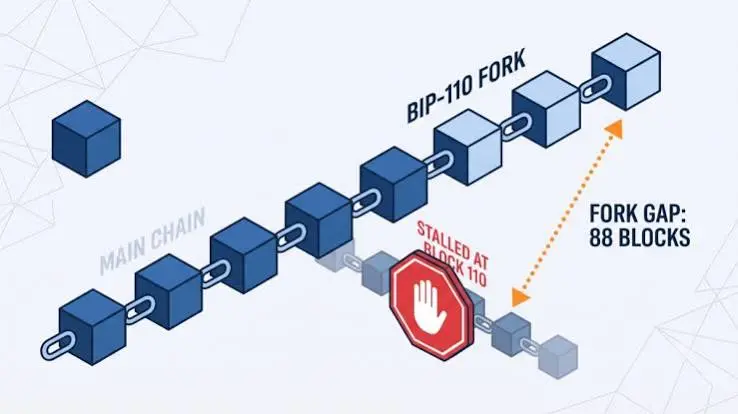
Strategy founder Michael Saylor stated that Bitcoin has gained market recognition, but the biggest challenge in the future is not external competition, but rather the erosion of consensus rules from within. He believes that Bitcoin's consensus rules are like a "constitution," determining property rights, scarcity, settlement mechanisms, and boundaries of power. Any modification of the rules for the benefit of specific groups is an infringement on the economic rights of all participants.He warned that Bitcoin is expected to grow a hundredfold in the future and become the infrastructure of the global capital market, while a single erroneous rule modification could harm markets, technologies, and economic freedoms that have yet to be born. Saylor specifically pointed out certain proposals, including BIP-110, arguing that they undermine the neutrality of the Bitcoin protocol by limiting effective paid transactions, introducing contract mechanisms, or expanding block capacity. He stated that although these proposals take different forms, they all weaken the scarcity of block space, increase network bandwidth and verification costs, expand protocol complexity, and introduce new security risks. At the same time, weakening the fee market will affect miners' income sources after block rewards continue to halve, thereby undermining the long-term security of the Bitcoin network. Furthermore, once a particular interest group is able to modify Bitcoin rules through certain means, other interest groups will follow suit, leading to long-term conflicts in protocol governance, capital outflows, slowed innovation, and deteriorating network security. Saylor called for keeping the Bitcoin base layer simple, neutral, scarce, and secure, leaving innovation to the second layer and application layer, promoting development through voluntary adoption rather than frequent modifications of the underlying protocol, and emphasized that protocol upgrades should be approached with extreme caution and only advanced when truly necessary to maintain the foundation for Bitcoin's long-term development.
app_icon
ChainCatcher Building the Web3 world with innovations.