BTC $63,266.22 -3.03%
ETH $1,878.26 -3.78%
BNB $564.91 -1.46%
XRP $1.05 -4.52%
SOL $73.16 -4.08%
TRX $0.3242 -2.15%
DOGE $0.0700 -3.80%
ADA $0.1552 -6.05%
BCH $213.02 -1.77%
LINK $8.34 -4.89%
HYPE $56.26 -6.63%
AAVE $97.87 -2.28%
SUI $0.6832 -4.70%
XLM $0.1718 -5.47%
ZEC $476.56 -5.43%
BTC $63,266.22 -3.03%
ETH $1,878.26 -3.78%
BNB $564.91 -1.46%
XRP $1.05 -4.52%
SOL $73.16 -4.08%
TRX $0.3242 -2.15%
DOGE $0.0700 -3.80%
ADA $0.1552 -6.05%
BCH $213.02 -1.77%
LINK $8.34 -4.89%
HYPE $56.26 -6.63%
AAVE $97.87 -2.28%
SUI $0.6832 -4.70%
XLM $0.1718 -5.47%
ZEC $476.56 -5.43%

electricity

All
Article
Flash

BNEF: U.S. data centers may account for 20% of electricity consumption by 2035, Bitcoin mining companies are accelerating the shift to AI computing power

Bloomberg New Energy Finance (BNEF) latest forecast shows that by 2035, electricity consumption by data centers in the United States will account for about 20% of the nation's total electricity consumption, a significant increase from the current level of about 5.9%. The agency has raised its forecast for data center electricity demand in 2035 to 106 GW, which is 36% higher than the 78 GW predicted in April this year. Currently, the operating capacity of data centers in the U.S. is about 40 GW, accounting for approximately 3.5%-4% of the national electricity demand, while under BNEF's baseline scenario, this proportion is expected to reach 8.6% by 2035. The high-growth model from the Electric Power Research Institute (EPRI) indicates that if the combined effects of cryptocurrency mining and AI computing power are taken into account, the upper limit of this proportion also points to 20%.In response to the explosive growth in AI computing power demand, Bitcoin mining companies are actively transforming. Companies like Core Scientific and Riot Platforms have partnered with tech giants such as AWS and Google to convert their existing mining sites into AI data centers. Currently, Bitcoin mining companies have secured about 6 GW of electricity capacity, which is expected to expand to 12 GW by 2027, with some analysts estimating that about 20% of mining companies' computing power capacity will shift towards AI workloads by then. Data from the Electric Reliability Council of Texas (ERCOT) shows that data centers now account for about 90% of local large load applications, with many sites originally used for cryptocurrency mining being repurposed as AI computing facilities. This trend is also directly reflected in the capital markets, as Core Scientific has seen a significant rebound in its stock price after emerging from bankruptcy and partnering with AI cloud service provider CoreWeave.

In the Ural region of Russia, 10,000 mining machines were seized from an illegal mining site, with electricity cost losses amounting to nearly 1 billion rubles

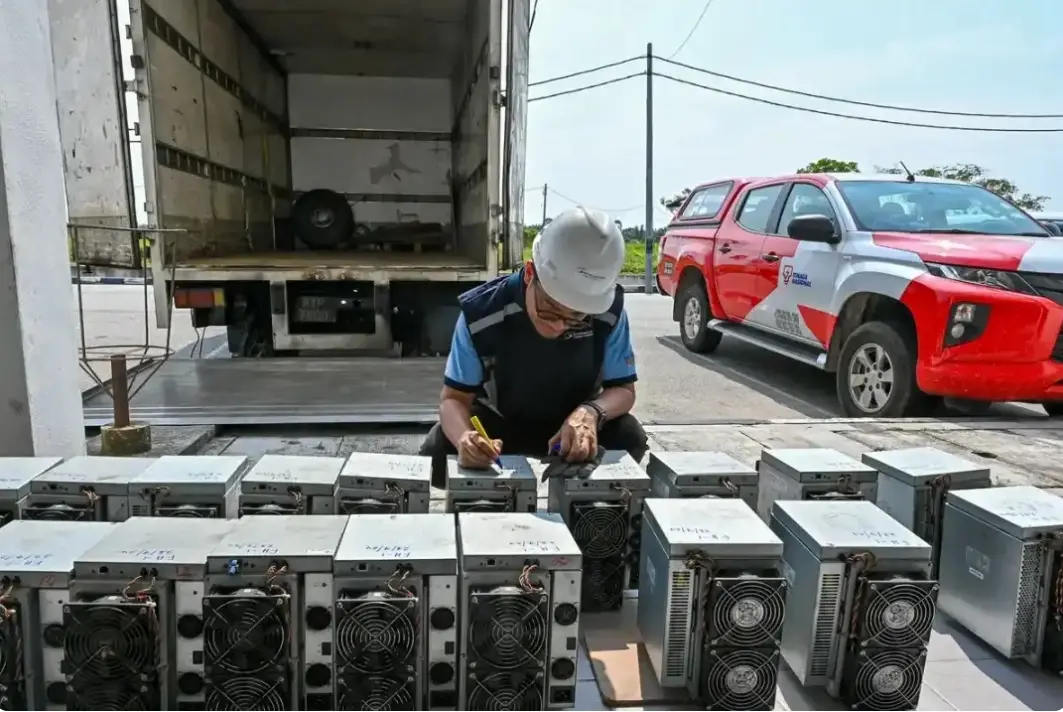
According to Bits.media, a large illegal cryptocurrency mining operation was discovered in the city of Nizhny Tagil in Sverdlovsk Oblast, Russia, and the nearby city of Kushva. The mining operation was hidden in an abandoned industrial park and deployed about 10,000 mining machines, which were dismantled by a joint operation of the Federal Security Service of the Russian Federation, the police, and the power company.Local power companies estimate that the losses caused by the long-term illegal electricity usage of this mining operation amount to nearly 1 billion rubles (approximately 12.7 million USD). Investigators stated that its electricity consumption was sufficient to meet the lighting needs of a small city. Law enforcement has arrested three suspects, who are currently under house arrest and are being investigated for "causing property damage through deception or abuse of trust." Under Russian law, those involved could face up to 5 years in prison.Investigations revealed that the operators of the mining site accessed the power grid through intermediaries and allegedly tampered with electricity meter data to cover up the actual electricity usage. Law enforcement agencies stated that the actual electricity consumption of the mining operation was about twice the approved quota. The local energy department initially launched an investigation due to frequent voltage fluctuations, power outages, and equipment failures in the abandoned factory area, ultimately pinpointing the location of the mining operation. A local television station also produced a documentary titled "Mining" to document this operation.

JPMorgan: The decline in Bitcoin prices, coupled with high electricity costs, has led to selling pressure in the market from high-cost miners

JPMorgan analysts believe that for the recent price trends of Bitcoin, the resilience of Strategy (stock code MSTR) is more important than miner activity. Although the world's largest Bitcoin holder has not yet begun to sell, Bitcoin miners seem to be facing increasing selling pressure.JPMorgan Managing Director Nikolaos Panigirtzoglou and his team noted in a report on Wednesday that the recent pressure on Bitcoin prices is mainly due to two factors: first, the recent decline in Bitcoin network hash rate and mining difficulty; second, the latest developments surrounding Strategy. Analysts stated that the decline in hash rate and mining difficulty reflects the influence of two forces: China's reaffirmation of its ban on Bitcoin mining following a surge in private mining activities, and the low Bitcoin prices combined with high energy costs squeezing profits, leading to the exit of high-cost miners outside of China.Analysts pointed out that while a decline in hash rate typically increases miner revenue, "Bitcoin prices are currently still hovering below their production costs," which brings selling pressure to the Bitcoin market. JPMorgan analysts have currently revised their estimate of Bitcoin's production cost down to $90,000, from $94,000 last month. According to analysts, this update is based on an electricity price assumption of $0.05 per kilowatt-hour, and for high-cost producers, every increase of $0.01 per kilowatt-hour will raise their production costs by $18,000.JPMorgan's report stated: "Against the backdrop of high electricity prices and low Bitcoin prices squeezing profits, some high-cost miners have been forced to sell Bitcoin in recent weeks."
app_icon
ChainCatcher Building the Web3 world with innovations.