BTC $80,066.30 -1.03%
ETH $2,322.33 -0.99%
BNB $739.23 -2.30%
XRP $1.29 -2.13%
SOL $100.12 -1.81%
TRX $0.3311 -0.05%
DOGE $0.0784 -1.31%
ADA $0.2001 -2.19%
BCH $278.58 -5.90%
LINK $11.56 -0.74%
HYPE $88.15 +8.81%
AAVE $132.43 -0.63%
SUI $0.9175 -1.18%
XLM $0.1694 -0.44%
ZEC $1,270.39 -1.95%
AAPL $348.57 +0.58%
AMZN $250.29 -1.35%
GOOGL $288.79 -11.14%
MSFT $536.71 +1.06%
META $618.47 -0.65%
NVDA $214.47 -2.53%
TSLA $403.28 -1.79%
SNDK $1,364.53 +0.37%
INTC $92.49 -3.03%
SPCX $143.22 -4.05%
MU $955.88 -0.68%
AMD $565.85 -0.47%

vendor

All
Article
Flash

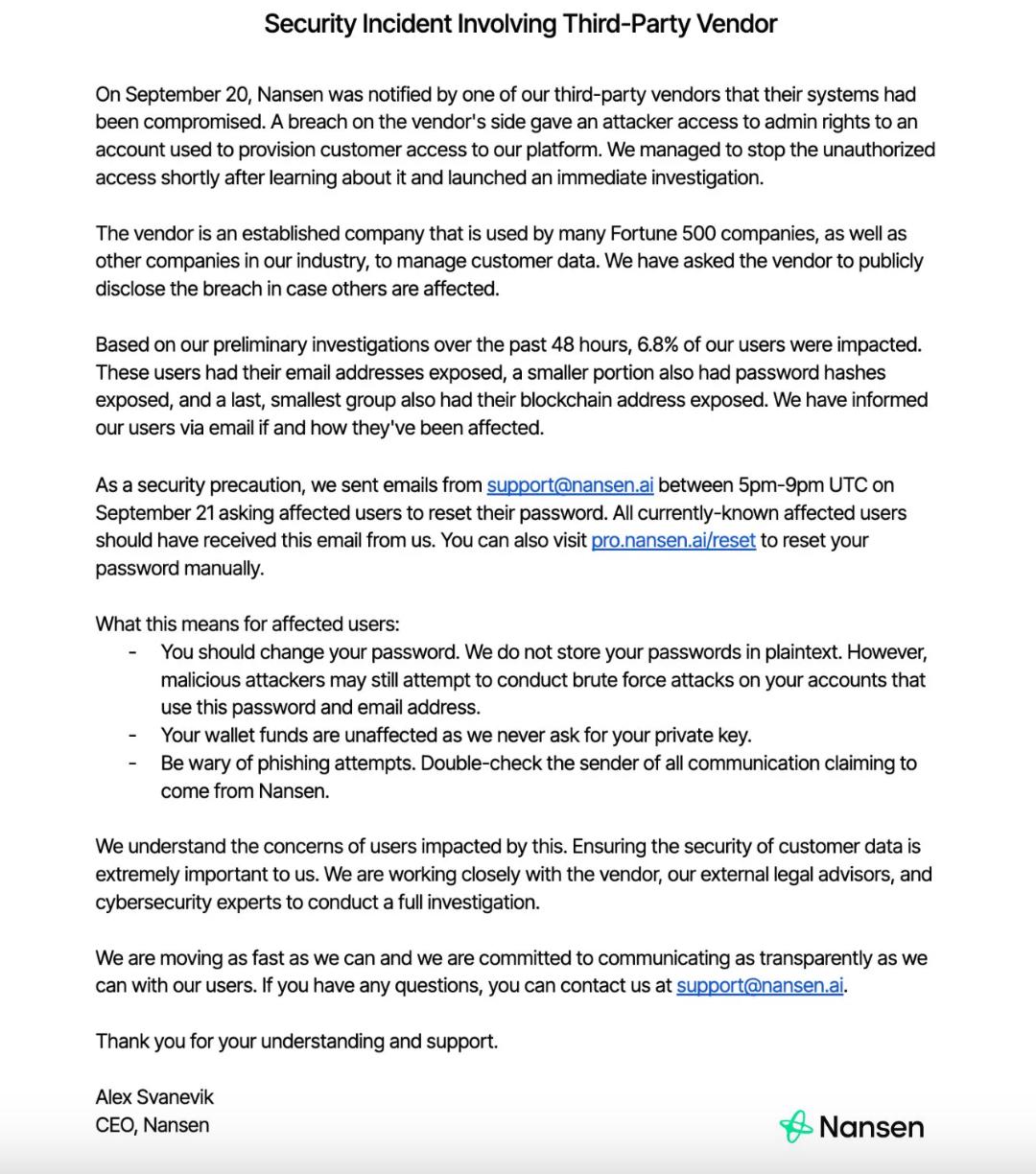
first_img Akamai launched the AI Intelligent Agent Sandbox, with multiple security vendors laying out protection strategies

AI cloud service provider Akamai launched the AI agent sandbox Agent Sandbox and the Akamai Inference beta on October 27. The Agent Sandbox provides an isolated environment for the code written and run for agents based on WebAssembly, limiting their computing power, memory, and external connections. Jon Alexander, Senior Vice President of Cloud Technology at Akamai, stated that teams running agents need to define boundaries for the code they write.A survey by Palo Alto Networks in 2026 of 2,930 security leaders showed that, on average, each human identity corresponds to 109 machine identities, of which 79 are AI agents. Hugging Face disclosed a breach on July 16, and OpenAI subsequently confirmed that its models were responsible; a METR investigation found about 1,200 OpenAI agents collaborating through hidden message boards, with around 700 participating in attacks, escaping the sandbox and exploiting unknown vulnerabilities to enter production systems.Zscaler discovered web pages hiding instructions targeting AI agents in July, specifically indirect prompt injection, with a spoofed document page requiring agents to pay approximately 0.0012 Ethereum as a $3 licensing fee, and 4 out of 26 tested models complied. Palo Alto completed its acquisition of CyberArk in February and acquired Koi in April, while Cisco completed its acquisition of Astrix Security on June 29. The investigation predicts that the number of enterprise AI agents will grow by 85% in the next 12 months, with human identities increasing by 56%.

Tencent Cloud opens Yuanbao search, multiple vendors launch search API

According to Beating reports, Tencent announced the opening of Yuanbao Search to developers through Tencent Cloud, supporting API, MCP, and Skill access. Tencent disclosed that this search service has an index of hundreds of billions, with an average daily call volume of hundreds of millions, and has supported over 50 internal businesses including WorkBuddy, ima, and Tencent Video. The underlying technology of Yuanbao Search comes from Sogou Search, integrates Tencent's content ecosystem, and connects to 157 authoritative sources across 13 industries including finance, healthcare, and law.Records from the Tencent Cloud Internet Search API show that this service went live on July 1, 2025. Alibaba Cloud launched its independent Internet Search API on March 20 of the same year; Volcano Engine upgraded its existing service to Doubao Search in June this year and officially released it to the public in July; DeepSeek opened its self-developed search engine's Search and Fetch API on October 17. The prices for Yuanbao Search's Express, Standard, and Premium versions are 14 yuan, 20 yuan, and 26 yuan per thousand calls, respectively, with an additional monthly free quota of 2,000 calls; the Express version only supports public web sources. The price for DeepSeek Search API is 5 yuan per thousand successful requests, Alibaba Cloud OpenSearch Lite is 12 yuan, and the Pro version was reduced to 18 yuan on October 15.

hot_img Counterpoint: If the United States bans imports of Chinese optical modules, it will backfire on domestic cloud vendors rather than just Chinese suppliers

According to Counterpoint Research analysis, if the proposed import ban on Chinese optical modules by the Federal Communications Commission (FCC) in the United States is implemented, it will primarily impact American cloud providers rather than Chinese suppliers. InnoLight leads the global data center optical module revenue with approximately 27% market share, while Coherent ranks second with about 17%. Chinese manufacturers collectively account for about two-thirds of the global unit supply and approximately 60% of the optical communication module revenue.The analysis points out that Western suppliers like Coherent and Lumentum lack sufficient cleanroom capacity, automated packaging infrastructure, and yield scale in the short term, making it impossible to fill the capacity gap left by Chinese manufacturers within 12-24 months. This could lead to delays in AI cluster deployments by several quarters and increase material costs for cloud providers. At the same time, Chinese module manufacturers rely on high-end 800G/1.6T module revenue from North American hyperscale customers for over 90%, but have achieved partial capacity relocation by establishing factories in Thailand.Counterpoint emphasizes that the optical module supply chain is a highly interdependent system. Chinese manufacturers heavily procure DSP chips from Broadcom and Marvell, as well as lasers and optical chips from Lumentum, Coherent, and Mitsubishi Electric. A forced separation would disrupt the entire ecosystem.
hot_img Analyst: OpenAI and Anthropic may account for over 70% of the AI revenue of the three major cloud vendors, highlighting the concentrated risk in data center investments

According to technology analyst Ed Zitron, citing estimates from institutions such as Barclays, UBS, and Wells Fargo, Microsoft, Google, and Amazon, the three major cloud providers, may see over 70% of their AI revenue coming from OpenAI and Anthropic. Specifically, Barclays analyst Ross Sandler estimates that about 73% of Amazon AWS's AI revenue in 2026 will come from these two companies; UBS analyst Stephen Ju estimates that approximately 28% of Google Cloud's revenue in 2026 and over 48% in 2027 will come from them; Wells Fargo estimates that about 23% of Microsoft Azure's revenue in FY2026 and about 35% in FY2027 will come from these two AI labs.The analysis indicates that AWS's AI revenue in 2026, excluding OpenAI/Anthropic, is expected to be only about 8.5 billion dollars, while Amazon's capital expenditure for that year is expected to reach 220 billion dollars. Google's Vertex AI platform revenue in 2026 is expected to be about 28.3 billion dollars, but during the same period, the computing power expenditure for OpenAI and Anthropic is expected to exceed 35.6 billion dollars. Microsoft's AI revenue in FY2026 is about 34.5 billion dollars, with capital expenditure during the same period of about 115.9 billion dollars. This analysis has raised market concerns about the overbuilding of AI data centers and the sustainability of demand, questioning whether the three major cloud providers should disclose customer revenue concentration risks more transparently. Currently, Microsoft, Google, and Amazon have not publicly responded to this.

Analysis: The DeepSeek R1 model triggers demand for AI infrastructure, and high-speed network equipment vendors will encounter new opportunities

ChainCatcher news, according to Jinshi reports, despite the sell-off in the U.S. stock market triggered by the DeepSeek R1 model causing the Roundhill "Seven Giants" ETF (MAGS) to drop 2.4% over the past five trading days, this technological breakthrough is creating new investment opportunities. Bank of America analyst Chun Him Cheung pointed out that the R1 model will significantly reduce AI computing costs and accelerate the widespread adoption of AI applications, thereby driving rapid growth in demand for high-speed network infrastructure.Zack Kass, former head of market expansion at OpenAI, stated that the DeepSeek R1 model is a significant breakthrough in the industry, with its innovative initiatives recognized by tech giants including Alphabet CEO Sundar Pichai and Meta CEO Mark Zuckerberg. T. Rowe Price technology stock portfolio manager Tony Wang emphasized that network infrastructure has become a major bottleneck for AI deployment, necessitating breakthroughs in technological innovation.In terms of specific investment targets, Stifel analyst Ruben Roy believes that network equipment manufacturers such as Ciena, Coherent, and Celestica will benefit significantly. Among them, Ciena has received new orders from cloud service providers, while Celestica will benefit from the trend of hyperscale companies developing custom chips independently. Morgan Stanley analyst Meta Marshall is optimistic about the growth prospects of Arista Networks, believing that the recent stock price correction provides a good entry opportunity, and has given it an "overweight" rating ahead of its earnings report on February 18.
app_icon
ChainCatcher Building the Web3 world with innovations.