BTC $79,581.99 -1.86%
ETH $2,449.36 -2.21%
BNB $717.65 -0.62%
XRP $1.40 -4.65%
SOL $101.41 -3.48%
TRX $0.3311 -0.13%
DOGE $0.0842 -5.82%
ADA $0.2122 -5.13%
BCH $251.90 -2.32%
LINK $11.63 -1.25%
HYPE $84.93 +1.20%
AAVE $130.75 -2.63%
SUI $0.7508 -5.26%
XLM $0.1782 -4.83%
ZEC $1,012.41 +6.67%
BTC $79,581.99 -1.86%
ETH $2,449.36 -2.21%
BNB $717.65 -0.62%
XRP $1.40 -4.65%
SOL $101.41 -3.48%
TRX $0.3311 -0.13%
DOGE $0.0842 -5.82%
ADA $0.2122 -5.13%
BCH $251.90 -2.32%
LINK $11.63 -1.25%
HYPE $84.93 +1.20%
AAVE $130.75 -2.63%
SUI $0.7508 -5.26%
XLM $0.1782 -4.83%
ZEC $1,012.41 +6.67%

cann

All
Article
Flash

first_img Decentralised.co: Stablecoins cannot solve the remittance problem on their own

Decentralised.co reported that the cost of sending $200 across borders is currently 6.36%, down from 9.67% in 2009, with the United Nations aiming to reduce it to 3% by 2030. Remittances consist of three parts: collecting from the remitter, transferring value, and paying the recipient, with the intermediate stage previously being slower and now the cheapest part. Receiving and paying require licenses, bank accounts, compliance, and payment networks. The process from Dubai to Manila takes about six steps, with only one step using blockchain.Pre-funded agent accounts decentralize operating capital. Tokenized dollars can be concentrated in a single funding pool, settled on Sundays, and rebalanced within minutes. Traders hold inventory and bear exchange rate risks. Félix Pago raised $200 million to facilitate remittances from the U.S. to Latin America via WhatsApp, with a16z leading a $87 million equity round and General Catalyst providing a $113 million credit line. Nium is now funding customer payments in USDC. a16z Crypto led a $10 million investment in Better Money. Conduit raised $36 million for corridors from Europe to Nigeria and Kenya, while Palla raised $14.5 million for white-label payments to thirty banks.The article states that stablecoins can fix pipeline issues but cannot resolve isolated systems related to legal matters or toll collection.

Vice Governor of the Central Bank Lu Lei: The boundaries of responsibility for intelligent payment systems cannot be ambiguous, and a self-discipline convention will be released

According to Mobile Payment Network, Lu Lei, a member of the Party Committee and Vice President of the People's Bank of China, stated at the 15th China Payment Clearing Forum that intelligent agent payments must not blur the boundaries of responsibility between consumers, operating institutions, and algorithm systems. Lu Lei believes that the essence of payment is the transfer of fund ownership, which objectively requires that the results of transactions are predictable, responsibilities are definable, and traces are traceable. Large models and autonomous intelligent agents have characteristics such as output randomness and insufficient transparency of logic. If transaction decision-making authority is blindly or excessively granted to intelligent agents, it will affect the trust foundation of fund transactions. The current governance rules of the payment industry and dispute resolution mechanisms are built around "humans as the final decision-makers in transactions." The new model of intelligent agents automatically initiating and assisting in transactions easily blurs the boundaries of responsibility, and the existing governance rules need to be optimized and improved.Regarding the issue of insufficient compatibility of protocol standards in the field of intelligent agent payments, Lu Lei emphasized that the dispute over protocols is essentially a dispute over business rules and technical standards, as well as a struggle for dominance in the era of artificial intelligence. The People's Bank of China continues to strengthen its tracking research on technological innovation, especially intelligent agent payments, guiding the Payment Clearing Association to leverage its advantages in industry self-regulation. Based on extensive soliciting of opinions, they will formulate and publish the "Self-Regulatory Convention for Intelligent Agent Payment Applications," and will continue to work on coordinating protocols and standards, as well as innovating risk governance. Lu Lei proposed three hopes to market institutions: actively respond to and implement the industry self-regulatory convention, with payment security and risk prevention as the bottom line, and consumer rights protection as the focal point; continuously track the trends of cutting-edge technologies such as large models and intelligent agents both domestically and internationally, and build technical reserves and application capabilities; adhere to the principle of rules and standards first, strengthen coordination and compatibility among different protocols and standards, and cooperate with regulatory authorities to promote the construction of a foundational protocol and technical standard system for intelligent agent payments.

first_img Unstoppable Domains abandons ICANN application, refunds Web3 domain names

Matthew Gould, the founder of Unstoppable Domains, stated that the company did not submit an application for its Web3 top-level domains in ICANN's 2026 expansion round and will refund customers who purchased related domains. Gould mentioned that the compliance, application, and bidding costs of incorporating Web3 domains into the ICANN system exceeded the company's expected recoverable sales. This move ends the company's commitment since 2019 that domains like .crypto and .wallet would eventually be resolvable in standard browsers.The application window for this round of ICANN opened on April 30 and closed on August 12, receiving over 1,600 major applications. Gould stated that customers have been notified via email, but the list of affected extensions and refund terms have not been disclosed. Some holders questioned the scope of the refunds, claiming they held the domains based on Unstoppable's commitment to advance the ICANN application. Gould responded that Web3 domains will still serve as on-chain assets for cryptocurrency transactions.Unstoppable continues to participate in ICANN activities as a service provider and previously announced a partnership with Telegram to apply for the .gram domain. Meanwhile, ENS has chosen a different path, with token holders approving the restructuring of the ENS Foundation to pursue the .ens top-level domain in ICANN, but ENS will not apply for .eth, as it is reserved for ISO 3166-1 country codes.

U.S. CFTC Chairman: The derivatives market will enter a new stage of development and cannot blindly follow regulatory consensus

Michael Selig, Chairman of the U.S. Commodity Futures Trading Commission (CFTC), wrote in The Economist that the global derivatives market is entering a new stage of development, where financial innovation needs to lead, rather than introduce regulatory models that may restrict market development.Michael Selig pointed out that for decades, derivatives (including financial contracts such as futures, options, and swaps) have been important tools for businesses, farmers, investors, and financial institutions to manage risk and optimize capital allocation. Today, the nominal value of the global derivatives market has exceeded $1.2 quadrillion, with nearly half of the market regulated by the CFTC.He stated that the United States' leadership in the derivatives field is built on generations of market competition, strong institutions, effective regulation, and an open attitude towards innovation. For a long time, global regulators have regarded the CFTC as a benchmark for efficient market regulation.Selig said, "The new era of finance needs innovation, not consensus." The United States will not introduce regulatory measures that hinder market development but will seek a balance between innovation and market efficiency. During his tenure, the U.S. will continue to play a leading role in the formulation of derivatives market rules and financial innovation, driving the market to remain competitive.

Zhao Changpeng: AI cannot solve the inflation problem, Bitcoin has unique value storage properties

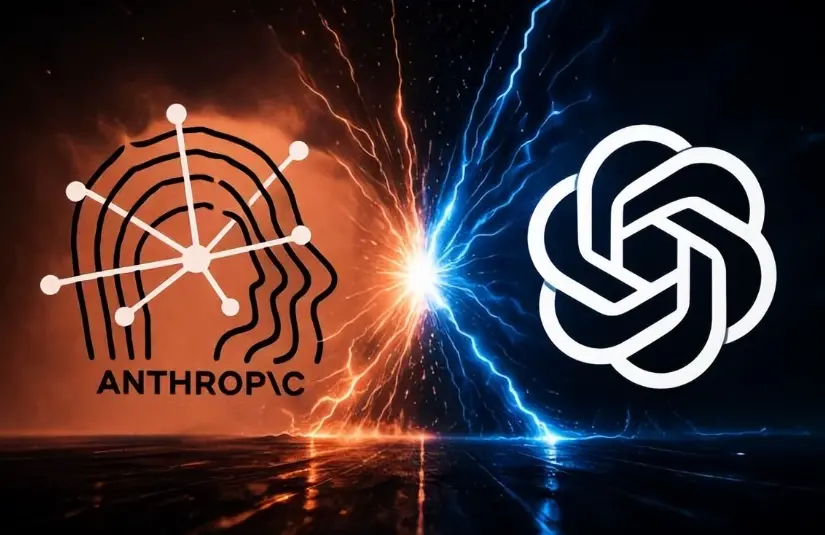
Binance founder CZ recently posted on social media that artificial intelligence (AI) and Bitcoin (BTC) serve different functions; AI drives productivity improvements, while Bitcoin is used to combat inflation and protect wealth. CZ stated, "AI is great, but it cannot protect you from the effects of inflation; Bitcoin can."CZ believes that the market often views AI and Bitcoin as two major hot investment themes, but their natures are fundamentally different. AI is a technology that enhances business efficiency and economic productivity, while Bitcoin is a digital asset with a fixed supply. He pointed out that the AI industry is rapidly developing, with global companies continuously investing billions of dollars in AI software, data centers, chips, and other infrastructure, driving transformations in various sectors such as healthcare, finance, and manufacturing. However, AI companies can issue more shares and raise funds for expansion, and their investment value still depends on business performance and market competition. In contrast, Bitcoin has a total fixed supply of 21 million coins, and holders possess a non-dilutable scarce asset. CZ believes this characteristic gives Bitcoin long-term value storage properties, providing protection when the purchasing power of fiat currency declines due to inflation.CZ has also previously stated that the AI boom may attract some funds that would have originally flowed into the Bitcoin market. As AI companies like OpenAI and Anthropic gain more capital attention, some investors may sell other assets to allocate to AI-related investments. However, CZ believes that AI and Bitcoin are not in competition; rather, they should be viewed as complementary assets: AI drives technological advancement and productivity improvements, while Bitcoin offers a way to store value that is unaffected by supply expansion.

app_icon
ChainCatcher Building the Web3 world with innovations.