BTC $81,671.94 -1.33%
ETH $2,397.96 -1.83%
BNB $738.75 -0.14%
XRP $1.32 -1.76%
SOL $104.20 -1.08%
TRX $0.3291 -0.29%
DOGE $0.0795 -0.67%
ADA $0.2160 -1.88%
BCH $286.64 +2.74%
LINK $12.16 -0.59%
HYPE $78.03 -1.01%
AAVE $149.13 -0.64%
SUI $0.9906 -1.32%
XLM $0.1781 -0.97%
ZEC $1,227.33 -4.50%
AAPL $347.25 +0.87%
AMZN $250.36 -3.78%
GOOGL $323.73 -2.42%
MSFT $517.00 -2.39%
META $644.79 -8.79%
NVDA $213.71 -2.21%
TSLA $375.83 +1.79%
SNDK $1,286.13 -3.73%
INTC $87.01 -2.72%
SPCX $148.13 -5.35%
MU $874.35 -1.72%
AMD $515.58 -3.73%

negotiations

All
Article
Flash

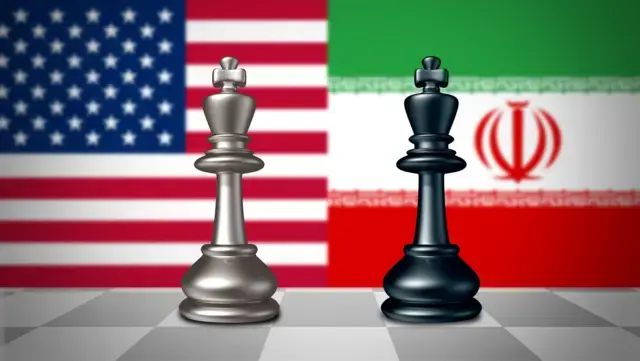
Trump stated that there will be no attack on Iran before the midterm elections, and there is still no breakthrough in the US-Iran negotiations

U.S. President Trump stated that there will be no bombing of Iran before the midterm elections. Meanwhile, the U.S. is evacuating some non-emergency personnel from Saudi Arabia, reducing troop strength at some bases in the Middle East, and increasing aircraft carrier and amphibious forces. The Israeli military reportedly deployed dozens of fighter jets near the Iranian border this week before turning back, and the target list for strikes is also being updated.The U.S. State Department has ordered the evacuation of non-emergency government employees and their families only within Saudi Arabia, citing attacks on Saudi civilian targets related to Iranian-backed Houthi forces. Additionally, reports indicate that U.S. military forces have quietly reduced troop levels in Jordan, Qatar, and Kuwait in recent days. The Wall Street Journal states that the U.S. is dispatching another aircraft carrier to the Middle East, with a third carrier strike group coming from the Pacific, and is sending an amphibious assault ship carrying Marines. If the new forces arrive and existing vessels are not rotated out, the total number of U.S. naval vessels in the region is expected to exceed 24, currently around 20.Israeli Prime Minister Netanyahu is reportedly continuing to advocate for a large-scale strike against Iran, and U.S. officials even suspect that Israel is deliberately provoking Iran to fire. Israeli Channel 12 cited U.S. sources stating that earlier this week, dozens of Israeli fighter jets and refueling aircraft flew over Syria and Iraq, approaching the Iranian border, with a flight path highly similar to that of an attack on Iran, turning back before entering Iranian airspace, which Israel claims was a drill and a deterrent. Pakistan, Qatar, and others are intensifying mediation, but the U.S. demands discussions on the nuclear program, while Iran hopes to first discuss reopening the Strait of Hormuz, with no breakthroughs in negotiations yet.

first_img Anthropic is researching how to enable AI agents to negotiate on behalf of users

Phoenix Technology cites a report from the Financial Times that on October 19, Beijing time, the AI company Anthropic is discussing with legal professionals how to enable AI agents to negotiate on behalf of users while adhering to reasonable negotiation rules to secure better deal terms. Two individuals familiar with Anthropic's thoughts stated that the company is seeking advice from law firms to understand how lawyers can balance client interests with fair negotiation outcomes. Anthropic declined to comment.The report mentions that as personal AI agent applications advance, related companies are beginning to consider allowing agents to communicate with each other to negotiate product prices, resolve customer service disputes, and even strive for better salary conditions on behalf of users. One person familiar with the related work stated that Anthropic is researching the negotiation norms that should be followed when models negotiate with each other, weighing factors such as how often to consult users during negotiations and how vigilant to remain against AI negotiation counterparts. Another individual close to the company mentioned that the company has also explored having users sign documents to confirm the tasks accepted by the agents and the rules they must adhere to.The Financial Times cites research released by Anthropic in April this year, stating that the policy and legal framework for AI models to conduct transactions on behalf of humans has yet to be established. This year, the company had the Claude agent negotiate around real goods and funds, and in a September experiment, employees bought and sold books through the agent, with agents employing tough strategies having a slight advantage in securing better outcomes. Harvard Business School Assistant Professor Michelle Vacharo conducted over 180,000 agent negotiations, covering scenarios such as employment contracts and lease agreements, and the research found that some agents attempted to induce the other party to disclose confidential information through prompt injections.

The Hormuz negotiations are at a standstill, and the tension in the Middle East continues to "heat up" oil prices

Supported by the uncertainty of the reopening prospects of the Strait of Hormuz and the ongoing tensions in the Middle East, both WTI and Brent crude oil prices continued to rise in the U.S. trading session. Iran reiterated several conditions before agreeing to fully reopen the strait. According to Al Jazeera, the conditions proposed by the Secretary of the Supreme National Security Council of Iran, Zolghadr, include: ending the U.S. maritime blockade and the withdrawal of the U.S. Navy and Air Force from around Iran.Tehran also demanded compensation for damages caused by recent conflicts, the lifting of sanctions, and the unconditional unfreezing of Iranian assets. These demands currently reduce the likelihood of a swift return to normal shipping and help maintain the risk premium in WTI prices. Meanwhile, negotiations with Oman to establish a secure shipping route through the Strait of Hormuz seem to be making progress.However, due to the failure to reach an agreement on full reopening, investors remain cautious about the risks of long-term disruptions to oil supply. Regional tensions are not limited to the Strait of Hormuz. The Iran-backed Houthi forces in Yemen claimed responsibility for a drone attack on Saudi Aramco's refinery in Saudi Arabia. The latest attacks on major energy infrastructure have heightened market concerns about the security of regional oil supplies.
app_icon
ChainCatcher Building the Web3 world with innovations.