BTC $77,492.25 -1.28%
ETH $2,423.06 -1.68%
BNB $682.96 -1.15%
XRP $1.35 -1.93%
SOL $100.07 -2.88%
TRX $0.3222 -3.01%
DOGE $0.0817 -1.28%
ADA $0.1965 -0.69%
BCH $245.71 -0.32%
LINK $11.23 -0.75%
HYPE $82.74 -1.72%
AAVE $127.80 +3.06%
SUI $0.7196 -0.95%
XLM $0.1758 -0.73%
ZEC $830.50 -1.94%
BTC $77,492.25 -1.28%
ETH $2,423.06 -1.68%
BNB $682.96 -1.15%
XRP $1.35 -1.93%
SOL $100.07 -2.88%
TRX $0.3222 -3.01%
DOGE $0.0817 -1.28%
ADA $0.1965 -0.69%
BCH $245.71 -0.32%
LINK $11.23 -0.75%
HYPE $82.74 -1.72%
AAVE $127.80 +3.06%
SUI $0.7196 -0.95%
XLM $0.1758 -0.73%
ZEC $830.50 -1.94%

found

All
Article
Flash

first_img The market expects TSMC's foundry prices to be raised by 10% to 15% across the board

According to a report by Juheng.com, after Samsung Electronics took the lead in raising prices for some advanced and mature processes, the market expects TSMC to follow suit, with prices for its various processes likely to increase by 10% to 15% across the board. According to reports from TrendForce and Nomura Securities, TSMC has completed a new round of price negotiations with customers in mid-year, raising prices for the tight supply of some 3-nanometer N3 processes by up to 15% for the second half of the year. The market further anticipates that by early 2027 at the latest, prices for TSMC's advanced processes such as N2, N3, and N5 may increase by another 5% to 10%.TSMC's N2 and N3 capacities have almost been fully booked by Apple and NVIDIA. The prices for mature processes such as N12, N16, and N28, which have not been adjusted for three consecutive years, may also see a simultaneous increase, with a maximum rise of about 10%. According to estimates from Citi Securities, TSMC's capital expenditure will reach $80 billion in 2027, further increasing to $90 billion in 2028, with this year's capital expenditure already raised to between $52 billion and $56 billion. TSMC announced in July that it would expand its investment in the United States to $265 billion. According to Reuters, Samsung raised prices for some new orders of advanced processes in July, with the 4-nanometer SF4 seeing increases of 10% to 15% for customers in China and the United States.

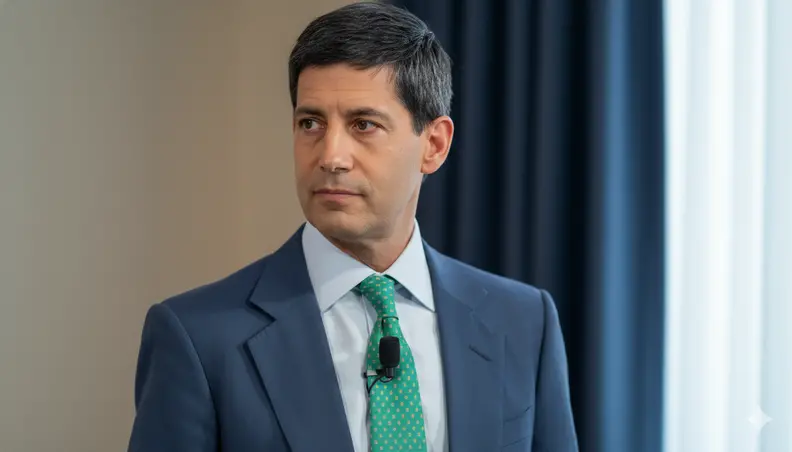
Cryptoquant Founder: The peak of this Bitcoin bull market cycle may be driven by global institutional and ETF demand

Cryptoquant founder and CEO Ki Young Ju stated that the peak of the current Bitcoin bull market cycle may be driven by institutional funds and ETF demand outside the United States. He pointed out that deeper stablecoin liquidity and tokenized asset infrastructure will expand global market participation. Using South Korea as an example, Ki Young Ju mentioned that the country currently does not have a spot Bitcoin ETF, retail investors cannot purchase overseas-listed spot Bitcoin ETFs, and most companies are unable to open trading accounts to buy BTC. South Korea has phased in corporate participation, with the Financial Services Commission (FSC) roadmap covering about 3,500 listed companies and qualified professional investors, but financial institutions and other companies are still excluded.Strategy's Bitcoin bank evaluated 25 major institutions covering trading, custody, digital asset products, financing, and corporate participation, with an overall adoption rate of 32%. RWA.xyz data shows that the global tokenized asset distributed asset value is $38.63 billion, an increase of 2.65% compared to 30 days ago. The Bank for International Settlements (BIS) stated that stablecoins have the potential to enable faster, programmable payments, but current designs may pose risks to financial integrity, liquidity, and currency. Ki Young Ju pointed out that the cumulative net inflow before the launch of the U.S. spot Bitcoin ETF was about $57 billion over two years, and the next phase will be global institutionalization, with more institutions adopting BTC as a strategic asset, and countries lacking ETFs will also improve related investment channels.

The Ethena Foundation announced four major adjustments to the ecosystem: repurchasing ENA and canceling monthly VC unlocks

According to official news, the Ethena Foundation announced four adjustments to the Ethena ecosystem, including repurchasing locked tokens held by early investors, further aligning the value of tokens with equity, launching a governance proposal for income to repurchase ENA, and canceling future monthly unlocks for VC investors.The Ethena Foundation stated that it has completed the acquisition of all locked ENA tokens from some major seed round investors who had sold ENA in the past 9 months. Regarding the alignment of token and equity value, the Ethena Foundation and Ethena Labs have reached a "Master Framework Agreement," which stipulates that the intellectual property and value generated by the agreement will exclusively belong to the foundation and be governed by ENA holders, while equity investors in Labs entities will no longer enjoy residual cash flow.In addition, the governance proposal for income to repurchase ENA has been launched. According to the proposal, the net income generated by all business lines under the Ethena brand will be used for programmatic repurchase of ENA, and the proposal has been approved by the Risk Committee. The Ethena Foundation also stated that it has reached an agreement with major investors to eliminate the selling pressure caused by future monthly unlocks for VC investors by releasing unallocated tokens. Team tokens will still remain locked according to the original allocation plan.

MYSTEN Labs co-founder Kostas Kryptos participates in the establishment of the cryptocurrency trading platform Havenex: Series A financing is about to be completed

The Sui development team co-founder of Mysten Labs, Kostas Kryptos, stated that Havenex is undergoing Series A financing and is about to complete it. All necessary license applications and some additional license applications have been submitted, and the financing amount is also close to being fully allocated.Havenex is not positioned to become another Coinbase, Binance, Bybit, or Kraken, but rather to provide infrastructure for financial institutions, enabling them to offer digital assets and traditional financial assets to clients while meeting regulatory, custody, security, and transparency requirements. Havenex plans to support a multi-chain architecture, verifiable custody, continuous solvency proof, default multi-signature, quantum-resistant keys, hardware two-factor authentication wallets, as well as self-custody and key loss protection mechanisms; in regions where regulations allow, it will also support privacy assets and RWA. The project will use Sui technology in suitable scenarios while integrating assets, bridging protocols, and foundational components from other ecosystems.The concept of Havenex was proposed by him, and he will currently participate as an advisor, but Mysten Labs and Sui remain his main focus. He stated that the project aims to establish transparency and security standards different from those of FTX and Mt. Gox, and to reduce the serious vulnerability risks caused by code generated by large language models recently.

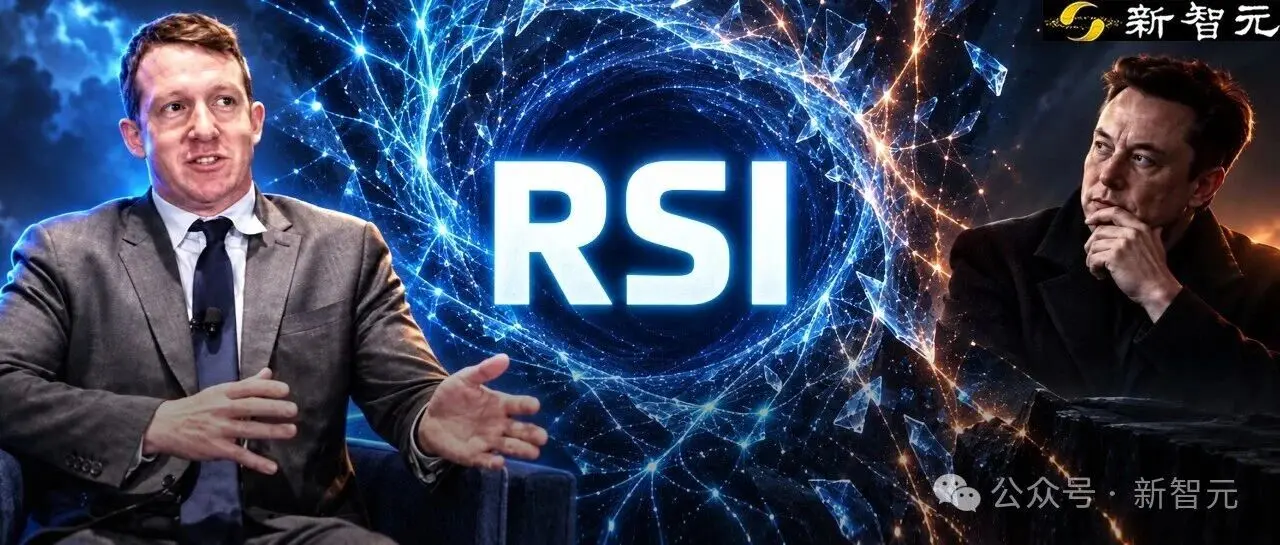
SemiAnalysis Founder: By 2028, most of the new AI computing power will belong to two companies

In the latest podcast, SemiAnalysis founder Dylan Patel predicts that by 2028, OpenAI and Anthropic may account for 70% to 80% of the world's new AI computing power, with the total computing power scale potentially exceeding 100GW. Patel stated that the two companies currently account for about 30% of the world's annual new computing power, and this proportion is still rising rapidly.Patel pointed out that the business model of leading AI laboratories is changing, with a significant increase in the efficiency of AI computing power output. Currently, Anthropic's revenue per megawatt of computing power has reached about $50 million and may further rise to $100 million. This allows OpenAI and Anthropic to procure or lease computing power at high prices ranging from $25 million to $50 million per megawatt.Patel expects that global AI-related capital expenditures will reach about $11 trillion from 2024 to 2029, with over $5 trillion needing to be financed through debt. Due to the potential return on investment of AI infrastructure being far higher than that of traditional industries, tech giants may accept higher financing costs, thereby pushing up overall credit rates and squeezing the valuations of traditional assets and highly leveraged economies. Additionally, Patel believes that the new computing power may not primarily be used for providing model inference services externally, but may instead flow more towards internal research and development and self-improvement of models within AI laboratories.

first_img Uniswap founder: Tokenization will reshape the market-making landscape, and AMM is still in its early stages

Uniswap founder Hayden Adams stated that after nine years of DeFi practice, the path for AMM to become the core engine of the global financial market is becoming increasingly clear. He pointed out that tokenization is not only an infrastructure upgrade but also changes who provides liquidity and what is traded in the market. The SEC has approved Nasdaq and the New York Stock Exchange to trade tokenized stocks, and the DTCC also conducted live testing of tokenized trading in July.Adams believes that traditional market makers vertically integrate capital, strategy, execution, settlement, and distribution, which is costly; blockchain disassembles these components, making capital a scarce input. Liquidity providers who already hold relevant assets or are the issuers themselves can bear inventory exposure at zero cost, thereby weakening professional market makers with lower capital costs. An on-chain "related asset pair" model has naturally formed (such as the Ethereum ecosystem pairing with ETH and stablecoins), as correlation reduces inventory risk and deepens liquidity.He cited that there are already 10 tokenized stocks on the Robinhood Chain forming a Uniswap pool with SPY, which has traded approximately $33 million in 12 days, with some trades occurring directly between stocks without touching the dollar. Adams also stated that although Uniswap's cumulative trading volume has reached about $4.6 trillion, AMM is still in its early stages, and there is significant room for improvement in subsequent design and ecosystem.
app_icon
ChainCatcher Building the Web3 world with innovations.