BTC $78,409.30 -1.65%
ETH $2,466.63 -1.51%
BNB $747.00 -0.12%
XRP $1.38 -1.80%
SOL $102.73 -2.38%
TRX $0.3375 +0.29%
DOGE $0.0892 -1.09%
ADA $0.2164 -1.91%
BCH $257.66 -0.04%
LINK $12.65 -6.55%
HYPE $84.08 -3.00%
AAVE $131.19 -2.88%
SUI $0.8127 +1.53%
XLM $0.1895 -0.52%
ZEC $1,132.23 -6.83%
BTC $78,409.30 -1.65%
ETH $2,466.63 -1.51%
BNB $747.00 -0.12%
XRP $1.38 -1.80%
SOL $102.73 -2.38%
TRX $0.3375 +0.29%
DOGE $0.0892 -1.09%
ADA $0.2164 -1.91%
BCH $257.66 -0.04%
LINK $12.65 -6.55%
HYPE $84.08 -3.00%
AAVE $131.19 -2.88%
SUI $0.8127 +1.53%
XLM $0.1895 -0.52%
ZEC $1,132.23 -6.83%

continue

All
Article
Flash

Galaxy Research: Coldcard attackers continue to transfer funds, approximately 45% of the stolen assets have entered mixing or cross-chain pathways

Galaxy Research published that the attackers in the Coldcard "Wave 3" attack are still continuously transferring the stolen funds. During this phase, the attackers created 293 2-of-2 multi-signature wallets for each victim's assets. The first batch of funds was transferred across chains to Ethereum via THORChain; the latest round of transfers has begun entering the CoinJoin mixing process.Currently, the Wave 3 attackers are processing the largest amounts of stolen funds in order of the stolen amount, having sequentially transferred the funds from wallets ranked 1 to 11. The next 10 wallets that have not yet been transferred hold a total of 30.81 BTC, while wallets ranked 61 to 293 hold a total of 33.77 BTC. So far, the attackers have transferred about 45% of the stolen assets from this exploit, with funds flowing to Ethereum (via THORChain) or entering CoinJoin mixing transactions. Additionally, this fund transfer has revealed a previously unknown wallet: 58 addresses jointly spent in a 2-of-2 multi-signature format identical to that of Wave 3, and these were further transferred by the Wave 3 attackers to a jump address that funds CoinJoin.The on-chain analysis team currently marks this wallet as "cause = open," but believes it likely also belongs to Coldcard victims, which means the number of wallets involved in Wave 3 may increase to 294, raising the previously reported total amount stolen from the Coldcard vulnerability to approximately 1806 BTC. Currently, about 82% of the stolen BTC remains in addresses initially controlled by the attackers, while about 18% has been transferred, with the flow of funds indicating that it may be undergoing laundering processes.
first_img OpenAI Chief Scientist says AI may continue to rise rapidly to recursive self-improvement

OpenAI Chief Scientist Jakub Pachocki published an article titled "An Alien Mind" on September 6, 2026. The article reviews the results of the RLSlow research project, which emerged in mid-2023, demonstrating the first scalable training of reasoning models. It states that three years later, reasoning language models have become part of rapid economic growth, beginning to push scientific boundaries, capable of operating computers and graphical interfaces, collaborating with humans and other AIs on research projects, while also changing the landscape of computer security and introducing new dangers.The author anticipates that the current pace of progress may continue towards recursive self-improvement based on internal results. If AI development continues along the current path, systems may experience equivalent or greater leaps in capability in the coming years, increasingly driving their own development. The author calls for extreme caution, believing that no one is prepared to deal with the consequences of the rapid rise of machine intelligence. OpenAI will continue to seek technical solutions for alignment and monitoring, build defensive systems, and unilaterally halt further scaling when necessary, but believes broader intervention is needed.The article states that machine intelligence is primarily driven by increased computational power, with AI growing more than being designed. In terms of alignment, it distinguishes between goal alignment and value alignment, with the core challenge being generalization. GPT-6 Astra shows significantly better alignment than GPT-5.6 Sol, but more progress is still needed. In monitoring, the focus is mainly on chain-of-thought monitoring, with assessments showing that reliance on capabilities is gradually weakening. In terms of scalable defense, models are becoming superhuman in breaking into computer systems, currently in a narrow window where using the best available models significantly enhances the security of critical systems.

first_img Bitcoin spot ETFs ended nine days of net inflows, while Ethereum ETFs continued their inflow momentum

On August 28, the U.S. spot Bitcoin ETF recorded a net outflow of $201.9 million, ending a nine-day streak of net inflows since mid-August. According to SoSoValue data, this reversal reduced the cumulative net inflow to approximately $55.1 billion, with total net assets of about $93.9 billion. Decrypt's ETF flow tracker turned the Bitcoin sentiment reading to "bearish" on that day.The previous strong performance was particularly remarkable: the Bitcoin ETF had accumulated inflows of $2.8 billion during an eight-day rally, during which Bitcoin briefly tested the $80,000 mark and recorded the largest single-day inflow since May, with a peak single-day inflow exceeding $600 million on August 20. In contrast, the Ethereum ETF showed no signs of weakness, with a net inflow of $102.1 million on August 28, extending its streak of inflows to ten days, with a cumulative net inflow of approximately $12.9 billion and total net assets of about $13.8 billion.As the flow of funds diverged, Bitcoin fell back due to hawkish remarks from Federal Reserve Chairman Kevin Warsh at Jackson Hole, after a rally that had pushed prices close to $80,000. Over the weekend, Bitcoin rebounded to around $79,000. Analysts pointed out that the single-day outflow relative to the fund's cumulative size remains moderate, and the interruption of the rally may not necessarily indicate a widespread reversal in institutional demand.

BlackRock: The scale of IBIT will continue to grow, currently holding over 765,000 bitcoins

According to Forbes, Bitcoin rose about 20% in the past week, breaking the $80,000 mark for the first time since May. Robbie Mitchnick, head of digital assets at BlackRock, stated that the scale of its Bitcoin spot ETF IBIT will continue to grow as BlackRock is still expanding channels for investors to access and allocate Bitcoin. BlackRock has lowered the minimum size for investors to directly exchange Bitcoin for IBIT shares from $25 million to $1 million. This mechanism allows eligible investors to convert their held Bitcoin directly into ETF shares without having to sell Bitcoin on the market first, potentially avoiding capital gains tax from asset sales.Since its launch, IBIT has become the fastest-growing ETF at multiple scale nodes, currently representing investors holding over 765,000 Bitcoins, valued at approximately $6 billion. Mitchnick noted that real-world risks such as kidnapping, extortion, and custody failures are driving some Bitcoin holders to shift all or part of their self-custodied assets to ETFs. Recently, attacks on some Coldcard hardware wallets have further intensified market concerns about the security of self-custody.Data shows that the 13 Bitcoin spot ETFs in the U.S., led by IBIT, recorded the strongest single-week inflow in nearly 10 months. Talos researchers indicated that this week, Bitcoin's approximately 23% increase and rise in volatility are among the highest in history, with similar trends typically corresponding to above-average returns in the medium to short term. Unlike the breakthrough in May, which lacked ETF funding support and subsequently fell back, this round of increase has structural buying support that was not present before.

first_img Analysis: CXMT's production capacity has peaked, and DRAM prices continue to rise sharply

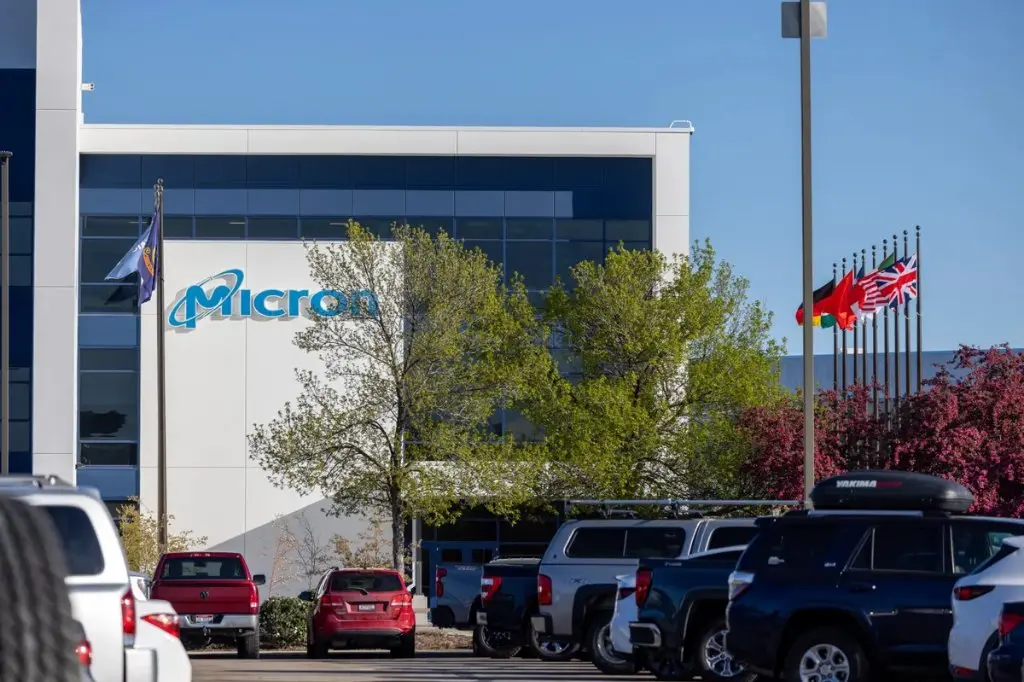
Analysis indicates that China's major DRAM manufacturer CXMT's monthly wafer output has reached a peak of approximately 240,000 pieces by the end of 2025, and is expected to remain flat in 2026. Due to the tightening of U.S. export controls on advanced semiconductor equipment, especially EUV lithography machines, its capacity for expansion is limited, and substantial expansion will not occur until at least 2027, depending on the progress of the domestic equipment supply chain. According to Goldman Sachs data, CXMT's coverage of domestic DRAM demand is only about 41% in 2026 and about 50% in 2028, reflecting a structural bottleneck for many years.TrendForce data shows that traditional DRAM contract prices are expected to surge by 90%-95% quarter-on-quarter in the first quarter of 2026, followed by another increase of 58%-63% in the second quarter. Jefferies predicts that prices will continue to rise by 40%-50% and 30%-40% in the third and fourth quarters, respectively. The price increase for server DRAM is even steeper, with Samsung and SK Hynix proposing price hikes of 60%-70% to clients like Microsoft and Google in the first quarter. S&P Global expects Samsung's traditional DRAM revenue per bit to rise by 116% year-on-year to $0.79 in 2026, while Micron's ASP will increase by 54% to $1.06; Bernstein predicts that SK Hynix's DRAM gross margin could reach 92.7% in the fourth quarter of 2026.Multiple forecasts suggest that effective supply relief may not occur until the end of 2027 or even 2028.

first_img Corporate AI spending continues to increase, with the growth focus shifting from subscriptions to APIs

FundaAI released a research report on enterprise AI applications, indicating that enterprise AI budgets are still expanding, but there is a divergence in trajectories in the second half of 2026 and 2027. The AI spending guidance from large U.S. telecom operator A shows an increase from a baseline of 100 in January to about 190 in December, with an expected year-on-year increase of 40%--50% in 2027; large European automaker A has only increased by 10%--15% so far this year, with guidance for next year remaining roughly flat.Incremental spending is shifting from paid seats to API/Token consumption and production workflows. The aforementioned telecom operator's subscription and API ratio has changed from about 50%/50% to 40%/60%, and it may trend towards 35%/65%; mid-to-large biopharmaceutical company A has adjusted from 80%/20% to about 70%/30%. Open-source adoption is uneven, with active scenario usage accounting for 30%--40%, as the unit price is lower, leading to a smaller spending proportion; experts estimate that open-source inference can be about 40%--70% cheaper than closed-source cutting-edge models, with the gap narrowing to 20%--40% under full cost metrics, and model routing, caching, and context compression could further reduce API spending by about 20%--30%.On the production side, AI budgets are increasingly built from the bottom up based on workflow ROI. The typical production ROI for this telecom operator is about 1.5--2 times, with a payback period of 6--18 months, and mature use cases can reach 3--5 times. The next wave of spending is related to agents, software modernization, network operations, commoditized workflows, and longer-cycle business processes, but engineering capacity, process reengineering, governance, and data readiness are becoming tighter constraints than funding.
app_icon
ChainCatcher Building the Web3 world with innovations.